Neuralink Receives FDA Approval for Clinical Trial of BCI-Controlled Assistive Robotic Arm

Neuralink
Brain-Computer Interface System Developer
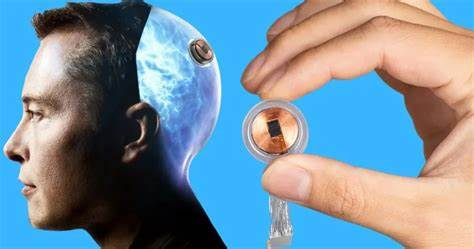
Neuralink Announces FDA Approval to Launch New Feasibility Trial for Its Brain-Computer Interface (BCI) Technology in the United States
This new trial evaluates the use of the N1 BCI implant from a company backed by Elon Musk to control an investigational assistive robotic arm. In a post on X (formerly Twitter), Neuralink claimed that it plans to implement cross-enrollment between its ongoing PRIME study and the new CONVOY study.
Currently, the company’s BCI implant, named “Telepathy,” is being evaluated as a technology that enables patients with quadriplegia to control external devices using their thoughts. The remotely rechargeable implant is accompanied by electrode threads that penetrate deeper into the brain.
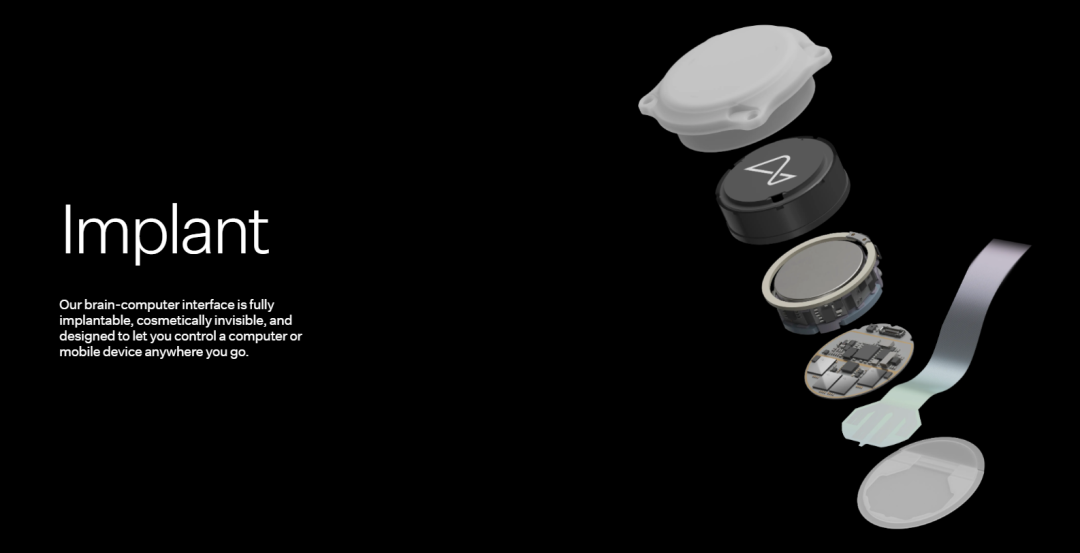
This brain-computer interface (BCI) is fully implantable and invisible in appearance, designed to allow patients to control computers or mobile devices anytime, anywhere. The N1 implant is sealed in a biocompatible enclosure that can withstand physiological conditions several times harsher than those found in the human body. Powered by a small battery, the N1 implant is wirelessly charged via a compact inductive charger, enabling easy use wherever needed. Advanced custom low-power chips and electronics process neural signals and transmit them wirelessly to the Neuralink app, which decodes the data stream into actions and intentions. The N1 implant records neural activity through 1,024 electrodes distributed across 64 threads. These highly flexible, ultra-thin threads are key to minimizing damage during and after implantation.
The company also has an R1 robot, designed to implant the BCI system while avoiding the vascular system.
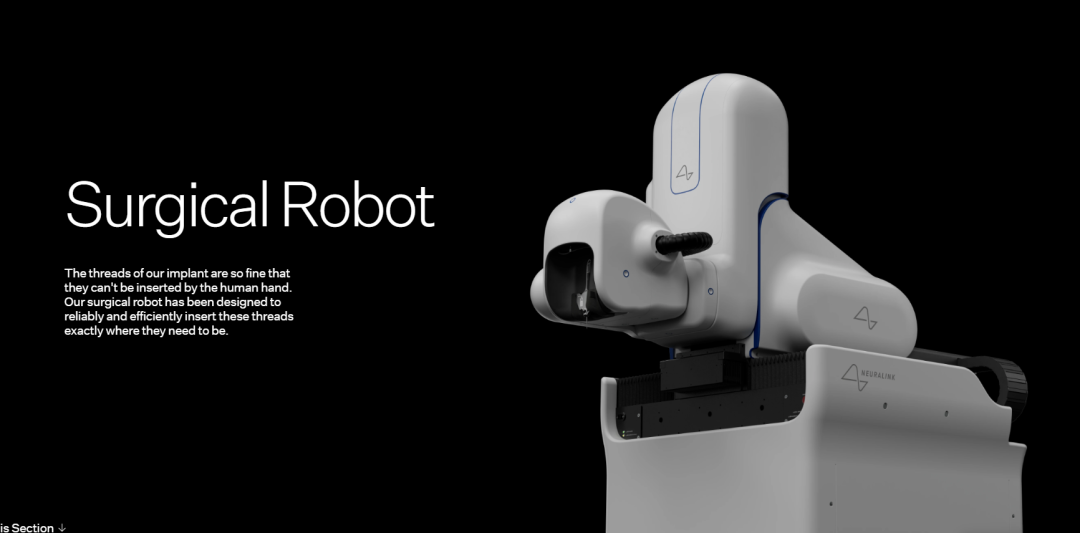
The threads of the N1 implant are so fine that they cannot be inserted by hand. Our surgical robot is designed to reliably and efficiently insert these threads with precision into their required positions. The base structure and motion platform provide a structural foundation for the robot head and the primary three-axis linear motion used to position the robot head and needle. The robot head houses the optical components and sensors for a five-camera system, as well as the optical components for an Optical Coherence Tomography (OCT) system. The needle, which is finer than a human hair, can grasp, insert, and release the threads.
The company stated, “We are pleased to announce that the FDA has approved and we have initiated a new feasibility study to expand BCI control using the N1 implant to investigational assistive robotic arms. This represents not only an important first step toward restoring digital freedom but also a significant milestone in restoring physical autonomy.”
As part of the PRIME study, the company completed the first human implantation of its brain-computer interface (BCI) in January. A 9-minute live demonstration showcased Noland Arbaugh using the Neuralink BCI to move a computer cursor and play chess online. Last week, Canadian authorities approved Neuralink to conduct research on its BCI in Canada as well.
Analysts believe that the total addressable market (TAM) for BCI technology in the United States alone is valued at approximately $400 billion.
About Neuralink
Neuralink is a company founded by Elon Musk, located in Fremont, a suburb of San Francisco, California, USA. Established in 2016, it focuses on the research and development of brain-computer interface (BCI) technology. A brain-computer interface involves implanting tiny electrodes into the brain to enable “interaction” between computers and brain cells via electrical currents, thereby achieving “human-brain–machine interaction.”



CCI Cardiovascular Physicians Innovation Club
Long-press the QR code to follow us
This Issue's Feature: Shen Li
Responsible Editor: Chen Baolin
Author: Yunyexuan
Post-Production: Ling Wujuan