

Dialogue with Proxima Capital's Sun Xiaolu: A New Wave of BD May Appear in the Medical Device Field
In 2025, China's medical assets were pushed to the forefront of the global innovation wave, transforming from followers of innovation to leaders in vertical field innovations. After nearly 20 years of development, China’s healthcare industry has finally reached a critical juncture of global competition and industrial integration. The year 2026 marks the beginning of a breakthrough iteration in the innovation logic of China's pharmaceuticals and medical devices.
As a venture capital institution deeply engaged in the healthcare sector, Belink Investment consistently anchors itself in core industry trends, finding its positioning amid the fluctuations of the primary market. It not only upholds China's advantages in the innovative drug field but also proactively seeks change within the medical device track. In recent years, Belink Investment has attempted to use industrial funds as a lever to arrange global acquisitions and integrations, deeply empowering enterprises to participate in global competition, carving out a distinctive investment path.
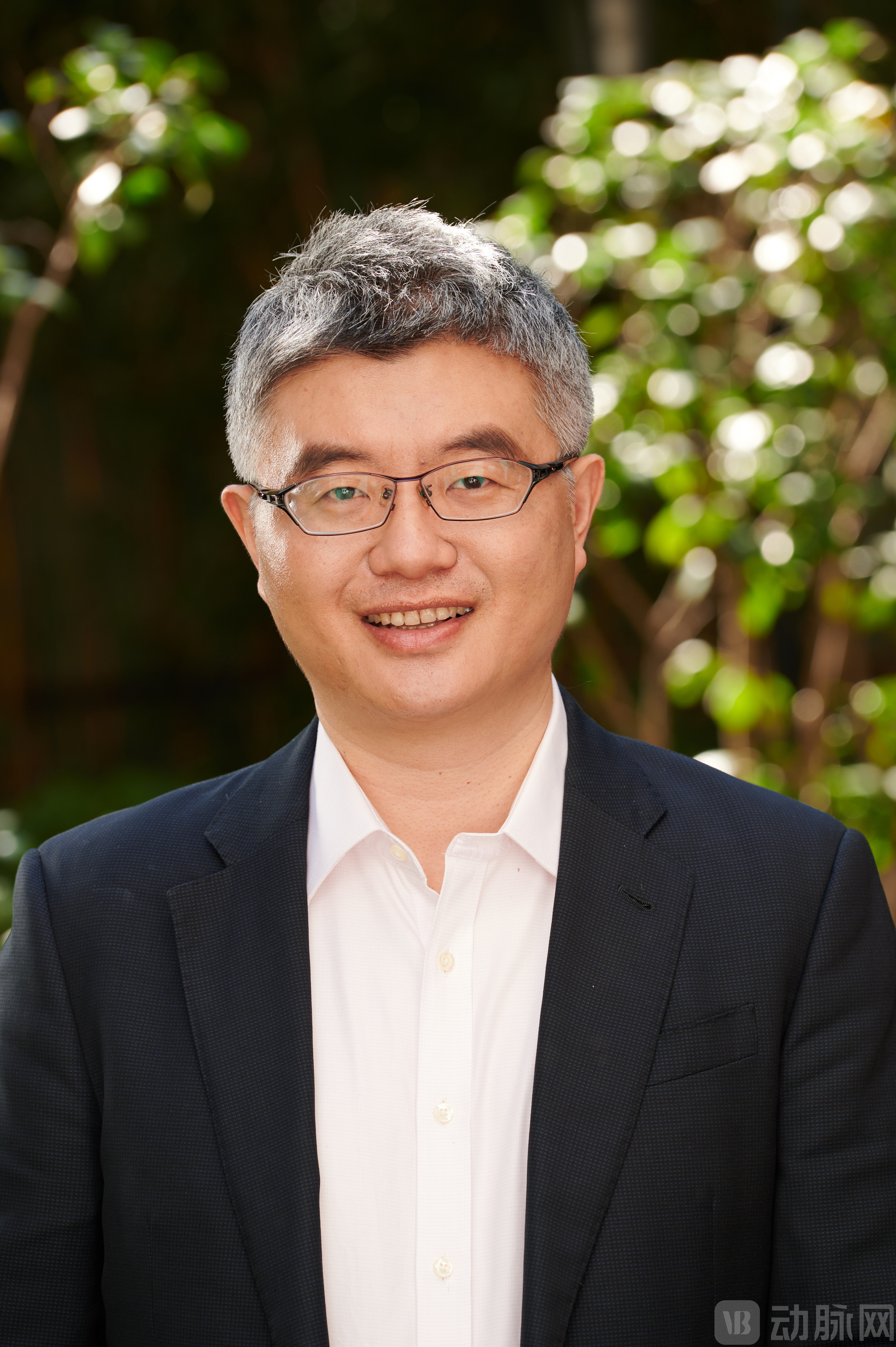
Sun Xiaolu, Founder and Managing Partner of Proxima Ventures
In this article, VCBeat interviews Sun Xiaolu, founder and managing partner of Star Capital, focusing on the core opportunities in the healthcare sector in 2026, analyzing the upcoming BD wave in the medical device field, exploring the overseas strategies of local companies under the background of industrial integration, and unlocking the global breakthrough code of China's medical innovation.
VCBeat: What are the main changes and trends in China's healthcare industry in 2025?
Sun Xiaolu:In the past two years, the capabilities of China's healthcare enterprises have rapidly improved in all aspects, and the entire industry has indeed undergone significant changes.
The most obvious progress is in the field of innovative drugs, where the innovation capabilities of Chinese companies have significantly improved. Domestic innovative pharmaceutical enterprises have stronger drug molecule design capabilities. Coupled with fast patient enrollment in clinical trials, strong overall industrialization capabilities, and relatively lower costs, they are bold in pursuing innovation. An increasing number of first-in-class pipelines are starting to systematically emerge. Moreover, as multinational companies increasingly recognize the compliance, clinical data, and pipeline quality of Chinese companies, a large number of multinational and overseas enterprises are coming to China to seek partnerships. They have discovered that Chinese companies truly have the ability to produce best-in-class products at a faster speed and lower cost.
A major change in the future may emerge in the medical device field. Chinese innovative medical devices are accelerating their pace to catch up with and surpass those from Europe and the U.S. Products from some outstanding companies, after multiple iterations, can now rival those of multinational corporations. These companies are also gradually building their own comprehensive solution product portfolios and establishing their brands. At the same time, some enterprises have entered a new phase of systematically expanding into global markets through industrial integration. China’s innovative medical devices are exporting industrial capabilities worldwide.
It can be said that China's innovative medical enterprises have fully sounded the horn to participate in the competition of the global market.
VCBeat: Against this backdrop, what interesting attempts has Proxima Ventures made?
Sun Xiaolu:We see that compared to 2024, in 2025 investors have more capital and are willing to invest, and the primary market has somewhat recovered. However, it is still quite difficult for early-stage companies to secure financing.
In terms of Proxima Ventures, our strategy in innovative drug investment maintains a steadfast belief in China's advantages. Proxima Ventures' innovative drug investment is divided into two parts: one is to promote Chinese enterprises to leverage their strengths and capabilities in industrialization, clinical trials, etc., to boldly take on global innovative products and accelerate these products into clinical practice. This includes not only globally innovative products independently developed by Chinese enterprises but also empowering innovative products from overseas.
The other part involves the system leveraging China's capabilities to introduce global innovative products into China, aiming to be the first in China. This includes creating the first pipeline in China and expanding specific technologies to other indications.
In contrast, our investment strategy in medical devices has undergone a significant shift. In addition to focusing on early-stage venture investments in innovative medical device companies — which is part of our DNA — Bellingstar Investment has established a 2 billion yuan industry fund. This fund aims to help Chinese medical device companies leverage their unique advantages in talent, clinical resources, cost, and efficiency. Through acquisitions and integration, we provide comprehensive solutions to compete in the global market. Currently, we are systematically working on several acquisition and integration projects. As early as the beginning of 2025, Bellingstar Investment assisted one of its portfolio companies in completing a transaction to acquire the assets of a multinational company in China.
In this aspect, we have actually accumulated some experience and resources. Over the past 20 years, China's medical device companies have continuously strived to bring many innovative products to market, gradually catching up with European and American enterprises. In this process, StarBridge Ventures has deeply supported the development of more than 200 innovative products, filling over 100 gaps in China, and boldly backed more than 50 globally pioneering innovations. We have over 20 portfolio companies that have each completed financing exceeding 500 million RMB, and eight portfolio companies that have each raised over 1 billion RMB, growing significantly in recent years. Alongside the rapid growth of these enterprises, we have also adjusted our strategy. Starting from the second half of 2024, we began supporting leading companies in attempting to consolidate related fields.
VCBeat: Looking ahead to 2026, what opportunities do you see for China's assets in the healthcare sector?
Sun Xiaolu:Now, we have entered a new phase where Chinese medical innovation companies are gradually becoming stronger and larger, starting to systematically expand into overseas markets. Taking some of the invested companies by Proxima Ventures as examples, their overseas sales already account for more than 30%. Through industrial integration, we can provide complete solutions across entire departments or disease areas, and are fully capable and have the opportunity to compete globally and explore markets worldwide. I believe that in the next decade, Chinese companies will largely replace products from some multinational corporations, systematically exporting high-quality, cost-effective products from China to the world. This is an important opportunity, and it is also the reason why we are establishing an industry fund at this point.
Moreover, I believe that in the next few years, the field of domestic medical device innovation in China will also usher in significant BD opportunities.
Between 2024 and 2025, China's innovative drug sector experienced a wave of BD (Business Development) activities, with upfront payments for a single pipeline deal potentially exceeding a company’s R&D investment over 1-2 years. In fact, there is also significant demand from overseas companies for China-produced innovative medical devices. However, compared to innovative drugs, medical devices have a lower level of standardization. The transfer of innovative assets in this field involves complex processes such as building production lines, establishing capacity, and setting up quality systems. Patents are another challenge, making BD transactions relatively more difficult and the amounts much lower. In reality, though, the demand from overseas markets for China's innovative medical device assets is even higher.
In China, the field of innovative medical devices is severely undervalued, with investors typically valuing products based on whether they have obtained certification and how much sales they generate. Overseas, the acquisition price for preclinical innovative products can exceed 100 million US dollars, with later-stage promotion usually carried out by large enterprises.
Compared with overseas companies, China's medical device enterprises have unparalleled advantages. We have abundant resources in engineers and clinical trials, and our costs are significantly lower. The R&D cost in China may be less than one-third of that in Europe and the U.S., manufacturing costs are about one-fourth, and clinical trial enrollment fees for some interventional and implantable products are between one-third to one-eighth. Chinese people are very hardworking, and the speed of R&D iteration and clinical trial enrollment is extremely fast, saving much more time compared to overseas teams. The industrial chain also responds promptly. Unlike pharmaceutical pipelines where much work can be outsourced, medical device products, especially Class III interventional/implantable devices, often require building one’s own production pipeline and quality system. Most tasks must be done independently, which is challenging for overseas teams but efficiently achieved by Chinese enterprises with high speed, good quality, and low cost. Collaborating with Chinese medical device companies addresses a clear demand, and this trend will undoubtedly grow.
After more than 20 years of development, Chinese medical device companies have continuously refined their products, and many product technologies and effects have already caught up with European and American manufacturers. These are the results of long-term continuous accumulation. In fact, business development (BD) transactions in the medical device sector will, in turn, drive the industry's value restructuring. BD brings capital, enabling companies to achieve better development, and through this approach, opens up markets in some developed countries.
Now, we already have medical device companies receiving BD Offers totaling over one billion US dollars. I believe the great era of innovative medical device BD transactions will come sooner or later.
VCBeat: What can Proxima Ventures do in this process?
Sun Xiaolu:We are a very unique fund in China, and have been deeply assisting enterprises. So far, more than 30 enterprises have been established or co-initiated by us at VBInsight. We have proactively recruited more than 300 founders, CEOs, directors, and other high-level personnel. Moreover, we have been deeply involved in the clinical design of over 70 products and their academic promotion in clinical settings.
Based on these accumulations, Proxima Investment is gradually promoting some systematic integration around more than ten vertical fields of medical devices, with the chain-leading enterprises we have invested in as the foundation. We aim to provide as much assistance as possible in the process of enterprises expanding into overseas markets, participating in global competition, and even acquiring multinational enterprise assets.
As previously mentioned, domestically produced innovative medical devices may usher in significant BD opportunities. We hope to take on this responsibility, lead this wave, and while promoting the entry of medical devices into the global market, also facilitate cross-border BD transactions for domestically innovative products.
VCBeat: What will be the investment pace of Proxima Ventures in 2026?
Sun Xiaolu:2025 is the financing year for Proxima Ventures. We have established an industry fund, are in the process of closing a venture capital fund, and are raising a US dollar fund. Our investments so far have been relatively modest. However, in 2026, we plan to invest in more projects. While valuations for mid-to-late-stage innovative drug projects are starting to become inflated, overall valuations, especially for early growth-stage companies, remain in line with expectations. Additionally, after years of experience, we now have a clearer understanding of companies' capabilities and true nature, making this a favorable time for investment.
In 2026, we will focus on opportunities for innovation and integration. Of course, clinical needs and industry demands will remain priorities. This industry always requires calm thinking—typically, when certain areas become overheated and the entire industry is following suit, it’s time to consider stepping back. Or at least use this window period to secure more funding to support the company's faster and better development.
VCBeat: At the beginning of the new year, what advice would you like to give to businesses?
Sun Xiaolu:I have several suggestions for companies. In fact, the current financing environment is still not optimistic, and exit remains difficult.
First, focus on value creation, closely align with clinical and market demands to develop and promote products. At the same time, reserve more funds and broaden funding channels as much as possible to mitigate risks and ensure better progress.
Second, there hasn't been a significant drastic change in the external environment. Enterprises need to follow their own pace and strategy to meet market demands and move forward in an orderly manner. For the invested companies of Proxima Ventures, we will continue to provide support.
Third, there are currently good opportunities to expand overseas. Our companies and products are increasingly being recognized worldwide. I believe all companies need to adopt a global mindset, and those with the means should actively seek to develop the global market.