

Synchron Unveils Chiral™, the World’s First Cognitive AI Brain Foundation Model

Synchron
Developer of implantable neural interface products

Recently, Synchron showcased the future of AI-driven brain-computer interfaces at NVIDIA GTC 2025.
Synchron Unveils Roadmap for Chiral™, a Foundational Model of Human Cognition, Marking the Emergence of Cognitive AI—Artificial Intelligence Trained Directly on Human Neural Activity. Synchron is advancing brain-computer interfaces (BCIs) from supervised learning to self-supervised learning, accelerating this transition by integrating large-scale neural data with advanced NVIDIA AI-driven computing.
At the GTC 2025 conference, Synchron demonstrated how its AI-powered BCI, driven by the NVIDIA Holoscan platform, displays on the Apple Vision Pro, enabling individuals to control digital and physical environments directly using Synchron’s Stentrode™ thought-control technology.
At the event, Synchron released an exclusive video showcasing the real-world impact of its brain-computer interface (BCI) technology. The video features Rodney, a Synchron BCI user with amyotrophic lateral sclerosis (ALS). Despite having lost the use of his hands, he can operate and control his digital home environment entirely without manual input, speech, or physical touch. Through direct thought control, he adjusts lighting, plays music, regulates temperature, and even activates appliances—all made possible by eye-tracking navigation and the AssistiveTouch feature on Apple Vision Pro, controlled via BCI.
Dr. Tom Oxley, CEO and Founder of Synchron, stated, “We are leveraging generative pre-training technologies to build a foundational brain model that learns directly from neural data—abstracting human cognition at its source to create functionalities that improve users’ lives.”
“The reason we can achieve this is that we are able to expand large datasets, making BCI as common as stent insertion.”
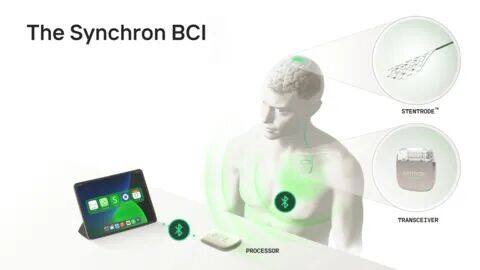
Cognitive AIRoadmap
Synchron’s collaboration with NVIDIA centers on three major technical milestones along the cognitive AI roadmap:
Motion Inference Powered by NVIDIA Holoscan – The First Step Is Achieving Real-Time Neural Decoding with Minimal Latency. NVIDIA Holoscan enhances on-device edge computing, enabling faster and more precise motion inference in Synchron’s BCI. This will allow users to seamlessly control digital environments through thought, laying the foundation for more advanced high-dimensional interactions and AI support.
Context-Aware Interaction with NVIDIA Cosmos—Following the achievement of real-time neural decoding, the next step is to integrate environmental awareness. The NVIDIA Omniverse platform and the Cosmos world foundation model create physically constrained, realistic home environment simulations, generating richly annotated datasets that enhance the accuracy, adaptability, and fine-tuning capabilities of motion inference. By interpreting neural signals within these real-world simulations, the system enables higher-dimensional inference, making interactions more predictive, adaptive, and intuitive.
From Neural Data to Cognitive AI: Training Chiral™—As a leader in scalable neurotechnology via transvascular approaches, Synchron will partner with NVIDIA to train Chiral™ on de-identified data. Since launching its clinical program in 2019, Synchron has accumulated 20 patient-years of stent implantation experience. As a pre-trained brain model, Chiral™ is designed to extract human cognition from large-scale neural data, thereby advancing brain-computer interfaces (BCIs), brain health, and future artificial intelligence systems. As more devices are deployed, the model will continuously improve, enabling higher-dimensional intent translation and evolving into a self-improving, general-purpose cognitive AI. This transformation goes beyond intent recognition, laying the foundation for real-time intent-to-action capabilities.
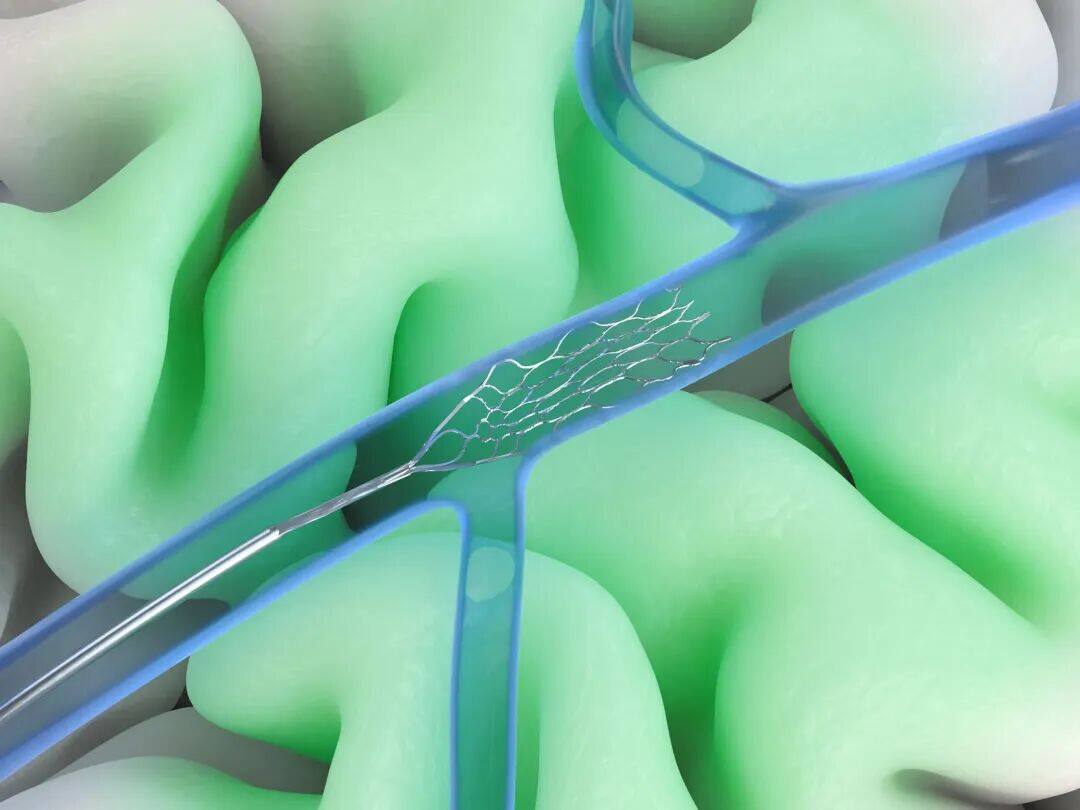
This breakthrough is only achievable at scale. Synchron, Inc. is addressing this challenge through its minimally invasive endovascular BCI delivery technology, a procedure as routine as pacemaker or stent implantation, which is performed millions of times annually. This scalability enables population-level neural data collection, which is critical for training brain intelligence models.
“We are witnessing a new computing paradigm, where technology no longer merely reacts to people but empowers them in entirely new ways,” said David Niewolny, Senior Director of Business Development at NVIDIA. “By integrating groundbreaking brain-computer interface (BCI) technology with NVIDIA’s AI and Omniverse platforms, Synchron is unlocking new possibilities for individuals with disabilities, enabling greater independence and enhanced communication and connectivity with the outside world.”
Synchron’s collaboration with NVIDIA lays the foundation for the first large-scale brain foundation model. Just as today’s artificial intelligence is trained on vast datasets of text and images, the next step in AI evolution is training on neural signals. Chiral™ will evolve into a self-learning cognitive model, representing the next leap beyond generative AI and agentic AI into the era of cognitive AI.
For academic sharing purposes only. If there is any infringement, please leave a message, and the infringing content will be removed immediately!


Join the Community
Welcome to the Brain-Computer Interface Community Exchange Group,
Exploring Topics in the Field of Brain-Computer Interfaces: Real-Time Tracking of Frontiers in Brain-Computer Interfaces
Join WeChat Group:
Add WeChat: RoseBCI [Note: Name + Industry/Profession].
Add QQ Group: 913607986
Submissions Welcome
1. Submissions welcome. For submission inquiries, please contact us via WeChat: RoseBCI
Click to Submit:Submission Guidelines for Academic News in the Brain-Computer Interface Community
2. To join the community as a part-time creator, please contact us on WeChat: RoseBCI


One-Click Triple Action: “Share,” “Like,” and “Watch”
Stay Ahead of Every Breakthrough in Brain-Computer Interface Technology