

Dialogue with Gortka Investment: The Medical and Health Track Pattern is Reshaping, with a Further Shift of Focus Towards Innovative Drugs
Over the past year, the investment and financing market in the global and Chinese healthcare sector has gradually emerged from the cold spell, ushering in a warming trend.
According to data from VBInsight, the primary market of China's healthcare industry will see a turning point in 2025 after three consecutive years of decline, with both the number of financing events and the total financing amount experiencing growth; at the same time, a surge in IPOs and a flurry of innovative drug BD transactions have further injected strong momentum into the industry.
As an investment institution in China that continuously focuses on the single track of healthcare, Gao Tejia has achieved several substantial results in the past year.: Promote seed funds to invest in high-quality projects at an earlier stage; continue to deeply collaborate with industry players to enhance the industrial synergy between traditional listed companies and innovative enterprises; 4 projects successfully went public, and 9 projects submitted IPO applications...
Under the warming market trend, what deep changes has the industry pattern experienced? How should the industry trends for the new year be analyzed? To address these questions, VCBeat had a dialogue with Sun Jialin, General Manager of Gortica Investment Group, to provide an interpretation from the perspective of a single-track investment institution in healthcare.
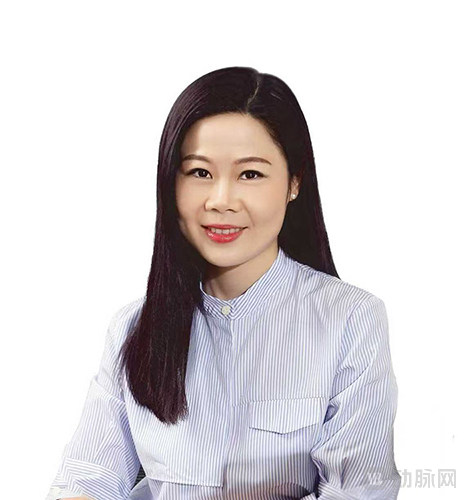
General Manager of Gaoce Capital Investment Group, Sun Jialin
VCBeat: In 2025, IPOs of healthcare companies in China will be active, and the licensing deals of innovative drugs will experience a concentrated boom. What fundamental changes will this wave of enthusiasm bring to the industry landscape?
Sun Jialin:First and foremost, it has significantly boosted investment confidence in the industry.In 2024, investment confidence in the biopharmaceutical sector plummeted to a low point, with some institutions even regarding it as a "neglected" track. The market sentiment surged in mid-2025, changing the attitudes of many institutions. However, Gao Tejia persisted in strategic investments during the downturn, especially doubling down on the innovative drug track, resulting in four projects completing IPOs by 2025, nine IPO applications being filed, and more projects expected to submit applications continuously into 2026.
Secondly, the investment focus of the healthcare industry is further concentrating on innovative drugs.Currently, China's innovative drug companies are still dominated by Biotech startups, while traditional large pharmaceutical companies face relatively long innovation transformation cycles and greater difficulties. After the boom of innovative drugs in 2025, traditional large pharmaceutical enterprises actively seek fast-track ways to enter the innovative drug sector, increasingly engaging in deep BD (Business Development) cooperation with domestic Biotech firms. Some medical device listed companies acquire vaccine enterprises, and other listed companies are willing to act as cornerstone investors for innovative drug funds, which would be almost impossible in 2024. Currently, the two core platform funds that Gao Tejia is preparing are both established in collaboration with listed companies.
In addition, the focus of the primary market has shifted, with the national level beginning to pay attention to黑马investment institutions that深耕a single track.This aligns with the development pattern of the VC industry. For instance, the U.S. market features a coexistence of large institutions like KKR and Blackstone alongside specialized boutique investment firms focusing on single tracks. Before 2025, the market placed more emphasis on scale; now, institutions deeply cultivating the healthcare and medical industry have gained greater recognition, especially at the national level.
VCBeat: With the positive momentum of IPOs and BD, does it mean that companies in the primary market can raise funds more easily? What are the changes in the financing rhythm?
Sun Jialin:Over the past year, I believe the changes have not been significant. First, the research and development of innovative drugs is characterized by long cycles, high investment, and high risks, with returns on investment being influenced by the叠加of technology cycles, capital cycles, and industry cycles.
Secondly, about 80% of the current primary market funds are state-owned capital. The hard requirements of government-guided funds on factories, land, taxation, employment, etc., are somewhat misaligned with the characteristics and development path of the innovative drug industry. In some regions, the requirements for reinvestment and investment promotion have even restricted investment institutions in their selection of innovative drug targets.
In 2026,As national funds such as social security funds and insurance capital continue to enter the market, it is believed that the difficulties enterprises face in financing in the primary market will be alleviated. We also look forward to the introduction of more "fresh capital" at the national policy level, further nurturing the vigorous development of the innovative drug industry.
VCBeat: Gao Tejia has long focused on unmet clinical needs. In the unique market environment of 2025, have there been any adjustments to investment and exit strategies?
Sun Jialin:Gortica's core investment strategy and quality target profile have not changed due to the BD boom; the adjustment is mainly reflected in the investment stage, that is, leveraging seed funds to invest in earlier-stage projects.
In the past, it was relatively difficult to exit seed-stage projects, whether through cross-round exits or exits via S-funds, as reaching a consensus on pricing was challenging. By 2025, the total scale of China's innovative drug license-out transactions will exceed 130 billion US dollars. As the BD model gradually matures, it also provides an additional exit pathway for high-quality early-stage projects. Even if an exit does not directly occur through BD, BD can still significantly alleviate the cash flow pressure on innovative pharmaceutical companies and provide performance support for investment institutions, thereby forming a closed loop in the investment logic. Therefore, the investment stage of Gao Tejia is extending from its previous focus on PE/VC, Pre-IPO, and M&A to angel rounds or seed rounds, in order to support more high-quality projects.
VCBeat: The current industry topic focuses on innovative drugs. Will there be any notable advancements in the innovative device sector by 2025?
Sun Jialin:In 2025, the core logic of medical device investment will still be autonomy and control alongside domestic substitution. Many of these projects have already entered commercialization or become profitable, demonstrating strong market competitiveness.
Gortec always pays attention to the development trends and investment opportunities in innovative medical devices. It has already made investment arrangements in fields such as surgical robots and high-end ophthalmic equipment. Currently, these projects are developing strongly, with domestic distributors actively seeking cooperation and overseas capital hoping to introduce their products into the Southeast Asian and Middle Eastern markets.
Although the medical device sector is currently less popular than innovative drugs, the industry is cyclical. For instance, a few years ago, the IVD sector saw the emergence of a group of outstanding companies. We remain optimistic about the long-term investment opportunities in the medical device sector.
VCBeat: Significant Differences in Development Cycles Between Medical Devices and Innovative Drugs, At Which Stage Do Investments in Device Companies Typically Focus?
Sun Jialin:Gortec has invested in two leading domestic medical device companies, Mindray and United Imaging. For us, investments in medical device companies typically occur after the A-round, meaning when the prototype is completed or has entered the type inspection stage. The medical device industry is a multi-disciplinary integrated track that requires a comprehensive evaluation of investment value based on factors such as the functional realization of the prototype, corresponding market potential, competitive landscape of the product, and the company’s product line layout.
The number of medical device companies in China far exceeds that of innovative drug enterprises, but very few ultimately grow into listed companies. To invest in medical device companies that truly possess growth potential and commercial value, we maintain a cautious investment attitude.
VCBeat: In 2026, which sub-sectors of China's healthcare industry are expected to become hotspots for primary market investment?
Sun Jialin:Each institution has different judgments. GaoTeJia does not follow short-term market trends; the core criterion remains whether the product can address unmet clinical needs, and such areas naturally have growth potential.
In recent years, market hotspots have rotated frequently, from ADC to small nucleic acids, and then to the current small molecule "undruggable" targets and molecular glues. Some hotspots may be driven by artificial factors.We focus on clinical needs, lead investments with industry research, layout more cutting-edge fields, and avoid concentrating funds in a single track.
For example, Gortica had already invested in the new alternative methods (NAMs) track such as organ-on-a-chip in 2021. In 2025, the FDA will require the gradual elimination of mandatory animal testing in drug development, promoting the inclusion of new alternative methods like organ-on-a-chip into the regulatory framework, which proves the correctness of our investment logic at that time.
As for general CAR-T, CGT and other popular fields in the industry, they are cautiously moving forward while keeping a close watch.We believe that investment requires a comprehensive consideration of track prospects, timing, and fund types. It demands decisiveness but also calls for restraint and respect.
VCBeat: What is your judgment on the valuation trend of the primary and secondary healthcare markets in 2026?
Sun Jialin:In 2025, China's innovative drug license-out deals have driven up valuations in the secondary market, influenced by market sentiment but, more importantly, reflecting the sustained improvement in the fundamentals of China's innovative drug industry. In 2026, more innovative pharmaceutical companies will achieve profitability through BD transactions or accelerated commercialization of products. Therefore, I am optimistic about the valuation performance of A-shares and Hong Kong stocks in 2026, as the secondary market will gradually align with fundamentals, and Hong Kong stocks and A-shares are likely to perform well.
But at the same time, listed companies may further diverge. On the one hand, the strong will remain strong, while on the other hand, innovative pharmaceutical companies with insufficient innovation and commercialization will struggle to gain market recognition and may even face the risk of delisting.
VCBeat: Considering the pipeline reserves of companies in China and the gaps in MNCs, which areas might be the hotspots for innovative drug BD in 2026?
Sun Jialin:Weight-loss drugs will continue to be a hot topic in the industry.In 2025, Eli Lilly's tirzepatide and Novo Nordisk's semaglutide generated revenues of $36.5 billion and $36.1 billion respectively, exciting the industry and triggering another round of capital investment.
Next are small nucleic acids, which have been receiving continuous attention due to their promising prospects in the anti-tumor field; cell therapy will also see numerous companies following up, but whether they can invest in high-quality targets remains to be seen., which is a test of the institution's judgment.
In addition, small molecules will become a new highlight.In previous years, the market paid more attention to large molecules, but small molecules are expected to perform remarkably well by 2026.
VCBeat: The pipeline for weight-loss drugs is already showing signs of internal competition. Will the focus shift to new technological approaches by 2026?
Sun Jialin:Yes, the industry is seeking new solutions and technical pathways in the weight-loss drug sector. Current drugs are mainly injectables, while the industry is focusing on oral weight-loss medications, extended-release weight-loss drugs, and innovative pipelines that improve patient compliance and optimize medication cycles. The weight-loss drug market is a sustainable and long-term demand-driven sector.
VCBeat: BD is one of the paths for enterprises to expand overseas. What might the future overseas expansion paths or landscape look like?
Sun Jialin:Going overseas is a gradual process. Currently, the main approach for innovative drugs produced in China to go overseas is through business development (BD). Following the path of Japanese companies, it starts with product exports, gradually progresses to team and company expansion overseas, and eventually grows into a multinational pharmaceutical enterprise.We predict that in the next decade, Chinese companies will rank among the world's top MNCs.
VCBeat: The mismatch between China's capital cycle and the healthcare industry cycle—how to resolve it? What kind of broader environment or policy support is needed?
Sun Jialin:For GPs, they are willing to be patient capital, make long-term investments, and cover the entire life cycle of enterprises. However, the cycle of RMB funds is relatively short. If exits cannot be made on schedule within 5-7 years, the pressure on LPs will be passed on to GPs, and then to enterprises, creating a chain reaction.
At present, we also see that some national-level funds and a few local funds have provided a longer capital duration cycle, introducing more patient "capital flow" for industrial development, which is a gratifying start.The formation of patient capital requires state-owned capital to take the lead in piloting and guiding institutions to develop a long-term investment style, ultimately building a pattern where state-owned capital serves as the cornerstone and private capital participates, creating a virtuous cycle of long-term and patient investment.
Before the formation of a true patient capital landscape, Gortica's strategy is to establish funds classified by investment stages. For example, seed funds last for 10 years, PE funds for 5-7 years, and M&A funds for 3-5 years, maximizing the alignment between GP investment strategies and LP capital types while reducing friction risks.
VCBeat: How does GaoTJ Investment build a healthcare investment ecosystem? How to empower portfolio companies through ecosystem resources?
Sun Jialin:For innovative drug companies, there remains a continuous need for funding even after going public. Therefore, through our proprietary Gortica ecosystem, we keep a close eye on industry trends, allowing the industry to understand the investment directions and intentions of capital, ensuring that funds flow to where they are truly needed. At the same time, portfolio companies can discover collaboration opportunities across the upstream and downstream industrial chains. Moreover, many early-stage innovative drug companies are founded by scientists who urgently need support in business management. The ecosystem serves as a communication bridge, connecting outstanding management talent and experience.
In recent years, Go Capital has shared our research insights with the industry through our industry research publication, *Gao Jian*. By 2026, we plan to use "Gao Jian" as a link while building the "Gao Peng Hui" platform to organize smaller, closer, and more precise offline ecosystem events within Go Capital to achieve resource connectivity and value output. We also look forward to VCBeat joining the "Gao Peng Hui" to collaborate with us in supporting the development of the industry.
The 10th Future Healthcare 100 Summit 2026 will kick off in Shanghai from May 19th to 21st. This year’s conference focuses on the core of China's innovative healthcare assets, bringing together over 8,000 industry and capital elites. It covers the entire industrial ecosystem in fields such as digital healthcare, innovative medical devices, and novel drugs, creating diverse connections to activate global value. Meanwhile, the 2026 Future Healthcare 100 evaluation has been fully upgraded, with submission channels now open. We sincerely invite you to join the ranking, attend the grand event, and explore opportunities for healthcare innovation together!
As the core circle of friends for the conference and the selection of the rankings, Gao Tejia Investment Group will also provide full support for this grand event.

Scan the QR code to register for the "2026 Future Healthcare 100 Strong" conference and enjoy early bird discounts.

Scan the code to enter the application channel for the "2026 Future Healthcare 100 Strong" awards.