

Neuralink Files for IPO Amid $500M Fundraise at $8.5B Pre-Money Valuation

Neuralink
Brain-Computer Interface System Developer


Registration: The 1st Global Cardiovascular Conference | Major Highlights
Call for Partners: 2025 Global Surgical Robotics Conference

On April 24, 2025, according to Bloomberg News, sources familiar with the matter stated that brain-computer interface company Neuralink plans toUSD 8.5 billion (approximately RMB 62.013 billion)of pre-money valuation to raise approximately$500 million (approximately RMB 3.648 billion)Funding. The Company has commenced preliminary discussions with potential investors, but the financing terms have not yet been finalized.
# Core Technologies
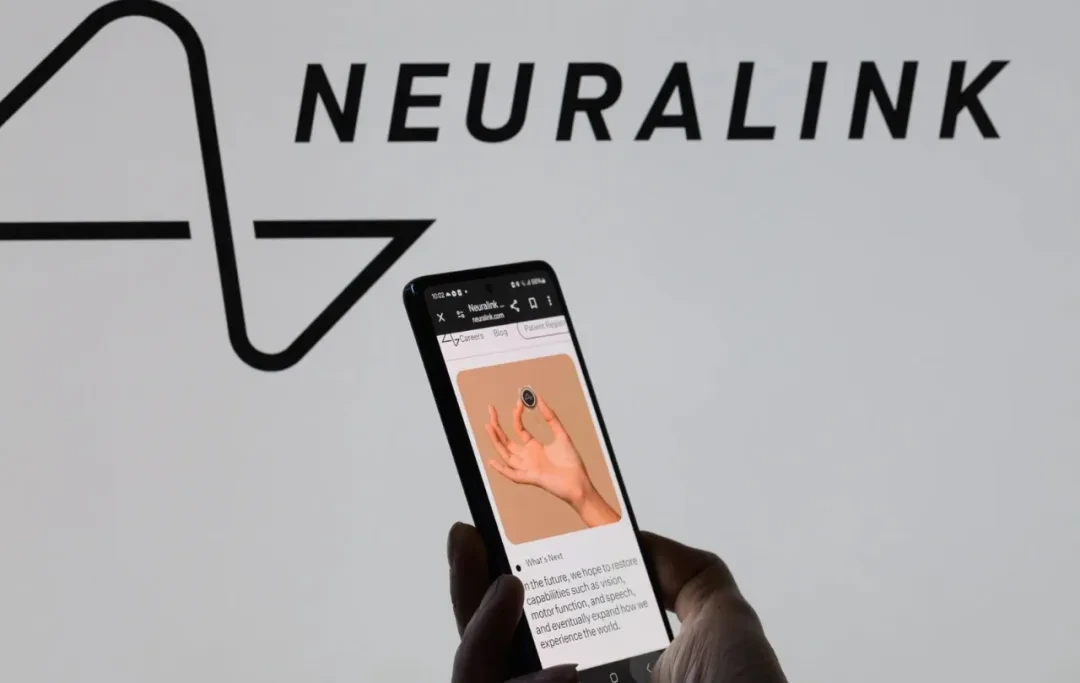
Neuralink is a high-tech company founded by Elon Musk in 2016, headquartered in the United States,Focused on the development of invasive brain-computer interface (BCI) technology. The company aims to connect the human brain with machine interfaces by manufacturing devices at the micron level,To achieve human-brain-machine interaction。
N1 Implantable Device
The N1 implant is only the size of a coin. Guided by the R1 robot, surgeons insert microthreads containing hair-like electrodes into the target area of the brain to record activity. When the N1 is implanted in the brain (such as the region controlling arm movement) and neurons in that area fire, signals can be transmitted to a computer.
'%20fill='%23FFFFFF'%3E%3Crect%20x='249'%20y='126'%20width='1'%20height='1'%3E%3C/rect%3E%3C/g%3E%3C/g%3E%3C/svg%3E)
High-Density Electrode Design:The N1 implant contains 1,024 electrodes distributed across 64 threads.Capable of capturing a large volume of neural signals.Threads feature high flexibility and ultra-thin characteristics,It can easily adapt to the complex structure of the brain during implantation, reducing damage to brain tissue; furthermore, it minimizes compression and interference with surrounding tissues.
Biocompatible Encapsulation:N1 Implantable Device Features Biocompatible EncapsulationDoes not trigger immune responses or other adverse reactions, ensuring the long-term stable operation of the device within the human body.
Wireless Charging and Transmission:The device is powered by a small battery,Charging via an external wireless charger eliminates the need for surgical battery replacement.
Decoding Function:Low-power chips and electronic components can process neural signals and wirelessly transmit them to the Neuralink app, which then decodes the data stream into actions and intentions.
R1 Surgical Robot
Because the threads of the N1 implant are extremely fine and cannot be manually implanted, Neuralink has developed a specialized surgical robot. This robot can reliably and efficiently insert the threads into predetermined positions with precision.
Advanced Sensing System:The surgical robot incorporates optical components and sensors from a five-camera system to provide high-resolution visual feedback, enabling real-time observation of the implantation site during surgery.
Equipped with OCT System Optical Components:Optical Coherence Tomography (OCT) is a non-invasive imaging technique capable of providing high-resolution images of the internal structures of biological tissues. In brain-computer interface implantation surgery, OCT can be used to monitor tissue changes in real time during thread insertion, ensuring the safety and accuracy of the implantation procedure.
Micro-fine Needle Design:The robot is equipped with a needle finer than a human hair, capable of precisely grasping, inserting, and releasing threads.
Blindsight
In October 2024, Neuralink’s brain-implant device “Blindsight” received the U.S. FDA’s “Breakthrough Device” designation.
Generally, visual impairment is primarily caused by damage to the retina or optic nerve. The core of Blindsight technology lies inBypassing the damaged visual system to directly stimulate the visual cortex of the brain, thereby simulating visual perception.It is implanted into the brain via an invasive approach, directly stimulating the visual cortex through external electrical signals to induce light perception in blind individuals (enabling them to perceive the specific location of light within their visual field).
After the patient provides feedback on the perceived location of light to the researchers, the researchers will again deliver the pre-designed composite electrical stimulation signals, thereby generating visual percepts within the patient’s field of view.
Although the initial visual experience may have low resolution, Musk stated that with continuous technological advancements, the resolution of future generations of devices will steadily improve, potentially even enabling the perception of electromagnetic spectra beyond natural human vision, such as infrared and ultraviolet light.
Related Reading:FDA Breakthrough Designation! Brain-Computer Interface Chip Restores Vision
Research on Neural Signal Decoding and Applications
Decoding Algorithm Development:Neuralink is dedicated to developing advanced algorithms to more accurately decode neural signals from the brain, translating them into specific motor commands or intentions, thereby enabling more efficient and natural human-machine interaction. Exploration of Multiple Application Scenarios:In addition to helping paralyzed patients regain motor function, research is also being conducted on how brain-computer interface technology can enable other applications, such as controlling smart home devices, facilitating silent communication, and enhancing cognitive abilities.
Synchron:WeiI. A BCI company that utilizes vascular systems to capture brain signals, under its umbrellaStentrode BCI Productconsisting of a nickel-titanium alloy stent, platinum (Pt) circular electrodes,LeadComposition. The stent expands within the blood vessel to secure it in place; then, 16 miniature sensors are mounted on it to capture brain activity. Platinum (Pt) circular electrodes collect neural electrical signals, andConnected to the chest via leadsWireless transmission system, which ultimately transmits signals to the external prosthesis via the wireless transmission system to control the external prosthesis.Exercise. Paradromics:DevelopedConnexus BCI System,AdoptedDirect Data Interfacedesign, which measures and interprets brain signals by implanting microelectrode arrays into brain tissue, and then transmits the signals to external devices via a wireless transceiver implanted under the chest skin. By decoding brain neural signals into medical data,It holds promise for helping aphasia patients restore communication abilities and achieve control of computer devices. Precision Neuroscience:UnderLayer 7 Cortical Interface TechnologyIt is a compromise between invasive and non-invasive brain-computer interface technologies, aiming to reduce damage to brain tissue. The 7-layer cortical interface is a thin-film microelectrode array designed to conform to the cerebral cortex without causing tissue damage. Using the company’s patented minimally invasive insertion method, it can deliver thousands of channels to any location on the brain’s surface.