

Neuralink Secures $600 Million in Record-Breaking Funding Round, Aims for Mass Implantation Within a Decade

Neuralink
Brain-Computer Interface System Developer

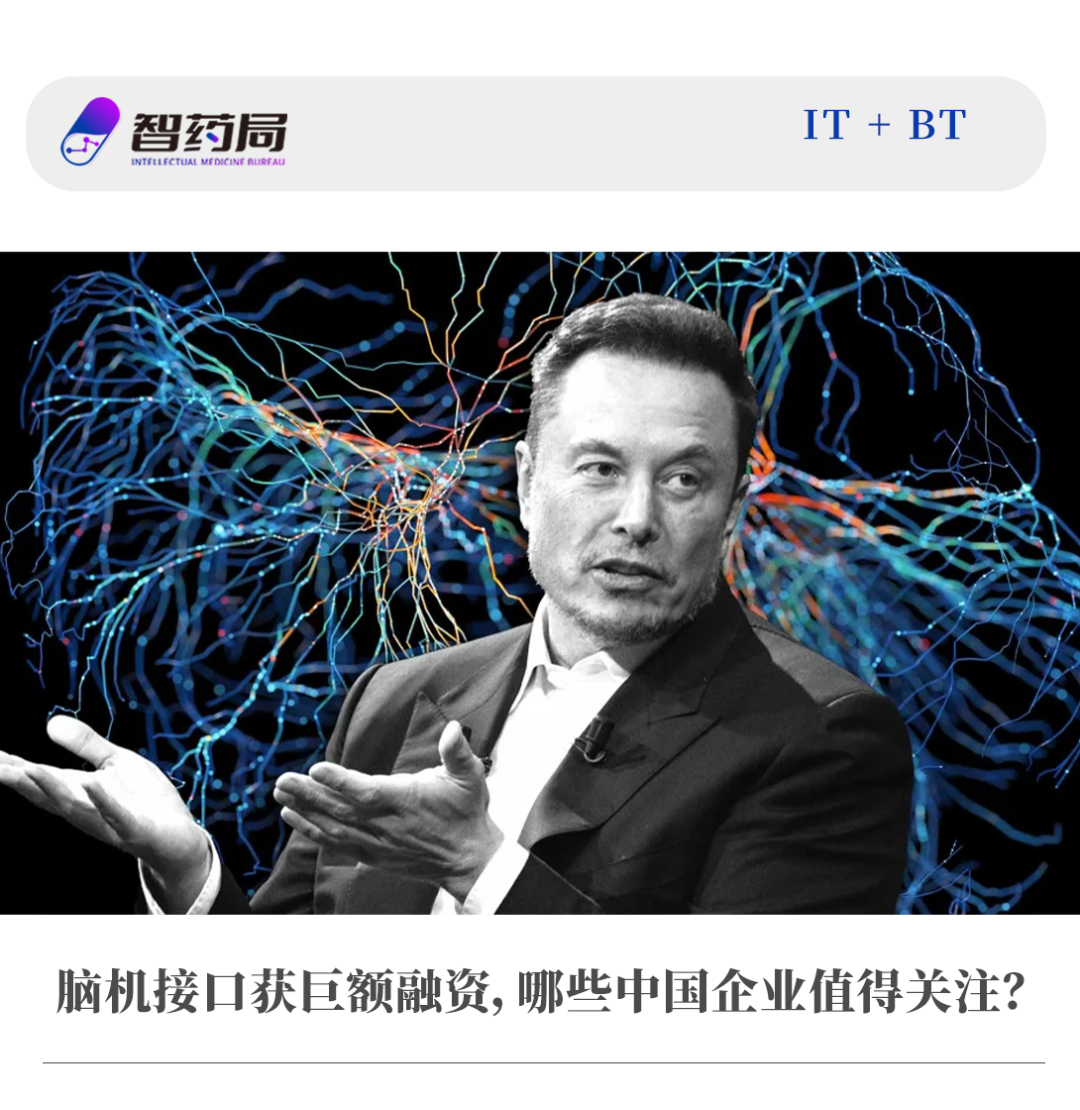
Just now, foreign media reported that Elon Musk's brain-computer interface companyNeuralinkRaised $600 million in financing(RMB 4.3 billion), the companyPre-money valuation has already reached $9 billion(approximately RMB 64.7 billion)!
This round of financing directlyBreaking Records in the Brain-Computer Interface RaceNeuralink moves one step closer to becoming a trillion-dollar unicorn.
Just last month, the third Neuralink implant recipient posted a video in which, with the help of a brain-computer interface, this individualPatients with Amyotrophic Lateral Sclerosis (ALS) Can Edit Videos and Play Mario Kart。
'%20fill='%23FFFFFF'%3E%3Crect%20x='249'%20y='126'%20width='1'%20height='1'%3E%3C/rect%3E%3C/g%3E%3C/g%3E%3C/svg%3E)
Musk stated that Neuralink's second product, "Blindsight" will be inFirst human implantation this year, aimed at restoring vision in the blind.
In January last year, Neuralink completed its first human implantation surgery, with the first patient achieving cursor control via thought. By the time of the second participant, the user was able to smoothly play shooting games and use CAD software.
Musk stated that the relevant progress has been quite smooth,He optimistically predicts that tens of thousands of people will have Neuralink implants within five years, and millions within ten years.
Beyond curing diseases, the greater mission of brain-computer interfaces isEnhance human capabilities, transcend physiological limits, and expand human cognitive and motor abilities.
It is reported that Musk has requested Neuralink staff to significantly accelerate their work pace, in order toEnsure that humans remain competitive compared to superintelligent AI in the future, or else human survival may be threatened.。
China is also demonstrating strong momentum in the field of brain-computer interfaces, currentlyDomestic cases have emerged34Relevant Domestic Enterprises, driven by the dual advantages of technological breakthroughs and policy support, the industrialization process is accelerating.
Mechanical Ascension! Musk Strongly Promotes Brain-Computer Interfaces
The term "brain-computer interface (BCI)" was first proposed in 1973 by Jacques Vidal, a computer scientist at the University of California, Los Angeles, who suggested that electroencephalographic signals could potentially be used to control prosthetic limbs.
In 2016, Musk co-founded Neuralink with several neuroscientists and engineers, personally investing $100 million as startup capital, with the initial goal of developing brain-computer interfaces to treat brain disorders.
Neuralink has developed a novel brain-computer interface implant containing over 1,000 microelectrodes distributed across extremely thin polymer threads, which must be surgically implanted into the brain by a specialized robotic system.
In July 2019, Musk unveiled at the press conferenceN1 Link, it is only the size of a coin and can transmit data via wireless connection.
In 2021, Neuralink released a video showcasing a monkey with an implanted N1 Link playing video games via thought control, sparking widespread sensation.
May 2023,Neuralink Receives FDA Approval to Conduct Human Clinical Trials, and completed the first patient implantation in January 2024.
In May 2024, Neuralink released the clinical report on its first brain-computer interface patient:The subject successfully controlled the cursor using thoughts to play chess, browse the internet, and live stream, expressing high satisfaction with the outcome.
Months later, the second patient to receive a Musk brain-computer interface implant completed the procedure, enabling seamless gameplay of CS and the use of CAD software for 3D printing design.
The success of multiple subjects has greatly boosted Musk’s confidence. He stated on social media that tens of thousands of people would have Neuralink implants within five years, and millions within ten years.
In a podcast episode, Musk even stated,Hundreds of millions of people worldwide will have Neuralink implants in the coming decades.
Implanting brain-computer interfaces in hundreds of millions of people is clearly not just about curing diseases; in Musk’s vision,Brain-Computer Interfaces Will Ultimately Enable Significant Enhancement of Human Capabilities to Adapt to the Future AI Shock
“If AI speaks at a rate of 1 Mb/s, while humans can only respond at a speed of 1 byte/s, this is unacceptable; we need to enable humans to keep pace with AI biologically as well.”
Elon Musk believes that,Human input and output rates need to be increased by several orders of magnitude to secure greater opportunities in a world filled with AGI.
Neuralink co-founder DJ Seo previously stated, “The long-term goal is to make brain-computer interfaces accessible to billions of people,”Unlocking Human Potential, Transcending Biological Limitations”。
This is also Neuralink's ultimate vision: to achieve harmonious coexistence between artificial intelligence and humanity.
Technological Breakthroughs + Favorable Policies: Domestic Brain-Computer Interfaces See Explosive Growth
Brain-computer interfaces are one of the future industries, listed alongside artificial intelligence, 6G, and quantum information, and are also an important representative of new quality productive forces.
According to statistics, the global brain-computer interface market size exceeded $2 billion in 2023 and is expected to grow at a compound annual growth rate of 17%, surpassing $10 billion by 2033.
The joint issuance by seven departments, including the Ministry of Industry and Information Technology and the Ministry of Science and Technology, on January 29 this year“Implementation Opinions on Promoting the Innovative Development of Future Industries”, explicitly stating the need forStrengthen R&D in fields such as brain-computer interfaces。
Previously, the National Healthcare Security Administration issued"Guidelines for Project Initiation of Pricing Items for Nervous System Medical Services", specificallyEstablish a Separate Project for New Brain-Computer Interface Technologies, sparking market attention.
Subsequently, issued by the General Office of the State Council"Special Action Plan to Boost Consumption"It was pointed out that promoting “AI + Consumption” and accelerating the development of smart wearables,Brain-Computer Interface, and the development, application, and promotion of new technologies and products such as robots.
Figure: Xuanwu Hospital and Tsinghua University TeamThe First Patient Receives a Wireless Minimally Invasive Brain-Computer InterfaceSuccessful Implementation of Brain-Controlled Grasping
In January this year, Beijing and Shanghai successively introduced five-year action plans for brain-computer interfaces, sounding the horn for local governments to encourage the development of the brain-computer interface industry.
“Action Plan for Accelerating the Innovative Development of Brain-Computer Interfaces in Beijing (2025–2030)”It was mentioned that by 2030, 3 to 5 technology-leading enterprises with global influence and around 100 innovative small and medium-sized enterprises will be cultivated. Meanwhile, Beijing will establish 1 to 2 demonstration zones for the clustered development of the brain-computer interface (BCI) industry, achieving large-scale commercial application of innovative BCI products in fields such as healthcare, elderly care, industry, and education.
"Shanghai Action Plan for Cultivating the Future Industry of Brain-Computer Interfaces (2025–2030)"It was pointed out that by 2027, more than five invasive and semi-invasive brain-computer interface products should complete clinical trials, targeting patients with aphasia and paralysis, to achieve partial restoration of language and motor functions and realize high-quality brain control.
Over the next three years, the Shanghai Institute for Medical Device Testing is expected toInvested over 100 million yuan to establish a nationally leading testing and inspection platform for brain-computer interface medical devices, providing strong support for the development of the domestic brain-computer interface medical device industry.
Compared with developed countries such as the United States, China started its research on brain-computer interface (BCI) technology relatively late, but has achieved rapid development in recent years and made remarkable progress in technological advancement.
In an interview with the media, Gu Xiaosong, an academician of the Chinese Academy of Engineering, stated,China is one of the countries with the most brain-computer interface research projects., with a large scale of scientific research output and rapid growth rate,Chinese enterprises account for more than half of global invention patent applications.
2024,Xuanwu HospitalandTsinghua UniversityThe team jointly announced,World’s First Case of Quadriplegia Treated with an Implantable Epidural Electrode Brain-Computer Interface, achieving a breakthrough in the rehabilitation of behavioral capabilities by enabling autonomous brain-controlled drinking, with the potential to commercialize ahead of Musk.
According to incomplete statistics from the Intelligent Drug Bureau, China has34 Brain-Computer Interface Companies, with most teams incubated in university or research institution laboratories, primarily concentrated in first-tier and coastal cities.
It is worth noting that,Hangzhou is the most proactive city in deploying brain-computer interfaces, aside from a few first-tier cities., and has already achieved multiple industrial outcomes.
As early as 2018, the Hangzhou Municipal Government introduced [technology/initiatives] through overseas study tours.BrainCo, providing support such as R&D space and rent reductions, and facilitating the relocation of its headquarters from the United States to Hangzhou.
Currently, BrainCo has been listed inHangzhou’s “Six Little Dragons”, ranking alongside Neuralink, founded by Elon Musk, as the two companies with the largest financing scale in the global brain-computer interface field.
Recommended Reading