

Exclusive Interview with Pivotal BioVenture Partners: Under Explosive BD, China Transitions from "Follower" to "Innovative Pharmaceutical Powerhouse"
The BD trend in China shows no sign of slowing down.
After the total amount of License-out reached 100 billion yuan in 2025, at the beginning of the new year, CSPC and Innovent once again broke market expectations with several blockbuster BD deals. In about a month and a half, the total amount of BD transactions in the Chinese market has already equaled the total for all of 2024, making 2026 clearly another year of hope.
However, new trading items, new trading scales, and new participants will inevitably give rise to some new market rules. At the forefront, insight, understanding, and mastery of these rules naturally become the top priority for every participant in the market.
With this as the goal, VCBeat recently conducted an in-depth interview with Dan Liu, Managing Partner of Pivotal bioVenture China. From the dual perspectives of the industrial and capital sectors, the discussion reviewed the gains and losses of 2025 and explored the mysteries of 2026.
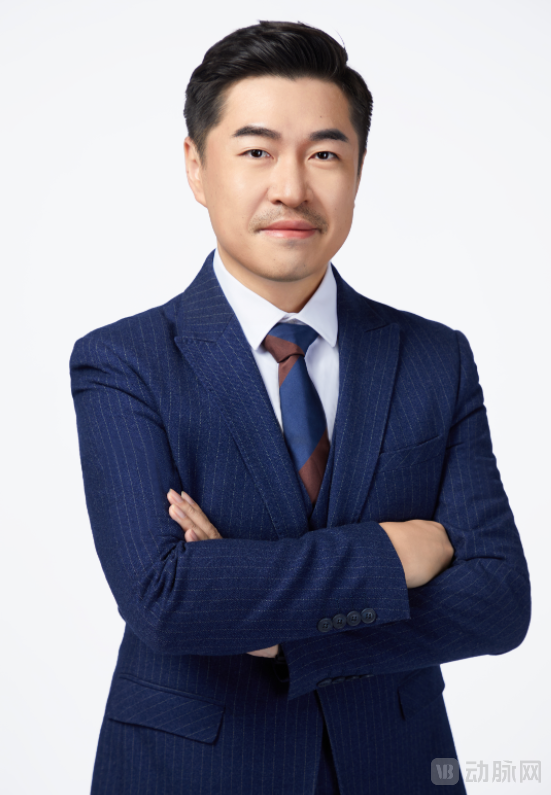
Dan Liu, Managing Partner of Pivotal bioVenture China
Q: The year 2026 has just begun and several innovative pharmaceutical companies have already received large BD deals. Is this an accidental event, or can it continue?
A:I don't think it's an isolated incident.
As early as around 2020, I predicted the major trend of China's innovative drug sector accelerating its shift from a "technology licensing importer" to a "technology licensing exporter," and the actual data has proven that judgment correct.
The increase in technology licensing output is not only reflected in the growing number of License-out deals, but also in the continuous improvement in their quality. It is precisely because of the increasing number and higher quality of BD deals that the scale of BD transactions keeps expanding. As the innovative drug industry transitions from quantitative to qualitative change, China is truly moving from a "follower" to a "major player in innovative drugs."
The initial reason that led companies to seek BD was the sluggish capital market after the pandemic, which prompted some innovative pharmaceutical firms to exchange BD for cash flow. Now, with an increasing number of innovative drugs in China achieving clinical and commercial breakthroughs, and with numerous replicable success stories in the industry, many investors have begun to believe that BD is not a short-term opportunity, thus refocusing their attention on the innovative drug market.
However, the returning capital did not hinder the progress of innovative drug BD but instead formed a driving force, further expanding the scale of transactions.
After all, BD activities nowadays are no longer the simple financing method of the past. They have formed a unique category of Chinese innovative assets, enabling China to play an increasingly important role in the global division of labor for innovative drugs.
Q: Under this change, what new strategies has Pivotal adopted?
A:Not only in 2025, but in recent years, we have maintained a strong investment focus on China's innovative pharmaceutical companies, and this commitment continues to grow. Specifically, we are highly active in cross-border transactions, which is why our presence can be seen in many of the world's top life sciences and healthcare investment projects from last year. Additionally, we place significant emphasis on supporting mergers and acquisitions (M&A) exits and cross-border licensing (License-out) for our portfolio companies, providing more reliable pathways for China’s innovative pharmaceutical enterprises.
Taking M&A exits as an example, Frost & Sullivan reported a total of seven Biotech events in 2024 where Chinese companies were acquired overseas (non-BD), three of which Pivotal BioVentures participated in. In this process, our role was to leverage cross-border ecosystems to find strategic buyers for these projects.
Moreover, we have developed differentiated strategies for projects at various stages: For innovative pharmaceutical companies in the mid-to-late clinical stage, the focus is on aligning with multinational pharmaceutical corporations to achieve a full sale by supplementing their pipelines. For early-stage technology platform companies, partial exit can be achieved by selling some assets or regional rights to industry leaders while retaining subsequent value. In terms of investment terms, we emphasize flexibility, considering investment groups and plans that allow for "multiple rounds of additional investments and sufficient resources," and design the most synergistic options based on the actual progress of the project and market conditions.
"Cross-border licensing + phased exit" is also an innovative exit model that we highly value. It should be noted that License-out is not "selling the seedlings green," but a key win-win cooperation for Chinese innovative drugs to gain international pricing and sustain R&D cash flow.
This model needs to overcome several challenges in practical operation: First, the divergence in valuation—how to reasonably discount the long-term potential earnings at the time of authorization, balancing immediate cash returns with residual value after future IPOs; second, the design of terms—specifying trigger conditions for subsequent exit, exercise price, and settlement mechanisms in the authorization agreement, involving complex wager structures; third, cross-border regulatory and tax arrangements—requiring advance planning of compliance pathways for cross-border asset transfers.
Despite numerous challenges, we have successfully assisted our portfolio companies in reaching licensing agreements with overseas pharmaceutical companies after Phase I/II clinical trials through structured tools like NewCo, while retaining residual rights to post-listing benefits. This will become one of our key exit strategies to be promoted in 2026.
In addition, in 2025, we also participated as anchor investors in the international placements of several 18A companies and are advancing several cornerstone investments.
In this process, we systematically review companies in the Hong Kong stock market's biotech sector with reasonable valuations, differentiated pipelines, and nearing commercialization inflection points, focusing on those with experienced management teams and clear overseas expansion potential for close engagement.
Overall, the role of Pivotal (Biomedical Investment) is not only to provide funding but also to serve as a long-term strategic shareholder, bridging these companies with industry resources and cross-border business development opportunities.
Q: Are there such differences in Pivotal's post-investment management strategy?
A:Pivotal adheres to a strategy of active post-investment management, particularly focusing on empowering portfolio companies in clinical operations, regulatory submissions, and BD collaborations to reduce execution risks.
In addition, we also rely on the global resources of the Pivotal Life Sciences platform to help companies connect with overseas medical innovation resources. This is the core of our cross-border strategy. Therefore, in 2026, we will further deepen the co-investment and information-sharing mechanisms with top biotech funds and corporate venture capital (CVC) departments of large pharmaceutical enterprises in North America and Europe. We aim to fully seize opportunities that align domestic and international companies and better leverage our connectivity capabilities.
To attract cross-border capital, we are currently building a bridge for "Innovation in China, Global Value Realization." This bridge serves two purposes: systematically showcasing the global competitiveness and licensing potential of our invested projects to overseas capital; and exploring the establishment of a U.S. dollar parallel fund focused on Chinese healthcare innovation or constructing SPVs at the project level to attract international long-term capital through a more flexible structure, reducing cross-border investment barriers.
Q: Over the past year, have there been any investment cases that left a deep impression on you?
A:There were many noteworthy cases in the past year, among which the investment in Prospect left a deep impression on me.
Prost is a brand-new biotech startup founded by an outstanding team from WuXi AppTec DDSU, with a decade of accumulated experience, achieving world-class results in small molecule R&D covering more than 500 targets. Regarding the team, founder Dr. Shuhui Chen is exceptionally talented, having served as Executive Vice President and Chief Scientific Officer at WuXi AppTec in the United States, demonstrating strong personal capabilities.
In the seed round stage of 2024, this project represented an underwater opportunity that had not yet been publicly introduced to the market, with only a very small number of investors in the industry being aware of it. We were able to gain early access to Prost through our long-term accumulated professional network and reputation within the industry. There was nothing particularly remarkable during the engagement process; the company was sufficiently outstanding and met our expectations, so we decisively proceeded with the investment.
Over the past year, Prost has demonstrated extremely strong R&D execution capabilities, successfully developing multiple
Several popular and heavyweight pipelines have been advanced to PCC and reached key milestones, featuring novel frameworks and outstanding performance. Both the speed and quality of progress demonstrate strong international competitiveness within the industry. Subsequently, the company secured participation from top-tier industry funds in two consecutive financing rounds, while also receiving continued increased support from many existing shareholders, including us.
In addition to providing financial support, we have been actively leveraging our ecological resource advantages to assist the company in connecting with potential BD collaboration opportunities, including multinational pharmaceutical companies, overseas biotech firms, and international capital channels. In terms of team building, we also support Prost in networking for talent, growing together with the enterprise and jointly creating value.
Overall, the investment in Prost reflects to some extent our three core competencies accumulated over a long period: the ability to capture opportunities for high-quality early-stage projects by leveraging industry networks and reputation; the capacity for long-term commitment through continuous investment based on team judgment and execution validation; and the empowerment capability to create value-added opportunities for enterprises using industry and capital ecosystem resources.
Q: In the new year, what new potential directions will Pivotal focus on?
A:Following the already validated path, Pivotal's healthcare investments for the new year will continue to focus on sectors with the core of "new quality productivity" and clear clinical value. Projects with these values will not be solely concentrated in the innovative drug field; we will consider deploying in two directions: gene therapy/editing innovative treatments and high-end medical devices.
Specifically, in terms of logic, we see that gene-editing technologies (such as CRISPR) have entered the era of precision treatment, offering fundamental solutions for genetic disorders, cancer, and more. These platform technologies are highly scalable, capable of revolutionizing the discovery and production pathways of biologics, cell therapies, and small-molecule drugs, thus holding both therapeutic breakthrough potential and cost-control advantages.
It is more challenging to evaluate such projects than traditional industries. Currently, our core focus is on the originality and patent barriers of the underlying technologies of innovative enterprises, as well as their ability to resolve key bottlenecks such as the efficiency and safety of in vivo delivery systems.
Of course, the scalability and cost control of CMC (process development and manufacturing) are also key indicators we focus on. These are critical to commercialization. While promoting industry development, we aim to ensure the sustainability of our own growth.
The 10th Future Healthcare 100 Summit 2026 will kick off in Shanghai from May 19th to 21st. This year’s conference focuses on the core of China's innovative healthcare assets, gathering over 8,000 industry and capital elites to explore the entire industrial ecosystem in fields such as digital health, innovative medical devices, and novel drugs. The event aims to activate global value through diverse connections. Meanwhile, the 2026 Future Healthcare 100 evaluation has been fully upgraded, with application channels now open. We sincerely invite you to join the list, attend the grand event, and seize opportunities in healthcare innovation!
As the core circle of friends for the conference and list selection, Pivotal will also provide full support for this grand event.

Scan the code to register for the "2026 Future Healthcare 100 Strong" conference and enjoy early bird discounts.

Scan the code to enter the "2026 Future Healthcare 100 Strong" selection application channel