

Neuralink's Blindsight Implant Enables Monkeys to 'See' Non-Existent Objects, Paving Way for Human Vision Restoration

Neuralink
Brain-Computer Interface System Developer

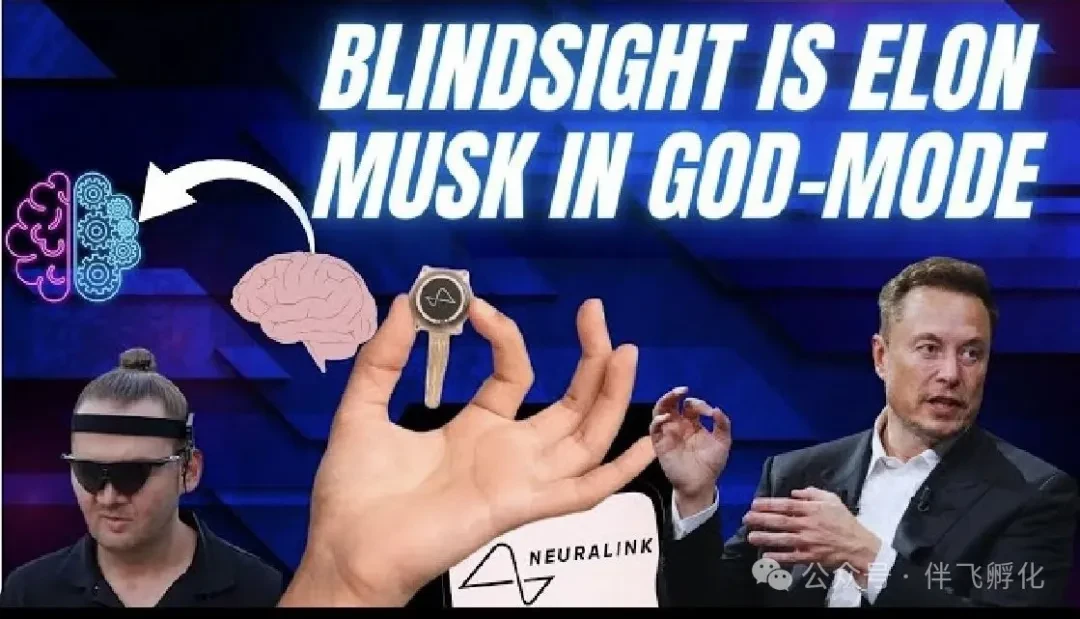
June 14 News: Bloomberg published an article yesterday (June 13) stating that Neuralink, the company under Elon Musk, successfully made a monkey "see" things that do not actually exist through brain implant technology.
Neuralink engineer Joseph O’Doherty stated at a conference on Friday that the experiment induced monkeys to perceive visual images of non-existent objects by stimulating the areas of their brains responsible for controlling vision.
In at least two-thirds of the experiments, the monkeys’ eyes indeed oriented toward the direction the researchers attempted to “make them see.”
'%20fill='%23FFFFFF'%3E%3Crect%20x='249'%20y='126'%20width='1'%20height='1'%3E%3C/rect%3E%3C/g%3E%3C/g%3E%3C/svg%3E)
Elon Musk has also stated, “Neuralink has successfully tested Blindsight in monkeys. Blindsight has been functioning well, and these monkeys have remained healthy over the past few years.”
O’Doherty revealed that Neuralink plans to pair the Blindsight system with a pair of glasses in the future to enhance the chip’s functionality.
He added,The visual cortex in a monkey's brain is closer to the surface of the brain than that in humans, making it more accessible.; In humans, Neuralink plans to use its surgical robot to implant chips into deeper regions of the brain.
Schematic Diagram Released by the Illinois Institute of Technology Experimental Team
O'Doherty revealed,Neuralink Plans to Pair Glasses with the Blindsight System to Enhance Chip FunctionalityHe added that the visual cortex in monkey brains is closer to the brain surface than in humans, making it more accessible; in humans, Neuralink plans to use its surgical robot to implant the chip into deeper regions of the brain.
Source: Cailianshe, Banfei Incubation
For academic sharing only. If there is any infringement, please leave a message, and it will be deleted immediately!
Join the Community
Welcome to the Brain-Computer Interface Community Group Chat,
Exploring Topics in the Field of Brain-Computer Interfaces: Real-Time Tracking of Cutting-Edge Developments
Join the WeChat group:
Add WeChat: RoseBCI [Note: Name + Industry/Profession].
Join QQ Group: 913607986
Call for Papers
1. Submissions are welcome. For submission inquiries, please contact us via WeChat: RoseBCI
Click to Submit:Submission Guidelines for Academic News in the Brain-Computer Interface Community
2. To join the community as a part-time creator, please contact us on WeChat: RoseBCI
One-Click Triple Action: "Share," "Like," and "Mark as Read"
Stay Ahead of Every Breakthrough in Brain-Computer Interface Technology