

China's Breakthrough in Invasive Brain-Computer Interfaces: Closing the Gap with the U.S.

Neuralink
Brain-Computer Interface System Developer
US and China Clash Again in the Brain-Computer Interface Arena!
On June 14, the Chinese Academy of Sciences announced on its official website that institutions including the Center for Excellence in Brain Science and Intelligence Technology of the Chinese Academy of Sciences had successfully conductedChina’s First Prospective Clinical Trial of Invasive Brain-Computer Interface, markingChinaTo become the second in the world to enterCountries in the Clinical Trial Phase of Invasive Brain-Computer Interfaces。
In January 2024, Neuralink, the star brain-computer interface (BCI) company under Elon Musk, successfully performed the world’s first human brain chip implantation surgery. The recent progress made by the Chinese Academy of Sciences also signifies that China is narrowing the gap with international advanced levels in the field of brain-computer interfaces.
Interestingly, just two days prior on June 12, Neuralink filed documents with the U.S. Securities and Exchange Commission (SEC), proposing to raise up to $649 million through an equity offering to advance clinical trials of its invasive brain-computer interface product, The Link, and to support the development of subsequent products.
According to VCBeat’s compilation, the brain-computer interface (BCI) field has seen frequent advancements over the past six months, with China achieving consecutive milestone breakthroughs in clinical applications. The competitive landscape between China and the United States in BCI technology has become increasingly pronounced.
This clinical trial represents the first major achievement of the Shanghai Key Laboratory for Clinical Trials and Translation of Brain-Computer Interfaces, which was established in December 2024. The study was conducted collaboratively by a team from the Center for Excellence in Brain Science and Intelligence Technology of the Chinese Academy of Sciences, Huashan Hospital Affiliated to Fudan University, and related enterprise partners.
Prior to human clinical trials, the team successfully implanted an invasive brain-computer interface (BCI) system into the hand and arm functional areas of the motor cortex in macaques during previous animal experiments. After training, the macaques achieved control of computer cursor movement solely through neural activity and were able to perform brain-controlled typing under target guidance. Subsequently, the research team safely explanted the device and performed a second implantation of a new device at the same cranial burr hole site.
Throughout the entire animal trial, from initial implantation to the explantation of the original device and subsequent implantation of a new one, the system operated continuously and stably, with no instances of infection or electrode failure. This lays the foundation for human clinical trials and validates the feasibility of upgrading the implant via a second surgical procedure.
In March this year, the study entered the phase of human clinical trials. A male patient who had undergone quadruple amputation due to a high-voltage electrical accident successfully played games on a computer via a brain-computer interface (BCI) after only two to three weeks of training following the implantation of the BCI device. His operational performance was comparable to that of able-bodied individuals using a computer touchpad.
Since the brain-computer interface device was implanted in March this year, the system has been operating stably, with no cases of infection or electrode failure.
Next, the research team will attempt to enable subjects to control robotic arms via a brain-computer interface (BCI), and will further explore the control of complex physical peripherals such as robotic dogs and embodied AI robots, thereby expanding the functional boundaries of daily life for these individuals. If successful, this invasive BCI system holds the potential to significantly improve the quality of life for millions of patients with complete spinal cord injury, bilateral upper-limb amputation, and amyotrophic lateral sclerosis (ALS).
Excitingly, the brain-computer interface used in this trial has surged ahead, breaking global records on several metrics.
First isThe World's Smallest and Most Flexible Neural Electrode: Its cross-sectional area is only 1/5 to 1/7 that of the electrodes used by Neuralink,The flexibility is over 100 times that of Neuralink electrodes.— Its softness is comparable only to intercellular forces. After implantation, brain cells are virtually unaware of the presence of a foreign body nearby, thereby minimizing damage to brain tissue to the greatest extent possible.
Secondly, building on globally leading flexible electrodes, the integrated implant has a diameter of only 26 mm and a thickness of less than 6 mm, comparable in size to a coin and half the dimensions of Neuralink’s implant.The World's Smallest Invasive Brain-Computer Interface Implant。
Therefore, this brain-computer interface only requires creating a coin-sized recess in the skull above the motor cortex to embed the implant, and then drilling a puncture hole of approximately 5 mm in the recess to allow electrode insertion into the cerebral cortex. This approach avoids full-thickness penetration of the skull, effectively reducing perioperative risks and significantly shortening the postoperative recovery period.
Furthermore, the system achieves dynamic optimization of the neural decoder through proprietary technology, completing the entire process of neural signal feature extraction, motor intention decoding, and control command generation within a 10-millisecond cycle. This capability enables subjects to perform highly demanding tasks, such as playing racing games.
Prior to this, it was widely believed that China’s brain-computer interface (BCI) technology lagged behind the global advanced level by 7–8 years; however, following the successive launch of clinical trials in China in 2024, this gap is now considered to have narrowed significantly to within 3 years.This trial took place approximately a year and a half after Neuralink’s first-ever human brain chip implantation surgery in January 2024, further narrowing the gap.。
In the field of semi-invasive brain-computer interfaces, China is also catching up.
In March of that year, the Beijing Institute for Brain Disorders and Brain-like Intelligence announced that the semi-invasive brain-computer interface “Beinao No. 1” had completed its first batch of human implants, totaling three cases. Peking University First Hospital and Beijing Tiantan Hospital, Capital Medical University, successivelyCompleted the Human Implantation of the World’s First Batch of Flexible, High-Throughput, Semi-Invasive, Fully Implanted Wireless Brain-Computer Interface Systems; Xuanwu Hospital of Capital Medical University completedWorld’s First Wireless Implantable Chinese-Language Brain-Computer Interface Helps ALS Patients with Aphasia Regain Communication Abilities。
According to reports, “Beinao No. 1” integrates China’s independently developed flexible high-density cortical electrodes, whileThe acquired signal throughput reaches 128 channels, setting a new global record for similar products.. In this trial, the proportion of effective channels of the device exceeded 98%.
“Beinao No. 1” has also conquered three key core technologies: first, a highly integrated miniature host responsible for processing received high-throughput, low-power signals; second, a new generation of low-power, high-bandwidth wireless short-range communication technology; and third, decoding of fine motor movements and high-accuracy Chinese language, achieving real-time accuracy and meeting the requirements of multiple scenarios.
It is particularly worth mentioning that “Beinao No. 1” is alsoThe World’s First Wireless, Fully Implanted Brain-Computer Interface System to Achieve Language Decoding for Aphasia Patients. As amyotrophic lateral sclerosis (ALS) progressed, the subject developed profound dysarthria, severely limiting verbal communication with the outside world.
Following implantation, the 67-year-old participant achieved a real-time decoding accuracy of 34% for 62 commonly used characters after just three hours of training. After one week of training, the participant’s real-time decoding accuracy reached 52%, enabling the decoding of phrases such as “I want to drink water,” “I want to eat,” and “I am in a good mood today; I want to take a walk with my family.”
With real-time optimization through adaptive error-correction algorithms based on large language models, subjects are expected to demonstrate significant potential for language recovery. This indicates that brain-computer interface (BCI) technology holds promise for providing novel, long-term, and stable speech rehabilitation solutions for a broader population of patients with speech disorders, thereby further expanding the boundaries of BCI applications in the diagnosis and treatment of neurological diseases.
What is even more anticipated is that Huashan Hospital and Xuanwu Hospital, two hospitals at the forefront of the brain-computer interface field in China, announced their collaboration at the end of May.Conducting the World’s First Clinical Cohort Study on Brain-Computer Interfaces, and patient enrollment has been simultaneously initiated in Beijing and Shanghai.
This clinical trial will enroll patients with spinal cord injury, aiming to complete 30 to 50 implantation surgeries across 10 medical centers in China by the end of 2025, in order to systematically validate the efficacy, safety, and long-term stability of implanted brain-computer interface technology.
Guided by the strategic framework of “Brain Science and Brain-Inspired Research,” known as the “China Brain Project,” the two major brain science centers in Beijing and Shanghai have emerged as pioneers in brain–computer interface (BCI) research in China. Currently, most significant research achievements in the BCI field originate from these two centers. However, with the deepening of BCI research in recent years, other regions across China are also beginning to gain prominence.
Tongji Hospital Affiliated to Huazhong University of Science and Technology launched in early JuneThe First Brain-Computer Interface (BCI) Outpatient Clinic and BCI Research Ward in Central China, and is open nationwide, providing patients with brain-computer interface (BCI) technology assessment and treatment consultation. After undergoing multidimensional screening, patients are expected to be prioritized for inclusion in clinical trial cohorts to receive cutting-edge BCI therapy.
At almost the same time,The First Brain-Computer Interface Clinical Research Ward in South ChinaIt was also unveiled and put into operation at Zhujiang Hospital of Southern Medical University.
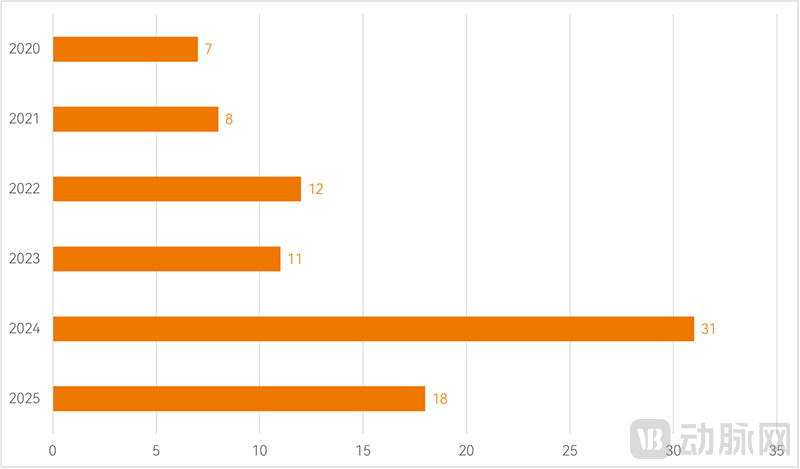
Incomplete Statistics on the Number of Clinical Trials for Brain-Computer Interfaces in China in Recent Years (2025 Data as of June 17)
According to incomplete statistics, in recent yearsChina’s Brain-Computer Interface Clinical Trials Show a Clear Upward Trend. Notably, in 2024, 31 brain-computer interface (BCI)-related clinical trials were registered, nearly triple the number in 2023. The rapid growth trend continued in 2025, with 18 BCI clinical trials recorded in less than six months; the full-year total is expected to surpass the 2024 level, setting a new historical record.
It is not only clinical progress that has been made; in areas such as reimbursement, China has also provided substantial support in recent times.
In mid-March, the National Healthcare Security Administration released the “Guidelines for Establishing Pricing Items for Neurological Medical Services (Trial),” which added new pricing items such as “Fee for Implantation of Invasive Brain-Computer Interfaces,” “Fee for Removal of Invasive Brain-Computer Interfaces,” and “Fee for Fitting of Non-Invasive Brain-Computer Interfaces.”
In late March, the Hubei Provincial Healthcare Security Administration swiftly aligned with the “Guidelines for Project Establishment of Pricing Items for Nervous System Medical Services (Trial)” and releasedChina's First Pricing for Brain-Computer Interface Medical Services, sending a clear signal of industry support.
Furthermore, the “Wuhan Healthcare Security Administration–Tongji Hospital Jointly Established Brain-Computer Interface Health Insurance Data Research Center” was officially unveiled and established in June at Tongji Hospital Affiliated to Huazhong University of Science and Technology. AsChina's First Brain-Computer Interface Medical Insurance Data Research Center, it will undertake the task of exploring the deep integration, analysis, and application of massive, high-dimensional neural functional and clinical data generated by brain-computer interface technology in clinical applications with health insurance data.
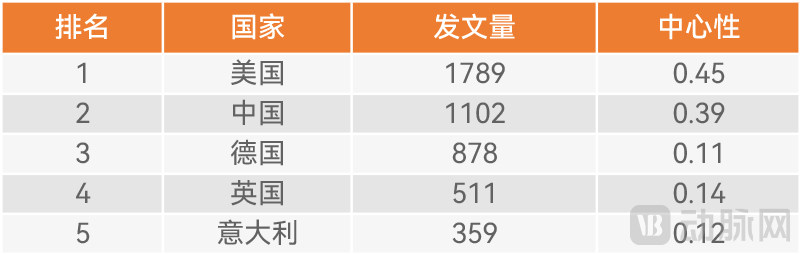
Countries with the Most Research Papers in the Medical Application of Brain-Computer Interfaces from 2013 to 2022 (Source: National Library of Medicine, Zheshang Securities Institute)
In the field of academic research on brain-computer interfaces, according to incomplete statistics,China ranks second globally in the number of academic papers on medical applications of brain-computer interfaces, trailing only the United States, and also ranks second worldwide in research centrality, again behind the United States.. The two countries have gradually widened the gap with other countries and regions around the world.
These developments have also gradually invigorated investment and financing in the brain-computer interface (BCI) sector in China. According to data from VCBeat, there were seven financing events in China’s BCI sector in less than half of 2025, matching the total number for the entire year of 2024. Notably, a high-value financing round of up to RMB 350 million emerged—in February, a domestic BCI companyJieti Medical completed a 350 million yuan Series B financing round, marking the largest funding deal in the history of China’s invasive brain-computer interface industry.。
However, at least in terms of investment and financing, China’s brain-computer interface sector still lags behind that of the United States. Not long ago,Neuralink has applied to raise $649 million in a new stock issuance, pushing its valuation above $9 billion. To date, Neuralink has raised over $1 billion in cumulative funding.
Currently, Neuralink has implanted its brain-computer interface in a third patient and received approval to launch a study in the United States on the N1 implant for controlling robotic arms, while also helping patients with amyotrophic lateral sclerosis (ALS) regain their ability to speak. In terms of individual corporate progress, it is leading globally.
Precision Neuroscience, its main competitor, completed a $102 million Series C financing round at the end of last year. ItsLayer 7’s high-resolution cortical electrode array for brain-computer interfaces received FDA approval in April., can be implanted into the patient's brain as an implant for up to 30 days.
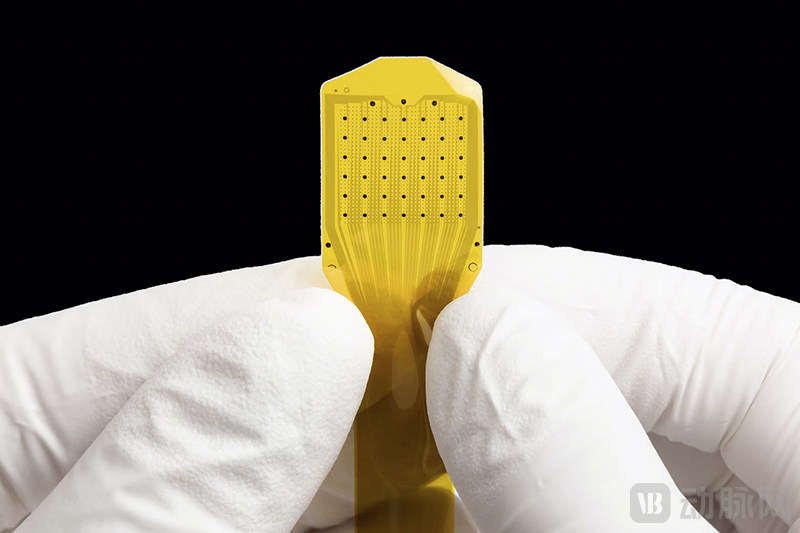
Enlarged demonstration of the electrode array used in the Layer 7 brain-computer interface (Image from the official website of Precision Neuroscience)
This electrode array consists of 1,024 electrodes with diameters ranging from 50 to 380 micrometers. The array is only one-fifth the thickness of a human hair, and requires an incision of less than 1 mm in the skull for insertion and removal.
This is alsoThe First System in Its Class to Receive Regulatory Approval, marking a major milestone in the field of brain-computer interfaces.
Synchron, another brain-computer interface (BCI) company renowned for its unique endovascular electrode arrays, has recently been actively engaging in cross-industry collaborations. Last year, it partnered with Apple to integrate BCI technology into Apple devices; this year, it further collaborated with NVIDIA to release the development roadmap for Chiral, a cognitive AI model.
Globally, competition in the brain-computer interface (BCI) sector is intensifying. With China’s recent rapid advancements in BCI technology, the field is beginning to take shape as a “US-China rivalry,” yet we must still accelerate our efforts.
As a cutting-edge technology under intense global scrutiny, brain-computer interfaces (BCIs) hold significant strategic importance, and global competition in this field is becoming increasingly fierce. With recent breakthroughs achieved at “China speed” in China’s BCI sector, an initial landscape of “US-China rivalry” in the BCI domain is taking shape.
Of course, brain-computer interfaces (BCIs) still present many variables and possibilities. Globally, no team has yet claimed to have reached the finish line in this race. China’s BCI industry must accelerate its efforts and sustain its momentum. VCBeat will continue to closely monitor developments in this field, confident that these aspirations will ultimately become reality.
References:
Beijing Youth Daily: “BeiNao-1 Completes First Batch of Fully Implantable Wireless Human Implants”
Shen Chunlei, China Science Daily: “Three Surgeries Completed in Less Than a Month—‘Beijing Brain No. 1’ Moves from the Lab to the Clinic”