

Dialogue with Tang Dajie, Chairman of Qinzhi Capital: 2026 Will Witness a Surge in Pipeline Purchases by Major Pharmaceutical Companies in China

Akeso
Innovative Antibody Drug Developer

Asieris
Innovative Drug Developer
In 2015, when Tang Dajie founded Qinzhi Capital, China's innovative drug industry was just getting started. Over the past decade, he has witnessed the frenzy of capital emerging from nothing and also experienced the winter following the burst of valuation bubbles.
In this highly volatile market, QMZ Capital has maintained the stability of its investment strategy while demonstrating flexibility in adapting to market changes. In 2024, when the biopharmaceutical industry experienced a capital winter, QMZ Capital made 18 investments against the trend. In 2025, as the biopharmaceutical sector in Hong Kong's stock market witnessed a recovery in IPOs, Tang Dajie reminded,The thaw in the secondary market has indeed brought about some improvement in the financing activity of the primary market. However, as investors in the primary market, we must remain rational, adhere to long-term principles, return to industry trends, originate from the industry, and serve the industry.
Where to Invest in 2026? What’s the Next Hotspot in the Biomedical Market? Check Out VCBeat's Dialogue with Tang Dajie, Chairman of Qinzhi Capital.
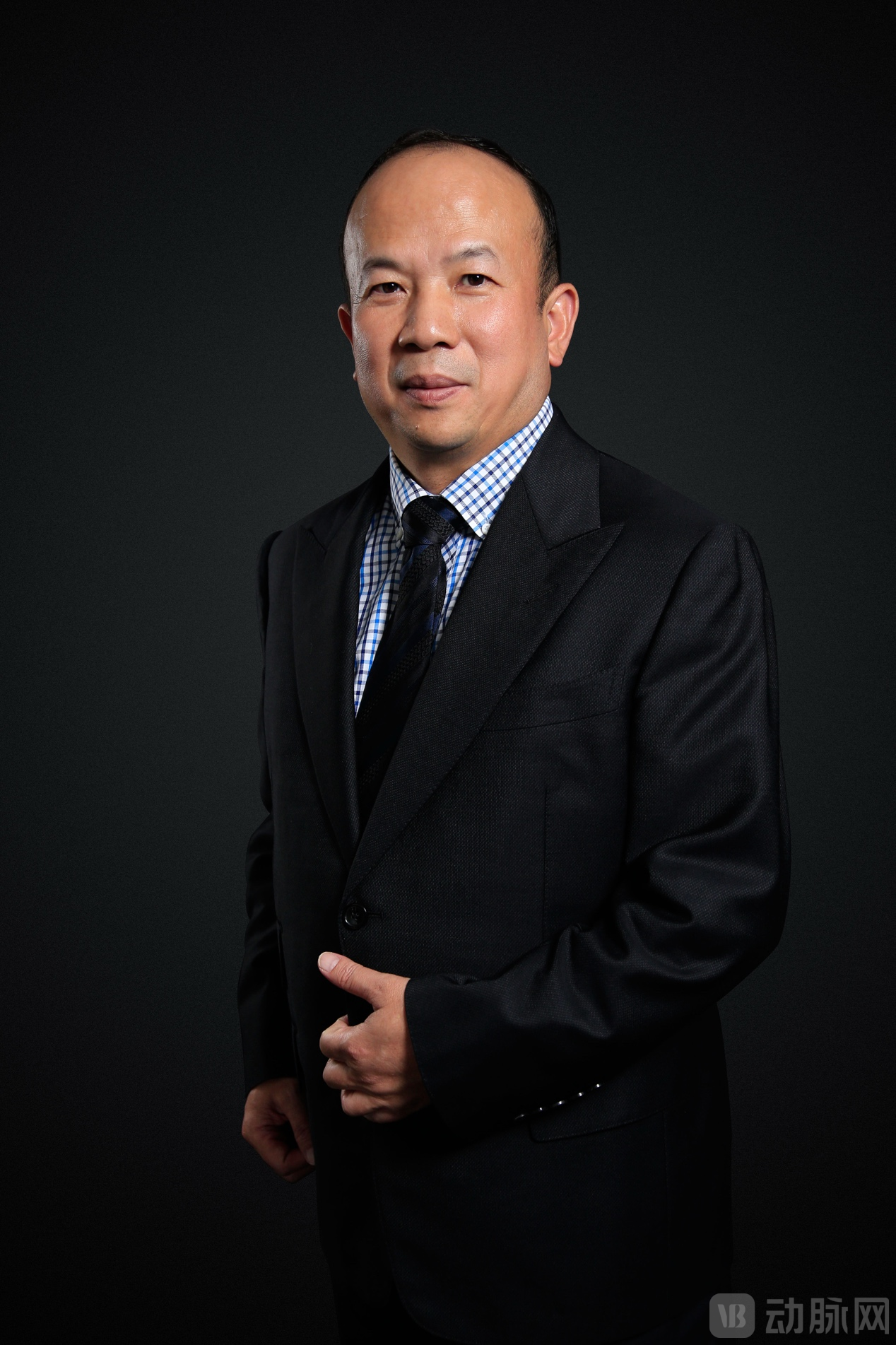
Tang Dajie, Master of Xiamen University, Doctor of Industrial Economics from Jinan University, Chief Investment Advisor of the National High-Performance Medical Device Innovation Center.
Former Vice President of Shenzhen Capital Group, President of Shenzhen High-tech Investment Group, Vice President of Shenzhen Airport Group, Director of Southern Fund, and Manager of the Investment Department at E Fund, with over 20 years of experience in investment and financing, mergers and acquisitions, industrial integration, and enterprise management.
Awarded "Best Investor in the Healthcare Sector for 2024" in 2024. In 2022 and 2023, China Venture Capital published its annual China Industry Investment Ranking, where he was consecutively recognized as the "Best Figure in China's Healthcare Investment Field." In March 2020, elected as a "2019 Shenzhen Emerging Venture Capital Leader." Part-time professor at multiple universities, specially appointed mentor for the Financial MBA programs at Xiamen University and Harbin Institute of Technology (Shenzhen). Authored the book "Research on the Behavior and Market Impact of China's Securities Investment Funds" and published over ten papers in academic journals such as Economic Research.
Has numerous successful investment cases, such as Akeso (09926.HK), Asieris Pharmaceuticals (688176.SH), NorthX Biologics (688712.SH), Dongyangang Pharmaceutical (06887.HK), Enovir Therapeutics, Philochem Bio, Haihe Biopharma, Jiatree Healthcare, Hertz Life Sciences, StarRing Technology (688031.SH), ZMT (002174.SZ), and AcorSemiconductor (002077.SZ), etc.
1There is a time lag between the heated secondary market and the recovery of the primary market.
VCBeat:Has the 2025 Hong Kong stock market "thaw" truly improved the exit environment? How to view the impact of this wave of IPO fever on market valuation?
Tang Dajie:The secondary market broke the ice in 2025, but the impact was not as strongly felt in the primary market, where financing activity and other indicators were gradually improving and recovering. The capital injection objectively promoted the primary market to refocus on the biopharmaceutical track and reevaluate its value.The secondary market capitalization is the largest value-added point and the best exit channel for cashing out.A good and active secondary market can attract more social capital to participate in the primary market, and even earlier-stage equity investments.
Looking back, 2015, the year Qinzhi Capital was founded, was the first year of China's innovative drug industry.We have invested in some good targets. But many companies that are now "great" were once considered as “three-nothing companies” in the traditional secondary market perspective — no revenue, no profit, and no product. This is actually the case for the biopharmaceutical sector.The particularity of the Tao.
This round of IPO fever is different from the last one in terms of correcting the valuation system.The first historic breakthrough in Hong Kong stocks occurred in 2018 and 2019, when a wave of domestic innovative pharmaceutical companies went public. The secondary market experienced a surge, but with very limited comparable samples, which directly skewed the valuations in the primary market. Pre-IPO valuations reached as high as tens of billions, causing many companies to be "artificially accelerated." As a result, post-IPO stock prices fell back to their original levels or even lower, and the inflated value bubble ultimately harmed the industry.
But after seven or eight years of development, China's innovative drug industryHas entered a new stage,The market's assessment of the target's competitiveness is now more comprehensive and evidence-based.In particular, China's manufacturing capabilities with Chinese characteristics and advantages have been verified globally. The financial strength of overseas buyers and their perception of cutting-edge products have helped us identify a group of outstanding targets. By 2025, the transaction volume is expected to reach 135.6 billion US dollars, accounting for 49% of global BD, surpassing last year's export value of China's new energy vehicles.
From this perspective, with the support of national policies and further capital injection, it can be expected thatIn the future3Year、5Years or even longer cyclesInsideThe International Competitiveness of China's Innovative Pharmaceutical EnterprisesWillContinuousIt will become apparent, and the transformation of technology into value will also accelerate. At the same time, more Chinese pharmaceutical companies will grow to a market capitalization of hundreds of billions, and within 5 to 10 years, multinational pharmaceutical enterprises capable of competing with MNCs will emerge.Therefore, Qinzhi Capital still positions the next 5 to 20 years as investing in biopharmaceuticals. We believe that we have the opportunity to share in the development of this industry.
VCBeat:Will the criteria for finding projects in the primary market change amid the heated IPO environment?
Tang Dajie:In 2024, Qinzhi invested in 18 projects, and in 2025, it invested in 14 projects. In the biopharmaceutical financing winter, it is considered a relatively active institution.The secondary market requires following the trend to select stocks and timing, and paying attention to market sentiment. However, the primary market is long-term, essentially returning to the development of industry trends, and is counter-cyclical layout.By the time you see a hotspot and jump in, the cost has already skyrocketed. The best safety margin in the primary market is price, and a good price comes from discovering value earlier than others—getting ahead of the game when the industry is still in its infancy and the market hasn't yet realized it. This is true value discovery.
In addition to discovering value, we also need to contribute to the growth of enterprises, which cannot be solved by simply providing money. Therefore, we advocate for early and small investments, coming from the industry and serving the industry, "Discovering Value, Accompanying Growth".The true value creation for the development of a startup and the cultivation of an industry must be completed in the early stages.So Qinzhi has always been very concerned about whether the first investment in 2 to 3 out of 10 projects comes from us.
To make the first investment, we need to go to the source to find projects. For example, in the biopharmaceutical field, we look for original research institutions and overseas-returning scientists; for high-end equipment, we seek technology spillover and talent spillover from large platforms and big enterprises, as well as entrepreneurs with mature industrial experience and technical barriers. Guided by the concept of "investment returning to the real economy, capital serving the industry," we have established a number of industry-focused funds by connecting with resources from the National Innovation Center for High-Performance Medical Devices, the Institute of Synthetic Biology at the Shenzhen Institutes of Advanced Technology, Chinese Academy of Sciences, and the Shenzhen Jiyin Biomedical Transformation Research Institute.
2Transformation and upgrading gradually become a necessity, leading domestic pharmaceutical giants to accelerate asset purchases
VCBeat:What New Trends Will Emerge in Innovative Drug BD Amid the Heat of Secondary and Primary Markets?
Tang Dajie:We have noticed that, in previous years, large domestic pharmaceutical companies participated in BD less frequently.Mainly refers to traditional generic drug companies and pharmaceutical distribution channel enterprises.In terms of assets, they have a relatively traditional product portfolio and strong pharmaceutical distribution capabilities. However, if they do not undergo transformation or make strategic preparations at this point in time, they may lose their competitive edge in the core markets of the next 5 to 10 years.
Since last year, their sense of urgency has significantly increased. Driven by external environmental pressures and strategic considerations, transformation has become an inevitable path. Many pharmaceutical companies have approached us, especially some listed company brands, hoping to expand into new pipelines and fields. The demand for collaboration or pipeline sourcing has notably risen.Against this backdrop, BD and M&A among Chinese pharmaceutical companiesExpected in 2026Will graduallyIncrease。
VCBeat:What are the current difficulties faced by this type of BD and M&A?What role does Qinzhi Capital play in this?
Tang Dajie:First, many traditional pharmaceutical companies lack understanding of the mergers and acquisitions of biologics/innovative drugs, requiring a transformation in mindset.For example, a medium-sized traditional pharmaceutical company with a market value of approximately 10 billion to 20 billion yuan may initially hope to acquire an innovative pharmaceutical company, requiringThey have products, market value, and profits as well. I often tell them that although this type of company is not listed, its valuation may not be much lower than that of a listed company.
In summary,Challenges Faced by Traditional Pharmaceutical EnterprisesTransformationAbsoluteNot Simply Capital Buying Projects,M&A of Innovative DrugsAlsoNoSimpleBuy a company、Install a startup company。In fact, Biotechs that have entered the clinical stage, under the support of Hong Kong's 18A or the fifth set of standards of the STAR Market, already possess an independent IPO path, and their willingness for mergers and acquisitions is generally low.
Second,Traditional pharmaceutical companies and scientist-led Biotechs will coexistDifficult to mesh, and then a series of problems arise. With more experience of this kind, we would offer some suggestions: first, position the field for transformation, penetration, and extension; then, carry out some pipeline BD in this field, starting with small pipeline collaborations.For example, partnering with China's R&D-based Biotech companies to secure...Exclusive rights in China, with greater potential value overseasLeave Biotech to Go Overseas。
Third, we suggest that industrial capital participate in the co-construction fund for investment. Leverage their own strengths (channels, production capacity) to seek potential cooperation targets through fund investments.
VCBeat:Do Traditional Pharmaceutical Companies Need to Build Their Own Innovative Drug Teams or Supplement Clinical Platforms for M&A or BD?
Tang Dajie: No, M&A or BDMeans youYesWith the help ofBiotechR&D Platform and Talent。The transformation of traditional pharmaceutical companies is not a new topic. Over the past decade, many large pharmaceutical companies have invested heavily to build their own systems and R&D teams, and to recruit excellent scientists, but ultimately failed. However, in the biopharmaceutical industry over the past ten years, we have seen many companies grow from individual startups to companies worth billions, hundreds of millions, or even tens of billions, such as Akeso that I previously invested in.
A BiotechBeing able to succeed is very important.The reason is that itsR&D PlatformAutonomy,Openness——Talent flow, capital access, and technology sharing are all indispensable.。At the same time, the underlying architecture of Biotech must maximize the interests of scientists (not just money or equity), which is a very powerful driving force.This is also the core reason for the low success rate of developing in isolation within a closed system.
Large pharmaceutical companies today can leverage the openness of such R&D platforms to unleash their potential through collaboration. In the process of absorbing and accumulating experience, they can reverse-leverage these resources to gradually transform or restructure their own R&D systems, which is a more pragmatic approach.
VCBeat:For traditional pharmaceutical companies, is BD or M&A a more cost-effective approach compared to building a team from scratch?
Tang Dajie:It's not just a matter of money. Conversely, can relying solely on well-equipped laboratory platforms retain scientists and lead to the development of new drugs? This is not certain. The value of a corporate platform lies in this: upon success, scientists gain not only equity or book profits, but long-term returns through deep alignment.
R&D and investment need to return to humanity — the key is to make scientists the "main beneficiaries.", not necessarily holding the largest number of shares, but definitely reaping the greatest benefits and forming the deepest ties. By collaborating on the R&D of certain pipelines, gradually becoming more involved, the scientists responsible for those pipelines will slowly gravitate towards your platform. The establishment of such a progressive R&D system may prove to be more sustainable than an aggressive transformation.
VCBeat:What are the differences in strategic resources and value that scientist entrepreneurs and Biotech companies can obtain when collaborating with local pharmaceutical leaders and MNCs?
Tang Dajie:Different. Although the volume of overseas BD has been large in the past two years, the overall model is quietly changing.PreviouslyIs thatOverseas rights sold to MNC,DifferenceIt's just about paying a little more for the down payment.、Later-stage SalesIncrease the commission ratio a bit.,To a certain extent, BD is a means of overseas financing.。Today, innovative pharmaceutical companies have deeper overseas cooperation and more say (not just bargaining power), while accumulating experience for future internationalization.A typical example is Akeso, whose 2015 deal with Merck was purely a pipeline export; in 2022, its collaboration with Summit not only set a new record for the amount of overseas transactions, but Xia Yu later also became a member of Summit's board of directors.
For instance, in ChinaLarge pharmaceutical leader, established through the Newco pathwayOverseas joint ventures are not only about product exports but also potentially serve as a platform to learn international R&D experience, familiarize with European and American regulatory systems, and even further establish overseas market teams and regulatory channels. For instance, Hangzhou Weijian Pharmaceutical, in which we invested, has strengths in pharmaceutical distribution and overseas pharmaceutical agency. Last year, it acquired the Chinese pharmaceutical headquarters of Japan's Kyowa Kirin.Based on this acquisition, they have established their own R&D and production system, thereby obtaining the "entry ticket" to enter the Japanese pharmaceutical market.
BD Model Will Continue to Evolve, But the Core Trend Remains Unchanged——2026Year or the next few years,BDWill become a relatively reasonable large pharmaceutical company grown domestically in China.、MoreConvenientInternationalizationChannel,Accelerate ChinaBiotech Advances in International Progress,Accelerate the growth speed towards a 100 billion market value.
3Medical products with consumer attributes will open up the market more quickly.
VCBeat:How does AI impact your life, work, and more? How does Qinzhi Capital invest in AI + healthcare?
Tang Dajie:I used to be a programmer, working on computer programming and information systems in my early years. After investing in biopharmaceuticals, we still embrace new technologies actively. From daily office work to AI investment strategies, everything needs to be rethought and repositioned. From an organizational perspective, Qinzhi Capital has subscribed to the commercial version of ChatGPT, and requires every investment manager to use it.
In terms of investment, we should maintain a rational understanding of the role AI can play in healthcare, pharmaceuticals, and different stages of development within the sector.Current AI-assisted pharmaceuticals have made relatively rapid progress in the early discovery of drug molecules and preclinical stages, improving efficiency, reducing costs, and shortening timeframes to address the core pain point of innovative drugs taking “ten years and a billion US dollars.” The application of AI in clinical stages and production supply chains will face some regulatory constraints, but overall, the logic of improving efficiency remains unchanged. Moving further downstream, large models targeting end consumers (C-end) are increasingly demonstrating their value in promoting medical equity and accessibility.
Qinzhi Capital mainly focuses on AI solutions in vertical fields, including projects that address clinical pain points, have specific application scenarios, and bring iterative improvements to tool applications. In the recently emphasized field of brain science, we are looking at how brain-computer interfaces can be iterated through AI and data information applications after resolving underlying technical issues.In particular, we cannot ignore the development of cutting-edge technologies or major trends due to the existence of commercial or regulatory issues.
VCBeat:What are the hot细分领域 and emerging tracks in 2026?
Tang Dajie:Some hot topics are eternal. For exampleTumor, with more than 4 million new patients annually in China, treatment methods are constantly evolving, and indications continue to expand. This clinical necessity ensures that it will always be a major track. The same applies to autoimmune diseases and cardiovascular conditions, which are also fields with large populations and high demand.
At the same time, with the improvement of public income levels and quality of life, people's definition of health is also changing - in the past, they only focused on life and death, but now they pay more attention to the quality of life. Particularly noteworthy isAutoimmunity and PainFields. Issues like dermatological conditions, obesity, and chronic pain, which were once manageable through endurance, have now become essential markets. The global weight-loss drug boom serves as the best example, with domestically produced obesity treatment drugs tailored for the Chinese population also being strategically developed.
We also look at the relationship between diseases and stages of social development. Nowadays, many people are choosing not to get married or have children, while the pet economy is booming. Qinzhi is one of the few institutions in the market that has established special funds for pet medicine and pet vaccines, with an early layout and good results. Behind this trend is actually...The Logic of Consumer Healthcare —— Biopharmaceuticals inherently have technical barriers, and when combined with consumer attributes, the path to monetization becomes clearer.For example, we initially invested in exosomes as drug carriers, but later discovered that they are rich in active substances and have broad prospects in the field of medical aesthetics as new materials. Consequently, we also developed the medical aesthetics sector.
In terms of cutting-edge technology, Qinzhi focuses onBrain Science and Brain-Computer Interface, AI-Assisted Drug Development and AI Healthcare, AI + High-End Medical Devices, Radiopharmaceuticals, BNCT Boron Neutron Capture Therapy, etc. Overall, Qinzhi pays close attention to new technologies that involve multidisciplinary integration and cross-disciplinary applications in the biopharmaceutical field.
The 10th Future Healthcare 100 Summit 2026 will kick off in Shanghai from May 19th to 21st. This year’s conference focuses on the core of China's innovative healthcare assets, gathering over 8,000 industry and capital elites to explore the entire ecosystem of digital healthcare, innovative medical devices, and novel drugs. The event aims to activate global value through diverse connections. Meanwhile, the 2026 Future Healthcare 100 evaluation has been fully upgraded, with submission channels now open. We sincerely invite you to join the ranking, attend the grand event, and explore opportunities for healthcare innovation together!
As the core circle of friends for the conference and list selection, Qinzhi Capital will also provide full support for this grand event.

Scan the code to register for the "2026 Future Healthcare and Pharmaceutical 100 Strong" Conference,Enjoy Early Bird Discounts

Scan the code to enter the application channel for the "2026 Future Healthcare 100 Strong" awards.