

Neuralink's Breakthrough: Seven Implanted, 1.5-Second Electrode Insertion, Vision Restoration by 2026, and Full AI Integration by 2028

Neuralink
Brain-Computer Interface System Developer
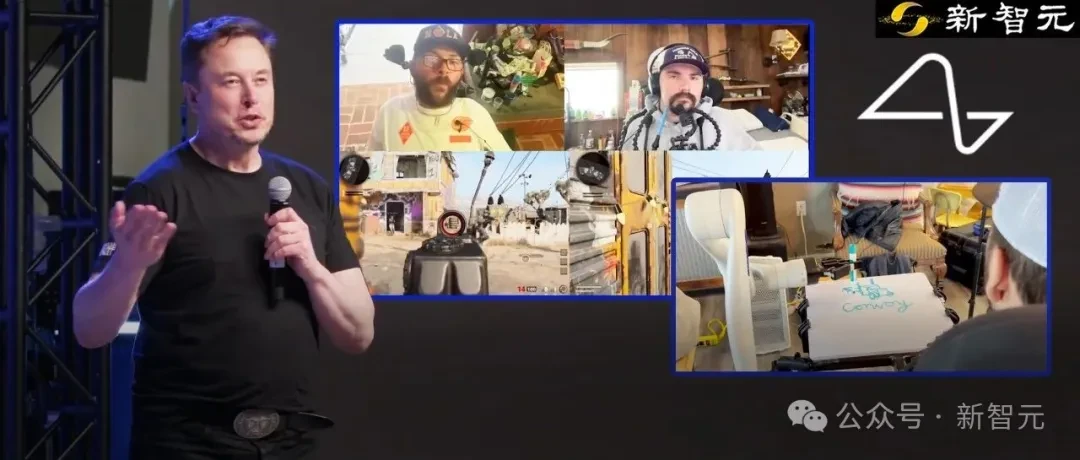
Elon Musk Has Done It Again! He and the Neuralink Brain-Computer Interface Team Held a One-Hour Press Conference Packed with Highlights and High-Energy Moments.
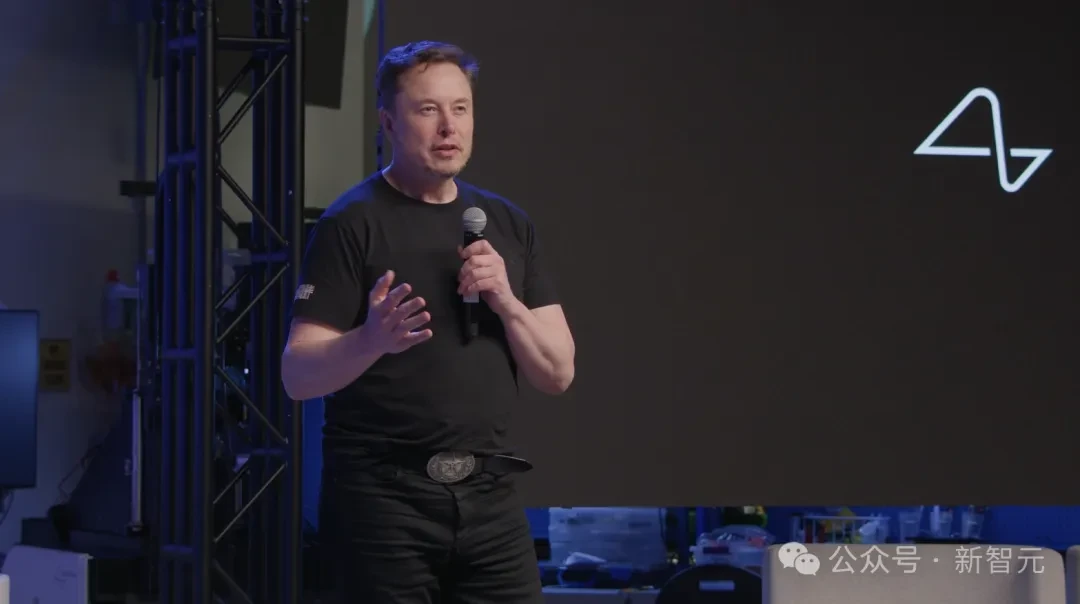
First, Neuralink announced that currentlySeven people worldwide have alreadyThe device was implanted.
Via「Telepathy」With the product, they have regained the ability to interact with the physical world, enabling them to play Mario Kart and Call of Duty using their brains, and even control a robotic arm to write.
'%20fill='%23FFFFFF'%3E%3Crect%20x='249'%20y='126'%20width='1'%20height='1'%3E%3C/rect%3E%3C/g%3E%3C/g%3E%3C/svg%3E)
Additionally, Musk proudly claimed that with Neuralink, every human could control a Tesla Optimus robot with their mind!
Your entire consciousness can be projected into it—you are Optimus Prime, and Optimus Prime is you. It’s simply too sci-fi.
By 2026, Musk even plans to restore sight to the blind and potentially develop superhuman multi-spectrum vision akin to Geordi from Star Trek, enabling them to see radar, infrared, and ultraviolet light!
Videos of seven individuals with implanted brain-computer interface devices playing games have gone viral across the Chinese internet.
Even Alex, who lost hand function due to a spinal cord injury, can control a virtual robotic hand with his mind and play “Rock, Paper, Scissors.”
However, Musk stated that Neuralink aims to do more than this; ultimately, they intend to build aWhole-Brain Interface, align the collective will of all humanity with the will of AI!
At the same time, they unveiled a blockbuster three-year roadmap.
If all goes well, by 2028, it is possible that all of humanity will be interconnected with AI and transformed into robots.
These seven volunteers underwent surgery to receive Neuralink’s N1 implant.
The N1 implant is a brain-computer interface (BCI) device that enables individuals with quadriplegia to control computers using only their thoughts.
Noland is the first person in the world to undergo this procedure.
Paralyzed after a spinal cord injury, he could only interact with the outside world by using a mouth stick in conjunction with a tablet. But now, with Neuralink, it is as if he has been reborn.
Not only can he play video games independently, but he also frequently defeats his friends decisively. It can be said that he has not only regained his freedom in the digital world, but also rediscovered the meaning of his life through participating in the research.
Alex was originally a mechanical parts manufacturer, but after suffering a spinal cord injury, he lost hand function.
But now, with the N1 device, he can operate CAD drawing software using brainwaves and personally design 3D parts!
He can even control a robotic arm with his brain, directly “Mind-Controlled Actuation」。
Bard is the first person globally to receive a Neuralink N1 implant due to amyotrophic lateral sclerosis (ALS).
He is a father of three, but was unfortunately diagnosed with amyotrophic lateral sclerosis (ALS) six years ago. Gradually, he lost the ability to speak and move, and can now only communicate with others using eye-tracking technology in dimly lit environments.
But now, Neuralink has given him an entirely new way to communicate, as if he were a different person.
Mike is also a "Amyotrophic Lateral Sclerosis (ALS)”. Previously, he worked as a surveying technician for the city government, spending most of his time working outdoors until he was diagnosed with amyotrophic lateral sclerosis (ALS).
Now, he can use a brain-computer interface to operate CAD software, continuing his surveying and mapping work from home and contributing to the family income.
After watching these demonstrations, countless people were moved to tears. Neuralink has not only connected the brain to computers but also restored dignity, freedom, and hope to those who had once been in despair.
Silicon Valley VC Deedy stated that these demonstrations truly moved him to tears, as they offered hope for his disabled uncle.
It is truly remarkable to see a team genuinely unlock human potential.
What Is Consciousness?
At the outset of the press conference, Musk stated that he hoped to unveil the mysteries of the brain.
He raised a profound philosophical question: What is consciousness?
In a sense, you are your brain, and your experiences are the firing of these trillions of neurons.
From the Big Bang 13.8 billion years ago to the present day, consciousness suddenly emerged at some point in between.
Neuralink aims not only to address conditions such as brain and spinal cord injuries but also to delve deeply into the nature of consciousness.
To this end, they developed a universal brain-computer interface technology. Furthermore, it must enable bidirectional information transfer with the brain without causing any damage.
It is worth noting that a person’s bandwidth output is less than 1 bit per second over the course of a day, and since there are 86,400 seconds in a day, it is virtually impossible for a person to output more than 86,400 bits in a single day.
Their goal is to enhance the “Bandwidth”, increasing the human communication rate from “1 bit per second”, increasing to several megabits per second, or even several gigabits per second.
When we communicate with others, we are essentially attempting to simulate their mental states and then compress complex scenarios into a few words or keystrokes. This process inevitably incurs information loss, and you are constrained by the speed at which you can speak or type.
What Neuralink has achieved is breaking through this limitation, unlocking infinite potential, and enabling us to communicate at millions of times the speed!
And this will fundamentally alter the essence of humanity.
Of course, the first step is that Musk will start by reducing human suffering and helping those who suffer from degenerative neurological diseases.
The first product is Telepathy, designed to assist individuals who have lost control of their bodies.
The next product is Blindsight, helping those who have lost their vision to see again.
Blindsight relies on glasses with built-in cameras and a visual cortex implant to help people regain their sight.
Finally, Musk even elevated the issue to the level of global AI safety: this helps mitigate the civilizational risks posed by AI.
Humans have three levels of thinking.
The first layer is the limbic system, which represents your instincts;
The second layer is the cortical system, which handles higher-level planning and thinking;
The third layer comprises the computers, mobile phones, and apps that you interact with.
Therefore, it can be said that humans are, in fact, already robots.
And as long as the bandwidth limitation is resolved, the collective will of all humanity can be aligned with the will of AI!
As noted at the outset, Neuralink’s BCI has now been implanted in the brains of seven volunteers.
The following is the monthly BCI usage by the top five volunteers over the past year and a half.
The chart shows that they use BCI devices for an average of approximately 50 hours per week, with peak usage exceeding 100 hours per week—essentially whenever they are awake.
In other words, brain-computer interfaces have truly become integrated into their lives.
Although the demonstrations shown above are already impressive enough, Neuralink’s goals extend far beyond that.
Their ultimate goal: to build a true whole-brain interface!
so-calledWhole-Brain Interface, which enables listening to neurons anywhere, writing information to neurons anywhere, and achieving rapid wireless data transmission to establish a high-bandwidth connection between the biological brain and external machines.
These can be achieved through fully automated surgery and will be ready for use within 24 hours.
Specifically, this is a universal brain input/output platform with three products.
Telepathy:The output section is mainly through a "meat stick”, helping people with motor impairments due to spinal cord injury, ALS, or stroke regain independence.
Blindsight:Input section, via “Blindsight”Help people who have lost their vision build high-bandwidth write capabilities.
Deep:Inserting electrodes into any region of the brain to help individuals with neurological disorders (neurasthenia, mental illness, neuropathic pain) regain independence.
Neuralink’s goals are, first, to increase the number of connectable neurons, and second, to expand coverage to any region of the brain.
Therefore, they began with microfabrication or lithography techniques to change the way more neurons are observed from a single channel, and also conducted mixed-signal chip design to actually increase the number of physical channels, thereby increasing the number of neurons that can be interacted with and allowing more information to flow from the brain to the external world.
Ultimately, the team hopes to use Telepathy to access deeper regions within the visual cortex, thereby achieving functional vision!
So, how can a whole-brain interface be achieved? Neuralink has unveiled its three-year plan for the future.
Fourth Quarter of 2025:Implanting devices in the speech cortex to decode conscious words directly from brain signals and convert them into speech.
2026:Increase the number of electrodes to 3,000, making it the first “Blindsight”Participants regained vision, starting with low-resolution navigation and ultimately achieving superhuman multi-spectral vision.
2027:Increase the number of channels to 10,000, achieving multi-device implantation for the first time (motor cortex, speech cortex, or visual cortex).
2028:Each implant features over 25,000 channels; with multiple implants, any part of the brain can be accessed to treat psychiatric disorders, pain, and dysfunctions, while also integrating with AI.
If this three-year plan proceeds smoothly, Neuralink will ultimately achieve a full-brain interface, thoroughly transcending our biological limits!
Also unveiled at the press conference was the second-generation surgical robot.
The previous first-generation robot required 17 seconds to implant each electrode wire, whereas the current model has increased speed by 11-fold, taking only 1.5 seconds to insert a single electrode!
Moreover, electrodes can now be implanted into regions more than 50 millimeters below the cerebral cortex, thereby achieving compatibility with 99% of the human population.
The self-developed N1 implant has also created a new mode of brain data transmission.
Essentially, it involves connecting your brain or biological neural network to the machine learning model on the right.
In a sense, we have for the first time expanded the basic substrate of the human brain!
Finally, the team proposed a Moore’s Law for interactive neurons: as we gain access to an increasing number of neurons, our modes of interaction with computers and the physical world will be fundamentally transformed.
For submissions, please add the Editor-in-Chief on WeChat:brainnews_01
Or contact the email: brainnews@vip.163.com
Source: New Zhiyuan
Copyright belongs to the author team; for sharing purposes only.