BCI Dreams and Realities: What Is Musk Saying, Thinking, and Doing?

Neuralink
Brain-Computer Interface System Developer
Recently, Musk’s Neuralink has once again taken China by storm, with a deluge of related news flooding the internet. From the general public and technology professionals to government policymakers, all are engaged in heated discussions on the matter.

PINS Medical Series of Brain Pacemakers
Technological innovation primarily follows two paths: demand-driven and technology-driven. In the research and development of brain-computer interface (BCI) medical devices, clinical and patient needs should remain central, with “achieving maximum benefit with minimal risk” as the primary principle in product design. Neuralink has consistently highlighted increasing channel count as a key technological breakthrough, but is this truly necessary? Does an increase in channel count inevitably lead to better outcomes? In fact, as the number of channels increases, the risks to product reliability and safety rise exponentially, potentially posing threats to patients. Therefore, technological breakthroughs should not blindly pursue parameter enhancements, but must always be fundamentally guided by clinical value and patient safety.
NeuroXess’s NEO product, guided by medical needs, pioneered the use of eight effective channels and successfully achieved patient rehabilitation goals. Building on this foundation, the system was gradually upgraded to 64 channels to support more precise motor control. This R&D model, driven by clinical demands and iterative technological innovation, not only ensures the practicality and safety of the technology but also leaves room for future development, representing a more pragmatic and efficient path forward.
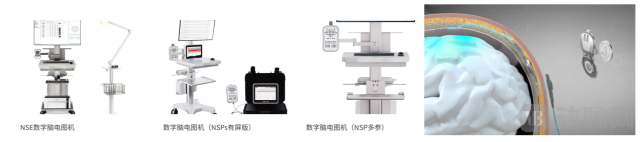
NeuroXess: From Domestic Substitution of EEG Devices to Original Innovation in NEO R&D
Technological innovation must not only pursue breakthroughs but also respect objective laws. After a decade of scientific research and technological accumulation in the field of brain-computer interfaces (BCI), China is ushering in a valuable golden period of development. At this critical juncture, we are fully capable of forging a path of independent innovation. By adopting a steady and orderly development strategy and strategically deploying leading breakthrough projects in selected areas, we can help build a healthier and more sustainable innovation ecosystem, laying a solid foundation for the long-term development of the industry.
The timing of this press conference is quite intriguing, coming shortly after Neuralink completed a $650 million financing round.
Looking back at Neuralink’s development trajectory, its fundraising pace has never slowed: it raised $26.96 million in 2017, increased to $39 million in 2019, surpassed $205 million in 2021, reached $600 million in 2023, and hit $650 million in 2025. Over the past decade, Neuralink’s cumulative funding has exceeded $1.5 billion.
This series of figures not only demonstrates the company’s strong capital appeal but also reveals the core driver of its development model: despite Elon Musk’s personal idealism and passion, Neuralink’s growth is fundamentally driven by financial and commercial logic. For this reason, a key value of this launch event lies in bolstering investor confidence and solidifying trust within the capital markets.
What Is the True Value of Technological Innovation? This question often prompts deep reflection. Recently, I have frequently received letters from patients proactively applying to participate in clinical trials. The earnest hope conveyed between the lines has made me profoundly recognize that every technological breakthrough has the potential to reshape individual lives. However, when I consider that hundreds of thousands, millions, or even tens of millions of patients with brain disorders are still enduring the torment of their conditions, a sense of apprehension inevitably arises. How can we ensure that every penny entrusted to us by the public is utilized effectively?

Brain Disorders Affect Individuals Across the Entire Lifespan, and Clinical Diagnosis and Treatment Still Face Significant Challenges
Neuralink’s investment scale has far exceeded the overall budget of China’s Brain Project, prompting deep reflection: Is its ambition overly grandiose, or does it entail resource wastage? Some propose benchmarking against Neuralink. What are our core objectives? Which specific problems do we aim to solve? Why should we benchmark against Neuralink? What specific aspects should be benchmarked? Who should conduct the benchmarking—enterprises, universities, or government agencies? The answers to these questions will directly influence China’s strategic layout and development path in the field of brain-computer interfaces.
Neuralink has successfully demonstrated the pathway for translating frontier technological exploration into industrial applications, providing a valuable model for the global technology community. However, judging from its technical characteristics, the current stage reflects more of corporate-level technological integration and engineering innovation rather than groundbreaking original innovations in basic science.
China has accumulated a substantial body of research achievements with significant original innovative value in the field of brain-computer interfaces, and these outcomes urgently require effective translation and application. We may draw lessons from the strategic planning and unwavering conviction demonstrated by Elon Musk in advancing the transformation of scientific discoveries into products, thereby further improving the mechanism for translating technological innovations. By establishing a more pragmatic system for achievement translation, we can shift the risks associated with technological commercialization from individual scientists and research institutions to specialized platforms dedicated to sci-tech innovation translation.
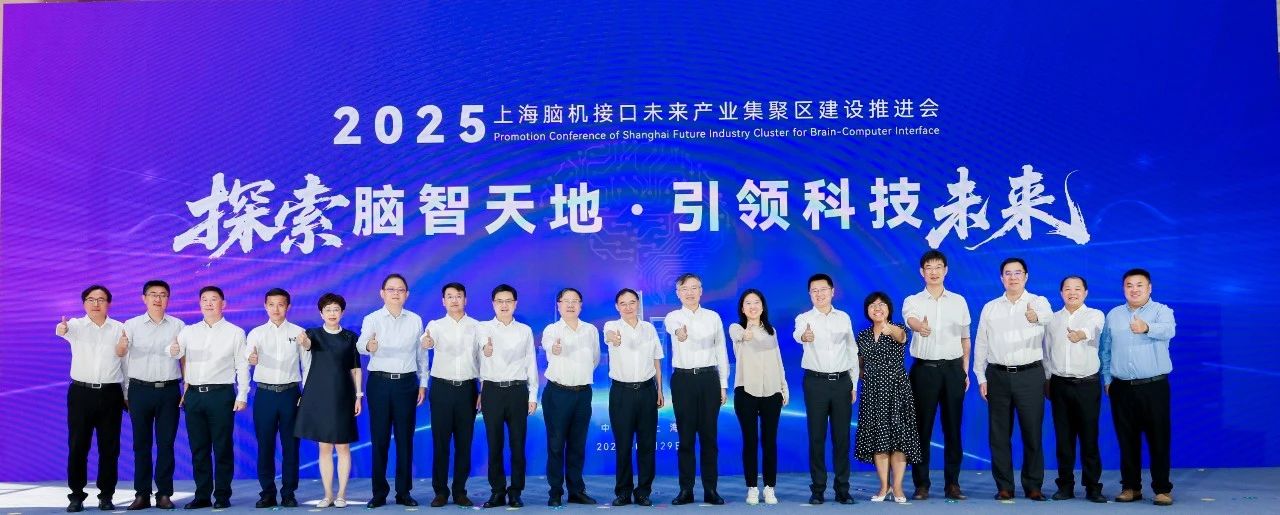
By establishing such a mechanism, we not only expect to cultivate innovative products like Telepathy but also spur the emergence of more frontier technological products with original innovation characteristics, such as artificial retinas and NEO. This enhancement in systematic translation capabilities will provide crucial support for China’s transition from following to leading in the field of brain-computer interfaces (BCI). The construction of Shanghai’s BCI Future Industry Cluster has taken a solid step forward in innovation translation.
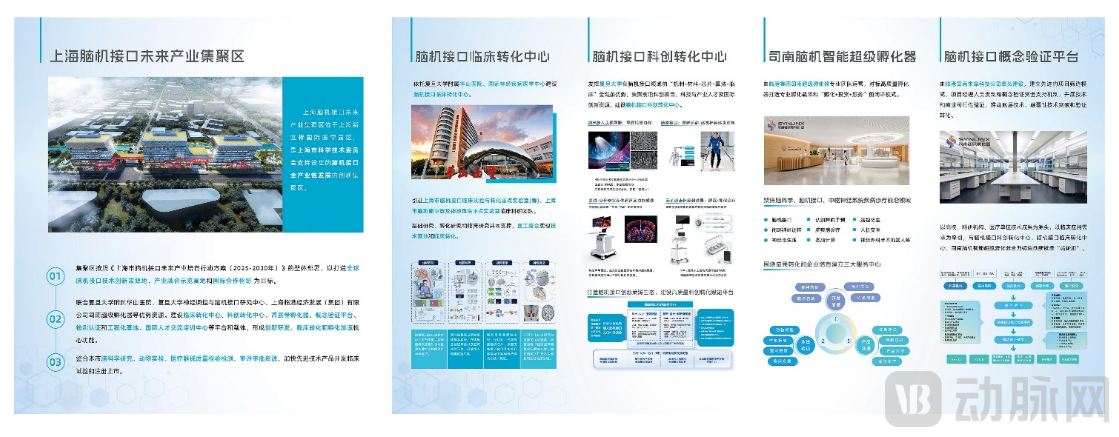
Shanghai’s Future Industry Cluster for Brain-Computer Interfaces: Building an Innovation Source and Translation Ecosystem
Elon Musk, with his characteristic optimism—bordering at times on excessive optimism—skillfully blends grand narratives with concrete examples, employing a variety of promotional storytelling techniques. However, we must recognize that paradigm shifts often require overcoming the century-long mountains of scientific exploration. While gazing at the stars, we must also keep our feet firmly on the ground and proceed with steady, measured progress.
Following the breakthrough achievement of successfully transitioning implantable brain-computer interfaces from laboratory settings to home use, Musk opened the press conference by outlining grand visions that include alleviating human suffering, enhancing human capabilities, understanding and expanding consciousness, and mitigating the risks associated with artificial intelligence. These visions are not merely Musk’s personal pursuits but represent a shared dream for the scientific and social development of all humanity.
From enabling game control and speech decoding to restoring vision through “blindsight” using high-channel-count flexible electrodes, this leap may be constrained by Neuralink’s shortcomings in scientific research and technological collaboration. This challenge is no longer merely a matter of engineering existing scientific achievements; rather, it represents technological innovation grounded in entirely new principles of neuroscience. It involves complex neural network reconstruction, the brain’s mechanisms for decoding and processing visual signals, and the intricate process of delivering three-dimensional information into the brain. Throughout this process, multiple parameters for each channel must be optimized, and these parameters are closely tied to the brain’s response to stimulation.
In the face of such original innovation tasks, it is urgent to establish an interdisciplinary development model featuring deep integration of “mechanism exploration–technological innovation–clinical application.” This model not only drives in-depth exploration of scientific principles but also promotes the close integration of technological innovation with clinical applications.
Professor Zhang Jiayi’s team at Fudan University elucidated the mechanisms underlying single-cell-level artificial photoreceptors and visual information processing in the field of basic neuroscience. Building on this foundation, the team collaborated with materials science experts to successfully develop a bionic artificial retinal prosthesis based on titanium oxide nanowires. Through close collaboration with the medical team at the Eye, Ear, Nose, and Throat Hospital of Fudan University, this technology was successfully implemented in four completely blind patients, helping them restore partial visual function. This year, the team achieved further breakthroughs by developing the world’s first supravision prosthesis covering the visible light to near-infrared II regions. Via a single minimally invasive subretinal implantation surgery, blind monkeys not only regained visible light vision but also acquired the ability to recognize complex infrared images. This significant achievement, published in Science, marks a new milestone in the field of visual prosthesis technology.
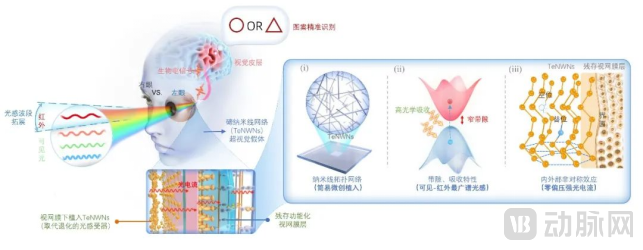
Schematic Diagram and Mechanism of Action of Nanowire Artificial Retina for Restoring and Enhancing Vision in the Blind
However, accelerating the clinical translation of such disruptive technologies remains a shared challenge for scientists. Establishing a brain-computer interface (BCI) innovation and translation platform capable of providing comprehensive support to researchers has become a critical issue requiring urgent attention.
Elon Musk has outlined a future development roadmap for Neuralink, progressing from the motor cortex (Telepathy) to the visual cortex (BlindSight) and deep brain regions (Deep). The goal is to achieve recording and stimulation modulation of neurons at any location, along with deep integration with artificial intelligence. This conceptual framework was already evident in the SUBNETS project funded by DARPA in 2014. However, the technological leap from the cortex to deep brain structures will present new challenges in terms of localization precision, fixation stability, and long-term reliability. Moving from local to whole-brain monitoring and modulation, and from “anywhere” to “everywhere,” is not only the ultimate dream of neuroscience research but also the shared direction of global scientific efforts. Achieving this goal will profoundly transform human understanding and application of the brain, propelling neurotechnology to new heights.
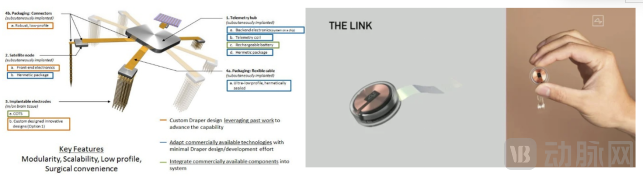
2014 DARPA FundingS'sThe whole-brain network modulation concept proposed by the UBNETS project (left) and the product form of Neuralink’s The LINK
Recently, online evaluations of Elon Musk have become sharply polarized: some label him a “charlatan,” while others regard him as a “disruptor.” Regardless of whether the commentary is laudatory or critical, it is undeniable that he remains firmly in the public spotlight. This attention may stem from his ability to seamlessly blend dreams with reality, thereby demonstrating the boundless power of aspiration. “Believe, and you will see”—it is precisely this steadfast commitment and faith in his vision that have driven him to achieve one groundbreaking milestone after another.
Elon Musk’s success has not only revealed the possibilities of technology but also ignited a deep-seated desire within each of us to realize our own dreams. We may also aspire to follow in his footsteps, turning seemingly unattainable dreams into reality. Meanwhile, our urgent need for technological breakthroughs ensures that every step he takes remains under intense scrutiny.
Elon Musk’s recent product launch once again highlighted his exceptional ability in cross-sector integration, particularly in the realm of engineering and technology synthesis. Future breakthroughs in brain-computer interface (BCI) technology will require even more interdisciplinary collaboration and innovation, as well as the cultivation of a new generation of young scientists who are both visionary and pragmatic. While we may not produce “mavericks” like Musk, we can certainly foster a lush “forest of science.” In Shanghai’s future industry cluster for brain-computer interfaces, Fudan University’s Center for Neuromodulation and Brain-Computer Interface Research, together with the Minhang District government, is establishing a BCI Sci-Tech Innovation and Translation Center. This initiative aims to explore a talent development framework for BCI professionals, driven by technological and industrial innovation.
What Exactly Is a Brain-Computer Interface? This question continues to be widely discussed across multiple fields, but more critically, what problems can it actually solve?

Looking back over the past fifty years, classic brain-computer interface (BCI) technology, centered on signal decoding, has primarily been researched within the fields of biomedical engineering and neurorehabilitation. However, these efforts have yet to achieve substantial implementation in healthcare and clinical practice. The emergence of Neuralink has injected new vitality into this domain, offering hope for translating scientific breakthroughs into clinical applications, reinforcing our confidence in the future, and accelerating our initial momentum.
Meanwhile, neuromodulation technologies centered on stimulating brain function have achieved significant progress in clinical research and application across neurosurgery, neurology, and psychiatry. However, the complexity of treating brain diseases has created an urgent need to enhance the efficacy of neuromodulation. It is this demand that has spurred the development of the emerging field of brain-computer interface (BCI)-based neuromodulation, paving a new path for the deep integration of brain science, medicine, and engineering technology.
Looking ahead to the next decade, a critical sprint phase in China’s advancement toward becoming a global science and technology powerhouse, brain-computer interfaces (BCIs) are emerging like a rising sun, bringing infinite possibilities to technological development. Centered on information exchange between the brain and the external world, BCIs aim to decode motor, emotional, memory, and even conscious functions of the brain, while constructing mathematical models of neural information transmission among the 86 billion neurons. This will enable comprehensive and precise modulation spanning from individual neurons to neural nuclei and entire neural networks.
Innovative products will emerge in abundance: they will not only help stroke patients reconnect with the outside world, but also enable paraplegic patients to regain the ability to walk, and even bring long-lost joy to patients suffering from mental disorders such as depression. Breakthroughs in brain-computer interfaces (BCIs) will extend beyond the mere connection of electroencephalographic signals to encompass invisible interactions at the cognitive level, ultimately achieving a deep integration of the brain with artificial intelligence. Brain-computer interfaces will become a bridge connecting us to the world, and even more so, a mighty vessel for our exploration of the vast frontiers of neuroscience.
I wonder what kind of media frenzy would ensue if Neuralink were to go bankrupt one day. Heroes regardless of success or failure, we gaze up at the same starry sky, but beneath our feet lies the land of China. Let us forge our own path on this fervent soil and envision the future of the world from within China.