

Synchron Founder Tom Oxley: Medical BCI Approval Expected in 3–5 Years, Consumer Implants Still 15–20 Years Away

Synchron
Developer of implantable neural interface products

Currently, approximately 3 billion people worldwide are affected by neurological disorders. Advanced technologies, represented by brain-computer interfaces, can not only significantly improve patients' quality of life but also hold the promise of reshaping human social interactions.
On June 24, at the 16th Annual Meeting of the New Champions of the World Economic Forum (also known as the “Summer Davos Forum”), Tom Oxley, founder of the U.S. brain-computer interface company Synchron, stated in an exclusive interview with a reporter from National Business Daily (hereinafter referred to as NBD) that medical applications of brain-computer interfaces would require another 3–5 years for regulatory approval, while consumer-grade implantable devices would take at least 15–20 years.
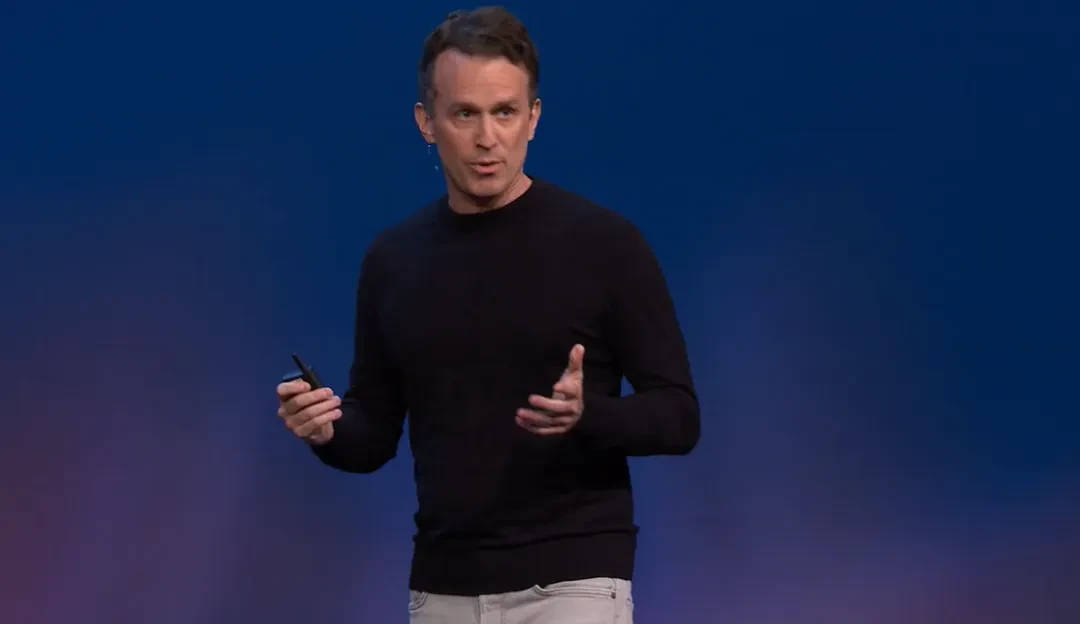
Tom Oxley
As the primary competitor to Neuralink, Elon Musk’s brain-computer interface (BCI) company, Synchron employs innovative endovascular technology to deliver electrodes via minimally invasive surgery to the vascular walls of the cerebral motor cortex, thereby enabling the acquisition of electroencephalographic signals. In 2019, Synchron became the first BCI company to initiate clinical trials of a permanently implanted system. In September 2024, its clinical trials achieved a breakthrough: a patient with amyotrophic lateral sclerosis (ALS) successfully controlled smart home devices by using thought alone to operate the “Tap to Alexa” accessibility feature on an Amazon Kindle Fire tablet. However, because the electrodes are not directly implanted into brain tissue, this technology still has certain limitations in signal acquisition precision.
According to data from the World Economic Forum, the brain-computer interface market is experiencing significant growth, projected to increase from $1.74 billion in 2022 to $6.2 billion by 2030.
01
Brain-Computer Interface Products to Enter Medical Applications in 3–5 Years
NBD:Synchron’s Stentrode™ is the first implantable brain-computer interface device to receive Investigational Device Exemption (IDE) clearance from the U.S. Food and Drug Administration, without requiring craniotomy. Synchron’s technology has already enabled paralyzed patients to control electronic devices using their thoughts. Do you believe that within the next five years, its applications can expand from paralysis treatment to a broader range of neurological disorders?
Thomas Oxley:Brain-Computer Interface Technology: Currently, its primary application is to help paralyzed patients regain control over external devices. Paralysis is not merely the inability to move one’s limbs; it may stem from disorders affecting the brain, nerves, or muscles. In such cases, brain-computer interfaces serve as a bridge, directly connecting the brain with devices such as computers and wheelchairs.
Currently, the most mature application of this technology is helping patients regain basic motor control. However, scientists’ ultimate goals are far more ambitious—in the future, it may not only enable limb control but also restore hearing and vision, facilitate speech and communication, and even enhance cognitive functions in healthy individuals. Nevertheless, these advancements will require step-by-step progress. At present, assisting paralyzed patients remains the most clinically established application.
NBD:What is the current cost of implantable brain-computer interface devices? How does Synchron’s endovascular implantation approach reduce overall costs?
Thomas Oxley:In the U.S. market, the pricing of the first batch of brain-computer interface devices will be benchmarked against existing neuro-implantable medical products, including deep brain stimulators, cochlear implants, and cardiac pacemakers, with an estimated price range of $40,000 to $60,000 (approximately RMB 280,000 to 420,000).
Currently, we are negotiating with U.S. health insurance providers to include this class of devices in insurance coverage, ensuring that patients who meet the indicated criteria do not have to bear the full out-of-pocket costs.
NBD:Beyond the medical field, in what form do you believe brain-computer interfaces will first enter the daily lives of healthy individuals within the next five years? Is it possible for Synchron to develop consumer-grade products?
Thomas Oxley:From the perspective of the current stage of technological development, the commercialization of consumer-grade brain-computer interface (BCI) devices still requires a considerable period of maturation. We anticipate that BCI products for medical applications will obtain approval for commercial use within three to five years.
However, it must be emphasized that even if approved, initial applications will be strictly limited to the healthcare sector. Based on our professional assessment, achieving the transition from medical to consumer-grade markets will require at least 15–20 years of technological iteration and market cultivation. This projection is based on a comprehensive consideration of multiple factors, including technological maturity, regulatory approval, and consumer acceptance.
02
Craniotomy or Endovascular Implant? Discussing Brain-Computer Interfaces with Elon Musk
NBD:Brain-computer interface technology directly reads brain signals, raising concerns about privacy breaches and mind control. What if the data were tampered with, as depicted in The Matrix? How does Synchron ensure the encryption of neural data and protect user autonomy? Do you support the establishment of a globally unified ethical framework for the industry?
Thomas Oxley:Currently, multiple authoritative global institutions are actively advancing the development of standards in the field of neurotechnology, including international organizations such as the IEEE (Institute of Electrical and Electronics Engineers) and UNESCO. I am chairing the World Economic Forum’s Global Future Council on Neurotechnology, where we are also discussing safety issues. Among the many challenges, privacy protection has been established as the top priority, requiring us to establish robust, high-level security safeguards.
Specifically, we adopt the following technical solutions: first, implement end-to-end encrypted data transmission; second, achieve data processing through localized edge computing to minimize external data transfer; and finally, subject all data used for model training to rigorous anonymization and aggregation.
NBD:Compared to Neuralink’s invasive implants, Synchron has opted for an endovascular implantation approach. What advantages does this technical pathway offer in terms of commercialization speed and risk control? How do you view Elon Musk’s assertion that “brain-computer interfaces require high bandwidth”?
Thomas Oxley:Vascular endovascular delivery also enables high-bandwidth signal transmission. In terms of technical implementation, vascular endovascular brain-computer interfaces offer significant advantages over traditional craniotomy: regarding technical performance, although our first-generation vascular implant system had lower bandwidth, the second generation has achieved high-bandwidth transmission, fully meeting clinical requirements. More importantly, the accessibility of vascular endovascular technology far exceeds that of craniotomy—similar to how cardiac pacemakers evolved from open-chest surgery to transcatheter intervention, achieving annual implantation volumes in the millions, the vascular approach can leverage existing medical resource networks.
Craniotomy faces two major bottlenecks in its widespread adoption: first, the limited number of medical institutions globally qualified to perform craniotomies; second, the prohibitively high cost per procedure. In contrast, endovascular interventions have not only established mature systems in areas such as stent implantation but also possess three foundational pillars for scalability—extensive hospital coverage, standardized operational procedures, and controllable treatment costs.
Our view is that craniotomy is not required for the large-scale development of brain-computer interfaces.
NBD:Have you discussed the brain-computer interface industry with Musk?
Thomas Oxley:We have spoken before. One topic we discussed was how this technology can access more regions of the brain. I believe the future and challenges of the brain-computer interface field lie in which technology can achieve expanded access to more areas of the brain. I once raised a question to Musk: Can craniotomy achieve this goal?
03
China’s “Six Little Dragons” Spark Massive Response Across the United States
NBD:How to View China's Technological Development and Corporate Performance in the Field of Brain-Computer Interfaces?
Thomas Oxley:The development pace of China’s brain-computer interface (BCI) industry is remarkable. The government has clearly identified it as a strategic technological priority and provided substantial support, which has directly driven the sector’s rapid growth. The significant participation of Chinese enterprises at the recent International Brain-Computer Interface Academic Conference held in Canada serves as a telling indicator. To my knowledge, there are currently about five companies in China focusing on the research and development of implantable BCIs. Although no products have yet received approval for permanent implantation, overall technological progress is advancing swiftly, filling me with great anticipation. I will depart for Beijing tomorrow (Note: June 25) to conduct on-site visits to several leading companies.
NBD:How Does Silicon Valley View China’s “Six Little Dragons”?
Thomas Oxley:Following DeepSeek’s model release, the world took notice of the “Six Little Dragons.” That technological breakthrough demonstrated remarkable leaps in capability and efficiency gains, triggering a significant response across the United States and raising awareness of how advanced China’s AI technology has become. Our peer, BrainCo, is likely also one of the “Six Little Dragons.”
NBD Reporter: Sun Yuting; NBD Editor: Gao Han
Source: National Business Daily
For academic sharing only. If there is any infringement, please leave a message, and it will be deleted immediately!
'%20fill='%23FFFFFF'%3E%3Crect%20x='249'%20y='126'%20width='1'%20height='1'%3E%3C/rect%3E%3C/g%3E%3C/g%3E%3C/svg%3E)
Join Community
Welcome to the Brain-Computer Interface Community Exchange Group,
Exploring Topics in the Field of Brain-Computer Interfaces: Real-Time Tracking of Frontiers in Brain-Computer Interface Technology.
Join WeChat Group:
Add WeChat: RoseBCI [Note: Name + Industry/Profession].
Join QQ Group: 913607986
Submissions Welcome
1. Submissions are welcome. For submission inquiries, please contact us via WeChat: RoseBCI
Click to Submit:Guidelines for Submitting Academic News to the Brain-Computer Interface Community
2. To join the community as a part-time creator, please contact us on WeChat: RoseBCI
One-click Triple Action: "Share," "Like," and "Mark as Read"
Don’t Miss Any Breakthrough in Brain-Computer Interface Frontiers