

Dialogue with StarBridge Capital: 2026 to Witness a Financing Boom Amid Triple Resonance of Policy, Capital, and Technology
In 2025, the healthcare sector experienced a major boom, with the火热 of innovative drug BD transactions becoming the biggest highlight.
Since April 2025, the boom in innovative drug BD transactions has started to spread to the secondary market, with most healthcare stocks in the mainland and Hong Kong stock markets showing very impressive performances. According to statistics from VCBeat, the top ten stocks in terms of year-to-date price increases in the A-share and H-share markets in the medical and health sector have all risen by more than 300% in 2025, with the highest increase seen in北海康成, which surged over 18 times.
The strong performance of the pharmaceutical sector in the secondary market has also ignited the IPO market, with metrics such as oversubscription multiples and first-day listing gains being repeatedly refreshed. Instances of thousands of times oversubscription and over a trillion yuan in frozen funds for new stock offerings have started to frequently appear in Hong Kong's innovative drug IPO market.
However, due to the parallel occurrence of the "floor price" in centralized procurement and the stock competition in medical devices, concerns linger behind the prosperity: for generic drug companies, centralized procurement has lowered the product ceiling and shrunk the market; the slowdown in device procurement has forced participants into "price wars," pushing the device industry into a stock competition phase where many companies face consolidation; while the innovative drug sector is experiencing a major boom, the increase in total BD amounts is driven by large projects exceeding $1 billion, but the number of BD deals remains basically flat. For FA agencies, this means that the number of available projects for transactions has not increased.
Standing at the starting point of 2026, it is increasingly difficult to discover a "new continent" with an "old map." The logic of healthcare investment has quietly been reshaped. Looking ahead to 2026, what changes will emerge in the healthcare industry? What adjustments and strategies are needed for investors and companies? Will 2026 truly become a "big year for financing"? We interviewed Yang Zhenjun, CEO of StarBridge Capital, to learn about his cutting-edge perspectives on the healthcare industry and the development strategy of StarBridge Capital’s boutique healthcare investment banking.
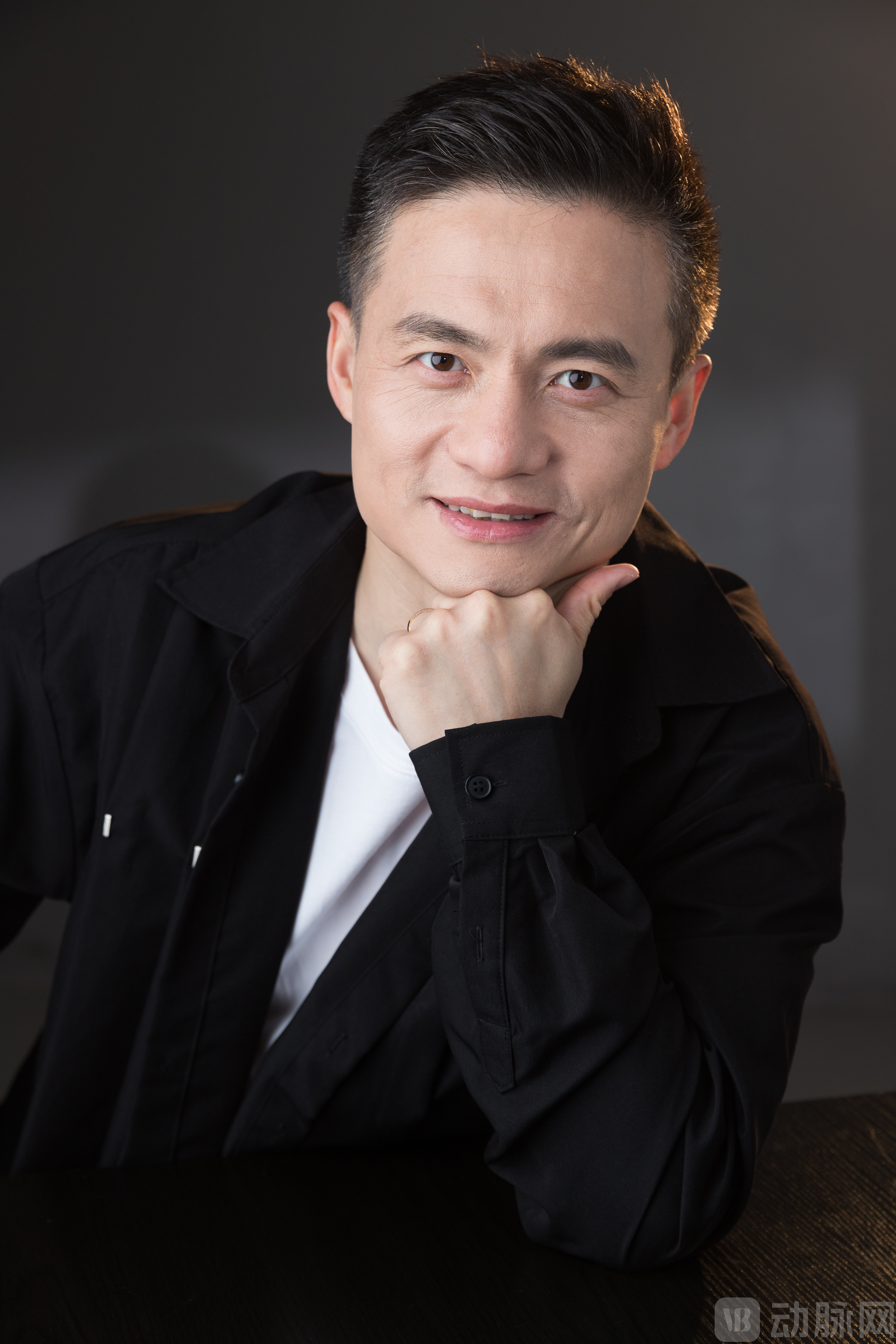
Yang Zhenjun, CEO of Star Bridge Capital
VCBeat:What Changes Have Occurred in the Investment and Financing of the Healthcare Sector in 2025?
Star Bridge Capital Yang Zhenjun:If I were to summarize in one sentence, it would be "The Secondary Market Clears Up, While the Primary Market Sees Survival of the Fittest". In 2025, the number of IPOs in A-share and Hong Kong stock markets reached 37, more than double that of 2024. The most notable aspects were the recovery of Hong Kong's Chapter 18A and the resumption of the fifth set of standards for STAR Market. In 2025, 16 companies went public through Hong Kong’s Chapter 18A. The fifth set of standards for the STAR Market resumed after a 25-month hiatus, with Beixins Life experiencing a whopping 183% increase on its first day of listing. Meanwhile, industry leaders like Hengrui Medicine adopted an 'A+H' strategy, further promoting their international expansion.
Compared with the hot secondary market,Total Financing Volume in Primary Market StabilizesIn 2025, there were 1,377 financing events in the primary market, a slight year-on-year decrease of 5%. However, the number of financings in the innovative drug and medical device sectors saw a small increase, with funds showing a "head aggregation" effect.
China Innovative Drugs 2025Total BD transactions exceed $130 billion, setting a new historical highChinese innovative pharmaceutical companies become the world's largest License-out licensors, with 3SBio and Hengrui Medicine reaching multiple hundred-billion-dollar deals.
In 2025, the triple resonance of policy, capital, and technology will propel China's medical industry into a new phase of global competition.
VCBeat:What are the highlights in each细分领域 of healthcare in 2025?
Star Bridge Capital Yang Zhenjun:In the field of innovative drugs, PD-1/VEGF bispecific antibodies have become a phenomenal product, with large BD deals frequently emerging. The explosion in this field has caught the attention of global MNCs and marks the transformation of Chinese Biotech from a "follower" to a global "leader." Emerging fields such as In vivo CAR-T, radiopharmaceuticals, and small nucleic acid drugs have achieved technological breakthroughs and active financing.
In the field of medical devices,Brain-computer interface becomes one of the hottest tracksBy 2025, financing exceeds 50 billion yuan, with policy support and technological breakthroughs advancing in parallel. The trend of medical device exports is evident. Facing the dual challenges of normalized centralized procurement in China and extreme domestic competition, outstanding Chinese medical device companies are gradually seizing opportunities to expand overseas. After "winning domestically," they rely on their ultimate supply chain and operational capabilities in respective fields, rich product portfolios, and forward-looking global strategies to sustain annual revenue growth of 40%-50%. Chinese enterprises are transitioning from "substitution" to "export," with accelerated CE/FDA certifications. Localization in "chokepoint" areas such as mass spectrometry and sequencing instruments is speeding up, with projects gaining favor from state-owned and industrial capital.
The number of financings in the synthetic biology sector remains stable, as capital is no longer interested in stories but focuses on commercialization capabilities. As a result, fields like medical aesthetics and microbial proteins are gaining favor. With bio-manufacturing being incorporated into China's top-level "15th Five-Year Plan" strategy, alongside local special funds and industrial capital accelerating their layout, the industry is breaking through core bottlenecks in technological transformation and large-scale production.
The number of financings in the medical service sector has declined, but the leading platforms have strong fundraising capabilities. Sub-sectors such as nutritional health, AI healthcare, and stem cell storage have shown counter-trend growth.
VCBeat:What positive changes have occurred in the policy environment of the healthcare sector in 2025?
Star Bridge Capital Yang Zhenjun:From the perspective of the policy environment, there are three key areas: payment, pricing, and industry development strategy.
On the payment side, the commercial insurance innovative drug catalog has been officially released, with 19 high-value drugs included, alleviating the pressure on medical insurance. On the pricing side, the centralized procurement policy is becoming more rational, emphasizing quality and supply stability, and curbing malicious low-price competition. From a strategic perspective, the "15th Five-Year Plan" explicitly supports future industries such as biomanufacturing, brain-computer interfaces, and embodied intelligence, accelerating the implementation of AI medical application scenarios.
VCBeat:As a deeply rooted institution in the healthcare sector, how does Xingqiao seize the current opportunities in the medical and health field?
Star Bridge Capital Yang Zhenjun:Star Bridge Capital adopts the buyer's mindset to operate as a seller, focusing its time and energy on high-quality projects that can generate profits for investors. It pays more attention to the development of projects after transactions and whether they can bring subsequent returns, proactively positioning itself as a boutique investment bank that seeks long-term win-win outcomes with the entire ecosystem.
In the current era where innovative drugs are entering the BD overseas market and medical devices are entering a period of stock competition, a large number of projects face integration and elimination. Among the more than ten projects completed by VCBeat in 2025, over half of the businesses involve projects with net profits exceeding 70 million yuan and revenues surpassing 500 million yuan. We are not only raising funds but also managing complex interest balancing. As numerous enterprises are currently facing repurchase issues, in addition to seeking investors interested in the projects, VCBeat Capital is also handling intricate shareholder communication and coordination work. These projects need to address the issue of balancing interests among founders, existing shareholders, and new investors. After resolving the repurchase problems, when the IPO market window opens, these enterprises will be able to move forward unburdened and have the opportunity to be among the first to receive IPO approval.
The other half of StarBridge Capital's business focuses on growth-stage projects. Against the backdrop of centralized procurement and anti-corruption efforts in the medical market, although many companies face pressure in business development, high-quality enterprises continue to grow rapidly, far surpassing the natural growth rate of the market.
VCBeat:What changes will occur in the healthcare field by 2026? What key directions are worth paying attention to?
Star Bridge Capital Yang Zhenjun:The number of healthcare IPOs in 2025 will double compared to 2024. This trend is expected to continue into 2026.The profit effect in the secondary market will boost institutions to raise funds again. It is expected that the scale of fund raising in 2026 will far exceed that in 2025, and 2026 will surely be a big year for fundraising, further boosting the investment boom in the primary market.
StarBridge Capital continues to be optimistic about the fields prioritized in China's 15th Five-Year Plan, including brain-computer interfaces and biomanufacturing. Companies in the health sector with technological attributes will attract significant capital interest. AI + healthcare is set to enter a new cycle, with high-quality AI + healthcare enterprises progressively achieving commercial implementation.
In the field of innovative drugs, as the amount of BD deals continues to reach new highs, the proportion of China's innovative drug assets in global licensing, both in terms of quantity and amount, will increase significantly. In the future, going public will no longer be the only exit route; asset mergers and acquisitions (M&A) and License-out will become mainstream. China's innovative pharmaceutical companies are transitioning from "followers" to "leaders" of global technology, a shift that is irreversible.
The 10th Future Healthcare 100 Summit 2026 will kick off in Shanghai from May 19th to 21st. This year's conference focuses on the core of China's innovative healthcare assets, gathering over 8,000 industry and capital elites to explore the entire industrial ecosystem in fields such as digital healthcare, innovative medical devices, and novel drugs. The event aims to create diverse connections to activate global value. Meanwhile, the 2026 Future Healthcare 100 evaluation has been fully upgraded, with submission channels now open. We sincerely invite you to join the list, attend the grand event, and explore opportunities for healthcare innovation together!
As the core circle of friends for the conference and list selection, StarBridge Capital will also provide full support for this grand event.

Scan the QR code to register for the "2026 Future Healthcare 100 Strong" conference,Enjoy Early Bird Discounts

Scan the code to enter the "2026 Future Healthcare 100 Strong" selection application channel