

YiLinCloud Files for IPO: Pioneering AI-Driven Transformation in Clinical Research

ECLINCLOUD
Clinical Research Cloud Platform
“AI is evolving from a ‘tool’ into a ‘partner.’”
At the ECLINCLOUD 2026 User Conference, Founder and CEO Dr. Qin Long explicitly stated that large language models, multimodal fusion, and AI agents evolve in successive layers, jointly constituting the cornerstone of the new AI era.
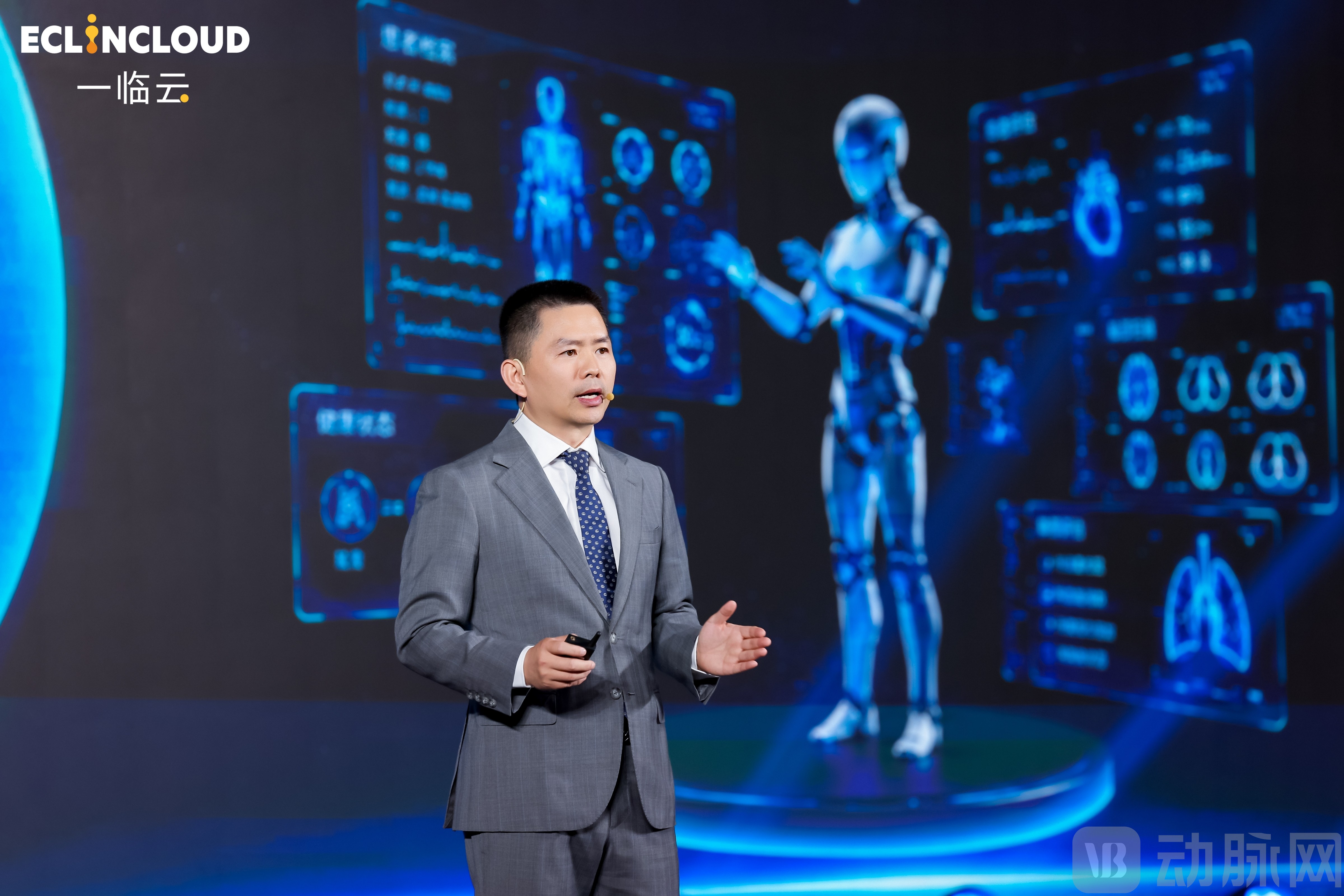
In this regard,As a leader in AI for clinical research in China,ECLINCLOUD continuously iterates its product matrix based on precise insights into industry trends and user needs.At the conference, ECLINCLOUD made a major announcement of its AI agent, “Lin Xiaofu,” and showcased in depth the achievements of its IRC (Independent Radiology Review Platform), built on years of strategic layout and substantial accumulation. Yan Peng, Vice President of Tencent Cloud and Tencent Health, immediately stated that the company would deepen strategic cooperation with ECLINCLOUD by leveraging its advantages in vertical scenarios such as clinical research and pharmaceutical R&D, to jointly build an open ecosystem.
On the other hand, ECLINCLOUD is also committed to building a high-end industrial dialogue platform.The conference brought together a host of industry leaders, including Wang Jinsong, Founder, Chairman, and CEO of Harbour BioMed; Zhu Xiuxuan, President of Global Clinical R&D at Zai Lab and internationally renowned oncology clinical expert; Ma Jian, Co-founder and CEO of XtalPi; Dai Yiren, Chief Operating Officer of Pharmaron Clinical and Partner at Kangjun Capital; Wang Lei, General Manager of Tencent Health Solutions; and Wang Wei, Co-founder, Director, and Senior Vice President of Noxgel. They convened to discuss the pressing contemporary issue of “AI Reshaping Clinical Research.”
Proactive Strategic Layout: ECLINCLOUD’s AI Advancement Journey
As an AI technology company specializing in clinical research,ECLINCLOUD’s exploration of AI-empowered clinical research is not a fleeting trend, but rather a strategy with clear depth and foresight.
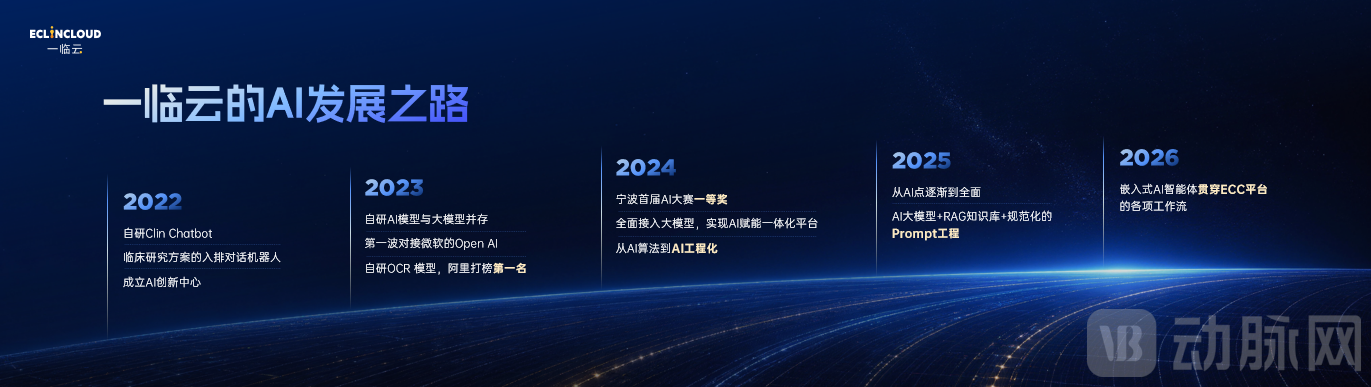
In 2022, well before the rise of GPT, ECLINCLOUD partnered with a renowned multinational corporation (MNC) to develop a “Clinical Chatbot” based on its proprietary knowledge graph, enabling researchers to automatically assess patient eligibility criteria through conversational interactions. In the same year, the ECLINCLOUD AI Innovation Center was established, officially elevating AI to a core corporate strategy.
In 2023, ECLINCLOUD established a “dual-track” strategy of developing its own AI models alongside large language models (LLMs), becoming one of the first companies in China to integrate Microsoft’s OpenAI technology; its self-developed OCR model also ranked first in Alibaba’s evaluations.
In 2024, ECLINCLOUD emerged from over a thousand competing enterprises to win the first prize in Ningbo’s inaugural AI Competition. In the same year, the company relocated its headquarters to Ningbo and received dual support from Hongfeng Capital and Ningbo’s talent policies, thereby fully completing its transformation from “AI algorithms” to “AI engineering.”
In 2025, ECLINCLOUD anchored its core strategy on “Large AI Models + RAG Knowledge Base for Clinical Trials + Standardized Prompt Engineering,” continuously driving AI from isolated tools toward comprehensive empowerment.
In 2026, embedded AI agents will be fully integrated into all workflows of the ECLINCLOUD ECC platform. ECLINCLOUD’s AI strategy enters a new phase.
Leveraging the breadth and depth of its AI capabilities, ECLINCLOUD has served over 20,000 users and more than 250 global enterprises and institutions to date, participating in over 1,100 clinical trial projects with operations spanning more than 10 countries and regions. Powered by its AI technology, project startup timelines have been reduced from two weeks to three days, database build cycles shortened by 60%, and data collection efficiency improved by 80%.
Despite its remarkable achievements, ECLINCLOUD has not slowed its pace in deploying AI. This is driven by two factors: on one hand, the “three highs” of drug development—high costs, long cycles, and high failure rates—remain unresolved, making quality improvement and efficiency enhancement the central theme of industry development; on the other hand, regulatory frameworks are gradually entering a new era driven by AI.
As industry imperatives converge with the wave of regulatory compliance, the irreversible, full-process, and multi-dimensional integration of AI into clinical research has become a reality. Against this backdrop, ECLINCLOUD’s latest AI innovation, LinXiaoFu, has been launched.
LinXiaoFu: The Intelligent Partner for All Roles in Clinical Research
Lin Xiaofu is a digital twin custom-built by ECLINCLOUD, tailored to the responsibilities of various roles in clinical research and regulatory requirements.
As early as May 2022, ECLINCLOUD initiated the research and development of LinXiaoFu. After four years of intensive development, LinXiaoFu is now deeply integrated into workflows for data collection, cleaning, monitoring, medical review, and project reporting, comprehensively covering all key stages across the entire chain—from trial design, initiation, and execution to data analysis and regulatory submission for market approval.
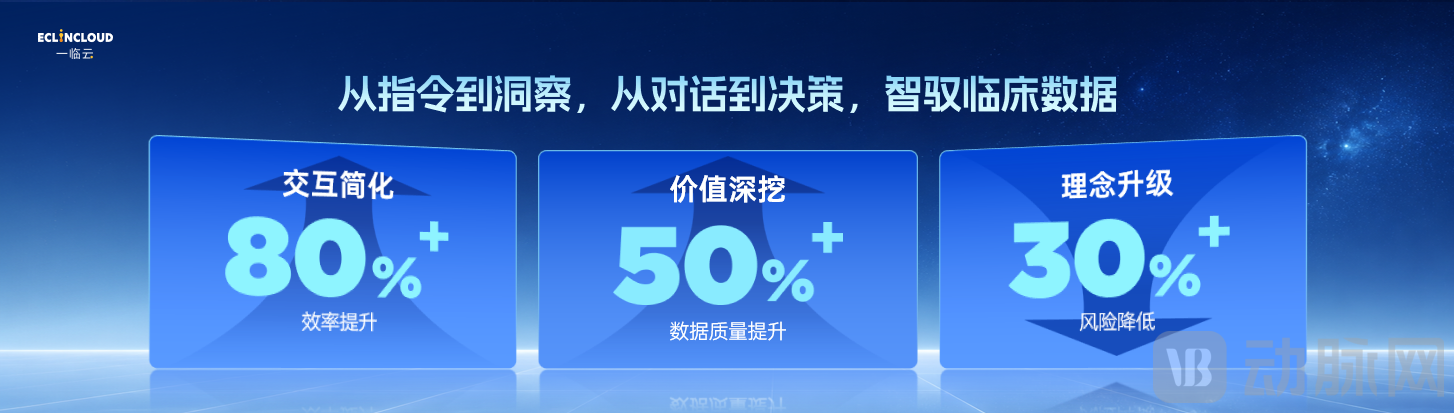
In short, regardless of data collection, medical monitoring, or customer service, personnel in every core role of clinical research can efficiently complete tasks and automatically meet compliance requirements simply by issuing instructions through the most natural “chat” interface.
For example, DBD Linxiaofu can intelligently analyze clinical protocols and rapidly generate complete documents containing visit plans and form content, while simultaneously enabling the automatic configuration of visit forms and other logical validation items within the EDC system, thereby reducing overall database build time by more than 60%.
CRC Linxiaofu has enhanced its medical OCR and multimodal recognition capabilities, enabling it to process over 1,000 types of medical forms and extract data from documents exceeding 40 pages with a single scan in just 30 seconds, achieving an accuracy rate of over 98%. Furthermore, it can automatically identify privacy-sensitive information in images uploaded by subjects and provide real-time alerts, effectively reducing the risk of privacy breaches and the costs associated with manual intervention.
PM Linxiaofu, leveraging the predictive models of the ECLINCLOUD AI Center, enables real-time analysis of operational data from various centers within the Electronic Data Capture (EDC) system. It conducts multi-dimensional, item-by-item scanning of multiple risk indicators, including compliance risks, safety risks, enrollment and follow-up risks, and attrition risks, to precisely identify issues and provide personalized control recommendations, thereby guiding risk intervention actions.
Lin Xiaofu, the intelligent customer service assistant, not only provides 24/7 online availability for timely responses to inquiries but also accurately identifies user roles to deliver professional guidance and replies tailored to a wide range of issues. Furthermore, Lin Xiaofu is proficient in multiple languages, overcoming time zone and language barriers to support every clinical center worldwide.
Overall, LinXiaoFu delivers a minimalist “dialogue-as-action” experience that directly addresses the “three highs” pain points in drug development. Moreover, from privacy identification to risk scanning, and from process standardization to multilingual compliance support, every interaction within LinXiaoFu is built on a foundation of regulatory compliance. In other words,The core value of Linxiaofu lies in enhancing quality and efficiency for the industry while safeguarding regulatory compliance.
IRC Platform: A Comprehensive Upgrade of Endpoint Assessment from Subjective to Combined Subjective-Objective Evaluation
In addition to Linxiaofu, IRC (Independent Review Committee) is another core product that ECLINCLOUD has been strategically developing for many years.
The underlying reason stems from its profound insight into industry trends. ECLINCLOUD has accumulated extensive experience with its eCOA products, providing long-term services for the electronic capture and scoring of rating scales. However, in recent years, regulations have continued to evolve, and project requirements have been constantly upgraded. Regulatory agencies represented by the FDA have gradually expanded the scope of imaging assessment, extending from oncology to a broader range of disease areas.
In light of this trend, ECLINCLOUD has upgraded its solution from the original subjective assessment model of “eCOA + Rating Scales” to a combined objective-subjective model of “eCOA + IRC,” providing more comprehensive and reliable endpoint assessment solutions for oncology and numerous non-oncology indications.
Specifically,ECLINCLOUD IRC Platform Covers End-to-End Full Business Scenarios: CRCs can directly upload images within the system, where the platform automatically performs anonymization and quality control checks, and intelligently assigns cases to reading experts based on predefined rules. Experts access the original images and complete assessments on the same platform, ensuring that all operations are logged and traceable throughout the process. Project managers can monitor the processing status of each image in real time via the backend. This designThoroughly break down data silos to ensure smooth and controllable business processes, with full visibility into project progress and risk insights.
At the technical support level, the platformCurrently focusing on ophthalmic diseases, with plans to gradually expand into multiple fields including cardiovascular, autoimmune, endocrine, oncology, and neurology. Its compatibility covers various formats such as DICOM 3.0, images, videos, and PDFs, along with online viewing of multimodal raw ophthalmic imaging data, laying a solid foundation for future cross-domain expansion.
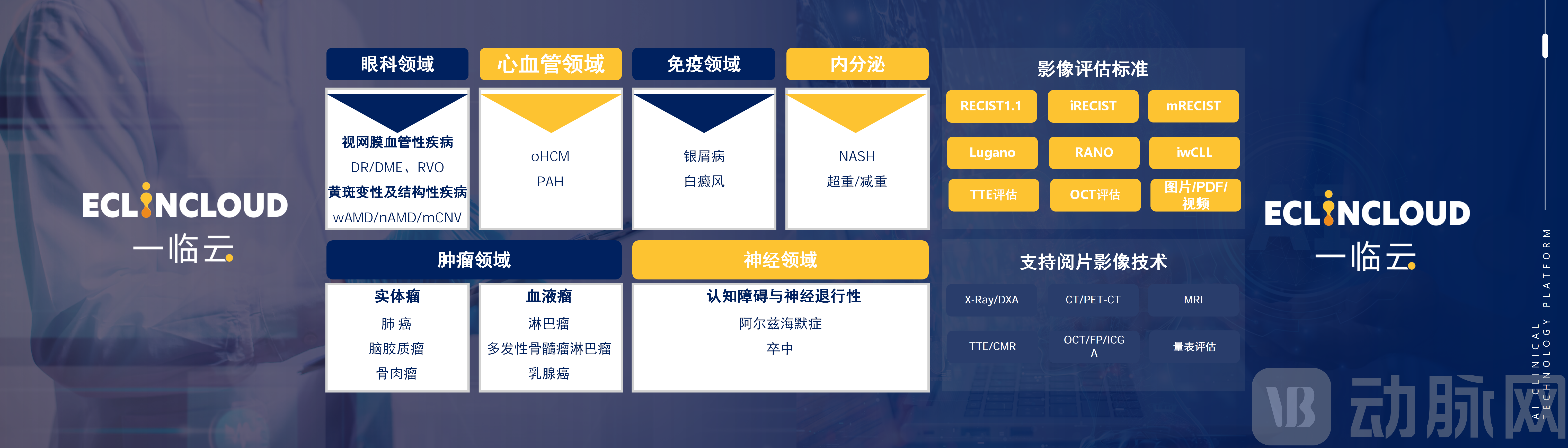
Leveraging these capabilities, the ECLINCLOUD IRC platform has established in-depth collaborations with numerous authoritative experts in Beijing, Shanghai, Guangzhou, and Shenzhen, building a service system that covers the entire value chain, all dimensions, and all indications. On the international front, the platform has successfully launched in the United States, the United Kingdom, Canada, and Australia, helping innovative drugs elevate from “Made in China” to “Global Value.”
Furthermore,ECLINCLOUD is actively exploring the deep integration of AI and IRC. For instance, it employs semantic segmentation models to perform pixel-level delineation of target lesions, and leverages AI to automatically generate enrollment reports, imaging reports, and consistency reports. Meanwhile, the company has partnered with Pharmaron and Zhejiang University to jointly advance frontier research and the translational application of “AI+IRC,” continuously strengthening its technological moat.
Thus, ECLINCLOUD has achieved a leap from eCOA’s “subjective reporting” to IRC’s “objective imaging,” and from a “single-point tool” to a “full-link platform.” Building on this foundation, the integration of LinXiaoFu agents empowers roles across the entire workflow, enabling ECLINCLOUD to establish a closed-loop capability spanning “data collection–endpoint assessment–intelligent decision-making.” This not only constitutes a systematic response to the “three highs” challenges in drug development but also represents a comprehensive practice of the philosophy that “AI evolves from a tool to a partner”—ensuring that every clinical endpoint is evidence-based and intelligence-enhanced.
Peak Dialogue: Six Prominent Guests Discuss AI’s Multidimensional Restructuring of Clinical Research
In addition to unveiling its own innovative achievements, the conference featured a special roundtable dialogue bringing together top-tier industry expertise.
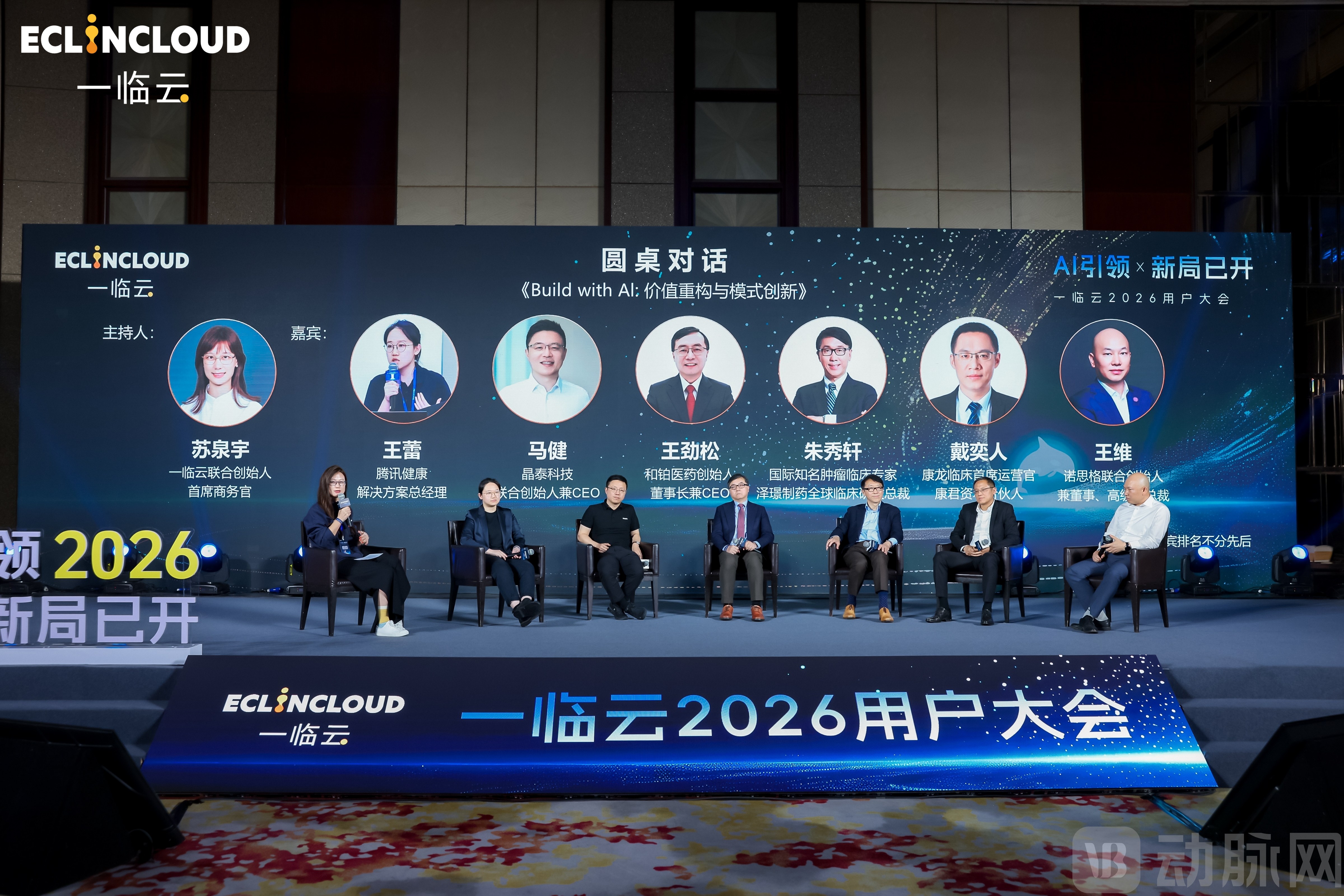
Amid the rapid iteration of AI technology, multiple panelists candidly expressed coexisting feelings of “anxiety” and “urgency.” Ma Jian, Co-founder and CEO of XtalPi, pointed out that AI-driven drug discovery has been evolving for over a decade, and the industry consensus remains to actively embrace the wave of artificial intelligence. Dai Yiren, Chief Operating Officer of Pharmaron Clinical and Partner at Kangjun Capital, also remarked, “AI technology is advancing so rapidly that new models and methods emerge every week. However, one thing is already very clear: AI will rewrite every industry.” Wang Wei, Co-founder, Director, and Senior Vice President of R&S Group, offered an even more urgent timeline: “Within the next one to two years, companies that fail to integrate AI into their operations will find their competitiveness completely obsolete.”
How Should Companies Respond to Challenges? Zhu Xiuxuan, President of Global Clinical R&D at Zai Lab, suggests that small and medium-sized enterprises need not “reinvent the wheel,” but should instead identify the best partners and leverage mature AI software during the clinical development phase to enhance efficiency. Wang Jinsong, Founder, Chairman, and CEO of Harbour BioMed, approaches the issue from an internal management perspective, cautioning against two mindsets: being “too slow” and “too greedy.” For employees hesitant about AI technology, companies can promote its adoption in a fragmented and tangible manner; for those overly eager to adopt AI, opportunities for experimentation should be granted based on rational analysis.
Beyond the efficiency revolution, data quality and compliance have also come into focus. Wang Lei, General Manager of Tencent Health Solutions, pointed out that as AI-generated data becomes increasingly prevalent, ensuring the quality and compliance of such data has emerged as a new challenge that the industry must address.
In addition to the roundtable discussion, Yan Chongchao, Deputy General Manager of the Clinical Data Science Center at Jiangsu Hengrui Medicine, shared insights as a pharmaceutical industry representative on “Challenges in Clinical Data Management and Pathways for Technological Empowerment.” Addressing the myriad challenges in clinical data management, he proposed that the solution lies in technological empowerment—necessitating a shift toward technology-driven systemic transformation. He envisioned that future clinical data management will evolve into a highly intelligent system.
This perspective resonates with the conference’s ecosystem-level launch—The AI for Clinical Ecosystem Officially Launches. ECLINCLOUD will join forces with more partners to build an open, collaborative, and sustainable AI clinical research ecosystem, pooling strengths from technology platforms, industry scenarios, and professional services to drive the true implementation of AI.
“AI-Led, A New Era Begins”—this is the theme of the conference and a footnote to our times. From Dr. Qin Long’s assertive judgment that “the AI era has arrived,” to the urgent consensus among roundtable panelists; from the strategic upgrade of ECLINCLOUD to the release of innovative achievements, and the official launch of the ecosystem alliance—all signals converge on one direction: for clinical research, AI has shifted from an “optional choice” to a “mandatory requirement.” This is not a gentle evolution, but a reconstruction of underlying logic.
"Amidst the tide, only those who embrace and innovate can steer forward and stand at the forefront."