

Neuralink Files IPO Prospectus: Advancing Brain-AI Integration to Restore Vision and Transform Human Capability

Neuralink
Brain-Computer Interface System Developer
· “Neuralink continues to make steady progress in the field of brain-computer interface products. Its released roadmap aligns with current industry development trends and meets market expectations. The technical optimization strategies across multiple areas offer valuable insights for the industry.”
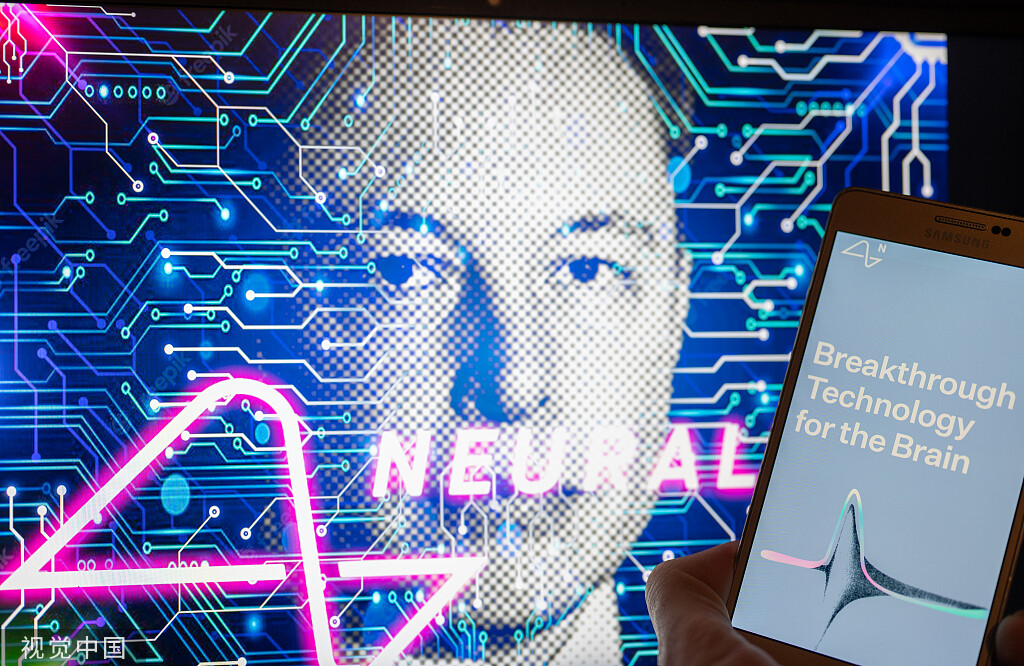
In the brain-computer interface (BCI) field, which has sparked the most controversy and attention in the tech community, Elon Musk has once again delivered a “futuristic” answer. On June 28 (Beijing time), Neuralink announced its phased progress for summer 2025. During a one-hour-long launch event, it showcased footage of volunteers with implanted devices controlling computer cursors, drawing, playing games, and even operating the Optimus robotic arm from Tesla, all solely through brain signals.
“We are developing a universal brain-computer interface. The ultimate goal is to directly connect your neural activity to machines, achieving an unprecedented increase in bandwidth. Currently, our output speed for thoughts is approximately one bit per second. In the future, we aim to reach speeds in the megabit or even gigabit range,” Musk said at the launch event. “This will be ‘conceptual consensual telepathy.’”
To date, seven users have completed implantation surgery, becoming the first recipients of Neuralink’s Telepathy device. Videos show that they can use brain signals to control computers for daily tasks such as typing, drawing, and web browsing. Some have used their thoughts to play computer games like Mario Kart and Call of Duty, while others have written code or controlled remote-controlled cars using brain signals. One user even played “rock, paper, scissors” with another person.
The press conference also showcased Neuralink’s R&D roadmap in areas such as vision restoration (product name: Blindsight), language decoding, and control of mechanical prosthetics: By the end of 2025, it aims to achieve direct decoding of “intended speech” from the speech cortex, converting thoughts directly into language and outputting them via a brain-computer interface; In 2026, the number of implanted electrode channels will be expanded to 3,000, and attempts will be made to help blind individuals restore low-resolution vision using cameras coupled with a brain-computer interface; In 2027, multi-region, multi-device implantation will be realized; By 2028, the number of electrodes will increase to 25,000, enabling comprehensive access to different brain regions to aid in the treatment of mental disorders and explore the potential for connectivity with AI.
Musk stated, “This is not just about helping paralyzed individuals regain function; our ultimate goal is to achieve integration with AI and expand the boundaries of human consciousness.”
Faced with this ambitious blueprint, a technical expert at Steady Medical, a Chinese brain-computer interface company, told The Paper’s technology section: “Neuralink has continued to make steady progress in the field of brain-controlled products. Its released roadmap aligns with current industry development trends and meets industry expectations. The technical optimization solutions across multiple areas offer valuable references for the industry.”
She believes that Neuralink’s industry insights and overall strategic planning are largely aligned with those of Stairway Medical, as both companies are focusing their development on key areas such as motor function replacement, precise neuromodulation, and sensory restoration. Regarding motor control, Neuralink has successfully validated the reliability of its system through seven clinical trials, marking steady progress toward large-scale clinical application. As for speech decoding and visual reconstruction, “Numerous excellent research findings in recent years have demonstrated the scientific feasibility of efficient language decoding and low-resolution visual restoration; now is an appropriate time to drive the translation from research to clinical practice.” Furthermore, for multi-region, multi-device implantation, success should not be judged solely by technical specifications such as the number of electrode channels. Instead, it is essential to “define requirements based on real-world application scenarios to determine the target brain regions for implantation, the number of electrode channels, and the overall implantation strategy.”
When asked whether Neuralink’s roadmap would serve as a reference direction for domestic brain-computer interface (BCI) teams, she stated, “Although Stairway Medical’s long-term goals are largely aligned with those of Neuralink, we will develop our own strategic plan tailored to the needs of Chinese patients and the characteristics of the local market in terms of specific implementation pathways.”
Stairway Medical completed China’s first prospective clinical trial of a brain-computer interface in March this year. Both its product and Neuralink’s adopt a combined approach of “microelectrode arrays + wireless communication + machine learning decoding,” but they differ in commercialization pathways, surgical procedures, and product development timelines. In China, many teams, including Stairway Medical, are advancing device safety, usability, and cost control in a relatively prudent manner.