

China Conducts First-In-Human Trial of Advanced Minimally Invasive Brain-Computer Interface, Surpassing Neuralink in Electrode Flexibility and Size

Neuralink
Brain-Computer Interface System Developer

"Brain-Computer Interface" That Controls Everything with Thoughts, Is It Getting Closer to Us?!
According to the latest report from CCTV,China Successfully Conducts First Invasive Brain-Computer Interface Clinical Trial——
A man who lost all four limbs due to an accident, nowBy Thought Aloneyou can play Gomoku, send text messages, and more.
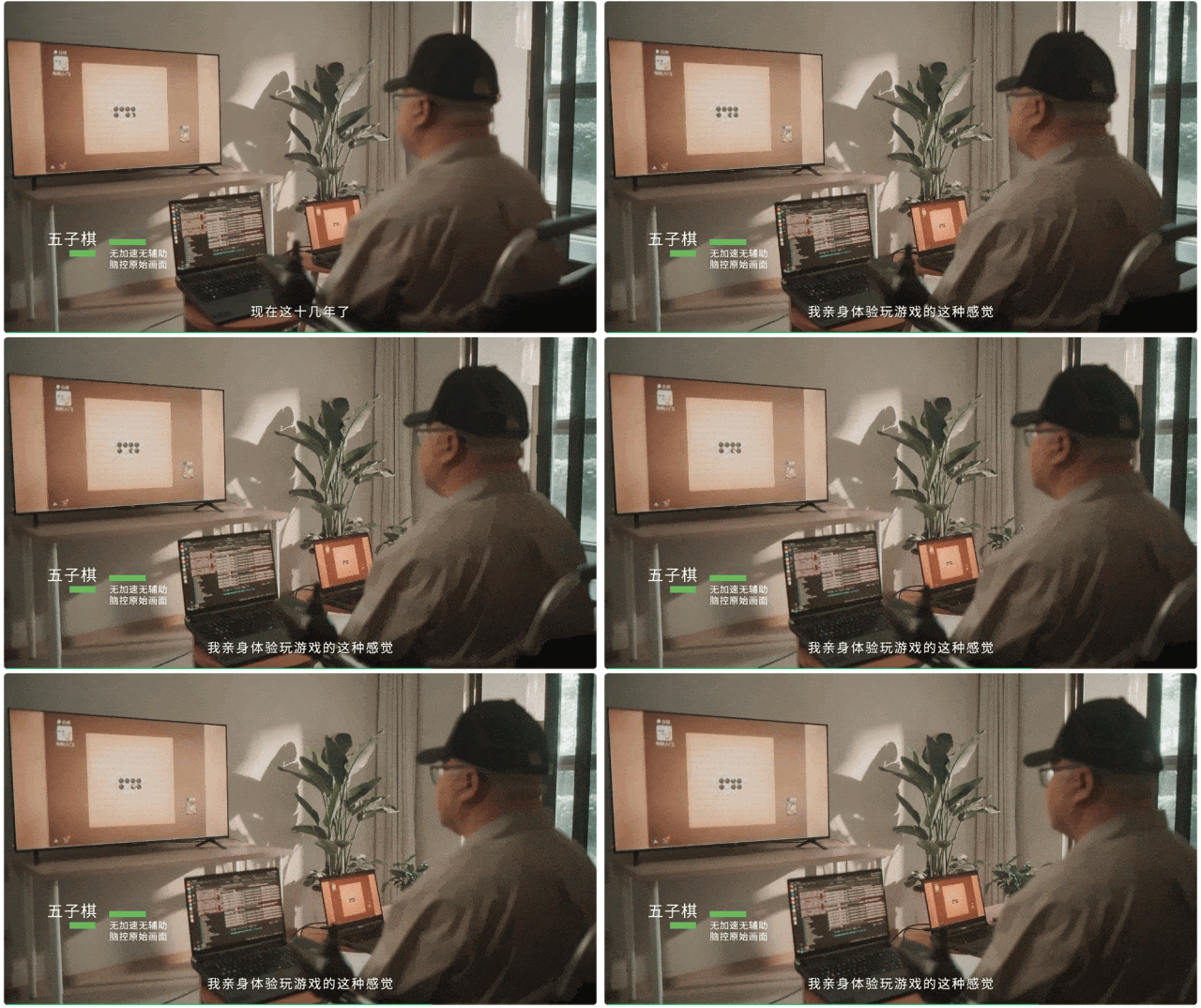
This study was conducted by the Center for Excellence in Brain Science and Intelligence Technology of the Chinese Academy of Sciences, in collaboration with Huashan Hospital Affiliated to Fudan University and related enterprises.
Its success marks that, in addition to Musk’s Neuralink, China has becomeThe Second GloballyCountries that have entered the clinical trial phase of invasive brain-computer interface technology.
Moreover, the implanted neural electrodes are currently the smallest in size and most flexible worldwide—
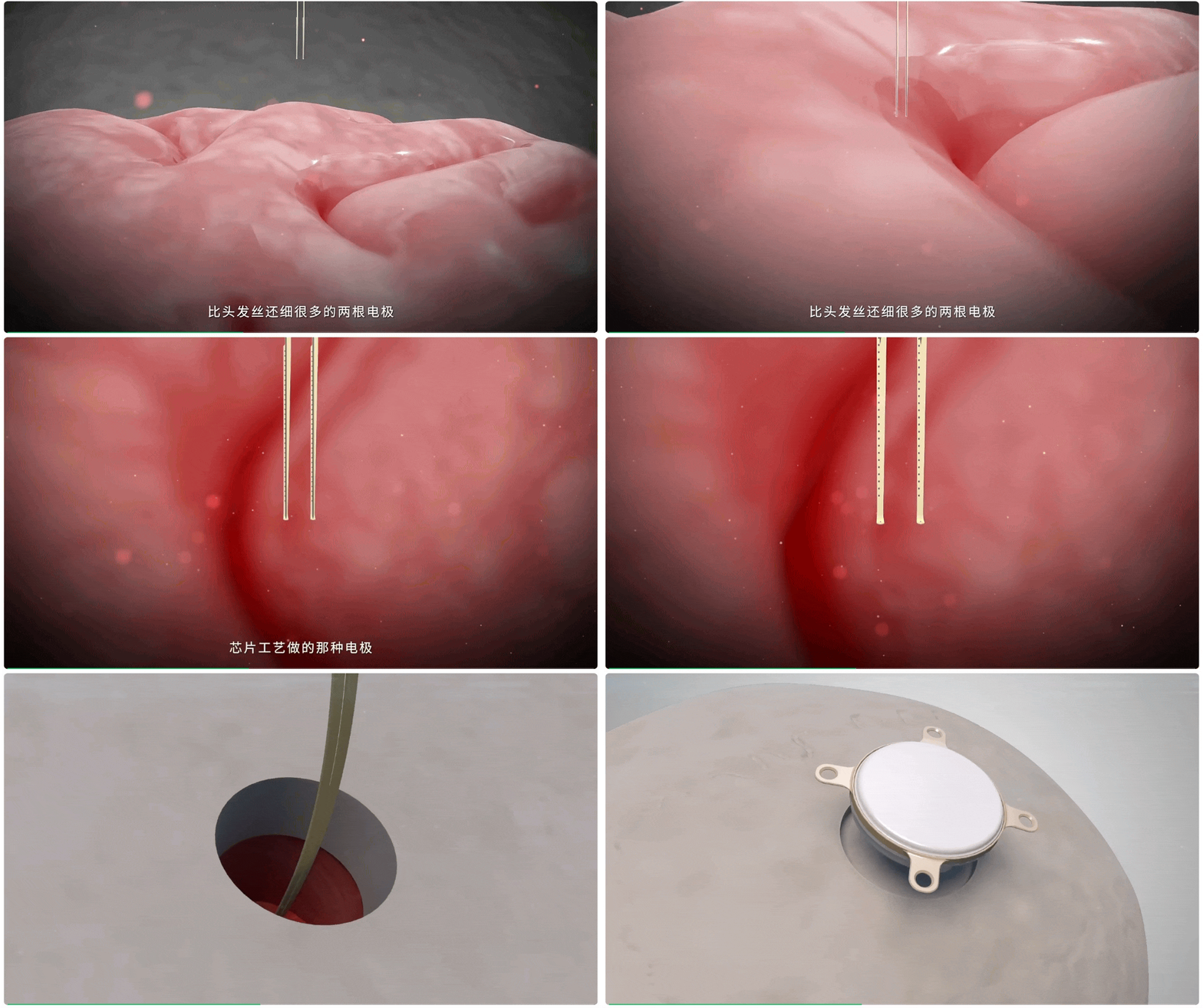
The implant is only the size of a coin (half that of Neuralink’s product), and the ultra-flexible electrodes are approximately 1/100th the diameter of a human hair (more than 100 times finer than Neuralink’s).
Regarding this new development, in addition to netizens marveling at science fiction becoming reality, some with wild imaginations have stated:
Textbooks could be directly implanted in the future (just say you don’t want to study~doge)

Fantasy aside, the next research direction has now been confirmed—
In the short term, we will attempt to enable subjects to use a robotic arm, allowing them to perform tasks such as grasping and picking up cups in their physical daily lives.
In the long term, it may also involve controlling complex physical peripherals, such as robotic dogs and embodied AI robots, thereby expanding the boundaries of daily life.
The achievement of these goals is inseparable from the team's work in brain-computer interfacesBreakthroughs in Hardware and Software——
Utilizes semiconductor fabrication processes
As an invasive brain-computer interface (requiring minimally invasive surgery to implant electrodes into the brain), the team’s core objective in hardware design is to pursue a single goal:
Minimize Damage to Brain Tissue。
This means that the implanted neural electrodes need to be as small and as flexible as possible.
Through relentless efforts, the team’s newly developed neural electrodes have achieved the status of being the “smallest in size and most flexible” globally.
Its cross-sectional area is only 1/5 to 1/7 that of the electrodes used by Neuralink, its flexibility exceeds that of Neuralink’s by more than a hundredfold, and its size is merely about 1/100th the diameter of a human hair.
'%20fill='%23FFFFFF'%3E%3Crect%20x='249'%20y='126'%20width='1'%20height='1'%3E%3C/rect%3E%3C/g%3E%3C/g%3E%3C/svg%3E)
Moreover, the newly developed implant is only the size of a coin, with a diameter of 26 mm and a thickness of less than 6 mm, making it the smallest brain-controlled implant globally and half the size of Neuralink’s product.
According to the team, semiconductor processing technology combined with advanced techniques ensures that the electrodes cause "almost no foreign body sensation" once inserted into the brain.
Neural electrodes leverage semiconductor fabrication processes to scale electrode dimensions to sizes comparable to neuronal structures in the brain.
Meanwhile, the flexibility of the neural electrode is of the same order of magnitude as the forces involved in the interactions and collisions between brain neurons. This ensures that it is both small and flexible, enabling long-term stable operation within the brain.
Following the successful completion of electrode implantation, the subsequent challenge is how to maintain long-term stable operation.
It is worth noting that Musk’s Neuralink has already encountered setbacks in this area; barely 100 days into its clinical trials, the electrode leads implanted in a participant began to “detach.”
The primary factor leading to various malfunctions is undoubtedly the susceptibility of conventional microscale sensors to corrosion by bodily fluids.
In this regard, the team remains atDevice ProcessandStructureand other aspects.
We have introduced reliable standards and technologies from the semiconductor industry into the fabrication of core devices, ensuring excellent biocompatibility and high-precision signal acquisition capabilities.
In a nutshell, the incorporation of semiconductor processes endows new neural electrodes with long-term signal acquisition capabilities.
Researchers revealed that the current lifespan of this device when implanted in the brain is5 years。
In addition to hardware, the team ensures real-time human-computer interaction by optimizing algorithms.
The most critical step isReal-time Online Decoding, meaning the system must complete the entire process of feature extraction from neural signals, decoding of motor intent, and generation of control commands within a time window of tens of milliseconds.
To achieve this goal, the core challenge facing the team is to establish a closed-loop control link with millisecond-level high-precision response, adapting to the non-stationarity of neural signals.
In response, the team creatively achieved dynamic optimization of the neural decoder (using an adaptive adjustment mechanism) through their independently developed online learning framework.
In summary, in the latest clinical trial, the 37-year-old male who underwent quadruple amputation due to a high-voltage electrical accident has preliminarily validated the efficacy and stability of the device.
The team stated that since the brain-computer interface device was implanted in March this year, the system has operated stably, with no infections or electrode failures reported in the more than one month since the surgery.
Moreover, only using2–3 Weeks of Adaptation Training, subjects can control a touchpad with their thoughts to play chess, race car games, and more on a computer.
Achieved a level comparable to that of ordinary people controlling a computer touchpad.
That said, the related effects still require longer-term verification~
Can continue to be upgraded and iterated
In fact, the safety and functionality of the device had already been validated in macaques before the formal commencement of clinical trials.
More critically, it also validatesFeasibility of Upgrading Implants via Secondary Surgery。
Specifically, after the initial implant had functioned stably for a period of time, researchers safely removed it from the macaque monkey’s brain; they then implanted a new device at the same craniotomy site for the second implantation.
The experimental results showed that the system continued to operate stably after surgery, with no instances of infection or electrode failure. Furthermore, macaques that had undergone specialized training were able to quickly adapt to the new system and achieve “mind-controlled” cursor movement.
This means that even after the 5-year equipment trial period expires, upgrades and replacements can still continue.
In the future, this research is expected to significantly improve the quality of life for individuals with complete spinal cord injury, bilateral upper-limb amputation, and amyotrophic lateral sclerosis (ALS).
Reference Links:
[1]https://mp.weixin.qq.com/s/XZq9Ef4WLEvtlP3vVylM8Q
[2]https://mp.weixin.qq.com/s/EsQHrB6MluyxJl7r3jVy_A
Source: QbitAI
For academic sharing only. If there is any infringement, please leave a message and it will be deleted immediately!
Welcome to the Brain-Computer Interface AI Planet to access more knowledge and resources in the fields of brain-computer interfaces and AI.
For collaboration inquiries, please add WeChat: RoseBCI [Note: Name + Industry/Profession].
Submissions Welcome
1. Submissions are welcome. For inquiries, please contact us via WeChat: RoseBCI
Click to submit:Guidelines for Submitting Academic News to the Brain-Computer Interface Community
2. To join the community as a part-time creator, please contact WeChat: RoseBCI
One-Click Triple Action: “Share,” “Like,” and “Wow”
Stay Ahead of Every Breakthrough in Brain-Computer Interface Technology