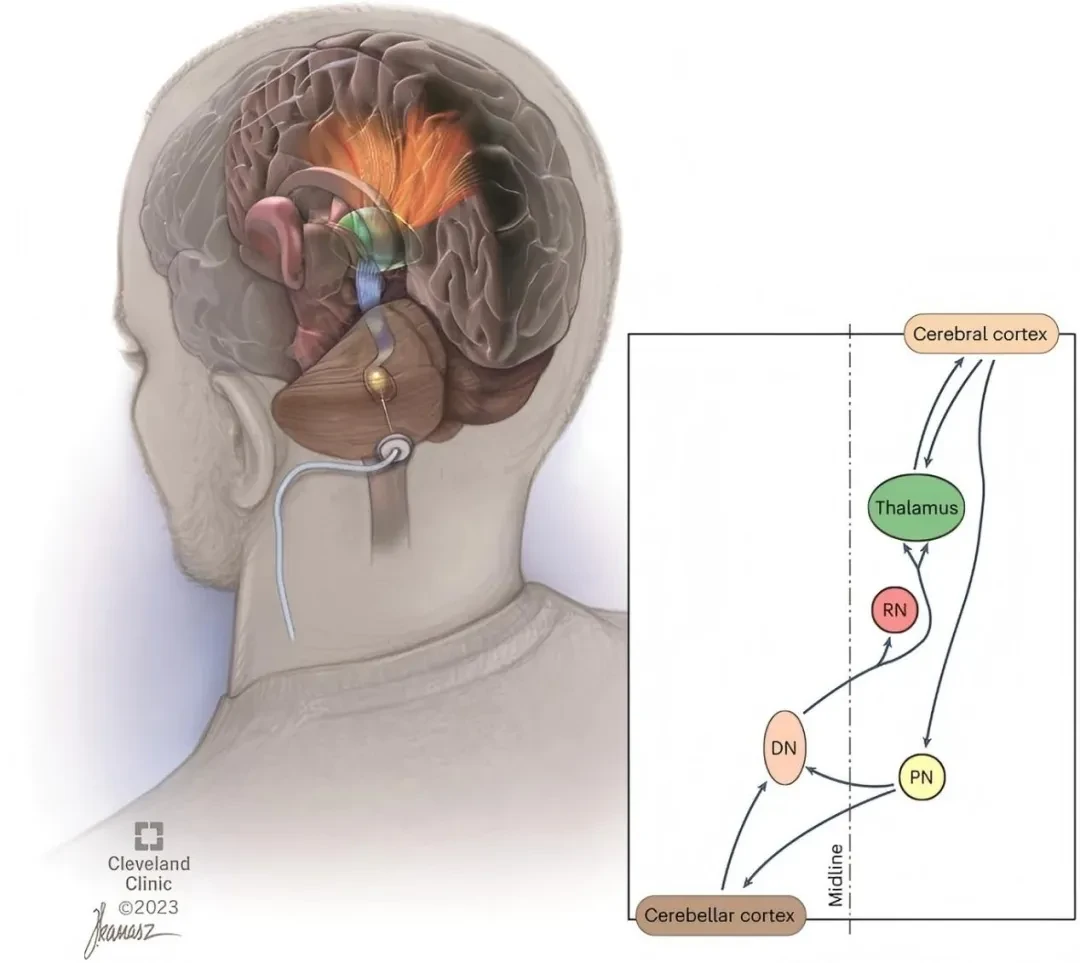
EDEN Study (NCT02835443)This is the first open-label, single-arm study to validate the feasibility and preliminary efficacy of the combined therapy of DBS plus rehabilitation training in the chronic phase of post-stroke recovery in humans. The relevant results were published in August 2023 as“Cerebellar Deep Brain Stimulation for Motor Function Rehabilitation in the Chronic Phase of Stroke: A Phase I Clinical Trial”(doi:10.1038/s41591-023-02507-0)Published in《Nature Medicine》(IF:50.0/Q1). This study was conducted at the Cleveland Clinic in the United States and enrolled 12 patients with moderate-to-severe impairment of upper limb function on the affected side, 1 to 3 years post-stroke. In the study, all subjects received unilateral DBS electrode implantation, followed by several months of outpatient rehabilitation training postoperatively.The study results showed that the combination therapy of DBS + rehabilitation training significantly improved the upper limb motor function of subjects without serious adverse events., with the most significant improvement observed in patients who retained some distal motor function at enrollment. Furthermore, the safety profile of this therapy is comparable to that of other approved deep brain stimulation treatments.
Building on this foundation, in March 2025, the research team published in《Brain Stimulation》(IF:8.4/Q1)published an article titled"Acute Dentate Nucleus Deep Brain Stimulation (DN-DBS) Modulates Cortical Motor Excitability in Chronic Stroke Survivors"(doi: 10.1016/j.brs.2025.02.021) further explored the immediate effects of DBS stimulation on cortical motor excitability and its neural underpinnings. The study found that acute dentate nucleus deep brain stimulation significantly enhanced motor excitability in the lesioned-side cortex of patients with moderate-to-severe chronic stroke. This physiological effect depended on the integrity of key white matter tracts and was closely associated with improvements in motor function achieved during long-term DN-DBS therapy. Research resultsProvides mechanistic support for DN-DBS as a potential therapeutic approach for post-stroke motor function recovery。
'%20fill='%23FFFFFF'%3E%3Crect%20x='249'%20y='126'%20width='1'%20height='1'%3E%3C/rect%3E%3C/g%3E%3C/g%3E%3C/svg%3E)
Building on the dual clinical and physiological evidence from the EDEN study, the Enspire team has further advancedPhase II/III Pivotal Clinical Study—“Rehabilitation Optimization via Electrical Stimulation Therapy (RESTORE): A Pivotal Study”(NCT05701280), aiming to systematically verify the long-term safety and efficacy of the combined therapy of DBS plus rehabilitation training in a larger population. The RESTORE plan is to recruit about 40 patients from 9 neurorehabilitation centers in the United States. Participants will be implanted with FDA-approved commercial DBS systems and undergo 5 months of rehabilitation training. In the first phase, participants are randomly assigned to either the "rehabilitation + DBS" group or the "rehabilitation only" group; then they enter the crossover phase, where those who did not receive DBS initially will also start stimulation to comprehensively compare intervention effects.
On March 4, 2025, Enspire DBS Therapy, Inc. announced that the first patient had been implanted at the second clinical site in its pivotal Phase II/III multicenter RESTORE trial. The inaugural procedure was performed at Brown University Health in Providence, Rhode Island, USA. The study is currently ongoing.
Professor Wael Asaad, Director of the Functional Neurosurgery and Epilepsy Program at Brown University Health Centerpoints out,"Stroke patients, particularly those who continue to experience upper limb dysfunction despite existing treatments and rehabilitation, urgently require new therapeutic options,"This potential therapy may bring new hope to patients whose recovery has plateaued.。”
Dr. Mark Pierre, Vice President of Clinical and Regulatory Affairs at EnspireIndicates:“The expansion of the RESTORE study to multiple clinical centers is a critical step in collecting long-term safety and efficacy data to support the market approval of DBS plus rehabilitation therapy. We are pleased to collaborate with Cleveland Clinic, Brown University Health, and other centers to advance this important initiative, and we look forward to launching additional new sites in the coming months.”