B. Braun Acquires True Digital Surgery to Bolster Robotic Digital Microscopy in Neurosurgery and Spine

B. Braun
Developer and Manufacturer of Medical and Pharmaceutical Equipment

Aesculap
Surgical Medical Device Provider

MedRobot
September 12, 2025, German medical giantB. BraunDeclared CompletedAcquisition of 100% Ownership of True Digital Surgery (TDS) in the United StatesTDS is a company specializing in digital, robot-assisted surgical microscopes. This transaction marks B. Braun’s further investment in the field of digital microsurgery. Notably,B. Braun previously held a minority stake in TDS, the current full acquisition demonstrates its strategic determination in this niche sector.
I. Transaction Overview
According to the announcement by B. Braun, after the acquisition is completed,TDS will continue to remain in Goleta, California, as its R&D center, maintaining its existing R&D team and technological expertise.. The specific amount of the transaction has not been disclosed.
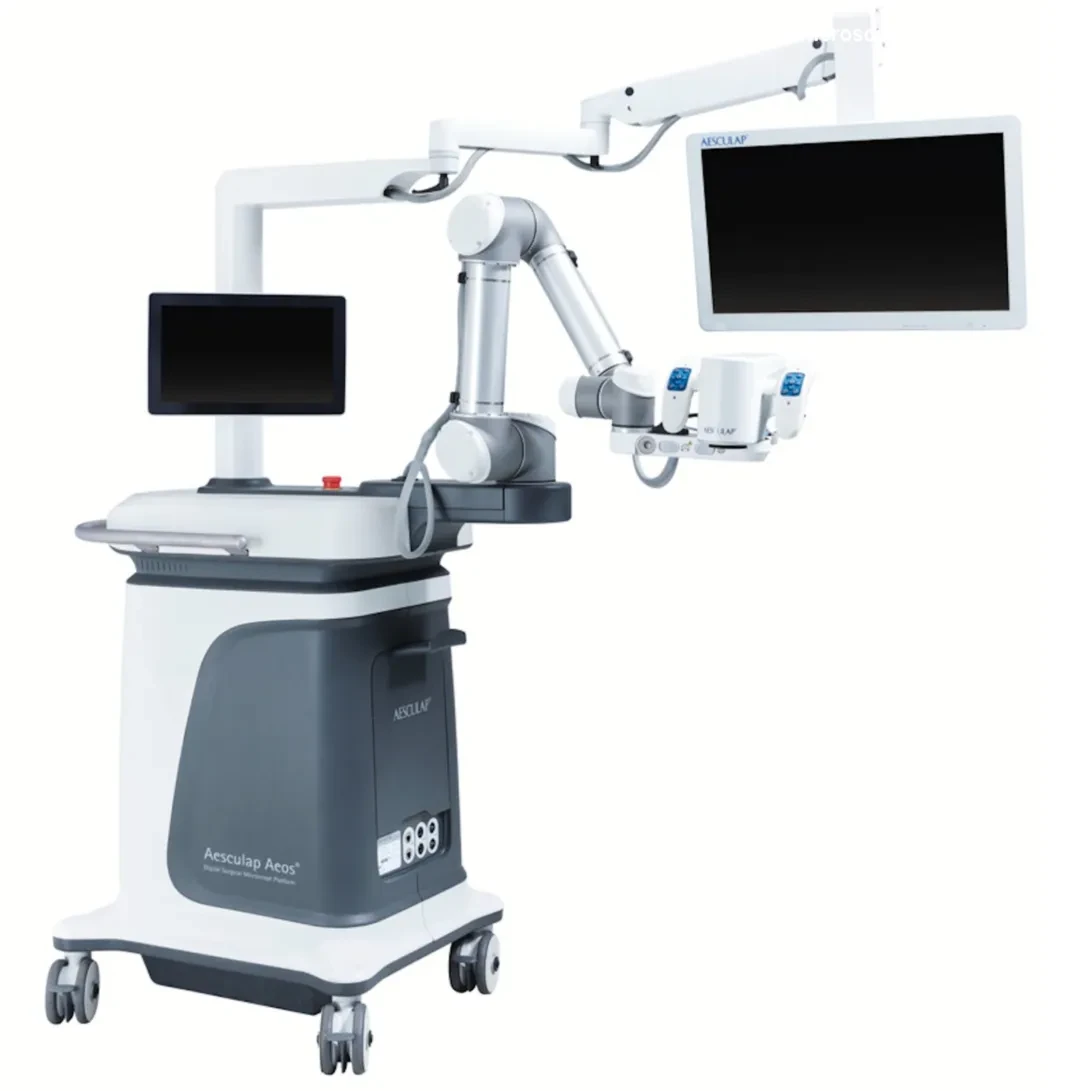
The core significance of this acquisition lies in:The TDS team and technology will be directly integrated into the Aesculap Surgical Division under B. Braun., becoming a key force driving the iteration of next-generation products. Aesculap has extensive expertise in surgical instruments and surgical microscopes, with its AEOS system already serving as a critical digital platform for neurosurgery, spinal surgery, and otolaryngology. Leveraging TDS’s capabilities in digital microscopy and robotic assistance, the future technological evolution of the AEOS system is poised to accelerate, providing clinicians with more competitive solutions.
II. Core Products and Technology (AEOS System × TDS)
Who is TDS? Why Didn’t It “Break Out” Earlier?
TDS (True Digital Surgery) originates from a veteran in digital microscopy and surgical visualization.TrueVision Systems, with its technological lineage tracing back to 2003. The team has long been deeply engaged in the niche sector of “digital + robot-assisted surgical microscopy,” primarily serving as a platform provider and joint development partner. While its brand recognition lags behind optical giants such as Zeiss and Leica, it maintains a close partnership with Aesculap, jointly launching the AEOS robotic digital microscope in 2020. Overall, TDS resembles more of a “technology-focused foundation company,” leveraging digitalization and robotics in high-precision specialties such as neurosurgery, spine surgery, and ENT.See more clearly, stand more comfortably, collaborate more smoothly"achieved productization."
What is AEOS? What are its core selling points?
AEOS(Aesculap Aeos® Robotic Digital Microscope) is a set of “Heads-up Display + Robotic Pose Control + Digital 3D Imaging” microscope platform.
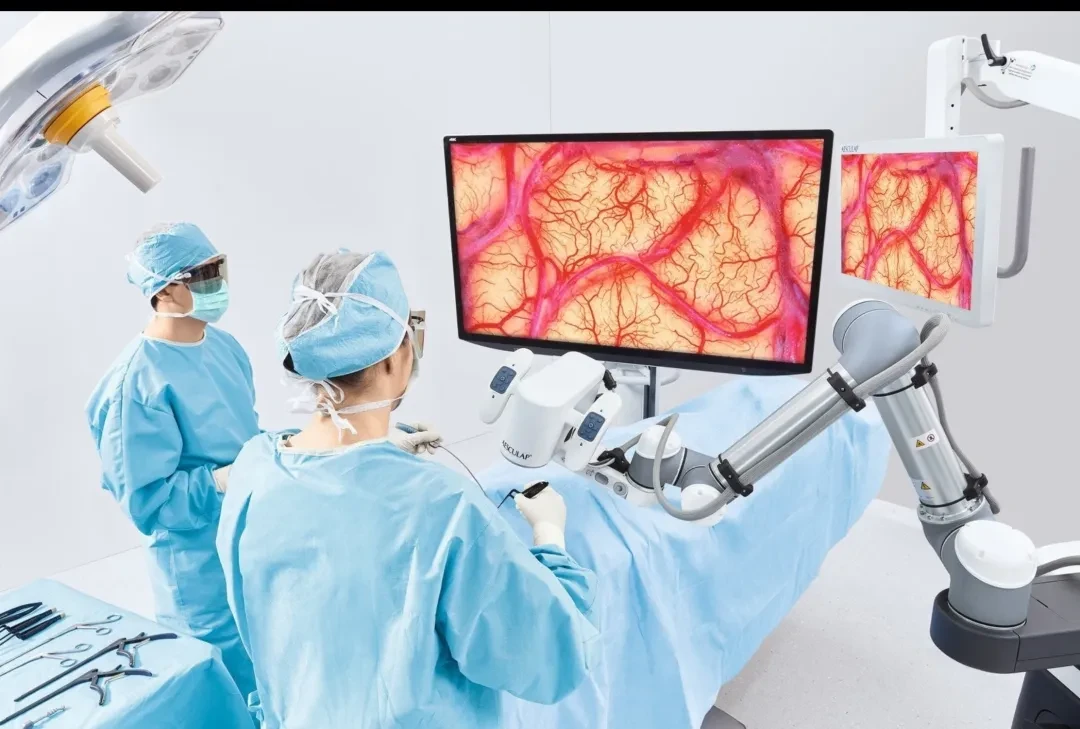
Surgeons do not need to lean over traditional eyepieces, through3D DisplayComplete microscopic field observation;
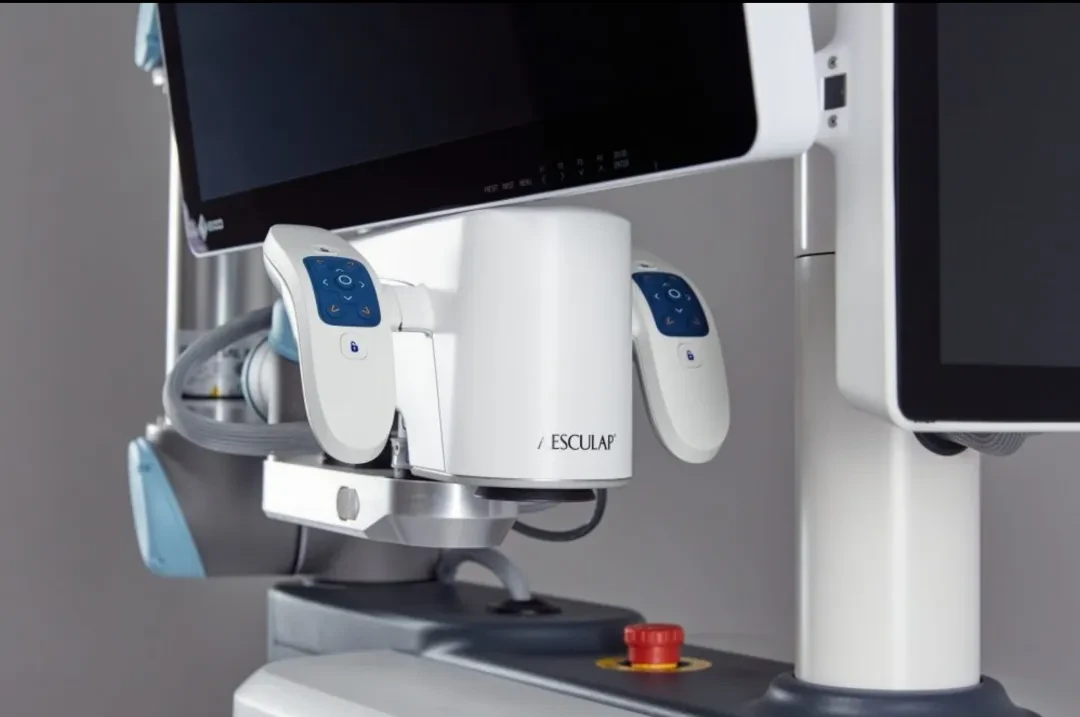
The six-degree-of-freedom robotic arm supports semi-automatic pose management, including “Lock-on target” and “Waypoints.”
The imaging system provides capabilities such as 3D 4K, HDR, 10× optical zoom, coaxial LED illumination, and deep-cavity imaging, and supportsPicture-in-Picture and Multi-Screen Integration for Secondary Digital Signals such as Endoscopy/Navigation;
Working distance: approximately 200–450 mm; supports team-shared visualization via multi-specification 3D medical monitors (e.g., 55"/31"/26"); features built-in 4TB storage and supports DICOM, along with intraoperative screenshot, 2D, and 3D video recording.
Applicable scenarios are primarily focused on neurosurgery, spinal surgery, and otorhinolaryngology (ENT).
Fluorescence Imaging and Registration Highlights (FDA 510(k) Cleared)
On the fluorescence module,AEOS features two modes: DUV400 (3D Digital Near-Ultraviolet Blue Light) and DIR800 (3D Digital Infrared).: The former is commonly used for fluorescence-guided observation of tumor boundaries with agents such as 5-ALA, while the latter is used in conjunction with indocyanine green (ICG) to assess blood flow and vascular patency in procedures such as cerebral aneurysm clipping, bifurcation occlusion, and bypass graft patency.
DIR800 as an accessory of AEOS has beenFDA 510(k) Cleared; The manufacturer also mentions in public materials that the AEOS system possesses the aforementioned fluorescence capabilities. For clinical practice, this means that using these features in the United States already complies with regulatory requirements.
Clinical and Usability Evidence (Representative Studies)
“Evaluation of a Novel Three-Dimensional Robotic Digital Microscope (Aeos) in Neurosurgery”(Cancers, 2021): Ten surgeons completed 19 neurosurgical procedures (12 cranial, 6 spinal, and 1 peripheral nerve) within 9 weeks.
Results: No intraoperative complications; overall surgeon satisfaction78.95%,84.21%Ergonomic performance was considered satisfactory; however, some physicians suggested improvements in image sharpness, independent zoom, and depth of field. The authors concluded that AEOS is feasible and safe for microsurgery and may offer ergonomic advantages over traditional eyepiece microscopes.
“Implementation of a three-dimensional (3D) robotic digital microscope (AEOS) in spinal procedures”(Scientific Reports, 2022): Seventeen cases involving various spinal pathologies and three surgeons with varying levels of experience were included. Questionnaires and objective records indicated that 3D depth perception, resolution, and image clarity were rated as satisfactory across all procedures. Occasional conflicts arose regarding monitor positioning and coordination with other intraoperative equipment (such as fluoroscopy), necessitating workflow optimization. The authors concluded thatAEOS Achieves “Very Satisfactory” Implementation Outcomes in Spinal Surgery (Especially Minimally Invasive Approaches)。
Differences from Traditional Microscopes/Comparable Digital Systems
AEOS’s “heads-up display + team co-viewing” shifts individual skills from “monocular viewing” to “team-shared immersive vision,” facilitating teaching and collaboration;
Six-Degree-of-Freedom Robotic Arm and Pose MemoryReduces the need for repeated manual repositioning;
3D/4K/HDR and Coaxial LEDHelps maintain brightness and depth of field in deep, narrow cavities;
Digital platforms and software upgradability (including user preference configuration, imaging modes, and DICOM/video) provide ample interfaces for future functional evolution.
It is important to note that all digital microsurgical/surgical visualization systems have a learning curve: the team needs to adapt to the display layout, multimodal control via foot pedals/handles/touchscreens, and coordination of "spatial pose" with other intraoperative devices.
III. MedRobot Analysis: B. Braun’s Strategic Intent
B. Braun’s shift from a minority equity investment to full ownership sends several clear strategic signals:
Focus on Digital Microsurgery
Microsurgery is a core tool in departments such as neurosurgery, spinal surgery, and otolaryngology. By fully integrating TDS, B. Braun will establish a complete R&D–product–service chain in this niche sector, going beyond being merely a device provider.
Strengthening the Technical Moat of the Aesculap Division
Aesculap has already established itself as a leading brand in surgical instruments and comprehensive operating room solutions. With the acquisition of TDS, the core algorithms, image processing, and robotic control capabilities behind the AEOS system have been integrated into its proprietary portfolio, enhancing its competitive differentiation against traditional optical giants such as Zeiss and Leica.
Long-term Investment, Future Layout
B. Braun has explicitly stated that TDS will continue to operate independently as a technology center in Goleta, California. This model of “retaining R&D heritage while integrating global resources” indicates that the company places greater emphasis on future product iteration and continuous innovation rather than short-term financial integration.
A Component of the Digital Surgery Strategic Landscape
Beyond microscopes, B. Braun has already established a comprehensive portfolio in operating room equipment, consumables, and implants. The acquisition of TDS will create synergies with its neurosurgery, spine surgery, and ENT businesses, adding a critical component to its digital surgical ecosystem.
IV. MedRobot Analysis: Industry Trends and Competitive Landscape
Technical Level:
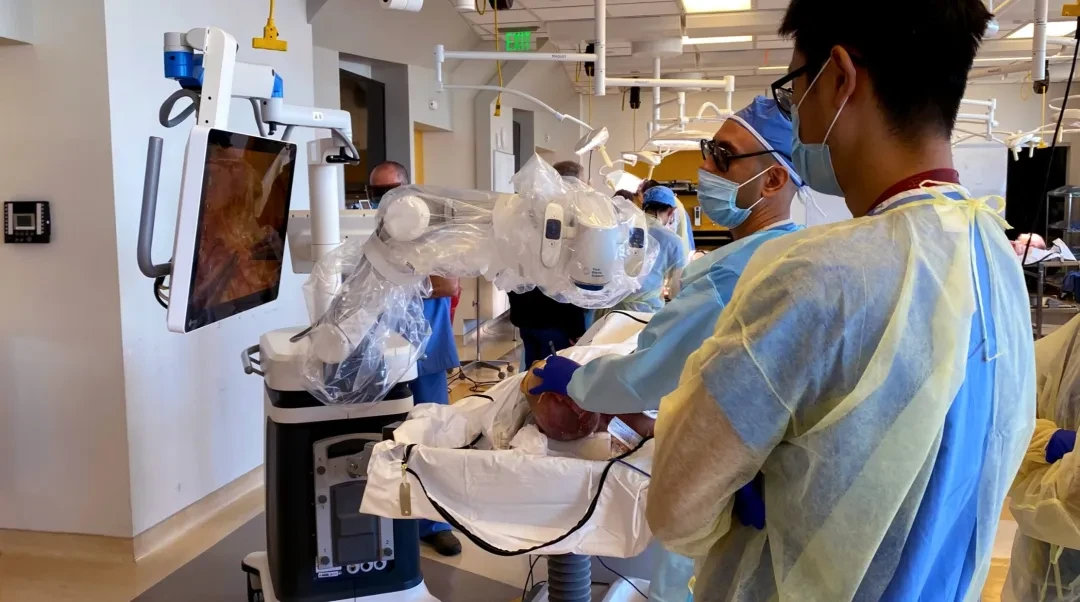
Digitalization and robotic assistance are gradually permeating microsurgery, the “high ground of precision maneuvers.” Similar to the trajectory of surgical robots in laparoscopy and orthopedics, microsurgeons also require tools to alleviate fatigue, magnify details, and enhance collaboration. The case of AEOS demonstrates that “digital microscopy + robotic arms” may become the new generation standard.
Competitive Landscape:
Zeiss (KINEVO 900) and Leica (ARveo series) remain the traditional dominators of the microscope market, leveraging their optical expertise and brand strength to maintain a mainstream position. B. Braun has entered the field through the acquisition of TDS, representing a “digitalization + robotics” approach that differentiates it from traditional optical giants. Meanwhile, some surgical robot manufacturers (such as China’s Surgerii and KonnoSight Technology) are also exploring the synergy between microscopic imaging and robotics, which may lead to cross-sector competition in clinical applications in the future.
Future Directions:
Digital Platformization: Software Definition and Algorithm Upgrades Become Key to Device Differentiation.
Integration and Collaboration: The Boundaries Between Imaging, Navigation, and Surgical Robotics Will Become Increasingly Blurred.
Business Model: Beyond equipment sales, the ability to generate recurring revenue through software upgrades and imaging data services will determine the product's long-term viability.
Challenges and Concerns:
Although AEOS has received FDA 510(k) clearance and is supported by preliminary clinical evidence, larger-scale, multicenter clinical data are still required from a commercialization perspective to demonstrate its superiority. Challenges in the short term include physician training, the learning curve, equipment cost control, and hospitals’ willingness to replace their existing Zeiss/Leica systems. In other words,B. Braun’s move is more of a “preemptive positioning,” with its commercial effectiveness yet to be validated over time.。
Surgical Robots Marketed in China
▌Laparoscopic Surgical Robot
▌ Orthopedic Surgical Robots
▌Vascular Interventional Surgical Robot
▌ Puncture Surgical Robot
▌Microwave Ablation Surgical Robot
Comprehensive▌Microsurgical Robot|Tuodao Medical
Endoscope▌Edge Medical |Sizhe Rui Intelligent Medical |ShuRui Robot| Conmed
Orthopedics▌Rosenbot |Yuanhua Intelligence| Changmugu |Xinjunte|Stryker
Puncture Robot▌True Health
# Bid Winning Weekly Report | Approved Weekly Report | Industry Weekly Report
Progress of Chinese Surgical Robot Companies | Progress of Overseas Surgical Robot Companies