
Neuralink
Brain-Computer Interface System Developer

As a frontier field where science fiction intertwines with reality, brain-computer interfaces (BCI) are becoming the new focal point of global technological competition. Neuralink, under Elon Musk, has further ignited worldwide imagination regarding invasive brain-computer interfaces. On September 10 (local time), Neuralink announced that the number of patients globally implanted with its BCI devices had risen to 12, with cumulative implantation days reaching 2,000 and total usage time exceeding 15,000 hours.
And on this side of the Earth,Zhangjiang Pharma Valley, the field of brain-computer interfaces is also witnessing a prosperous landscape with multiple technological pathways advancing in parallel, and is moving toward practical application at an unprecedented pace.


Technological Breakthrough: From “Immobile” to “Controllable”

atJinnao MedicalAccording to founder Feng Shiqing, this year can be regarded as Year One of brain-computer interfaces. This is not an isolated view. At the “2025 Zhangjiang Pharma Valley International Innovation Conference” held in late August"Advanced Therapy Forum"At the Brain-Computer Interface Sub-forum, multiple speakers stated that, driven by technological breakthroughs, policy support, and capital investment, brain-computer interfaces have moved from the “laboratory” to “clinical application” and are poised to realize “commercial value.”
Medical rehabilitation has emerged as one of the mainstream application areas for brain-computer interfaces (BCIs). By acquiring and decoding neural signals, BCIs leverage algorithms to interpret and “read” brain intent, offering hope to patients with neurological disorders such as paraplegia, epilepsy, cerebral hemorrhage, and Parkinson’s disease. This technology holds the promise of enabling a leap from “non-responsive” to “interactive” and from “immobile” to “controllable.”
Invasive and semi-invasive approaches, which involve surgically implanting sensing devices such as electrodes and chips into brain tissue to clearly capture signals, have become the primary methods for treating the aforementioned diseases.
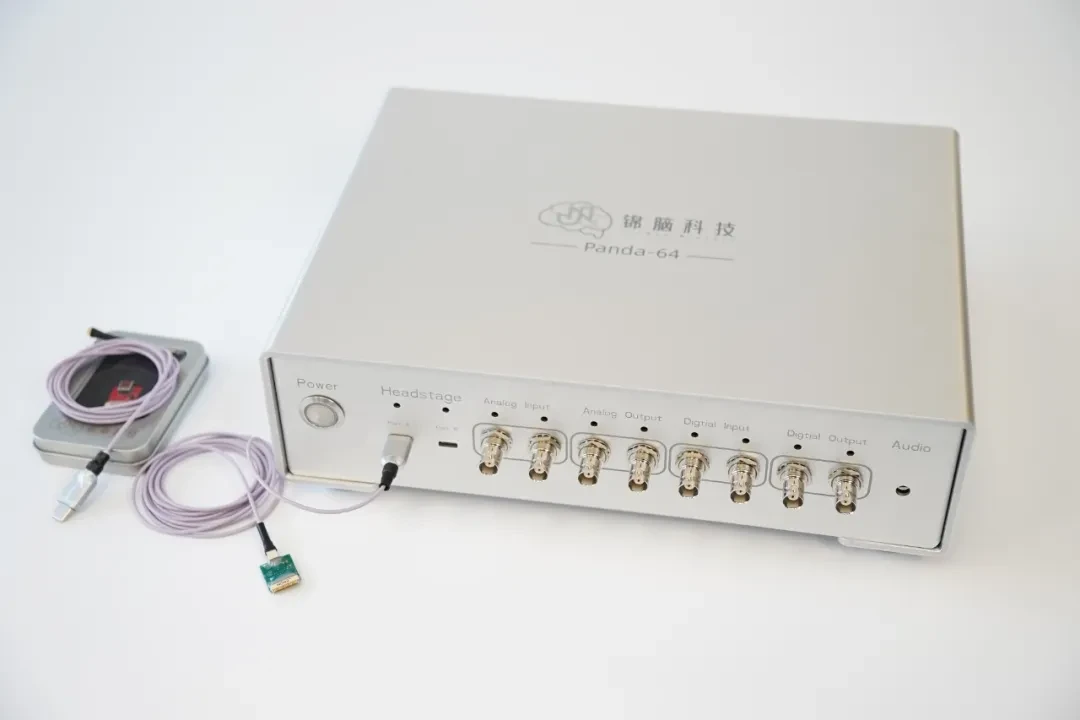
(Image source: Jinnao Medical)
Jinnao Medical’s strategic focus is on invasive technologies. “We aim to leverage the research and development and industrial translation of invasive technologies to bring benefits to individuals with high-level paraplegia and motor function impairments,” introduced Feng Shiqing.
However, the development of invasive devices is no easy task. Among these, the design and manufacturing of electrodes represent one of the most significant technical barriers in the entire brain-computer interface system, encompassing multiple aspects such as materials, structural design, and fabrication processes. Furthermore, with electrode implantation, key challenges also arise, including immune responses, algorithmic decoding, electrochemical stability, and biocompatibility.
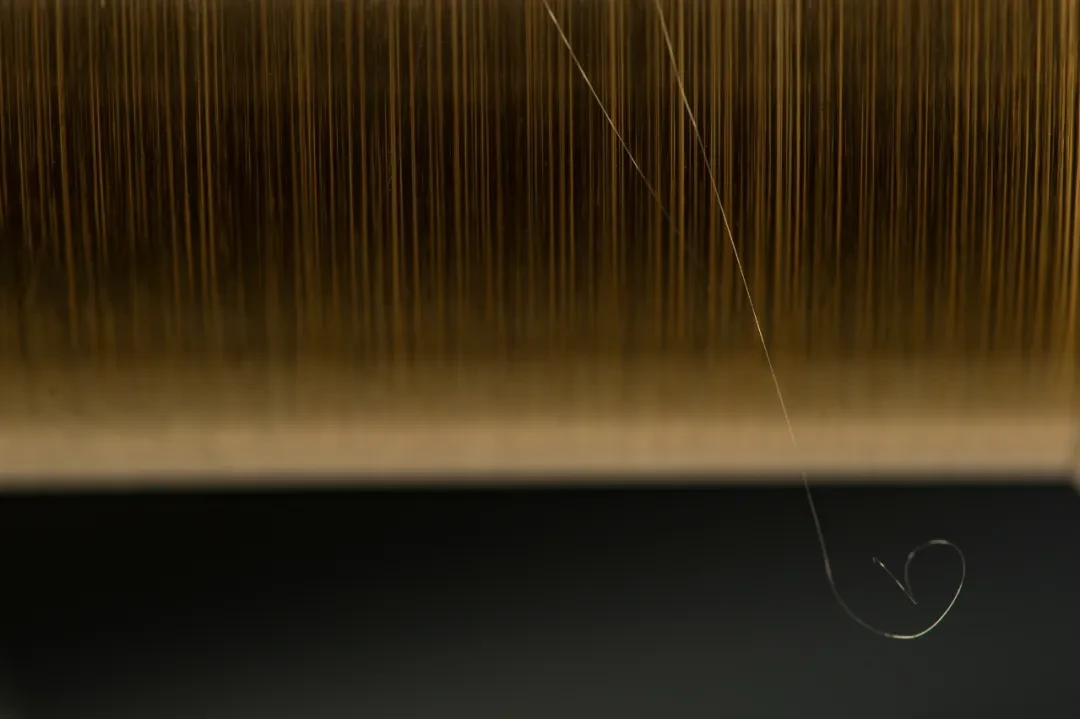
Jinnao Medical's Self-Developed and Manufactured 10μm Ultra-Micro Electrode Wire
(Image source: Jinnao Medical)
“We prioritized and tackled these issues from the very beginning of our R&D efforts,” said Feng Shiqing. Leveraging the team’s years of accumulated expertise in brain science, the company successfully developed the “High-Density Ultra-Micro Array Electrode System.” This system features a 1,600-channel electrode design with an inter-electrode spacing of only 300 micrometers, enabling the simultaneous capture of electrical activity from thousands of neurons.
In terms of safety issues such as heating and infection, Jinnao Medical innovatively adopts a “three-stage modular design,” separating the electrode implantation unit, digital processing unit, and power supply and transmission module. This approach effectively avoids common problems in traditional solutions, including noise interference, overheating, and limited battery life.
The “high-density ultra-micro array electrode system” also demonstrates superior potential in addressing issues such as signal stability. In conjunction withMingke MedicalIn the collaborative brain-computer interface (BCI) specialized laboratory, animal experimental data showed a 10-month signal attenuation rate of approximately 50%, significantly outperforming other products on the market.

Ecological Victory: Why Zhangjiang Pharma Valley?
“Despite the broad development prospects and significant market potential of brain-computer interfaces (BCIs), the entire field is still in its early stages. It involves multidisciplinary integration, features a long industrial chain, and presents substantial R&D challenges and high costs.” According to Tan Qi, co-founder of Jinnao Medical, it is difficult for enterprises to succeed by operating in isolation, which is why they chose to collaborate with Mingke Medicine.Facilitated by Zhangjiang Pharma Valley, we successfully partnered with Mingke Medical to jointly establish a specialized Brain-Computer Interface (BCI) laboratory.。”
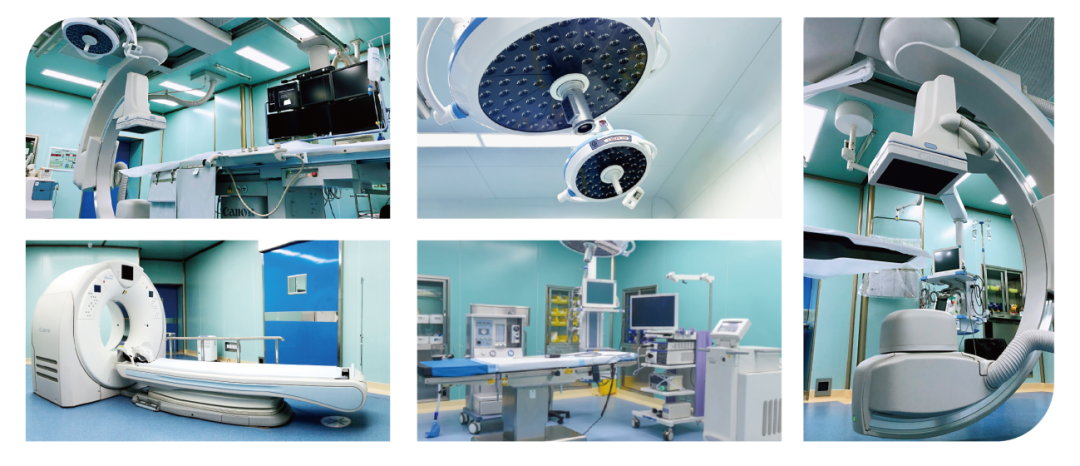
Mingke Medical Laboratory
“Mingke Medical“Established a preclinical large-animal experimental center spanning nearly 5,000 square meters and built to international standards, equipped with large imported digital subtraction angiography (DSA) systems, 64-slice CT scanners, and a comprehensive testing and inspection system. The center provides full-spectrum, end-to-end experimental services across all major species—including mice, rabbits, pigs, dogs, and non-human primates—to innovative enterprises. Leveraging these advanced, state-of-the-art facilities, years of accumulated comprehensive and professional expertise, and process controls compliant with CNAS standards, the center has not only significantly enhanced experimental precision and efficiency but also effectively shortened the overall project trial cycle.”Mingke MedicineChairman Shen Lei introduced.
In the cutting-edge field of brain-computer interfaces (BCIs), Mingke Medical has also made proactive strategic arrangements, establishing a high-standard experimental platform to address the industry’s data bottlenecks. By developing neural signal models in pigs, dogs, and monkeys, the company is accelerating the validation of electrode biocompatibility and signal decoding accuracy. In the fourth quarter of 2025, Mingke Medical will collaborate with leading professional institutions to jointly establish the “Joint Laboratory Platform for Brain-Computer Interfaces.” This platform will focus on invasive BCI devices, providing animal validation services for core application scenarios such as motor control and language decoding, which is expected to shorten related R&D cycles by 40%.
Nevertheless, the industry’s development still faces challenges. Shen Lei candidly stated, “Although we have obtained experimental data for multiple product varieties through animal trials, large-scale, high-quality EEG datasets remain scarce across the broader brain-computer interface (BCI) industry, and there is a lack of unified standards for data acquisition and annotation. More critically, data from different research institutions and companies cannot be directly compared or shared, which significantly undermines the reusability value of data and the efficiency of collaborative industry research.”This requires collaborative development among government, industry, academia, research institutions, and healthcare providers to achieve a breakthrough in the industry.”
“Competition in the brain-computer interface industry is, at its core, competition between ecosystems,” said Tan Qi. The advantage of Zhangjiang Pharma Valley lies in its globally leading biomedical industrial cluster and open-source biomedical innovation ecosystem, cultivated over more than 30 years of development, rather than being merely a blueprint on a blank slate. This is precisely the magnet that has attracted top-tier innovative forces such as Jinnao Medical to take root here.
“The biomedical industry ecosystem in Zhangjiang Pharma Valley is highly developed.From talent to funding, from policies to clinical resources, from materials to chips... In Zhangjiang Pharma Valley, you can seamlessly access various innovation elements, accelerating the emergence of innovative seeds. "Within the next 2–3 years, our high-density ultra-micro array electrode system, a motion intention capture device, will also expand to emotion, perception, and visual intention capture devices, bringing hope not only to patients with high-level paraplegia but also to those with epilepsy," said Feng Shiqing.