Nalu Medical Secures $50 Million Growth Financing to Accelerate Commercialization of Innovative Chronic Pain Therapy

Nalu Medical
Medical Device Developer

Trinity Capital
Equity Investment Firm
Trinity Capital
Equity Investment Firm
September 2025, Investment Management CompanyTrinity Capital Inc.(NASDAQ: TRIN)Announced that it will provide support to companies in the neurostimulation device sector Nalu Medical Provides up to$50 million(approximately RMB 360 million)growth capital to support the company’s rapid expansion during the commercialization phase.
This financing follows closely on the heels of Nalu’s FDA approvals for spinal cord stimulation (SCS) and peripheral nerve stimulation (PNS) indications, as well as its $85 million Series E equity financing completed in 2024, serving as a significant catalyst for the company’s commercialization efforts.
Trinity stated that the initial funding amounted to approximately $26 million, with the remaining funds to be released in tranches based on commercial milestones such as patient implant volume and revenue targets. This structured financing not only avoided equity dilution but also ensured the company’s cash flow security during the commercial ramp-up phase.
# Use of Proceeds and Strategic Significance
Nalu Medical will leverage this round of financing to further expand its sales and marketing teams, enhance production and inventory capabilities, intensify marketing efforts, and support increased coverage across major pain clinics nationwide. CEO Tom West emphasized that this financing will accelerate the transition from pilot markets to a national presence, ensuring that more patients with chronic pain can access Nalu’s minimally invasive treatment solutions as soon as possible.
Kyle Brown, Managing Director at Trinity Capital, stated that Nalu Medical possesses differentiated technological barriers in the neurostimulation sector, capable of addressing current gaps in chronic pain treatment. “We look forward to helping it expand from regional deployment to a nationwide rollout across China, ultimately achieving scaled adoption of this innovative therapy.”
# Track Background and Industry Opportunities
Chronic pain is one of the most common health problems worldwide. Current treatment modalities primarily rely on opioid analgesics, which pose risks of tolerance, dependence, and abuse, thereby imposing a substantial public health burden. Neuromodulation therapies—particularly Spinal Cord Stimulation (SCS) and Peripheral Nerve Stimulation (PNS)—have become internationally recognized as advanced treatment options capable of providing long-term, safe pain control.
However, the current market is dominated byMedtronic, Abbott, Boston ScientificDominated by three giants, the three combined account for more than 80% of the market share, with products still primarilyTraditional Implantable Pulse Generator (IPG)Predominantly. Such devices are bulky, resulting in poor patient comfort post-implantation, requiring frequent charging or battery replacement, and associated with a high rate of secondary surgeries. High costs and complex surgical procedures also limit treatment accessibility, rendering it unaffordable for the majority of patients.
Against this market backdrop, Nalu Medical’s innovative solution offers a disruptive, differentiated alternative: smaller, more comfortable, easier to operate, and more cost-effective.
# Company Profile
Nalu Medical, founded in 2015 and headquartered in Carlsbad, California, is an innovative medical device company focused on the treatment of chronic neuropathic pain. The company has completed over $200 million in equity financing, with investors including globally renowned funds such as B Capital, Gilde Healthcare, MVM Partners, and Novo Holdings. Its management team comprises industry veterans, including CEO Tom West, former Chief Executive Officer of Intersect ENT, who brings extensive experience in commercialization and market expansion.
In the first half of 2025, Nalu Medical’s patient implant volume increased by 30% year-over-year, and its commercial network has expanded to cover major pain management clinics across the United States.
# Product Introduction
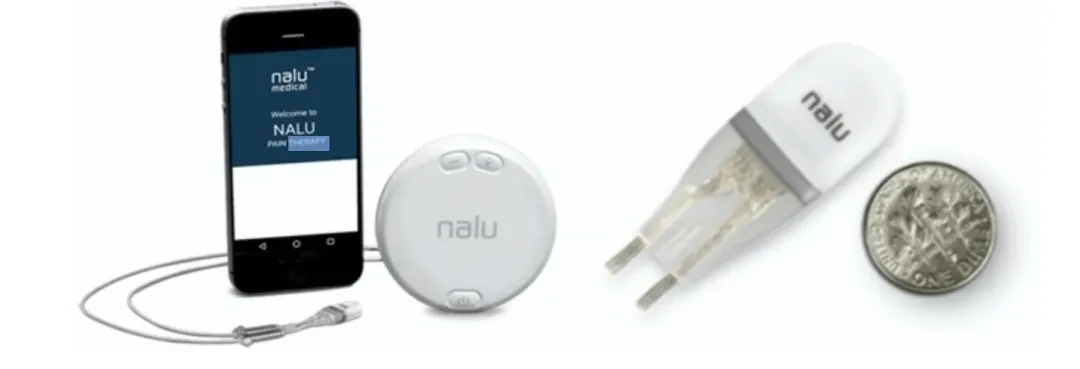
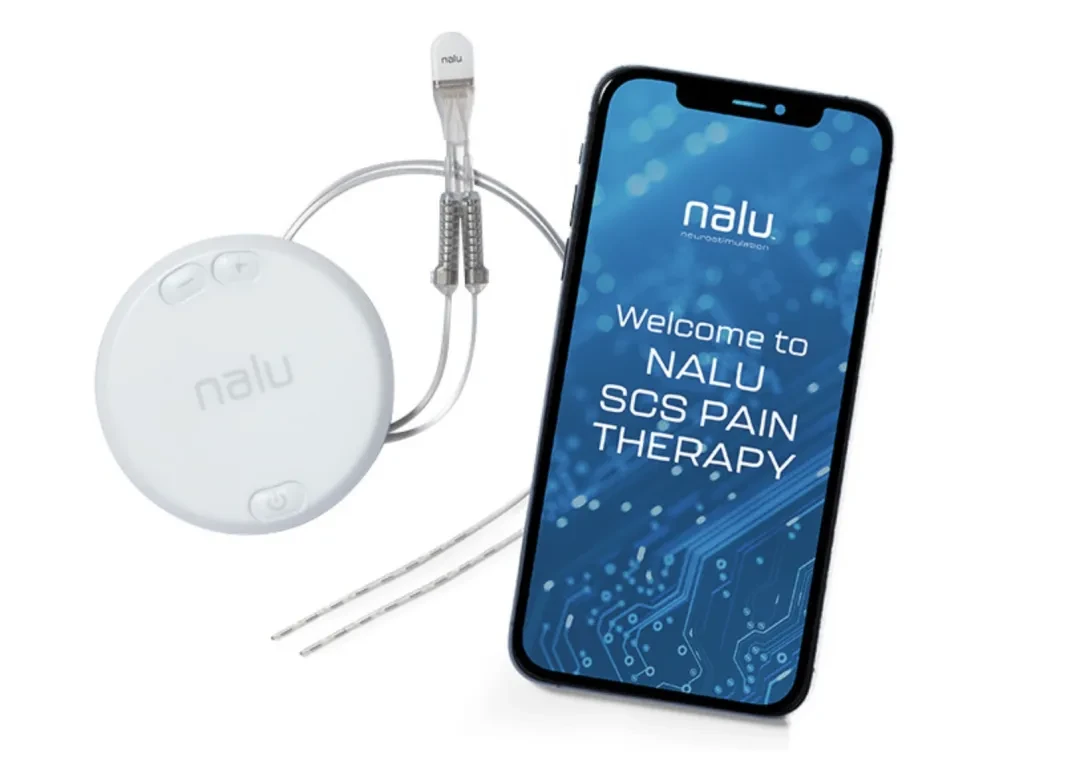
The Nalu Neurostimulation System is aBattery-Free, Miniaturized Neural Stimulation System, indicated for SCS and PNS indications. Its core components include:
Micro-Implantable Pulse Generator (micro-IPG): With a volume just 1/27th that of traditional IPGs, the battery-free design is nearly imperceptible after implantation, significantly enhancing patient comfort.
External Therapy Disc: The IPG is powered wirelessly, eliminating the need for surgical battery replacement and significantly extending device longevity to 18 years.
Intelligent Control App: Patients can self-adjust stimulation parameters to achieve personalized treatment, and the software can be upgraded online to avoid secondary surgery.
This system not only lowers the barrier to implantation and maintenance costs, but also significantly improves physicians' operational efficiency and shortens the learning curve.
Clinical Progress
Latest one-year follow-up data from the Nalu COMFORT study show that 87% of patients experienced pain relief exceeding 50%, with an average pain reduction of 69%; 95% of patients reported overall improvement, and more than 70% demonstrated reduced disability and improved quality of life.
Chief Investigator Dr. John Hatheway commented, “This is the first time that such durable clinical improvement has been observed across multiple anatomical regions, fully validating the therapeutic value of PNS.”
CEO Tom West stated, “One-year postoperative data surpassed other published randomized controlled trials of PNS, confirming that Nalu technology can deliver significant and sustained improvements for patients with chronic pain.”
# Conclusion
With a $50 million growth capital infusion from Trinity Capital, Nalu Medical’s commercialization efforts are entering an accelerated phase. Its unique battery-free micro implantable pulse generator (IPG) and scalable business model position the company to carve out a niche in the neuromodulation market, which has been monopolized by three major players for years, thereby advancing chronic pain treatment toward greater minimally invasiveness, affordability, and accessibility.
Siyu Annual Activity Review:The 1st Global Ophthalmology Congress | The First Global Orthopedics Conference | The First Global Cardiovascular Conference| The 1st Global Aesthetic Medicine and Technology Conference |The 2nd Global Medical Technology Conference|The 3rd Global Surgical Robotics Conference