Boston Scientific Acquires Nalu Medical for $530 Million to Expand Chronic Pain Portfolio with Wireless Neuromodulation Platform

Nalu Medical
Medical Device Developer

October 17, 2025Boston Scientific announced an approximately$530 million (approximately RMB 3.8 billion)Cash Acquisition of Nalu Medical.This neuromodulation company, established less than a decade ago and renowned for its “Wireless Peripheral Nerve Stimulation System,” just secured $50 million in growth capital from Trinity Capital last month to support commercial expansion.
From Financing to M&A: Only Three Weeks Apart.
This is not merely a capital maneuver, but rather an industry footnote on the future direction of chronic pain treatment.

# From Investment to M&A: The Next Strategic Move of Neuromodulation Giants
Boston Scientific and Nalu Medical are no strangers. As early as 2017, Boston Scientific acquired a stake in Nalu Medical through a strategic investment and has long monitored its R&D and clinical progress. This acquisition will involve the purchase of all remaining equity interests, with closing expected in the first half of 2026.
Nalu is currently in a phase of rapid growth, with sales projected to exceed $60 million in 2025 and a growth rate of over 25% anticipated for 2026. Upon completion of the transaction, Nalu will be integrated into Boston Scientific’s Neuromodulation division, alongside its existingSpinal Cord Stimulation (SCS)、Radiofrequency Ablation (RFA), complementing products such as Basivertebral Nerve Ablation (BVN).
For Boston Scientific, this transaction represents a strategic expansion from “central neuromodulation” to “peripheral neuromodulation.”As a result, the company’s product portfolio in pain management has become more comprehensive, achieving multi-level coverage from deep nerves to peripheral nerves, thereby further strengthening its direct competition with industry giants such as Medtronic and Abbott in the field of neuromodulation.
# Acceleration Signals Prior to Acquisition
Prior to the acquisition announcement, Nalu had just secured up to $50 million in growth capital from Trinity Capital.
The financing structure adopts a phased disbursement mechanism, linked to commercial metrics such as implant volume and revenue targets, indicating that it has entered a mature stage of commercial scale-up.
Nalu plans to use these funds to expand its sales and marketing teams, increase production capacity and inventory, and accelerate coverage of major pain management clinics across the United States.Chief Executive Officer Tom West stated that this financing will“Propelling the Company’s Expansion from a Regional Footprint to a Nationwide Presence”。
Kyle Brown, Managing Director at Trinity Capital, pointed out: “Nalu’s technological approach is distinctly differentiated in the field of neurostimulation, enabling a balance among therapeutic efficacy, comfort, and accessibility.”
This funding round marked a tipping point for Nalu Medical’s commercial expansion and laid the groundwork for this acquisition. For Boston Scientific, choosing to act at this juncture signaled that it had identified a target with mature technology, robust market validation, and seamless integrability into its existing portfolio.
Related Reading:$360 Million Raised! Innovative Therapy for Chronic Pain
# Technical Highlights: Making Neurostimulation “Smaller, Longer-Lasting, and Easier to Use”
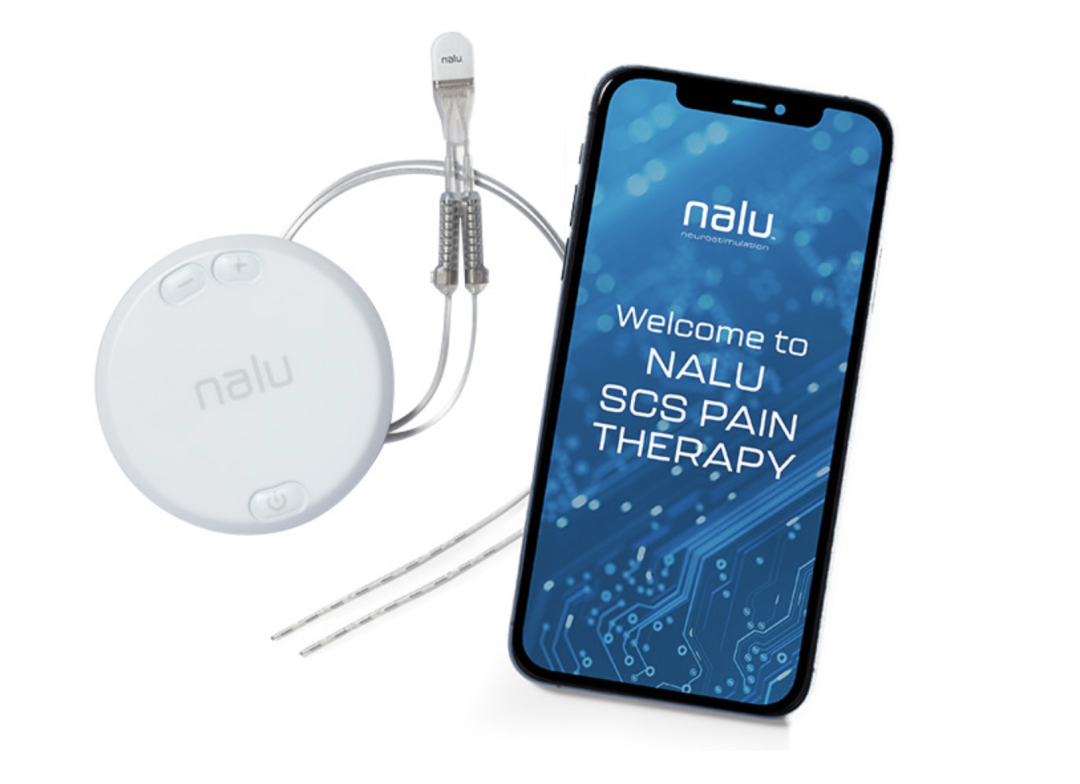
Nalu's core product isNalu Neurostimulation System——A battery-free, miniaturized, wirelessly powered neurostimulation system indicated for both peripheral nerve stimulation (PNS) and spinal cord stimulation (SCS).
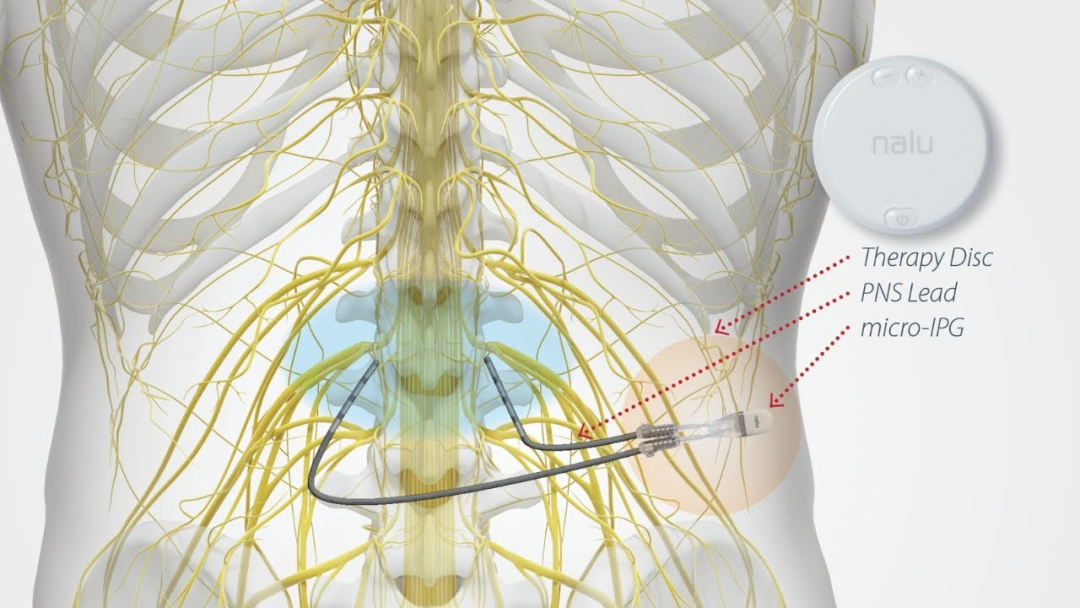
System Architecture Consists of Three Parts:
Micro Implantable Pulse Generator (micro-IPG): With a volume only 1/27th that of traditional IPGs, it is nearly imperceptible after implantation, significantly enhancing patient comfort;
External Therapy Disc: Powering the implant via wireless energy transfer eliminates the need for battery replacement, with a device lifespan of up to 18 years;
Smart Control App: Patients can independently adjust the stimulation intensity and mode, while physicians can remotely monitor and update the software to enable personalized treatment.
This system reduces surgical complexity and maintenance costs, while also eliminating the risk of secondary surgeries associated with traditional battery-powered stimulators.
A lighter, smarter form factor truly endows neuromodulation with the attributes of “wearable medical technology.”
# Clinical Validation: Dual Enhancement of Efficacy and Compliance
Efficacy data is a critical foundation for the Nalu system.
In two multicenter randomized controlled trials (COMFORT and COMFORT 2), the Nalu System achieved87%and79%Results of >50% Pain Relief in Patients. Mean Pain Reduction Reached64%, real-world data from over 2,000 cases similarly demonstrated that 94% of patients achieved clinically significant improvement.
Clinical investigators believe that these data demonstrate consistent efficacy across multiple anatomical sites (such as the shoulder, lower back, and knee), highlighting the broad applicability of peripheral nerve stimulation (PNS) therapy.
Furthermore, Nalu’s wireless power design significantly improves patient compliance and postoperative experience, enabling long-term, low-maintenance therapy.
Against the backdrop of long-term reliance on pharmacotherapy for chronic pain management and limited acceptance of implantable therapies, such a system architecture undoubtedly enhances “technological accessibility”—ensuring not only therapeutic efficacy but also greater ease of use.
# Track Significance: Re-stratification of Chronic Pain Treatment
Chronic pain is one of the most prevalent chronic conditions globally, affecting over 1 billion people worldwide. Traditional treatments primarily rely on opioids, which carry risks of dependence and abuse. Neuromodulation therapies—particularly Spinal Cord Stimulation (SCS) and Peripheral Nerve Stimulation (PNS)—have been proven to offer viable alternatives with long-term safety and efficacy.
The market is currently dominated by three companies—Medtronic, Abbott, and Boston Scientific—which collectively hold approximately 80% of the market share. However, mainstream products remain traditional battery-powered implantable pulse generators (IPGs), which are characterized by their large size, high cost, and complex operation. Nalu Medical has entered the market with a differentiated approach featuring “miniaturization + wireless power transfer,” offering a viable alternative.
For Boston Scientific, the value of this acquisition lies not only in product complementarity but also in providing the company with aFor patients with mild conditions and peripheral painnew entry point.
This means that, beyond the treatment of severe pain, it can expand into more application scenarios for “moderate pain” or “localized pain,” enabling neuromodulation to reach a broader base of grassroots and outpatient markets.
# Siyu Observation: The "Mass Adoption Tipping Point" for Peripheral Nerve Stimulation
Ten years ago, the keyword in neuromodulation was “closed-loop feedback”; five years ago, it was “AI algorithms”; and now, the industry is beginning to return to the most fundamental question—How to Make It More Affordable, Accessible, and Sustainable for More Patients。
Nalu’s innovation directly addresses this challenge. It represents not merely a single technological breakthrough, but a reimagining of neuromodulation as an “accessible medical device.”
Boston Scientific’s acquisition also sends a signal: large companies are shifting from complex system integration to lighter, more scalable technology models.
In the future neuromodulation market, competition will no longer hinge solely on “whose algorithm is more precise,” but rather on “whose system can enter clinical practice more easily.” From this perspective, the significance of Nalu may far exceed that of a single transaction.
Recent Articles
The Era of Domestic Medical Devices Has Arrived!
Unveiling Innovation in Medical Devices: How Doctors’ “Great Ideas” Become Reality?
Global Medical Device Monitor
▌Capital Radar | Money Flow
Foreign Financing Events |Domestic Financing Events |Overseas Acquisition Cases |Domestic Acquisition Cases
Overseas Company IPO |Domestic Enterprise IPO |Financial Reports of Overseas Companies |Domestic Corporate Financial Reports
Exhibition Preview / Review / Roundup
Nalu Medical Annual Event Review:The First Global Ophthalmology Conference | The 1st Global Orthopedics Conference | The First Global Cardiovascular Conference| The 1st Global Conference on Medical Aesthetics Technology |The 2nd Global Medical Technology Conference|The 3rd Global Surgical Robotics Conference
Content Disclaimer:“Siyu MedTech” tracks global advancements in medical technology, aiming to disseminate knowledge on technology and industry. All content is provided solely for industry exchange and academic discussion and does not constitute medical advice or commercial promotion. Information regarding companies, products, and registration details mentioned in the articles is sourced from public materials or verified channels. If there are any errors or omissions, please feel free to contact us for corrections. Email: jacky@suribot.com
Copyright Notice:“Siyu MedTech” original articles are copyrighted by Beijing Siyu Bote Technology Co., Ltd. Unauthorized reproduction, excerpting, or mirroring to other websites, public accounts, or commercial platforms is prohibited. For reprint permissions, please contact the backend for authorization. The platform reserves the right to pursue legal action against unauthorized full-text reprints, content spinning, or rewriting.