

Altman Enters the BCI Arena with Merge Labs: A Non-Invasive Challenge to Musk’s Neuralink

Neuralink
Brain-Computer Interface System Developer

Altman and Musk’s Feud Spills Over into the Brain-Computer Interface Arena!
Recently, according to insiders, Altman has invited Mikhail Shapiro, an award-winning expert in biomolecular engineering, to join Merge Labs, the brain-computer interface startup he is about to co-found with Alex Blania.
Merge Labs is exploring the development of more advanced brain-computer interfaces (BCIs) by genetically modifying brain cells and combining this with ultrasound technology.
Although Shapiro’s official title has yet to be determined, insiders say he will become a founding team member of Merge and play a core leadership role in negotiations with investors.
Merge Labs is expected to make its official debut in the near future.
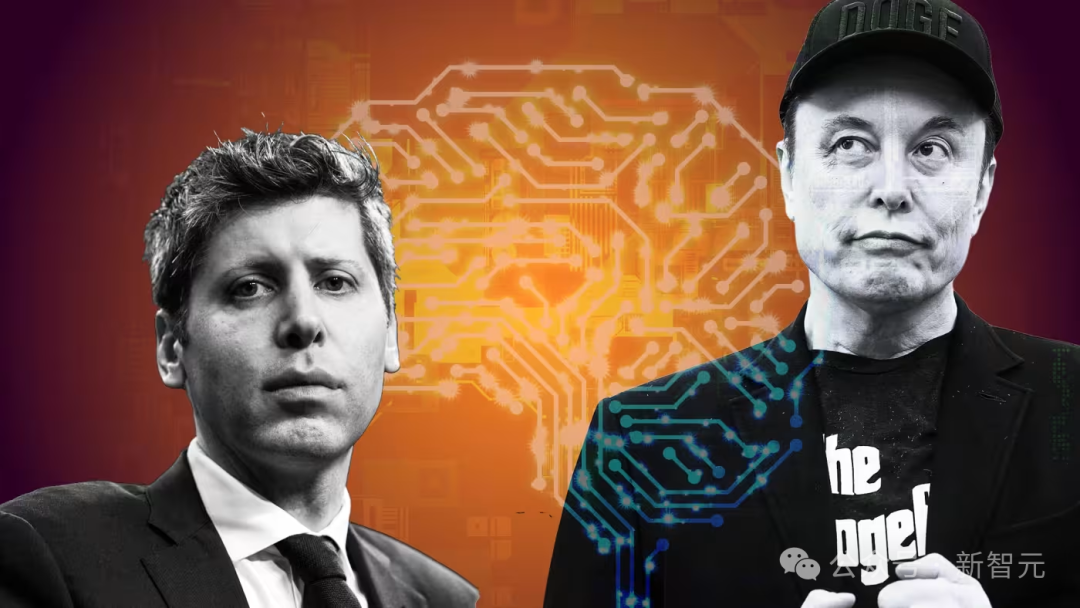
Altman may serve as Chairman of the Board of Merge Labs, without involvement in day-to-day operations. His division of responsibilities with Blania is expected to be similar to their roles at Tools for Humanity, a company that leverages iris-scanning technology for digital identity verification.
At Tools for Humanity, Altman serves as Chairman of the Board, and Alex Blania serves as CEO.
According to reports, at a press dinner in San Francisco this August, Altman mentioned the brain-computer interface project and stated that financing discussions for Merge were underway.
Merge plans to raise $250 million at an $850 million valuation, with the majority of the funding coming from OpenAI’s venture capital team.
Notably, Altman had previously invested in Musk’s brain-implant company, Neuralink.
Enabling "Read-Only Mode" for Brain-Computer Interfaces
Shapiro’s joining reveals Merge’s direction—it will adopt a non-invasive technological approach that is markedly different from Neuralink’s.
Like Altman, Musk is also an advocate of the concept of “human-machine integration.”
As early as 2016, Musk founded Neuralink, a company with the mission of developing brain-computer interfaces (BCIs) implantable in the human brain to directly connect the human brain to external devices (such as smartphones, computers, and even future AI systems).
It is akin to inserting a “USB port” into the human brain to establish a brain-computer interface, thereby allowing your “thoughts” to be “output” as computer commands.
In 2024, Neuralink announced that it had implanted its brain chip into the first human volunteer, and in the nearly year since, it has performed multiple additional human brain implantations outside the United States.
However, implanting chip devices in the human brain is often accompanied by extremely high risks such as brain tissue damage and immune responses.
Altman has publicly and explicitly stated that he disapproves of Neuralink’s invasive approach:
“I would absolutely never implant anything in my brain that kills neurons, like the Neuralink interface. I hope to be able to get ChatGPT to respond to me just by thinking; perhaps a read-only mode would suffice, which seems quite reasonable.”
Merge Labs Offers a Novel Non-Invasive Brain-Computer Interface Solution Based on Ultrasound and Genetic Technologies.
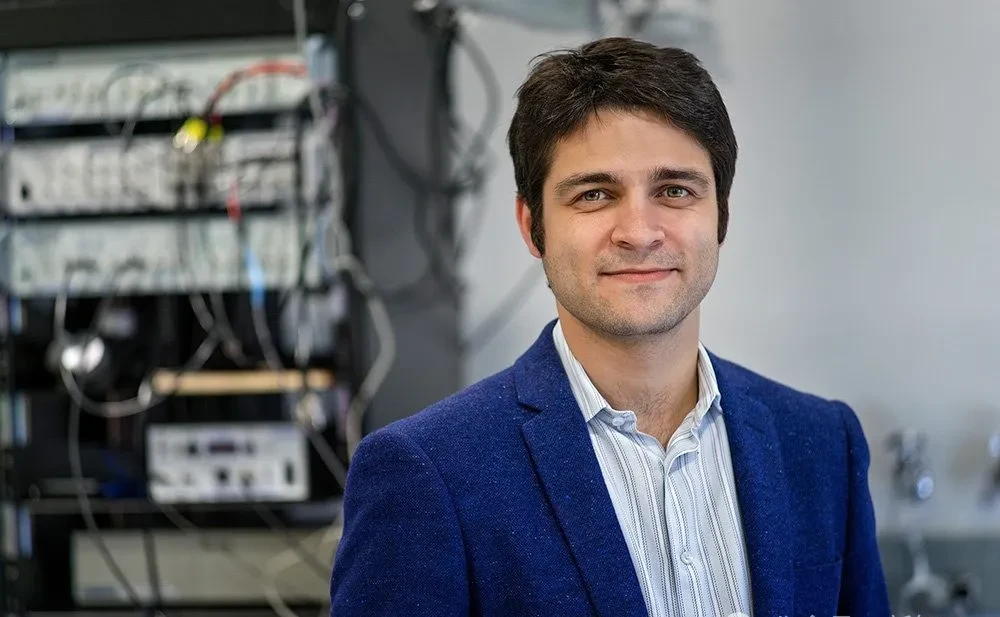
Mikhail Shapiro
Mikhail Shapiro earned a Ph.D. in Bioengineering from the Massachusetts Institute of Technology and a B.A. in Neuroscience from Brown University, and he conducted postdoctoral research at the University of Chicago and the University of California, Berkeley.
Shapiro is dedicated to leveraging the interaction between sound waves, magnetic fields, and the human brain to develop brain-computer interfaces, thereby avoiding the need for craniotomy and chip implantation as required by Neuralink.
He believes that rather than inserting electrodes directly into brain tissue, it is better to genetically modify cells to make them responsive to ultrasound, thereby minimizing invasiveness as much as possible.
Shapiro’s laboratory at the California Institute of Technology has achieved multiple innovations in the field of biomolecular technology, with a particular focus on non-invasive neural imaging and control technologies. By leveraging biomolecules with unique physical properties to interact with acoustic waves or magnetic fields, the lab enables applications such as non-invasive neural imaging and modulation.
Ultraman's Prediction Eight Years Ago
Human-Machine Integration May Begin in 2025
As early as December 2017, Altman predicted in his blog that the era of human-machine integration would occur between 2025 and 2075.
“In Silicon Valley, a hot topic is the debate over exactly when humans and machines will merge (or, when humans will be surpassed by rapidly evolving AI or genetically enhanced species). Most predictions fall between 2025 and 2075.”

https://blog.samaltman.com/the-merge
Merge Labs will be officially launched in the coming weeks, a timing that aptly echoes Sam Altman’s prediction eight years ago that brain-computer interfaces would arrive “in as little as eight years.”
Altman named the new laboratory “Merge” (meaning fusion), embodying his firm belief in the inevitable arrival of human-machine integration.
He stated that human-machine integration is a gradual process that has already begun in the era of mobile phones and search engines, and that humanity has entered a stage of co-evolution with AI. We are improving AI, while AI is also influencing and shaping us.
“Unless we destroy ourselves first, superhuman AI will happen, genetic enhancement will happen, and brain-computer interfaces will happen.”
Merge Labs marks a direct confrontation between Altman and his longtime rival Musk in the field of brain-computer interfaces (BCI).
The two co-founded OpenAI, but after a conflict arose, Musk left the board to establish xAI, turning them into rivals in the AI field.
Merge Labs is currently still in its early stages, and its future direction may undergo significant adjustments.
Altman’s insistence on Merge Labs’ “non-invasive” BCI technology roadmap, combined with Shapiro’s leading research in the field and OpenAI’s substantial financial and technical resources, positions Merge Labs to potentially pioneer a distinctly different path from Neuralink in the brain-computer interface domain, enabling safer and more scalable human-machine interaction.
References:
https://www.bloomberg.com/news/articles/2025-08-15/sam-altman-brain-chip-venture-is-mulling-gene-therapy-approach%20
https://www.theverge.com/column/806666/sam-altman-merge-labs-brain-computer-interface-startup-hire?utm_source=chatgpt.com
Source: New Intelligence Element
For academic sharing only. If there is any infringement, please leave a message and it will be deleted immediately!
Welcome to the Brain-Computer Interface AI Planet
Access More Knowledge and Resources in Brain-Computer Interface + AI and Other Fields.

For group discussions and business collaborations, please add WeChat: RoseBCI [Note: Name + Industry/Profession].
Call for Papers
1. Submissions are welcome. For submission inquiries, please contact us via WeChat: RoseBCI
Click to submit:Guidelines for Submitting Academic News to the Brain-Computer Interface Community
2. To join the community as a part-time creator, please contact us on WeChat: RoseBCI


One-click Triple Action: “Share,” “Like,” and “Mark as Read”
Stay Updated on Every Frontier Development in Brain-Computer Interfaces