

Mind Reading 2025: From Motor Control to Thought Decoding — Brain-Computer Interfaces Enter the 'Whole-Brain Era'

Paradromics
Brain-Computer Interface Technology Developer

Neuralink
Brain-Computer Interface System Developer
On November 20, 2025, U.S. neurotechnology company Paradromics announced that its brain-computer interface device had received approval from the U.S. Food and Drug Administration (FDA) to initiate its first long-term clinical trial. The trial aims not only to verify safety but also to achieve a groundbreaking vision: enabling individuals with aphasia to regain real-time verbal communication capabilities through “imagined speech.”
Over the past two years,The Brain-Computer Interface Field Is Undergoing Unprecedented Acceleration. In 2024, Elon Musk’s Neuralink completed its first human implantation, and at least 13 volunteers are currently using the technology to play computer games and control robotic arms. Meanwhile, at least five other brain-computer interface (BCI) companies have conducted their first-in-human tests of their devices over the past two years. By 2025, approximately 90 individuals worldwide had used implanted BCI devices in clinical trials, with more companies planning to initiate human trials in the coming years.
In the consumer market, signals of change are equally clear. In 2023, Apple filed a patent for EEG sensors for AirPods, signaling that neurotechnology may soon transition from a niche research tool to a consumer product used daily by millions. When a tech giant enters the arena, the entire market landscape will be redefined.
The breakthroughs in the technology itself are even more astonishing. Traditional brain-computer interfaces (BCIs) primarily read signals from the motor cortex, enabling paralyzed patients to control robotic arms or type on screens using their thoughts. However, researchers are now exploring deeper brain regions—specifically the posterior parietal cortex, which is associated with reasoning, attention, and planning. More remarkably, these next-generation systems can detect users’ intentions hundreds of milliseconds before they consciously attempt to execute an action, and can even decode hesitation and choice during the decision-making process.
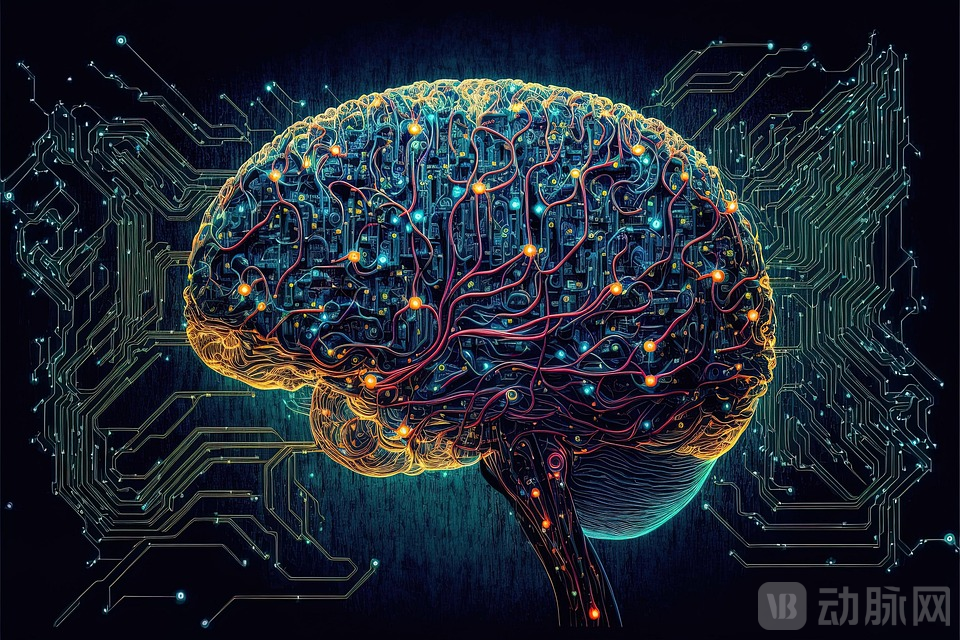
(Source: Pixabay)
When machines know what you are thinking before you do, it is no longer a plot from science fiction but a reality unfolding.Where will this technology lead us? How do we draw the line between medical miracles and privacy crises? In the “Whole-Brain Era,” how will brain-computer interfaces redefine the relationship between humans and machines?These questions have reached a point where they must be answered.
Early brain-computer interface (BCI) technology focused on the motor cortex, the region of the brain responsible for executing movements. When paralyzed patients imagine moving their arms, neurons in the motor cortex generate electrical signals, even though these signals cannot reach the muscles that have lost function. The role of the BCI is to capture these signals and convert them into commands to control external devices.This enables patients to control robotic arms, move computer cursors, and even regain the ability to speak through synthetic voice technology.
But Caltech neuroscientist Richard Andersen and his team went further. They implanted interfaces not only in the motor cortex but also a second interface in the posterior parietal cortex. This region plays a different role in the brain—it is responsible for reasoning, attention, and planning, serving as the “site of intention formation.”
This “dual-implant” approach has yielded unexpected findings. Andersen explained, “Surprisingly, when we accessed the posterior parietal cortex, we were able to obtain signals from a large number of regions intermingled together. The variety of information we could decode was extensive.”
In a study, Andersen’s team recorded brain activity in participants while they played blackjack. They found that certain neurons responded to the face value of the cards, others tracked the cumulative total of the cards in the player’s hand, and still others became active when the player decided whether to draw another card.This means that brain-computer interfaces can not only read “what you are doing” but also “what you are thinking.”In another proof-of-concept study, the research team even achieved preliminary decoding of internal dialogue from the parietal cortex, although the vocabulary remained extremely limited.
The key technology that makes all this possible is artificial intelligence. Brain signals themselves are extremely noisy, filled with various interference and individual differences. Traditional methods require lengthy personalized training for each user to establish a reliable decoding model. But deep learning algorithms have changed everything. By training on thousands of hours of neural data from multiple individuals,AI can learn patterns from seemingly meaningless fluctuations, transforming “noise” into “signals.”
Synchron CEO Tom Oxley stated, “The more we apply deep learning technology, the better we become at separating signals from noise. But in reality, it’s not about separating signals from noise; rather, it’s about extracting more signals from the signal itself.”
What is more surprising,AI Can Capture Faint "Preconscious" Signals. In an unpublished study, researchers at Synchron discovered that they could detect an error signal before users became aware of their mistakes. This signal appears just before users are about to select an unintended on-screen option; in other words,Brain-computer interfaces detect user errors slightly earlier than the users themselves become aware of them.This “preconscious prediction” capability is propelling brain-computer interfaces into a new dimension.
Despite remarkable technological advancements, implantable brain-computer interfaces remain under strict medical regulation. To date, no implantable brain-computer interface has received formal clinical approval anywhere in the world.
Synchron’s device comes closest to achieving this goal. Unlike other devices that require craniotomy, Synchron’s interface is implanted via the vasculature, inserted into the blood vessels covering the surface of the motor cortex, which significantly reduces surgical risk.The device has demonstrated safety, stability, and efficacy in preliminary trials.Oxley stated that the company is discussing pivotal clinical trials with the U.S. FDA, which could ultimately lead to clinical approval.
Neuralink has opted for a more complex neurosurgical implantation approach. Although this method carries higher surgical risks, it enables the acquisition of higher-quality neural signals. To date, at least 13 volunteers have received Neuralink implants and are using the device to play computer games and control robotic arms. According to the company, over 10,000 individuals have joined the waiting list for clinical trials. Furthermore, at least five other companies have completed their first-in-human tests in the past two years, although these trials mostly involved short-term recordings during neurosurgical procedures, ranging from a few minutes to several weeks.
Researchers in the field generally agree that the first devices to gain approval will be systems that record signals from the motor cortex to help severely paralyzed patients regain independence, including brain-computer interfaces that enable speech through synthetic voice technology. But everyone is looking ahead to the next step. Ethicist Nita Farahany observes, “They all hope to trace back further in time within the brain, reaching the subconscious precursors of thought.”
In stark contrast to the cautious advancement of medical-grade devices, consumer-grade neurotechnology is evolving within a rapidly expanding regulatory vacuum.These products utilize electroencephalography (EEG) technology to record detectable electrical activity ripples on the scalp via head-mounted devices. Although EEG cannot capture the activity of specific neurons like implanted electrodes, it can reveal overall brain states, such as alertness, concentration, fatigue, and anxiety levels.
Some companies are already selling headsets with companion software that provides users with real-time scores of these states, aiming to help them enhance athletic performance, meditate more effectively, or boost productivity. Ramses Alcaide, CEO of the Boston-based neurotechnology company Neurable, explained how AI has improved the usability of EEG: “We’ve made EEG less cumbersome than it used to be. Now, it can be used in real-life environments.”
Marcello Ienca, a neuroethicist at the Technical University of Munich in Germany, points out that EEG can detect minute voltage changes occurring in the brain within hundreds of milliseconds after a person perceives a stimulus; such signals may reveal how people’s attention and decision-making are associated with specific stimuli.
However, David Lyreskog, an ethicist at the University of Oxford, pointed out that, unlike clinical brain-computer interfaces constrained by medical regulations and privacy protections,The consumer-grade brain-computer interface field has almost no legal regulation.“Regulatory standards are like the Wild West,” he said.
In 2018, Ienca and colleagues found that most consumer-grade brain-computer interfaces (BCIs) did not use secure data-sharing channels or implement state-of-the-art privacy technologies. “I believe this has remained unchanged to this day,” said Ienca. More alarmingly, a 2024 analysis of the data policies of 30 consumer neurotechnology companies by the New York-based nonprofit Neural Rights Foundation revealed that nearly all companies retained complete control over user-provided data, meaning that most could use this information at their discretion, including selling it.
A car accident in 2008 left Nancy Smith paralyzed from the neck down, depriving her of the ability to play the piano. However, years later, she became a participant in a clinical trial conducted by the Andersen team and regained the ability to play the piano through a brain-computer interface (BCI). When she imagined playing the on-screen keyboard, her BCI translated these thoughts into keystrokes, allowing simple melodies such as “Twinkle, Twinkle, Little Star” to be played.
But Nancy’s experience was unsettling. “It felt as though the piano keys were striking themselves automatically; I didn’t even need to think about it,” she said at the time. “It was as if it knew the piece and played it on its own.”
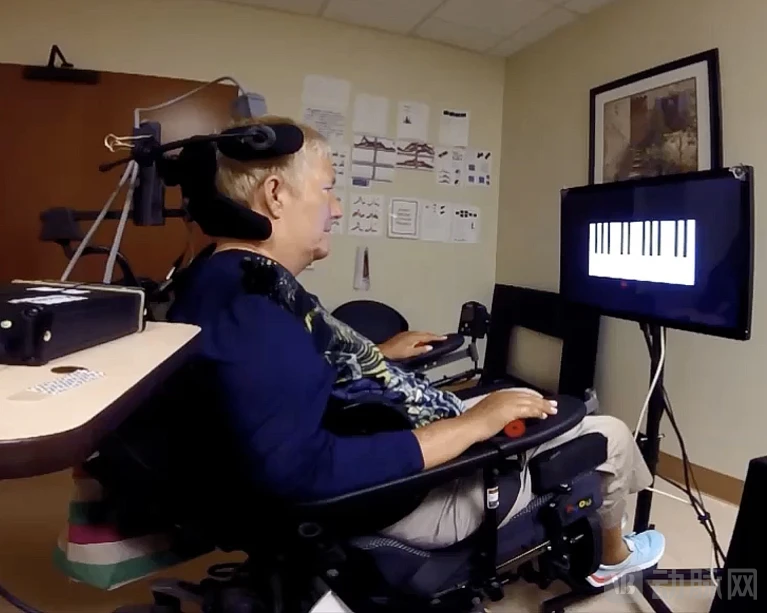
Figure: Nancy, who is paralyzed below the neck, creating music using a brain-computer interface (Source: Caltech)
Andersen explained the reason: Nancy’s brain-computer interface system was trained on her neural signals while she imagined playing. This learning enabled the system to detect her intent hundreds of milliseconds before she consciously attempted to play. Was this piano note played by Nancy, or by AI? If Nancy felt that “the piano was playing itself,” could it still be considered her action? Nancy passed away from cancer in 2023, but her experience leaves a fundamental question: When AI acts on “preconscious intent,” is it still your will?
Synchron’s discovery of erroneous predictive capabilities in unpublished research has made this issue more urgent. When a system can detect error signals before the user becomes aware of the mistake, how should it respond? Oxley stated, “If the system knows that you have just made an error, it can act in a way that predicts your next move.” Automatic error correction would enhance speed, but it means the system takes action on behalf of the user.While this may not be controversial for brain-computer interfaces (BCIs) that record from the motor cortex, what if BCIs were to infer other aspects of a person’s thoughts?
Matt Angle, CEO of Paradromics, believes that the integration of AI introduces an interesting dial, allowing brain-computer interface users to trade off between autonomy and speed. When users relinquish some control, such as when brain data is limited or ambiguous, “will people feel that the action is disembodied, or will they begin to feel that this is what they wanted in the first place?” Angle asked.
Privacy risks are equally severe.The Chilean government and the legislatures of four U.S. states have enacted laws granting protected status to direct recordings of neural activity in any form. However, Ienca and Farahany worry that these laws are insufficient because they focus solely on raw data, rather than on the inferences companies can make by combining neural information with parallel digital data streams. For instance, inferences about an individual’s mental health or political leanings could still be sold to third parties for the purpose of discriminating against or manipulating individuals.
“In my view, the data economy is already significantly infringing on privacy and cognitive freedom,” Ienca said. Adding neural data “is like injecting steroids into the existing data economy.”
Several key international organizations, including UNESCO and the OECD, have issued relevant guidelines. Furthermore, this September, three U.S. senators introduced a bill requiring the Federal Trade Commission to review how data from neurotechnology should be protected.
Risks to identity may be more subtle yet far-reaching.Farahany pointed out that Neuralink’s integration of the AI chatbot Grok with its brain-computer interface (BCI) serves as an early example of how the boundary between humans and machines may become blurred. A non-verbal research participant can use the BCI in conjunction with Grok to generate synthetic speech at a normal conversational pace. The chatbot suggests and drafts responses to help accelerate communication.
Although many people currently use AI to draft emails and other responses, Farahany suspects that an AI chatbot embedded in a brain-computer interface (BCI), if involved in every interaction, would likely exert excessive influence on what the user ultimately says. This effect would be amplified if the AI acts on intentions or preconscious thoughts.
She argues that chatbots with built-in design features and biases shape an individual’s way of thinking. “What you express becomes integrated into your identity, unconsciously shaping who you are,” she said.
Farahany observed,Going Beyond the Motor Cortex: A Universal Goal for Brain-Computer Interface Developers“They all hope to trace back further within the brain, reaching the subconscious precursors of thought.” Oxley predicts that the desire to treat mental illnesses and other brain disorders will lead to the exploration of more brain regions.“Whole-brain interfaces will be the future.”He said.
Maryam Shanechi, an engineer and computer scientist at the University of Southern California, is working toward this goal, in part by identifying and monitoring the neural signatures of mental illnesses and their symptoms. Brain-computer interfaces may be able to track such symptoms in individuals, deliver stimulation to modulate neural activity, and quantify the brain’s response to that stimulation or other interventions. “This feedback is crucial because you want to precisely tailor treatment to each individual’s unique needs,” says Shanechi.
A core aspect of her work is building foundational models of brain activity. Such models are constructed by training AI algorithms on thousands of hours of neural data from numerous individuals, theoretically enabling generalizability across individual brains. Synchron is also collaborating with NVIDIA, an AI and chip company based in Santa Clara, California, to leverage AI’s learning potential for building foundational models. Oxley stated that these models are uncovering unexpected signals in the motor cortex that were previously considered noise.
However, Shanechi remains cautious about excessive optimism. “This is not magic,” she emphasizes, noting that the capabilities of brain-computer interfaces to detect and decode signals are constrained by training data, which is challenging to acquire.
At the application level, researchers believeThe First Batch of Approved Devices Will Be Used to Help Severely Paralyzed Patients Regain Independence. However, both Oxley and Angle believe that brain-computer interfaces (BCIs) in brain regions beyond the motor cortex may one day aid in the diagnosis and treatment of psychiatric disorders. Oxley predicts that BCI data, integrated with multimodal digital data streams, will increasingly enable the inference of individuals’ inner mental states. After evaluating these data, BCIs can respond to thoughts and desires—potentially subconscious ones—in ways that may influence cognition and behavior.
At the regulatory level, a fundamental shift in thinking is underway. Farahany stated that previous considerations regarding neurotechnology primarily focused on safeguarding the privacy of users’ brain data to prevent third-party access to sensitive personal information. Looking ahead, the focus will increasingly be on ensuring that AI-enabled brain-computer interface systems fully align with users’ best interests.
In a preprint paper published this July, Farahany and colleagues proposed a new regulatory framework for brain-computer interfaces (BCIs) that would impose a legal fiduciary duty on developers in both experimental and consumer sectors toward their users. Akin to the relationships between lawyers and clients or physicians and patients, BCI developers would be obligated to act in the best interests of their users.
“If you are concerned about mental privacy, you should be very concerned about what happens to data after it leaves the device,” she said. “But I am now more worried about what happens on the device itself.”
Technology is not always neutral. Every design choice embeds value judgments: Should speed or autonomy be prioritized? To what extent should AI intervene? Does data belong to the user or the company? Whose interests are being served? When Synchron chose to prompt users for confirmation upon detecting erroneous signals rather than automatically correcting them, it prioritized safeguarding users’ sense of control. These seemingly technical decisions are, in fact, shaping our relationship with technology—and even shaping ourselves.
2025 is a critical window period.Multiple companies are poised to launch large-scale human trials, Synchron may secure clinical approval within the year, and consumer devices are rapidly gaining adoption. While there is still room for policy formulation, the window of opportunity is closing. If this moment is missed, the technology will become a fait accompli, business models will solidify, and the erosion of privacy and autonomy may become the new normal.
What should not be obscured by risk is that miracles are happening. Paralyzed patients are regaining the ability to communicate and move; ALS patients are still able to express themselves even after losing all muscle control; and Nancy Smith has returned to playing the piano—even if in a complex manner.In the future, patients with mental illnesses may receive effective treatment.This is not just about restoring function, but also about restoring dignity.
Yet the prerequisites for realizing these miracles are: transparent technological design, effective regulation, genuine informed consent from users, and broad societal discussion. We need to answer some fundamental questions: How much neural data are we willing to surrender for convenience? Who should own your thoughts? To what extent should AI intervene in human decision-making? How can we balance innovation with protection?
Mind reading is transitioning from science fiction to reality. As machines become capable of deciphering your subconscious, we need to answer the following question more than ever before:Where Are the Boundaries of Being Human?The answer to this question is not determined by technology, but by the choices we make at this moment.
Brain-Computer Interfaces Can Cross the Boundaries of Consciousness, but Who Will Guard the Last Line of Defense for Thought? The Answer Lies in the Conscience of Developers, the Wisdom of Regulators, the Vigilance of the Public, and Our Collective Reflection on What Kind of Future Is Worth Pursuing.