Is the Real-World Version of Cyborgs Accelerating Toward Arrival?
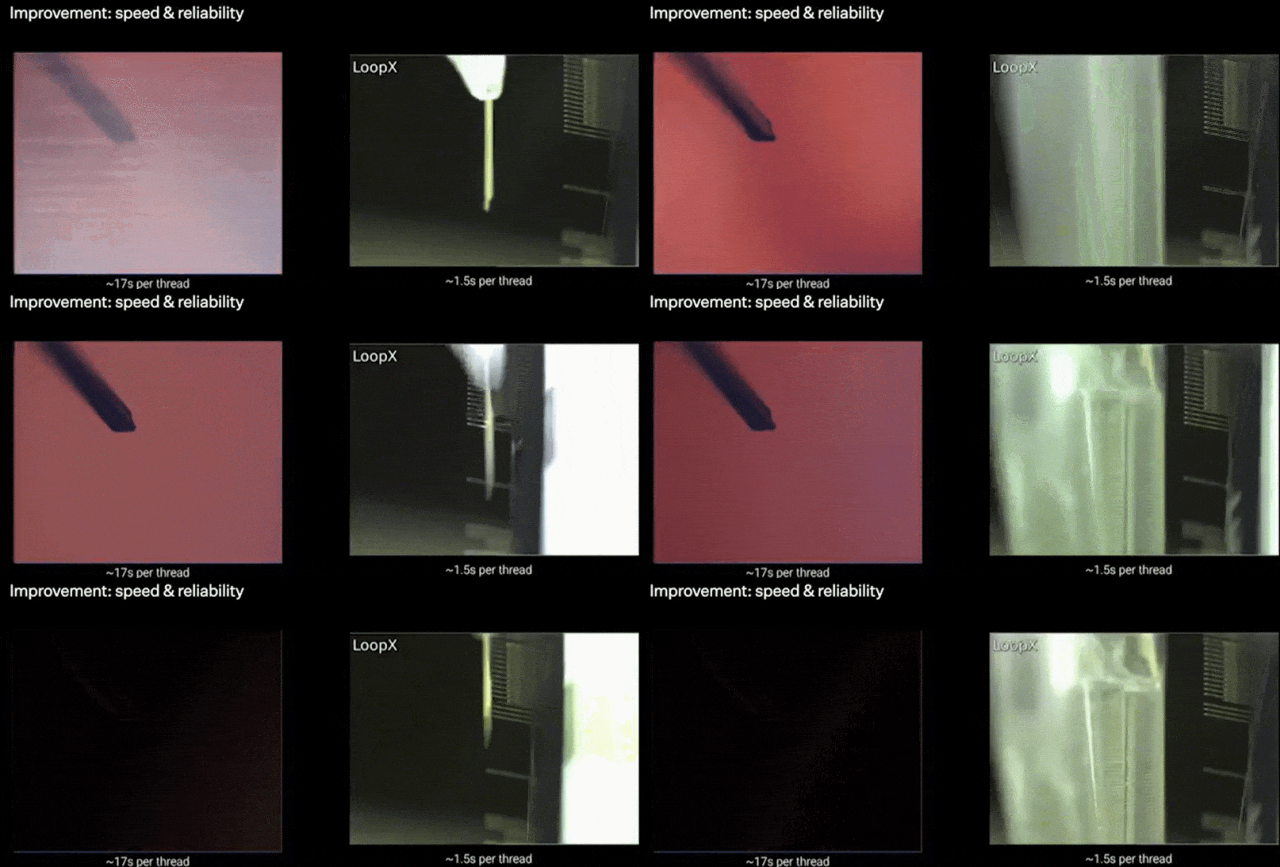
Recently, Neuralink posted a video on social media in which co-founder DJ Seo introduced the company’s latest advancements.From the technological advancements and details presented by the company, we observe:· Speed of single electrode wire implantation by the new generation surgical robotFrom 17 seconds to 1.5 seconds,and is compatible with 99% of the global population;
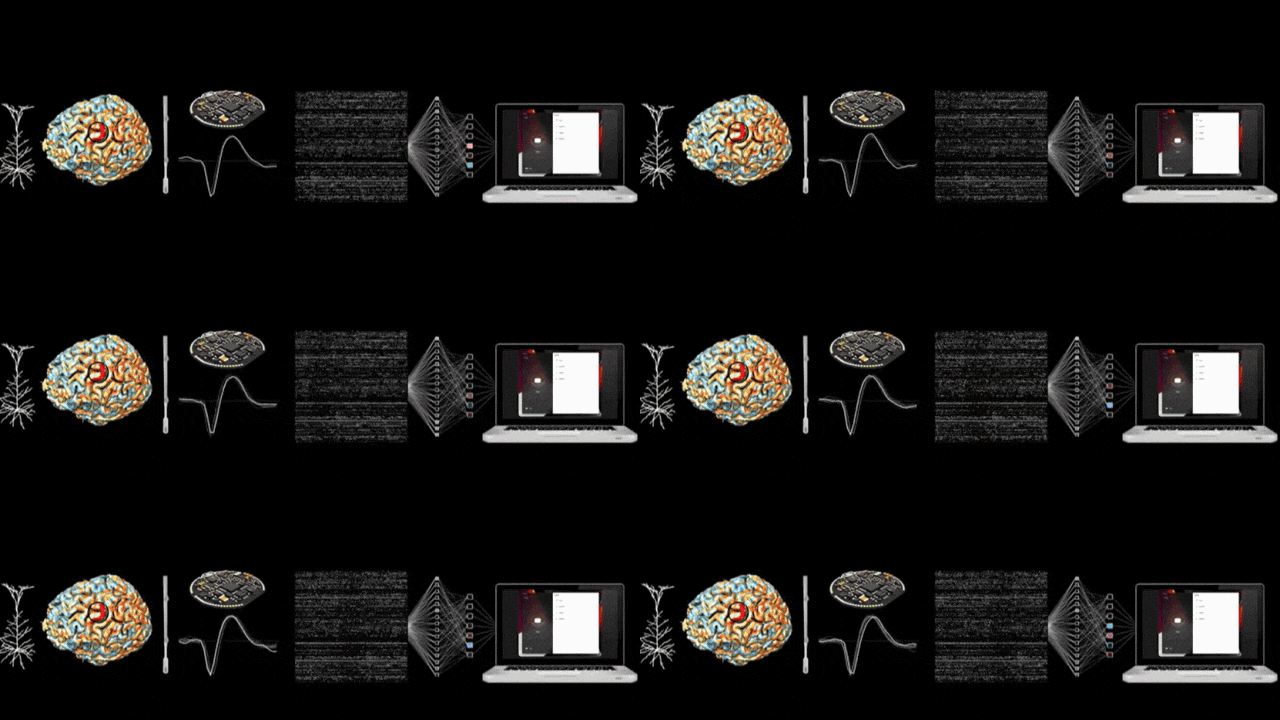
·More than a dozen subjects have been using the device for 8 hours per day, with over 10,000 patients on the waiting list;·New GenerationSurgical Robot InsertionInsertSingle Electrode LeadSpeed is more than ten times faster than existing robots;· Is dedicated to developing devices capable of being inserted into the superficial layers of the brain>50 mmDeep novel implantable needles to access a richer population of neurons;·its adoptedNeedle HolderManufacturing costs reduced by 95%。On one hand, recent cases have demonstrated that brain-computer interfaces are not merely about controlling a mouse or computer with thoughts, but rather enabling the operation of robotic arms; on the other hand,Neuralink is advancing from individual experiments to replicable applications, with these developmentsOr a key step toward scaling up the application of brain-computer interface technology.“Secret Weapons”: Surgical Robots, Implantable Devices, and Neural DecodingBrain-Computer Interface (BCI) is a technology that enables direct communication between the brain and external devices by...Technology for acquiring and decoding neural signals and converting them into output commands (e.g., to control external devices)。Neuralink’s initial goal is to help millions of paralyzed patients improve their quality of life. In the long term, it aims to help patients enhance motor and speech functions and achieve visual restoration by controlling computers or robotic arms.So, how are they implanted into the human brain? Neuralink’s “secret weapon” lies in its three core systems: the surgical robot, the implantable device itself, and neural decoding.
First, the doctor will drill a 25 mm diameter opening, about the size of a coin, in the patient's skull to implantBCI Device。
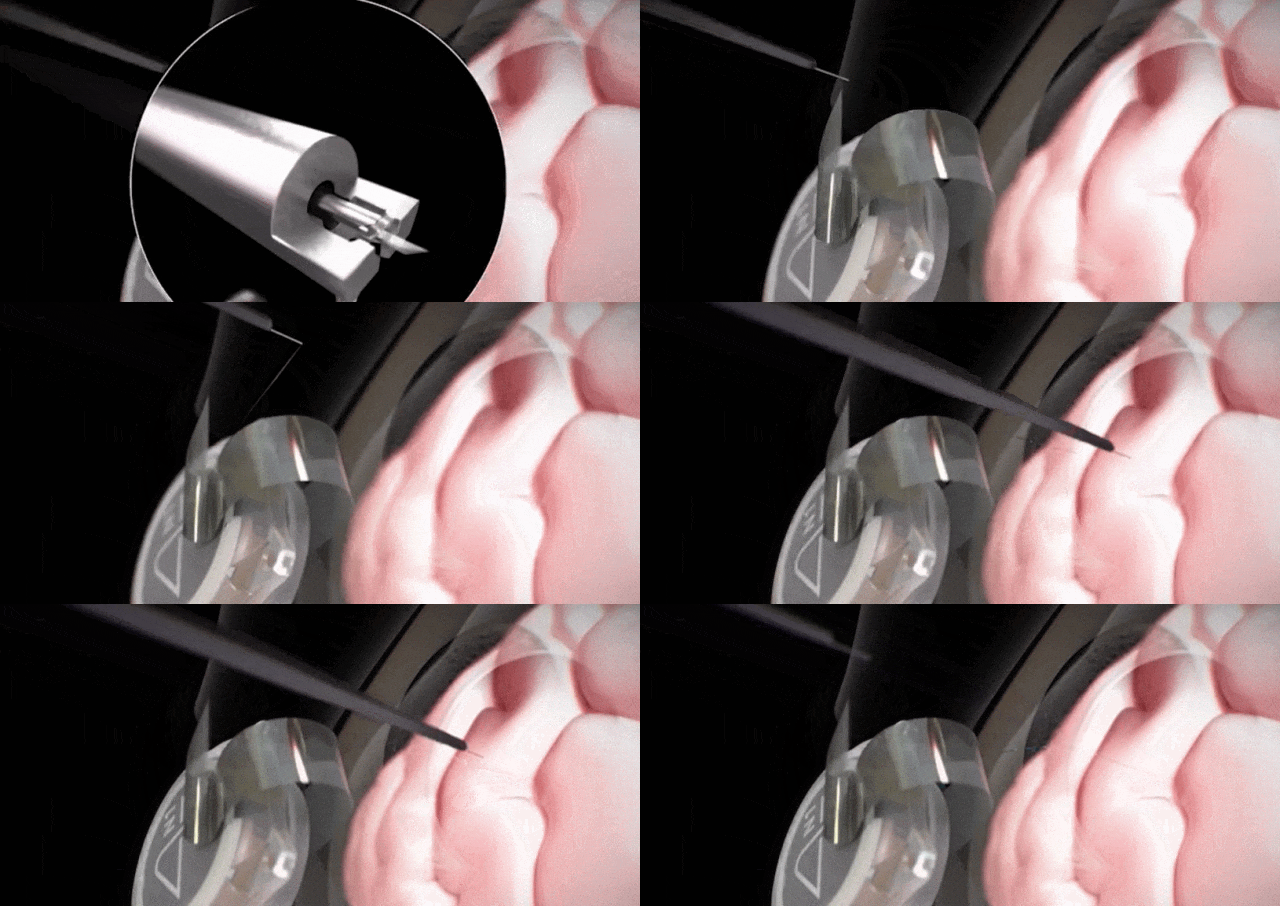
Next, the surgical robot takes the stage—equipped with a needle as fine as a red blood cell (thinner than a human hair), it safely introduces flexible electrode threads into the cranium. Each thread contains 8 electrodes, totaling 1,000 channels.The key lies in the fact that this flexible electrode wire is controlled by precision motors on the surgical robot, combined with coils while avoiding blood vessels.The robot divides the flexible electrode wires into 128 insertion actions.It is important to recognize that the brain is as soft as tofu, making it challenging to safely insert electrodes into an object that is in a state of constant motion and subject to change.
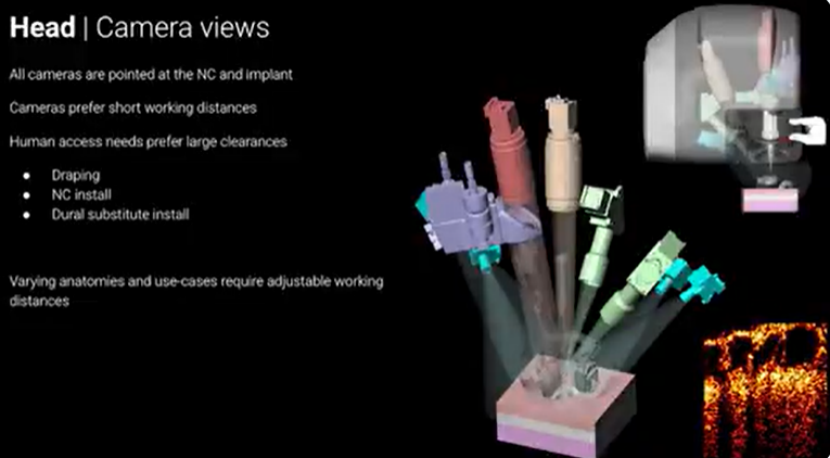
Existing off-the-shelf solutions are not feasible; Neuralink employed six sets of microscopes and optical coherence tomography (OCT,Optical CoherenceTomography) as a visual structure to track brain motion.
Their long-term goal is to make surgery as routine as LASIK eye surgery, capable of being completed within a “lunch break”—under an hour, and even while the patient is awake.”。A striking contrast is that surgical robots, upon insertionInsertionSingle electrode wireSpeed increased by more than tenfold; below are the existing surgical robots and the new-generation Rev10Comparison:Regarding implantable devices, they are manufactured using microelectromechanical systems (MEMS) processes in Neuralink’s cleanroom facilities; the company has also designed its own low-power analog circuits and custom chips.
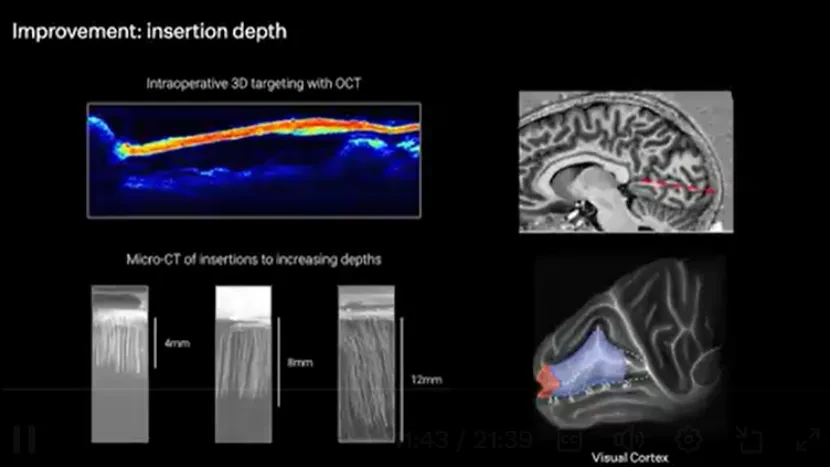
Hardware is one aspect; software presents comparable challenges. While pursuing faster insertion, Neuralink has also made improvements in achieving deeper insertion.
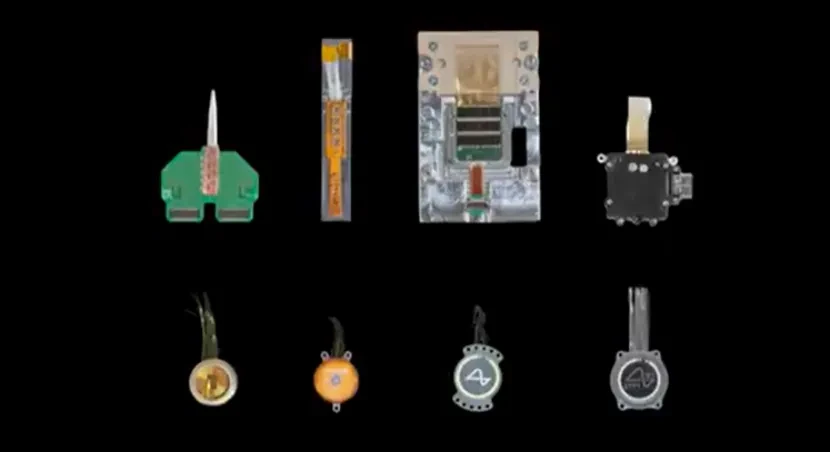
Figure | Neuralink electrode iterative development, from the initialWith USB-C PortFrom Wired Implantable Devices to Smaller, More Flexible Wireless Implantable Devices(Source:Neuralink )Currently, it is inserted 4 mm from the brain surface to capture all neural activity, with the goal of reaching a greater depth of 50 mm. The ability to insert deeper means access to a richer population of neurons, while also enabling contact with different regions of the brain. Particularly for visual prosthetics, deeper insertion can reach areas more likely to provide superior visual outcomes.
DJ Seo pointed out that implantable devices currently face a series of challenges, with the key technical indicator being the number of channels. A higher channel count means more neurons can be recorded, thereby yielding more information. Currently, the number of implanted channels is approximately 1,000.Developing higher-density, 10,000-channel devices。Or Embracing a New Era of Whole-Brain InterfacesNeuralink has made continuous technological progress since its establishment in 2016, when AI technology was not yet mature.ChatGPT and the Transformer architecture had not yet emerged, and autonomous driving was just in its infancy.In 2021, the company demonstrated a monkey playing a table tennis game via brain control (as shown in the figure below).Since then, the company has undergone an intensive three-year testing period—continuously building, testing, and iterating—ultimately securing approval to conduct clinical trials. In 2024, Neuralink implanted its first brain chip in a human.Neuralink’s first product, “Telepathy,” enables individuals with spinal cord injuries, amyotrophic lateral sclerosis (ALS), or quadriplegia to control digital devices such as computers and smartphones through thought.
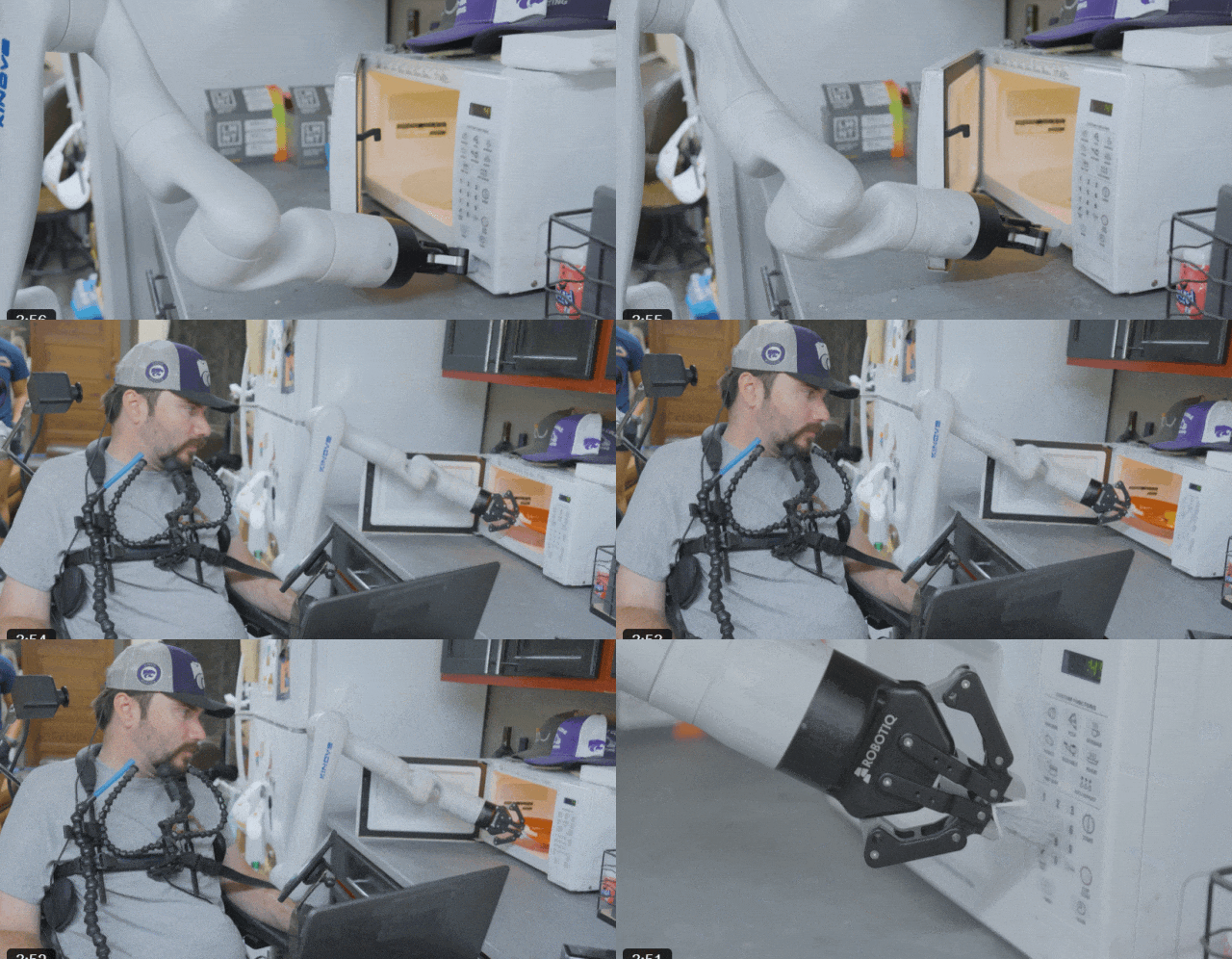
GIF | A patient with spinal cord injury uses for the first timeNeuralink'sDevice-controlled robotic arm (Source:Neuralink )
For example, a P1 participant of Neuralink played Civilization VI for up to 9 hours after receiving the BCI implant.
With Neuralink’s products, some individuals have used them to control a robotic arm to feed themselves for the first time, others have used them for programming, and still others for artistic creation... Tasks that ordinary people typically perform using computers and smartphones are now becoming a reality thanks to brain-computer interface (BCI) technology.
Through Neuralink, we have seen BCIProgressmore details of,Technological breakthroughs are underway, but the industry must still overcome numerous engineering and institutional hurdles before reaching an era of true widespread adoption. Let us look forward to the future together.The New Landscape of Whole-Brain Interfaces。
https://x.com/neuralink/status/1996278331541733773?s=20
https://x.com/BarrowNeuro/status/1983263005447250081
https://x.com/MarioNawfal/status/1996348721844326523?s=20Operations/Layout: He Chenlong