

Suzhou Zelgen Biopharmaceuticals Files for Hong Kong IPO with Three Commercialized Innovative Drugs and a Robust Pipeline
Servier
Pharmaceutical R&D and Manufacturing

Zelgen
Innovative Drug Research and Development, Manufacturer
Neuralink
Brain-Computer Interface System Developer
After nearly four months of gradual decline, the innovative drug sector finally surged again today, with the Hong Kong-listed Innovative Drug ETF rising more than 5%. Shares of Joinn Laboratories, 3SBio, Innovent Biologics, and BeiGene, among others, saw significant gains.
In terms of news flow, Elon Musk recently stated on social media that his brain-computer interface (BCI) company, Neuralink, will begin “mass production” of its BCI devices in 2026. This sparked a thematic rally in China’s A-share market, with Sanbo Brain Hospital, Meihao Medical, Xiangyu Medical, Vishee Medical, and Aipeng Medical all hitting their 20% daily price limits.
Intelligence Silicon, a recently listed company, announced today that it has entered into an R&D collaboration with the global independent pharmaceutical company Servier, with a total value of $888 million.
Furthermore, on December 31, 2025, Zelgen announced the completion of a business development (BD) deal, licensing its CD3×DLL3 trispecific antibody (ZG006) to AbbVie. Zelgen will receive an upfront payment of $100 million, as well as milestone payments totaling up to more than $1.1 billion.
Meanwhile, Zelgen is also pursuing an IPO on the Hong Kong Stock Exchange.
Gelonghui learned that Suzhou Zelgen Biopharmaceuticals Co., Ltd. (hereinafter referred to as "Zelgen") submitted its listing application to the Hong Kong Stock Exchange on December 19, 2025, with China International Capital Corporation serving as the sponsor.
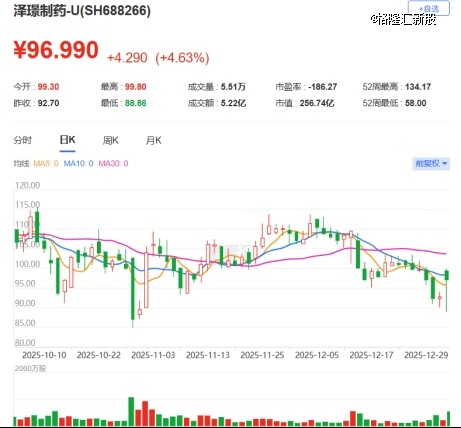
Zelgen was listed on the STAR Market in January 2020, with the stock code 688266.SH. As of the close on January 5, the company's share price was RMB 96.99 per share, and its market capitalization stood at RMB 25.67 billion.
01
Headquartered in Kunshan, Jiangsu, with three products already on the market.
Zelgen was established in 2009 and restructured into a joint-stock company in February 2019, with its headquarters located in Kunshan, Jiangsu.
Pursuant to the Concert Party Agreement, as of December 15, 2025, Dr. Sheng Zelin and Ms. Lu Huiping collectively held 23.63% of the voting rights in the Company.
Dr. Sheng Zelin, 65, has served as Chairman of the Board and General Manager since the company’s inception. Dr. Sheng earned a Master’s degree in Hematology from the Medical College of Zhengzhou University and a Ph.D. in Pharmacology from the University of Miami.
Dr. Sheng previously held positions at Bristol Myers Squibb, Shanghai Aona Pharmaceutical Technology Co., Ltd., and Bailu Pharmaceutical Technology (Shanghai) Co., Ltd.
Lu Huiping, 58, currently serves as Executive Director and Executive Deputy General Manager. She holds bachelor’s and master’s degrees in Genetics and Genetic Engineering from Fudan University.
Lu Huiping has held positions at the Naval Medical University of the Chinese People's Liberation Army, Shanghai Clone Biotechnology High-Tech Co., Ltd., Shanghai Ambo Biomedicine Co., Ltd., and MicuRx Pharmaceuticals (Shanghai) Co., Ltd.
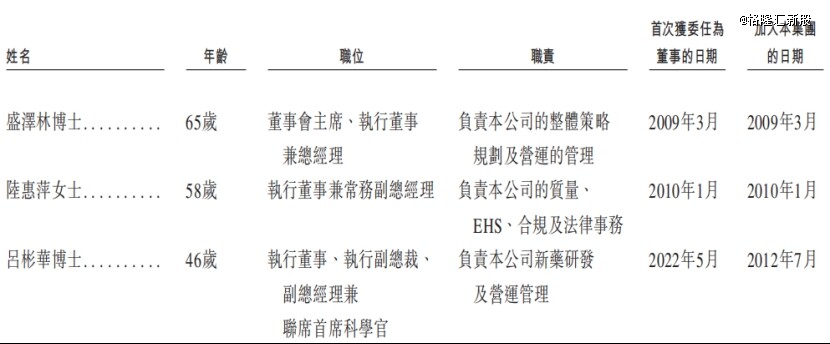
Company Executive Directors, Source: Prospectus
Zelgen is an integrated biopharmaceutical company with a strategic focus on oncology, autoimmune diseases, and hemostasis/hematology.
The company’s business is driven by a dual innovation engine, integrating two proprietary technology platforms: 1. Small-molecule drug development platform; 2. Bispecific/trispecific antibody and complex recombinant protein development platform.
From an R&D perspective, the company’s product portfolio and pipeline encompass marketed drugs, late-stage clinical candidates, and early discovery projects at the forefront of innovation.
Currently, the company has three marketed drugs: Zepusheng, Zepuping, and Zepuning.
1. Zeppsun (donafenib tosylate tablets) was approved in China in June 2021, becoming the first domestically developed small-molecule multi-target drug for first-line treatment of advanced liver cancer in China;
In August 2022, Zepposan received further approval for the treatment of progressive, locally advanced or metastatic radioactive iodine-refractory differentiated thyroid cancer. Both indications have been included in the National Reimbursement Drug List.
2. Zepping (JAK1 inhibitor garsocitinib hydrochloride tablets) was approved in May 2025, becoming the first domestically produced JAK inhibitor approved in China for the treatment of myelofibrosis. In December 2025, Zepping was included in the National Reimbursement Drug List, with an effective date of January 1, 2026.
Zepplin is simultaneously advancing clinical development in autoimmune indications, including severe alopecia areata, ankylosing spondylitis, and moderate-to-severe atopic dermatitis.
3. Zeptin (Recombinant Human Thrombin) is the only recombinant human thrombin in China developed using recombinant DNA technology and successfully commercialized. Zeptin was approved for marketing in January 2024 and was included in the National Reimbursement Drug List in the same year.
02
The pipeline under development includes 11 candidate drugs, and ZG006 has reached a BD licensing agreement with AbbVie.
In terms of its R&D pipeline, Zelgen’s candidate drug portfolio comprises 11 candidate drugs (including Zeputin and its clinical programs related to autoimmune diseases), totaling 28 clinical programs.
Among these, seven indications for three candidate drugs have entered the BLA/NDA or pivotal/Phase III registration clinical trial stage, including the ongoing Phase III clinical trials of Zeppin for severe alopecia areata, ankylosing spondylitis, and atopic dermatitis.
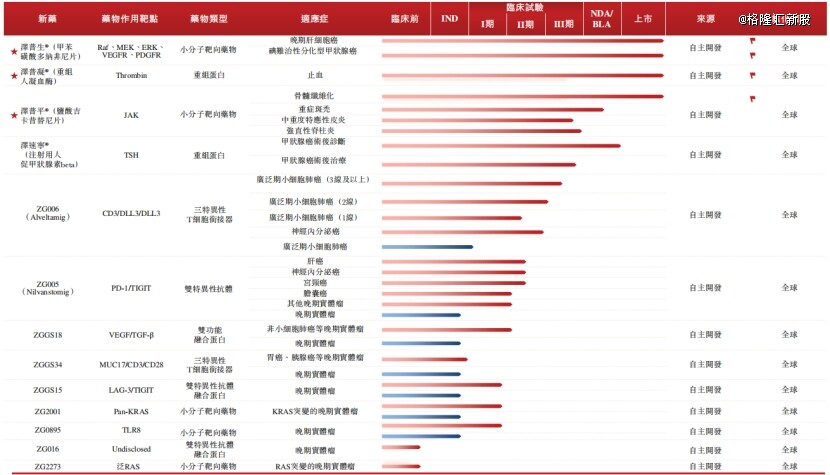
R&D Progress of Marketed Products and Core Candidate Drugs, Source: Prospectus
Candidate Drug—Zesuning
Zesuning (Recombinant Human Thyrotropin Beta for Injection) is currently in the final stage of BLA review and is expected to fill a significant gap in China’s postoperative diagnostic market for thyroid cancer.
Currently, no recombinant human thyroid-stimulating hormone has been approved in China for use as a diagnostic agent in the postoperative follow-up of patients with differentiated thyroid cancer, specifically for whole-body radioactive iodine scanning and serum thyroglobulin testing.
Zelgen has signed an exclusive promotion partnership with the Swiss subsidiary of the German company Merck.
Candidate Drug—ZG006
ZG006 (Alveltamig) is a trispecific T-cell engager targeting two distinct DLL3 epitopes and CD3, representing the world’s first DLL3-targeting trispecific antibody (CD3/DLL3/DLL3).
ZG006 has best-in-class potential, achieving a mechanistic breakthrough through the integration of a “dual DLL3+CD3” targeting design. This mechanism addresses the urgent need for effective therapies in refractory cancers such as small cell lung cancer and neuroendocrine tumors.
ZG006 has been granted Breakthrough Therapy Designation by the China National Medical Products Administration (NMPA) for the treatment of recurrent or progressive advanced small cell lung cancer and DLL3-positive neuroendocrine tumors.
In addition, the U.S. Food and Drug Administration (FDA) has granted orphan drug designation to ZG006 for the treatment of small cell lung cancer and neuroendocrine tumors.
At the end of 2025, Zelgen reached a BD licensing agreement with AbbVie for this project.
Candidate Drug – ZG005
ZG005 (Nilvanstomig) is a recombinant humanized bispecific antibody targeting PD-1/TIGIT, representing a new generation of immunomodulators with dual PD-1 and TIGIT blocking activity.
Currently, no drug with this mechanism of action has been approved globally. Given the limitations of PD-1 monotherapy, including limited response rates and drug resistance, ZG005 holds promise as a next-generation cancer immunotherapy.
In the 20 mg/kg Q3W dosing regimen for patients with second-line or later cervical cancer, ZG005 achieved a confirmed ORR of 40.9%, a disease control rate (DCR) of 68.2%, and an mPFS exceeding 11 months.
Other Pipeline Candidate Drugs
Leveraging its core technology platforms, the company is advancing multi-dimensional R&D in oncology, encompassing tumor immunology, the tumor microenvironment, and mechanisms of tumor growth and drug resistance. Its pipeline covers T-cell engagers, bispecific and multispecific antibodies, as well as small-molecule therapies targeting traditionally “undruggable” targets.
Other innovative candidate drug pipelines include:
ZGGS18: A Bifunctional Fusion Protein Targeting VEGF/TGF-β
ZGGS34: A Trispecific T Cell Engager Targeting CD3/CD28/MUC17
ZGGS15: LAG-3/TIGIT Bispecific Antibody
ZG2001: A Novel Oral Pan-KRAS Mutation Inhibitor
ZG0895: A Highly Potent and Selective TLR8 Agonist
ZG016: Novel Immune Cell Engager Bispecific Antibody
ZG2273: A Novel Pan-RAS Inhibitor
Among them, ZGGS18, ZGGS15, ZG2001, and ZG0895 have successfully completed Phase I dose-escalation clinical trials in China; ZGGS34 has entered Phase I clinical trials in China; and ZGGS18, ZGGS15, ZG2001, ZG0895, and ZGGS34 have all received Investigational New Drug (IND) approval in the United States.
03
High R&D and sales expenses resulted in a cumulative loss of RMB 1.027 billion during the reporting period
Leveraging three marketed drugs, Zelgen has achieved sales revenue. The company has entered into promotional collaborations with several contract sales organizations (CSOs), including Grand Life Sciences and Merck, to promote certain products.
During the reporting period, comprising 2022, 2023, 2024, and January–September 2025, the Company’s revenues were RMB 320 million, RMB 384 million, RMB 532 million, and RMB 593 million, respectively, with gross profit margins of 91.5%, 92.6%, 93.6%, and 89.8%, respectively.
However, due to substantial investments in research and development activities as well as sales and distribution expenses, the Company has not yet achieved profitability. During the reporting period, the Company recorded net losses of RMB 486 million, RMB 295 million, RMB 150 million, and RMB 95.6 million, respectively, resulting in a cumulative loss of RMB 1.027 billion.
Zelgen primarily relies on its in-house R&D team to advance the development of candidate drugs. As of the end of September 2025, the R&D department had a total of 309 full-time employees.
During the reporting period, the Company’s R&D expenditures were RMB 498 million, RMB 496 million, RMB 388 million, and RMB 303 million, respectively.
Furthermore, the Company’s selling expenses were also relatively high, with selling and distribution expenses amounting to RMB 228 million, RMB 250 million, RMB 271 million, and RMB 332 million, respectively, during the reporting periods.
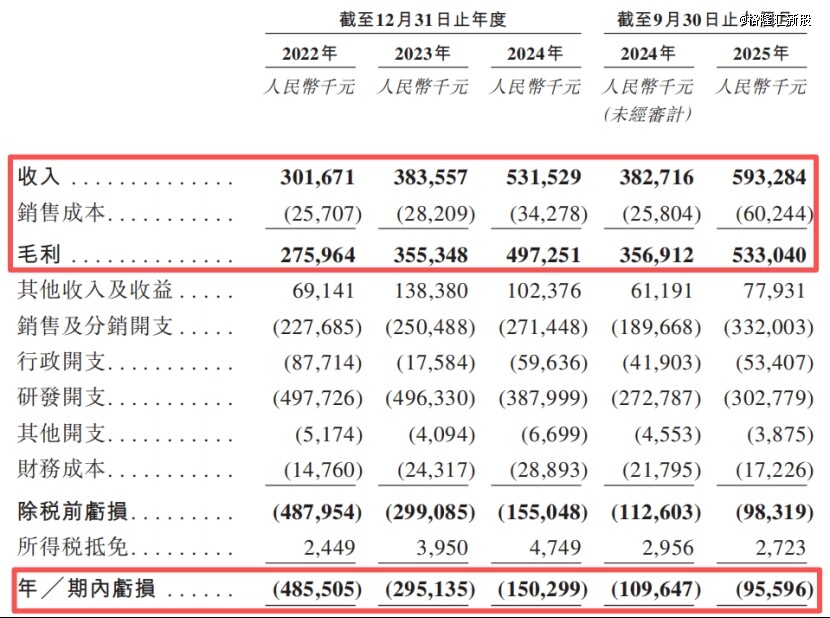
Key Financial Data, Source: Prospectus
During the reporting period, Zelgen’s net cash flows from operating activities were RMB -391 million, RMB -290 million, RMB 42.3 million, and RMB -22.4 million, respectively.
As of the end of September 2025, the company’s cash and cash equivalents totaled approximately RMB 133 million, a decrease from RMB 217 million at the end of 2024.
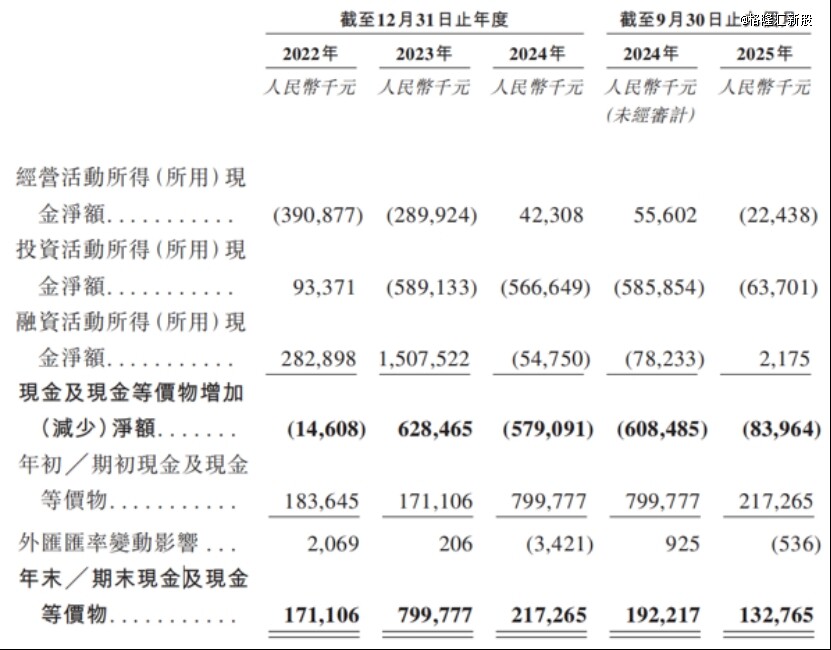
Consolidated Statement of Cash Flows, Source: Prospectus
Zelgen’s Hong Kong listing aims to raise funds primarily for the research and development of its pipeline candidates, including ZG006, ZG005, ZGGS34, and ZGGS18.
Overall, although Zelgen has already launched three drugs, this is still insufficient to support its high R&D and sales expenses, and the company remains in a loss-making stage. Gelonghui will continue to monitor whether the company can successfully advance its clinical development and commercialization efforts to achieve profitability at an early date.
[This article is published with authorization from Gelonghui IPO, a partner of Zero2IPO. This platform only provides information storage services.] For any inquiries, please contact Zero2IPO at editor@zero2ipo.com.cn.