



[Global Times U.S. Correspondent Zhuo Ran, Global Times Reporter Chen Zishuai, and Global Times Contributing Reporter Chen Xin]Editor's Note:As global tech giants vie for dominance in artificial intelligence (AI), a quiet battle has already begun in another frontier of technology. Recently, OpenAI made a significant investment in Merge Labs, a brain-computer interface (BCI) company, positioning itself as the largest investor and forming direct competition with Elon Musk’s Neuralink. Foreign media have noted that OpenAI’s entry into the BCI sector sends a clear signal: this field is poised to become the core focus of the next round of technological competition. As brain-computer interface technology moves closer to practical application, it has not only attracted major tech companies like OpenAI but also spurred the emergence of high-value startups. A technological race involving a market worth tens of billions of dollars is now in full swing.
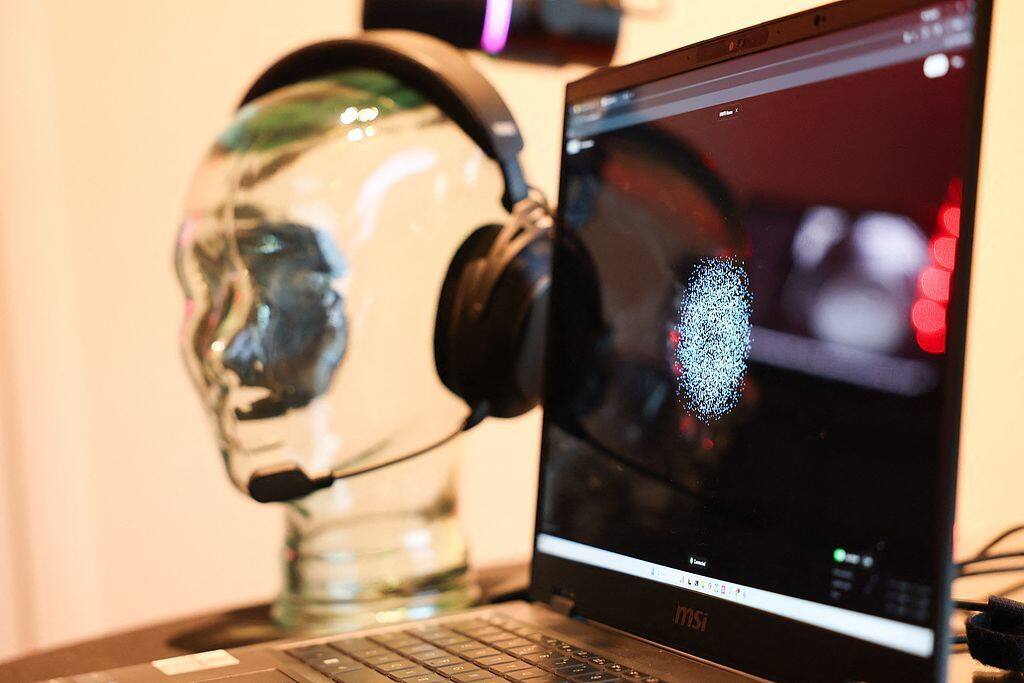
Altman vs. Musk
Bloomberg recently reported that Merge Labs, a brain-computer interface company co-founded by OpenAI CEO Sam Altman, has completed a $252 million financing round. Led by Bain Capital, with OpenAI as the largest investor, this round values the company at $850 million. Currently based in the San Francisco Bay Area with fewer than 50 employees, Merge Labs plans to continue expanding its workforce. According to a statement recently posted on its website, the company’s goal is to “seamlessly connect humans with artificial intelligence.”
Wired magazine stated that, unlike Neuralink, Merge Labs has indicated its product will not be implanted in the brain. The company stated on its official website: “We are developing entirely new technology that connects with neurons using molecules rather than electrodes, and transmits and receives information via deeply penetrating modalities such as ultrasound, thereby avoiding the implantation of devices into brain tissue.” Elon Musk’s Neuralink is also developing brain-computer interface chips; however, Neuralink currently requires invasive surgical implantation: a surgical robot removes a small piece of the skull and inserts ultra-fine electrode wires into the brain to read neural signals. The interface envisioned by Merge would be “a fusion of biology, devices, and artificial intelligence, presented in a form that we are willing to use and that is widely accessible to the public.” Artificial intelligence will play a key role in Merge Labs’ technological pathway. According to an announcement from OpenAI: “OpenAI will collaborate with Merge Labs to develop foundation models and other cutting-edge tools to accelerate technological progress.”
Bloomberg stated that Merge Labs’ latest funding round is highly significant in the field of brain-computer interfaces (BCI). Among major U.S. BCI companies, only Neuralink has raised more in a single financing round than Merge Labs did in this round. Merge Labs has further intensified the competition between Sam Altman and Elon Musk. The two were once close business partners but later parted ways due to disagreements. Notably, Altman had previously invested in Neuralink, which has raised $1.3 billion in total funding.
OpenAI stated that AI can not only accelerate research and development in fields such as bioengineering and neuroscience, but brain-computer interfaces will also benefit from AI operating systems capable of “understanding intent, adapting to individuals, and operating reliably.” In other words, Merge Labs could become the “remote control” for OpenAI’s software. This also reveals the “closed-loop” nature of the deal: if Merge Labs succeeds, it will bring more users to OpenAI, thereby justifying OpenAI’s investment in the company.
"The Strategic High Ground of Tech Giants' Enthusiastic Participation"
According to the Detroit News, in the vision of Silicon Valley entrepreneurs and investors, artificial intelligence will become highly advanced, and humans will be willing—perhaps even compelled—to enhance their cognitive capabilities to leverage this technology. Just as smartphones enabled human access to the digital world, brain-computer interface (BCI) technology aims to streamline human-machine interaction. In recent years, advances in artificial intelligence have provided the computational power necessary for brain implant devices, spurring rapid development in this field.
Brazilian news outlet CPG stated that OpenAI’s investment in Merge Labs is still in its early stages, and its move into the brain-computer interface (BCI) sector has sent a clear signal: this field may become the core focus of the next round of technological competition. Against the backdrop of billions of dollars in stakes and long-standing public rivalry, Altman and Musk appear ready to push their competition to the limit—this time, the battlefield lies within the human brain.
In addition to Merge Labs, several other startups—including Paradromics, Precision Neuroscience, and Synchron—are actively positioning themselves in the brain-computer interface (BCI) sector. Synchron, a New York-based BCI startup, has raised $345 million to date, with investors including Amazon founder Jeff Bezos and Microsoft founder Bill Gates. Paradromics has completed its first human implantation and is preparing for clinical trials targeting patients with severe motor impairments. This indicates that the race is not merely a duel between two companies. However, the personal rivalry between Sam Altman and Elon Musk may significantly elevate public attention in this field.
Currently, brain-computer interface (BCI) technology already enables paralyzed patients to perform tasks such as moving a computer cursor or controlling a robotic arm. However, with the assistance of artificial intelligence, such systems may be capable of executing far more complex tasks in the future. Forbes magazine has stated, “We are standing on the cusp of a massive technological paradigm shift that promises to fundamentally transform human civilization.” Altman and Musk are vying for one of the largest market opportunities in history. It is time to pay serious attention to this field. In recent years, billions of dollars have been invested in the research and development of both invasive and non-invasive BCI technologies. As this technological race unfolds over the coming years, the stakes could not be higher.
Huang Wenhong, Deputy Director of the Software Industry Research Office at the Institute of Information and Software Industry under the China Academy of Information and Communications Technology (CAICT), stated in an interview with Global Times reporters on the 19th that, from a trend perspective, the brain-computer interface (BCI) field is highly likely to evolve into a strategic high ground where “tech giants actively participate and can hardly afford to be absent.” However, this will unfold over a long-term cycle of more than a decade, rather than being a short-term rush to capitalize on a fleeting trend. On one hand, the investments made by these giants have already set the tone, indicating that the BCI sector holds significant development potential and is poised to become one of the key gateways for next-generation human-computer interaction. On the other hand, the entry of these major players will propel “BCI + AI” from niche scientific research into competition for general-purpose technology platforms. Behind the deep engagement of tech giants lies their recognition of the substantial potential for applying AI technologies in the BCI domain, as well as the immense scenario-based value inherent to BCI itself. Once “BCI + foundation models” become standard, a closed loop will form among human-computer interaction interfaces, computing power platforms, and data platforms—a development that no leading AI or operating system company can afford to ignore. The “rivalry” between Altman and Musk serves as a landmark event highlighting the concentrated efforts of global tech capital in the BCI赛道 (sector), marking the transition of BCI from a “frontier scientific research issue” to a competitive stage focused on “next-generation infrastructure and platform-level gateways.”
“Entering a New Stage of Comprehensive Competition in Ecosystem and Market Application Capabilities”
The “Research Report on Brain-Computer Interface Technology and Applications (2025)” released by the China Academy of Information and Communications Technology shows that the number of brain-computer interface companies worldwide has exceeded 800, primarily concentrated in the United States and China. Data from Mordor Intelligence indicates that the global brain-computer interface market size was approximately USD 1.27 billion in 2025. It is projected that by 2030, the global brain-computer interface market will surpass USD 10 billion.
In recent years, Chinese brain-computer interface (BCI) companies have achieved rapid development. Forbes magazine reported that BrainCo, a Chinese BCI unicorn, announced the completion of approximately RMB 2 billion in financing, making its funding scale the second largest globally in this field. The company has been deeply engaged in the research and development of non-invasive BCI technology. Its core technology collects and decodes neural signals through wearable devices such as headbands and armbands, achieving large-scale commercial deployment of its products.
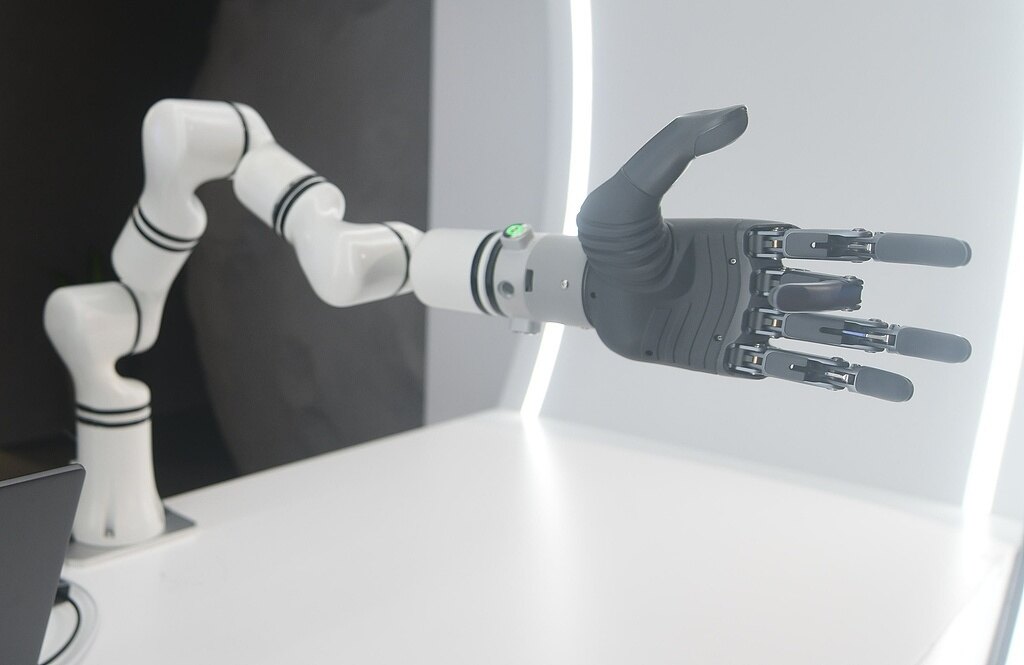
Wired magazine stated that China is home to numerous domestic brain-computer interface (BCI) companies, and the Chinese government has prioritized the development of this technology. Last July, a policy document jointly issued by multiple Chinese ministries laid out a clear roadmap for achieving key technological breakthroughs in BCI by 2027 and establishing an internationally competitive BCI industry by 2030. Ries Huber, a professor of neuroscience at Georgetown University in the United States, remarked, “China demonstrates strong capabilities in translating basic research findings into practical applications and commercialization. We have already witnessed this in industries such as photovoltaics and electric vehicles. Today, brain-computer interfaces represent another field where this capability will play a pivotal role. This document outlines a comprehensive set of systematic efforts required to become a leader in the BCI sector—extending beyond scientific research to genuinely driving the mainstream adoption of this technology.”
Wired magazine also stated that although China started later in the field of brain-computer interface (BCI) research, it is rapidly catching up with the United States. Several Chinese enterprises and research institutions have successfully tested BCI implantable devices in patients, demonstrating that paralyzed patients can move computer cursors, control robotic arms, and even convert thoughts into text. Currently, U.S. companies such as Emotiv have begun selling consumer-grade wearable devices based on electroencephalography (EEG) technology, which collect brainwaves via the scalp. However, these devices are expensive and have not yet achieved widespread adoption. In contrast, China is actively promoting the mass production of various forms of non-invasive devices, including forehead-mounted, headband-style, ear-hook, and earbud-style devices, as well as products integrated into helmets, glasses, and headphones.
Discussing the development trends of enterprises in this field in China and the United States, Huang Wenhong told reporters from Global Times that the US remains ahead in “original breakthroughs” and clinical applications, while China is rapidly catching up in “policy design + industrial implementation + application scenarios.” He explained that, in terms of competitive dynamics, the US has taken the lead in high-risk invasive clinical applications, whereas China’s advantages in semi-invasive, non-invasive approaches, and richness of application scenarios are gradually becoming evident. “Currently, China’s developmental advantages in brain-computer interfaces (BCIs) are mainly concentrated in three areas: ‘policy + industrial chain, engineering + market scale, and multimodal AI + Chinese semantic understanding.’ Of course, we must also clearly recognize that China still lags behind Europe and the US in certain fundamental theories, original algorithms, key components (such as some high-end neural electronic materials), and international discourse power on ethics. In the next phase, Chinese enterprises and research institutions should, under the premise of ‘safety, controllability, and regulatability,’ strengthen cooperation with global peers in standard-setting and ethical governance, while achieving breakthroughs in a few key technological areas, thereby truly transitioning from ‘followers’ to ‘peers’ or even ‘leaders.’”
Forbes magazine stated that a series of events, including BrainCo’s RMB 2 billion financing round, mark the transition of the brain-computer interface (BCI) sector from the technology exploration phase to the second half, characterized by “product commercialization and large-scale application.” The deep synergy between capital and industry is accelerating technological maturity and ecosystem development. Although the industry still needs to overcome long-term challenges such as technical reliability and ethical standards, this round of financing has undoubtedly injected strong momentum into industry development. The commercialization race for BCIs has entered a new stage featuring comprehensive competition in ecosystem building and market application capabilities.