

Epia Neuro Emerges as 'International Counterpart to BRC Neuroscience,' Launches Minimally Invasive Bidirectional BCI Platform for Stroke and Cognitive Disorders

Neuralink
Brain-Computer Interface System Developer
On April 2, 2026, Epia Neuro, a San Francisco-based brain-computer interface (BCI) startup, officially announced its establishment. The company is dedicated to developing solutions for neurological disorders, aiming to help stroke survivors and patients with cognitive decline regain hand function and independence in daily living through a novel implantable neural interface platform.
Core Technical Architecture
Epia Neuro's Core ProductProduct is a"Read-Write" Minimally Invasive Neural Interface, distinct from traditional read-only devices that merely record brain signals. Its disc-shaped implant is placed within the skull, allowingSurgery completed within 1 hour, without penetrating the dura mater, and future upgrades or replacements are relatively convenientStool.
The platform’s uniqueness lies in its simultaneous support for sensing and electrical stimulation in both the cortex and deep brain regions. It not only decodes neural intent but also integrates cortical stimulation and deep brain stimulation (DBS) therapies, offering potential treatments for conditions such as cognitive decline.
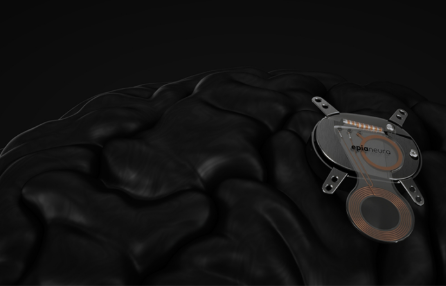
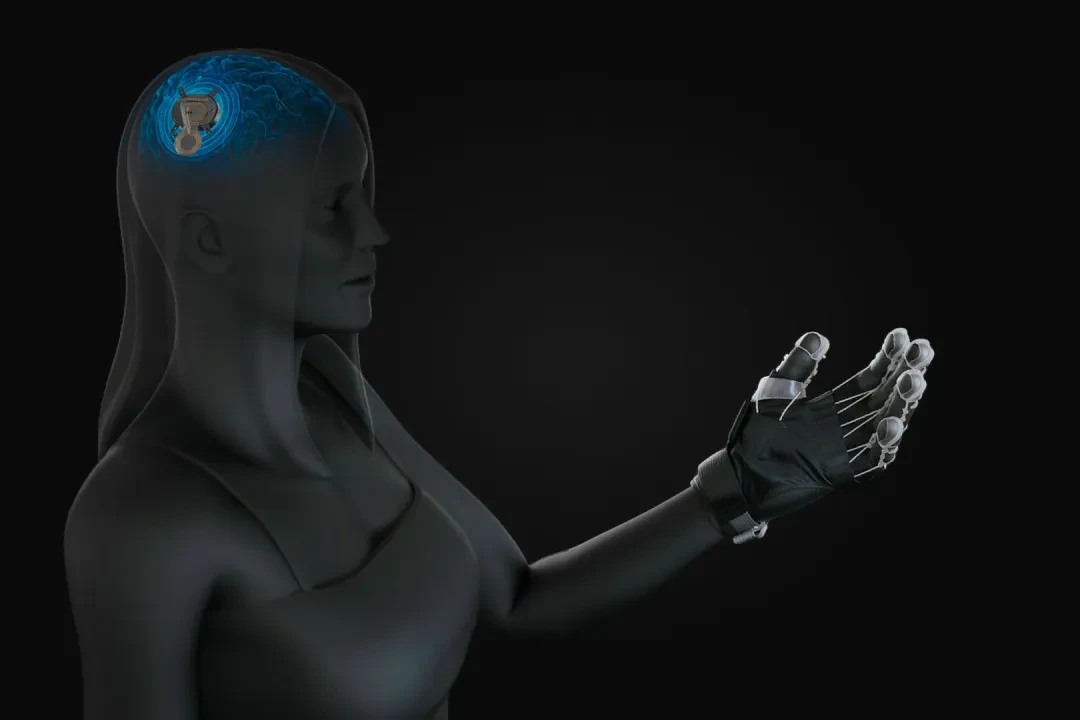
During the patient's recovery period or while at home, it is necessary to wearMatchingAI-Driven Electric Power-Assist Glove. The system wirelessly charges the implant via a non-invasive headgear (requiring charging only every few days) and features a discreet appearance. Built-in algorithms combine neural signals acquired by the implant with data from external glove-mounted sensors in real timePredict and drive grasping movements to achieve a closed-loop "intention–action" system.
Neuroplasticity and Principles of Rehabilitation
This technology is based onNeural PlasticityPrinciple—namely, the brain’s ability to change and establish new connections. When a stroke damages the motor cortex, although the brain still generates motor signals when the patient attempts to move their limbs, the injury blocks the transmission of these signals to the muscles. Epia’s implant collects neural signals from undamaged areas of the brain, identifies hand movement intentions, and converts them into actual movements via a glove.
Michel Maharbiz (CEO and Professor at the University of California, Berkeley) explained, “We can train the system to understand user intent and provide compensation for the functions they are attempting to restore.” With repeated use, the system strengthens motor-related neural pathways, induces neuroplasticity, and modifies connections between the brain and spinal cord, ultimately leading to genuine improvement in the native function of the arm and hand even after the patient removes the glove.
Differentiated Positioning and Clinical Progress
Unlike Neuralink, founded by Elon Musk, which primarily helps patients with severe motor impairments control computers or digital speech, Epia’sTechnologyFocused on helping patients regain hand mobility, directly addressing the common issue of weak grip strength after stroke. Compared to the previous U.S. FDAApproved wearable device IpsiHand (some patients cannot generate recognizable brain signals sufficient to drive the device), Epia's implantable solution, being closer to the brain, can extract more meaningful signals and reduce risks through surgically scalable design.
Company PlanIncisionFirst-in-Human Technical Demonstration to Be Conducted Later This Year in the Department of Neurosurgery at Lenox Hill Hospital in New York, and conduct further testing at other locations by the end of 2026.
Management Team
The company was founded by serialEntrepreneurMichel Maharbiz(formerly founder of Iota Biosciences) serves as Chief Executive Officer, with a neuroscientist serving as Chief Technology and Science OfficerGil Mandelbaum, Chief Operating OfficerMichelle PatrunoOver 15 years of experience in scaling operations for high-growth enterprises.
Maharbiz stated, "The founding goal of Epia Neuro is to restore patientsmeaningful functions that provide true independence, enabling them to fully engage in life. Over the past five years, the team has been developing its first product—a system capable of real-time interpretation of neural intentions and their conversion into rehabilitative therapies and practical daily assistance. We will begin with stroke treatment and rapidly expand into a broader range of neurological disorders."
Source: massdevice,wired
For academic sharing only. If there is any infringement, please leave a message, and it will be deleted immediately!

Promotion | Business Cooperation,Please contact
WeChat: ZuoLeiLeiya(Note: Name-Organization-Business Cooperation)
Communication | Join Group for Discussion,Please contact
WeChat: RoseBCI(Note: Name-Affiliation-Discussion)
Submission | Become a CreatorPlease contact
WeChat: RoseBCI(Note: Name - Creator)
One-click Follow | Light Up the Star Icon
Don't Miss Any Breakthrough in Brain-Computer Interface Frontiers
One-click Triple Action: "Share," "Like," and "Watch"
Feel free to chat in the comments section