Science Corp Files for IPO: Max Hodak’s Biohybrid Brain-Computer Interface Startup Pioneers Non-Invasive, Neuron-Integrated Neural Implants

Neuralink
Brain-Computer Interface System Developer

Pioneer in Medical Device Media Coverage
Sharing Professional Medical Device Knowledge
Brain-Computer Interface Sector Welcomes a Disruptive Player! Former NeuralinkPresident and Co-Founder Max Hodak(Max Hodak)Science Cor, an independently established entityp is rewriting the future of brain-computer interfaces with a technological approach entirely different from that of Musk.
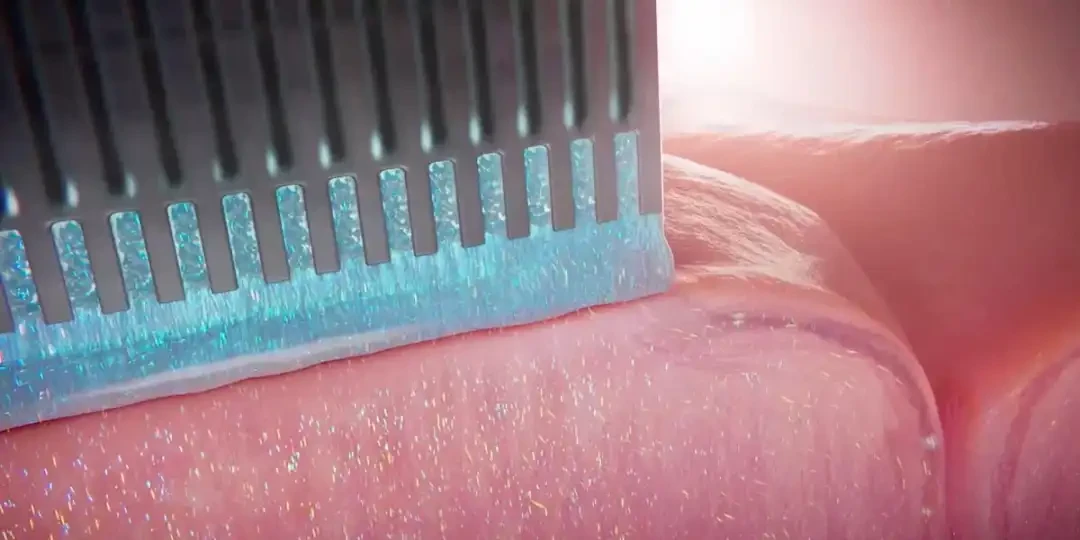
Image sourced from the official website; the blue area contains a large number of cells.
developed by the companyBiohybrid Brain-Computer InterfaceInstead of adopting the technical approach of penetrating the brain with metal electrodes, this method involves “planting” lab-cultured neurons onto chips, driven by optical pulses to achieve seamless integration with the brain.,It neither damages brain tissue nor compromises the stability of neural interactions, earning it the title of the “moderate faction” in brain-computer interfaces.
March 5, Bloomberg News: Science Corp has just completed a $230 million Series C financing round, reaching a post-money valuation of $1.25 billion and bringing its total fundraising to $489 million. This achievement makes it the second-most-valued and second-highest-funded brain implant company globally, trailing only Elon Musk’s Neuralink, and positioning it as Neuralink’s most formidable competitor.
Neuralink's Chip Is a Genius Design
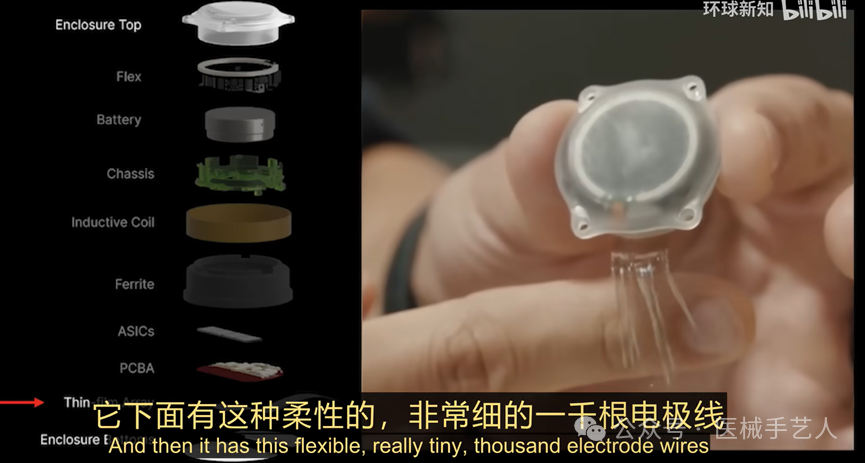
Neuralink’s brain-computer interface contains numerous flexible electrodes.
Traditional brain-computer interfaces (represented by Neuralink) rely onMetal Electrode Penetration into Brain TissueReading or stimulating nerves yields impressive short-term results, but the probes cause continuous brain damage, leading to progressive long-term performance degradation; furthermore, their invasive design faces stringent regulatory oversight and carries higher risks.
Science Corp’s biohybrid interface takes a completely different approach:
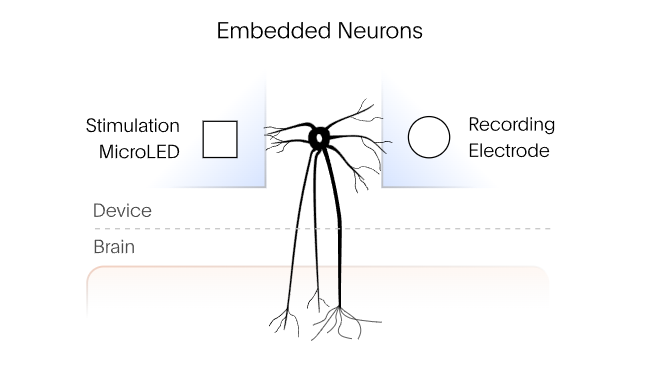
30-Member Team Refines “Chip for Long Neurons,” Human Trials Imminent
Co-founder and Chief Scientific Officer Allen Mardinly led a 30-person team in spending years refining this biohybrid sensor. In 2024, the company published a paper confirming that the device can be safely implanted in mice and modulate brain activity.
The team is currently fully committed to prototype development, overcoming the technical challenges of medical-grade neuron cultivation. Dr. Juner has joined as a scientific advisor, leading the preparations for the first-in-human clinical trial in the United States and liaising with the ethics committee.
The trial plan is pragmatic: first, implant high-density sensors without neurons (520 recording electrodes, pea-sized) in stroke patients requiring craniotomy, placing the device above the cerebral cortex to test the safety and efficacy of brain activity monitoring. Due to its non-invasive design, the company even plans not to seek FDA approval, believing the device poses no significant risk.
Founded in 2021, the company’s most mature product is currently the PRIMA vision restoration device, which helps patients blinded by macular degeneration regain their sight. After acquiring the technology in 2024, the company advanced it into clinical trials, with approval for market launch in Europe potentially being granted as early as this year.
Yet Hodak’s ambitions extend far beyond this. From breaking into neuroscience laboratories during his university years to founding a biocomputing company and subsequently partnering with Elon Musk to build Neuralink, his life’s mission has been to establish a reliable interface between the human brain and computers—aiming not only to treat intractable conditions such as Parkinson’s disease, epilepsy, and spinal cord injuries, but also to endow humanity with entirely new senses and achieve capability enhancement.
Günel further envisions that this system, by combining the precision of electronics with the advantages of biological repair, holds promise for halting the progression of Parkinson’s disease—a feat unattainable with current brain cell transplantation and deep brain stimulation techniques.
Compared to the regulatory hurdles and niche patient populations faced by companies like Neuralink, Science Corp’s conservative approach offers a clearer path to commercialization. However, Gunel also acknowledged that aiming to launch human trials by 2027 is optimistic, as substantial technical and ethical work remains to be completed.
More Exciting Content
Follow us on WeChat Channels


Major Launch: ResMed AirSense™ 11 Redefines Comfortable Sleep with Five-Dimensional Smart Upgrades
750 Million: Domestic Imaging Leader Plans Acquisition
A New Era in Surgery Has Arrived: United Imaging Breaks Through with an Ecosystem Strategy
Top 100 Medical Device Company Acquired for RMB 8.7 Billion
Siemens Healthineers Partners with Cook Medical to Usher in a New Era of Radiation-Free Minimally Invasive Surgery
CNNC Particle: Illuminating the Path of Independent Innovation in Nuclear Medicine with Core Hard Technologies
Stryker Announces Major Acquisition
Intelligent Global Vision, Boundless Minimally Invasive Innovation | MicroPort Unveils Multiple “First-of-Its-Kind” New Products at CMEF
AI Instant Diagnosis for 230+ Conditions, Omni-domain Interconnectivity, and Integrated In-hospital and Out-of-hospital Care: Three Key Advantages of Edan’s Smart Ecosystem
Hardcore AI + Full-Scenario Ecosystem! Carestream Health Leads the Way in Digital and Intelligent Transformation of High-End Imaging

ShangBusiness Cooperation Email: qxzj@landianyiliao.com