

Neuralink's First Human Recipient Shares 28-Month Experience: 85% Electrode Retraction Overcome, 10-Hour Daily Use Sustained

Neuralink
Brain-Computer Interface System Developer

Noland Arbaugh—the first human subject to receive a Neuralink brain-computer interface implant—delivered the closing demonstration at the 2026 Robotics Summit & Expo held in Boston on Thursday. The demonstration showcased a scene that most engineers present had previously only encountered in academic papers: a man moving physical chess pieces using only his thoughts.
It has been 28 months since Arbaugh underwent implantation surgery at the Barrow Neurological Institute in Phoenix. This time, rather than presenting the data-driven conclusions typical of clinical trial reports, he shared his personal experiences as a long-term user with the live audience: how the technology performs in daily use, what happens when malfunctions occur, how the system recovers through software updates, and the authentic human experience of being part of this “feedback loop.”
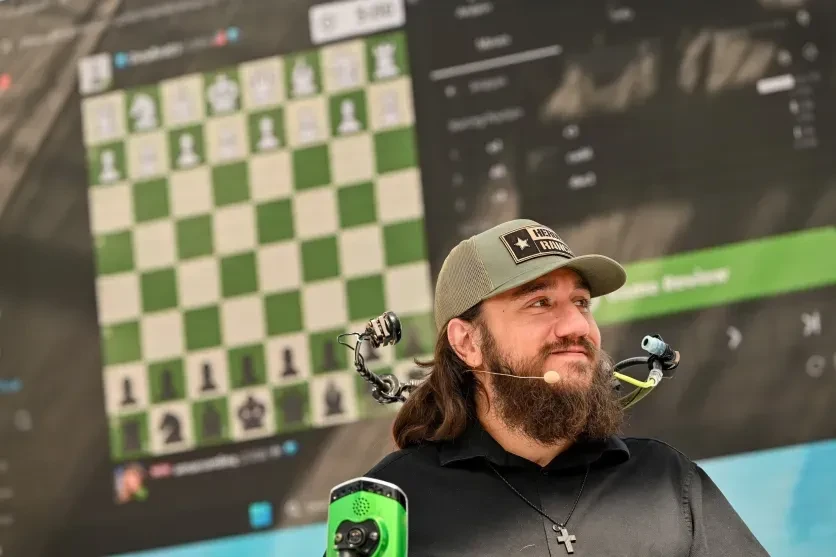
The highlight of the event was a live demonstration applying neural control technology to a physical chessboard. In this system, motor commands generated by Arbaugh’s motor cortex were decoded by the N1 chip and transmitted wirelessly via Bluetooth to manipulate the movement of physical chess pieces in real time.
For Arbaugh, such demonstrations are nothing new. In fact, he has been playing chess in this manner for over a year.
However, for the audience attending this summit, the significance of this demonstration lies in its specific context: the engineers present are dedicated to developing robots and anticipate that these robots will be able to receive and execute similar “streams of motion commands” in the future. Meanwhile, the implantable device in Arbaugh’s body has been operating continuously for 28 months within a human host under real-world, daily-life conditions. This undoubtedly represents one of the closest instances to a “field test” of this technological concept to date.
How Neuralink’s Brain-Computer Interface Decodes Motor Signals
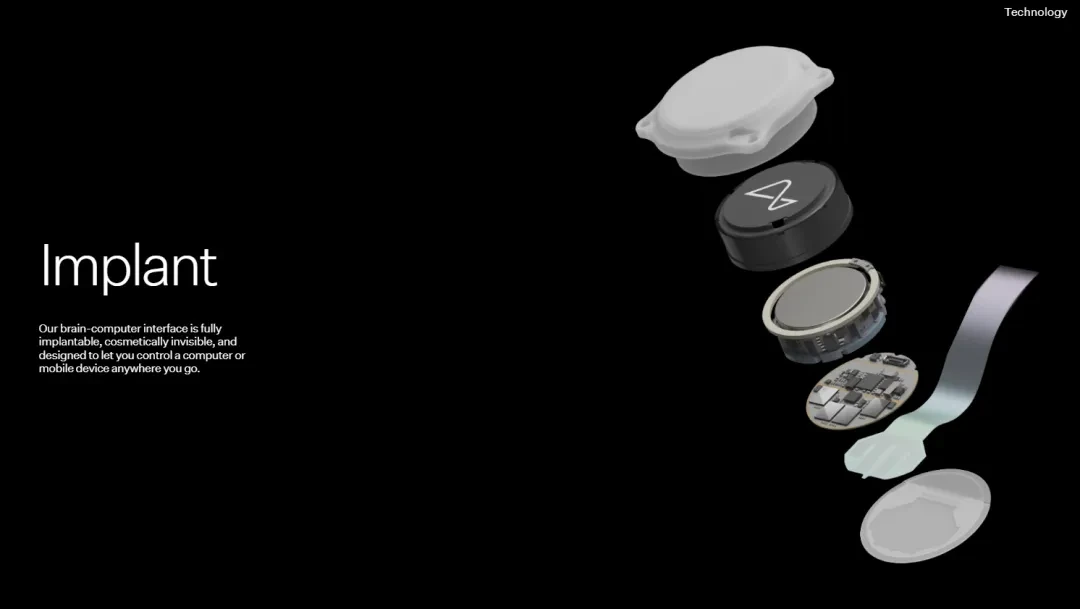
The Neuralink N1 chip implanted in Arbaugh in January 2024 features 64 ultra-fine electrode wires with a total of 1,024 electrodes, and was implanted into the motor cortex—the brain region responsible for planning voluntary movements.
When Arbaugh imagined moving his hand, the neurons in that region generated specific firing patterns. The implant captured these patterns, digitized them, and transmitted them to an external device via low-energy Bluetooth technology. Subsequently, a machine learning algorithm trained on Arbaugh’s individual neural patterns converted these signals into continuous cursor movements or, as demonstrated in this instance, into control commands for manipulating physical chess pieces.
Compared to early brain-computer interface (BCI) technologies, the key differences of this system lie in “resolution” and “bandwidth.” The motor cortex does not generate simple “on/off” binary signals; rather, it produces continuous spatiotemporal patterns formed by the coordinated activity of hundreds of neurons. These neurons work synergistically to encode movement direction, velocity, and intent.
Neural engineering expert Kip Ludwig remarked in March 2024, during Arbaugh’s first public demonstration of the technology, that while it held great promise, it was still in its early stages of development. Now, with Arbaugh having used the device continuously for 28 months, this initial assessment has been further corroborated by real-world, long-term use.
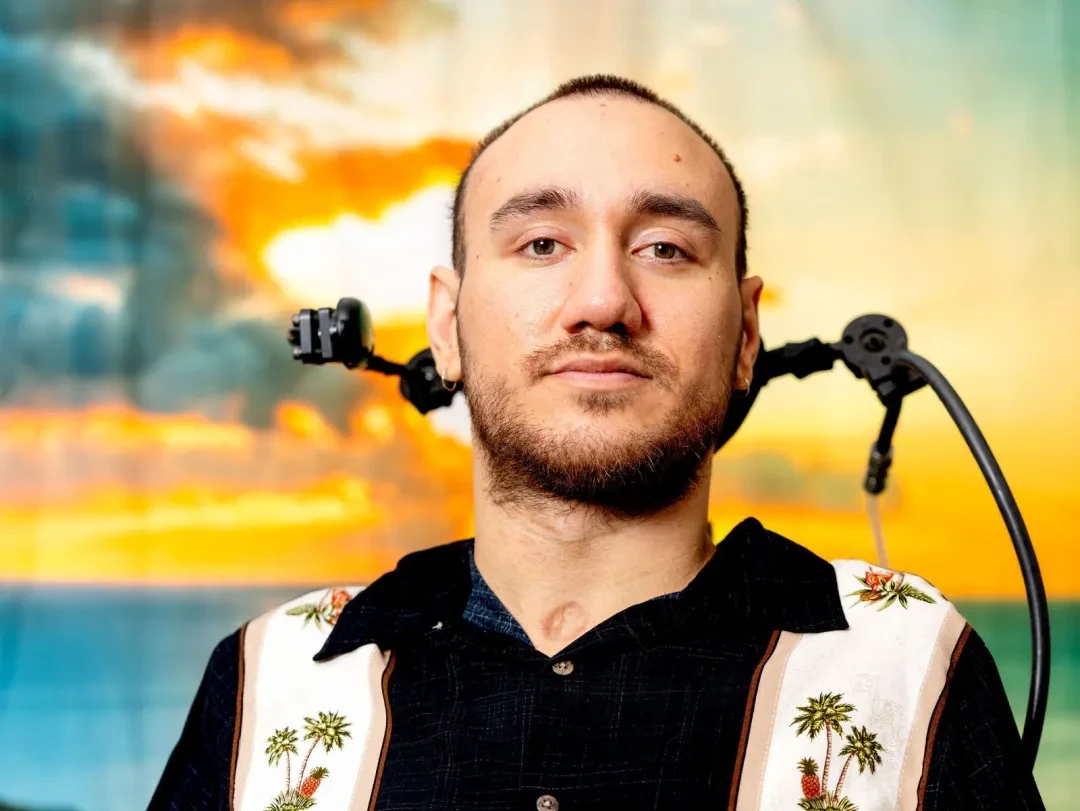
Noland Arbaugh is the first patient to receive a Neuralink brain-computer interface implant, enabling him to control a computer using his thoughts.
Beyond Arbaugh: Neuralink Trials Expand to Over 20 Patients Worldwide
Arbaugh was the first patient in Neuralink’s “PRIME Study” (i.e., the “Precise Robotically Implanted Brain-Computer Interface” study). This ongoing clinical trial primarily targets adults with quadriplegia resulting from spinal cord injury or amyotrophic lateral sclerosis (ALS).
As of early 2026, the trial had enrolled more than 20 participants across multiple sites in the United States, the United Kingdom, Canada, and the United Arab Emirates. Reportedly, a patient enrolled in the UK subsequently succeeded in controlling a computer using the updated N1 architecture within hours after surgery.
This updated architecture employs 128 thinner, flexible electrode wires, with eight electrodes integrated onto each wire. While maintaining a total of 1,024 electrodes, the design helps reduce tissue displacement, which was a significant factor contributing to the initial electrode retraction issues observed in the Arbaugh case.
In contrast, Synchron’s Stentrode system adopts a markedly different technological approach: endovascular implantation via the jugular vein, which avoids craniotomy and its associated risks, albeit at the cost of reduced electrode density.
Another company, Precision Neuroscience (co-founded by a former Neuralink employee), is dedicated to developing flexible surface electrode arrays. These arrays adhere only to the surface of the cerebral cortex without penetrating into the cortical tissue.
Currently, neither of the aforementioned technical approaches can match Neuralink in terms of electrode count, nor can they achieve the high-resolution levels pursued by Neuralink; consequently, a gap remains in the precise decoding of complex motor intentions.
On December 31, 2025, Elon Musk announced that Neuralink is on the verge of entering the mass production phase for its N1 implant and plans to fully implement a nearly automated surgical implantation process.
In May 2026, the company further announced that its next-generation R1 robot had acquired the capability to precisely implant electrode wires into nearly any region of the brain. This technological breakthrough expands the scope of potential clinical applications: in addition to the original domain of motor function restoration, neurological disorders such as Parkinson’s disease, refractory epilepsy, and treatment-resistant depression have also been included within the range of potential therapeutic targets.
The brain-computer interface (BCI) field, represented by Arbaugh, reached a significant regulatory milestone in May 2025: the U.S. Food and Drug Administration (FDA) officially granted “Breakthrough Device Designation” to Neuralink’s “Speech Restoration Application” project.
This application is designed to help patients with ALS, stroke, spinal cord injury, cerebral palsy, and multiple sclerosis regain their ability to communicate verbally. Phase 3 clinical trials are expected to officially launch in the second half of 2026; the company plans to submit a Pre-Market Approval (PMA) application in 2027, with commercialization anticipated by 2028.
What Does the Development of Brain-Computer Interfaces Mean for the Field of Robotics?
The debate sparked by Arbaugh at the 2026 Robotics Summit centered not on assistive technology itself, but on architectural design.
The humanoid robots showcased at the summit, including Boston Dynamics’ electric Atlas and Agility Robotics’ Digit, currently rely primarily on preset program interfaces or trained AI models to receive commands. However, introducing a control layer driven by brain-computer interfaces (BCIs) would fundamentally transform this architecture: human operators could transmit commands directly from their motor cortex to the robot’s control system, thereby reducing the latency in “translating intent into action” to nearly the time required for neural signals to be transmitted via Bluetooth channels.
Currently, this field remains in the research and exploration phase and has not yet been transformed into mature products available for purchase on the market. However, Arbaugh’s live demonstration presented this vision to the public in a concrete and non-hypothetical manner.
When neural control of physical entities—whether chess pieces, cursors, or exoskeleton joints—operates smoothly via real-time decoding algorithms, the core question in engineering shifts accordingly: no longer “Is this feasible?” but rather “How can we ensure sufficient reliability for practical deployment?”
This is precisely the core issue that the remaining sessions of this summit will jointly explore around humanoid robots.
Arbaugh’s keynote address served as the finale, with the question he posed in his closing remarks—“Where exactly lies the boundary between ‘controlling a robot’ and ‘becoming one with a robot’?”—Clearly, a single summit cannot provide the ultimate answer.
How Does the Neuralink Brain-Computer Interface Work?
The Neuralink N1 implant inserts 1,024 electrodes into the motor cortex—the region of the brain responsible for planning voluntary movements—via slender, flexible threads.
When a user generates motor imagery, neurons in the corresponding brain region produce specific firing patterns. Electrodes capture these patterns and wirelessly transmit them via Bluetooth to an external decoding algorithm. The algorithm then translates the neural signals into commands for cursor movement, keyboard input, or device control. This entire process requires no physical movement from the user.
What Can Noland Arbaugh Do with the Neuralink Implant 28 Months After Implantation?
As of mid-2025, Arbaugh used the implant for approximately 10 hours per day to engage in activities such as playing chess, studying neuroscience courses, managing schedules, and communicating. All these operations were performed solely through thought.
He also successfully overcame a major setback encountered early on, when approximately 85% of the electrode leads detached from the brain tissue. Neuralink ultimately resolved this technical challenge through a software update rather than additional surgery.
What Specifically Does Neuralink’s PRIME Clinical Trial Refer To?
The PRIME study, fully named the “Precision Robot-Assisted Brain-Computer Interface Implantation Study,” is the first human clinical trial conducted by Neuralink, aiming to recruit adult patients with quadriplegia caused by spinal cord injury or amyotrophic lateral sclerosis (ALS).
As of early 2026, the trial had enrolled more than 20 participants across multiple research centers in the United States, the United Kingdom, Canada, and the United Arab Emirates.
What is the relationship between the development of brain-computer interface technology and robotics technology?
Researchers and engineers view neural implants as a potential “direct control layer” for robotic systems: instead of programming or training AI models to interpret commands, users can directly issue instructions to the robot’s control system by leveraging neural signals from the motor cortex.
Although this remains at the conceptual research stage, Arbaugh has demonstrated the ability to manipulate physical objects through sustained neural意念 control. This provides a concrete and practically significant reference data point for robotics technology development.

Brain-Computer Interface Community isChina's First Brain-Computer Interface (BCI) Industry Service Platform. Pioneer and Leader of New Media for Brain-Computer Interfaces in China。We provide the following services to enterprises, research teams, investment institutions, and industry practitioners:
Publicity Report:Report on corporate updates, technical insights, and product introductions through articles with images, short videos, and live streams to enhance exposure and industry influence.。
Resource Matching:Match resources such as capital, supply chain, clinical institutions, and channel partners according to needs, facilitate genuine connections, and promote collaboration.
Translation of Achievements:Assist the technical team in identifying industry partners, investors, and application scenarios to facilitate the translation of technology into products.
Event Planning and Execution:Undertaking the planning and execution of online and offline roadshows, salons, forums, and other events.
Other Custom Requirements:Including personalized services such as report customization, market research, and talent recruitment support.
Cooperation Negotiations,Please contact WeChat: ZuoLeiLeiya
(Note: Name-Affiliation-Collaboration)
Submit | Become a Creator,Please contact WeChat: RoseBCI
?Starred & Pinned?
Don’t Miss Any Breakthrough in Brain-Computer Interface Frontiers

One-click Triple Action: “Share,” “Like,” and “Mark as Read”
Feel free to chat in the comments section.