

Domestic PD-(L)1/VEGF Bispecific Antibodies Take Center Stage at ASCO 2026 with Breakthrough Clinical Data
Akeso
Innovative Antibody Drug Developer

3SBIOINC
Biopharmaceutical Manufacturer

BioNTech
Developer of Novel Biologics

Huaota
Biological New Drug Developer

2026 American Society of Clinical Oncology(ASCO)Annual MeetingCurrently being held in Chicago, USA.
This year’s conference will undoubtedly focus on PD-(L)1/VEGF Bispecific Antibodies: Akeso Remains the StandoutIvonescimabPhase IIIThe HARMONi-6 StudyOS Data Selected for Plenary Session.Meanwhile, 3SBIOINC/PfizerofSSGJ-707(PF-08634404)、BioNTech/BMS'sPumitamig、HuaotaHuaota'sHB0025 and others also made their appearances.
This article will discuss somePD-(L)1/VEGF Bispecific AntibodyClinical Data Released for the ProductIntroduction for reference only.

Akeso:Ivonescimab
Combination ChemotherapyFirst-Line Treatment for Squamous NSCLC
Ivonescimab had multiple study results presented at this conference,IncludingFirst-line Combination Chemotherapy for Squamous NSCLC(sq-NSCLC)Phase IIIof the HARMONi-6 studyOS Data, Combination ChemotherapyFirst-line Treatment of Unresectable Metastatic Colorectal Cancer(mCRC)Interim Analysis Data from an International Multicenter Phase II Study of Neoadjuvant Combination Chemotherapy for Resectable Locally Advanced Squamous Cell Carcinoma of the Head and Neck(LA-HNSCC)the results of exploratory Phase II clinical studies, etc.
Among themof the HARMONi-6 studyOS Data Selected for This Year’s ASCOPlenary Session. This is aA randomized, controlled, multicenter Phase III clinical study designed to evaluateEfficacy and Safety of Ivonescimab Combined with Chemotherapy versus PD-1 Inhibitor Combined with Chemotherapy as First-Line Treatment for Locally Advanced or Metastatic Squamous Non-Small Cell Lung Cancer (sq-NSCLC)
ResearchPrimary endpoint:ComparisonIvonescimabCombined Chemotherapy and Tislelizumab Combined with ChemotherapyAs first-line treatment for locally advanced or metastatic squamous NSCLC byIndependent Imaging Review Committee (IRRC) Assessed according to RECIST v1.1 criteriaProgression-Free Survival (PFS). Overall Survival (OS) is the key secondary endpoint.
The results announced this time show that,Compared with tislelizumab plus chemotherapy, ivonescimab plus chemotherapy significantly prolongs overall survival (OS) in patients.. As of February 27, 2026, the median follow-up time was 21.36 months. In the ITT population, compared with tislelizumab combined with chemotherapy,Ivonescimab in Combination with Chemotherapy Significantly Reduces the Risk of Patient Death by 34%,Hazard Ratio (HR)=0.66,P=0.0017(<0.0049),The mOS in the treatment group was 27.9 months.(The last death event in the treatment group caused a sharp drop in the KM curve to the median point, thereby yielding the mOS for the treatment group), the mOS in the control group was 23.7 months.
Ivonescimab plus chemotherapy: 12-month OS rate was 78.9%(vs. 72.2% in the control group), with a 24-month OS rate of 64.7%(vs. 48.6% in the control group)Compared with the control group, the survival benefit in the treatment group continued to increase over time, providing patients with more durable and clinically meaningful long-term survival advantages.
Furthermore, all subgroups demonstrated significant benefit. Regardless of PD-L1 expression status, the treatment group showed a significant overall survival (OS) benefit compared to the control group. The OS hazard ratio (HR) was 0.68 in the PD-L1 TPS ≥1% subgroup and 0.64 in the TPS <1% subgroup; the OS HR was 0.67 in the PD-L1 TPS 1–49% subgroup and 0.64 in the TPS ≥50% subgroup. Regardless of tumor metastasis status, the treatment group demonstrated a significant OS benefit compared to the control group: the OS HR was 0.47 in the subgroup with ≥3 metastatic sites and 0.69 in the liver metastasis subgroup.
The proportions of patients in the two groups who subsequently received immunotherapy were 13.9% in the treatment group versus 19.2% in the control group; the proportions receiving targeted therapy were 12.4% in the treatment group versus 17.3% in the control group; the proportions receiving antibody–drug conjugate (ADC) therapy were 4.5% in the treatment group versus 5.6% in the control group; and the proportions participating in other clinical trials were 0.8% in the treatment group versus 2.3% in the control group.
Regarding safety, ivonescimab in combination with chemotherapy demonstrated a favorable overall safety profile, comparable to that of tislelizumab plus chemotherapy. Treatment-related adverse events of grade ≥3 in the two groups (TRAE) The incidence rate was 69.2% vs. 58.9%; the incidence of adverse events leading to drug discontinuation or death was similar between the two groups.
Previously, in the pre-specified progression-free survival period (PFS) In the interim analysis, ivonescimab combined with chemotherapy demonstrated clinically meaningful and statistically significantPositive PFS Results,mPFS was 11.1 months(vs. 6.9 months in the control group),HR=0.60,P<0.0001。

Pumitamig(BNT327/BMS986545)is an investigational PD-L1/VEGF-A bispecific antibody, which was reported at this conferencePumitamig in Combination with ChemotherapyFirst-line Treatment for NSCLCofGlobal Phase II/III ROSETTA Lung-02 Trial(NCT06712316)Phase II interim data.
As of April 13, 2026,Among the 40 patients evaluable for efficacy,The median follow-up time was 9.0 months,Pumitamig Combination Chemotherapy inNon-squamous NSCLC(nsq-NSCLC)among patientsConfirm the Objective Response Rate(cORR)For57.1%, Squamous NSCLC(sq-NSCLC)incORR is 68.4%,DCR was 100%。
Encouraging antitumor activity was observed at both dose levels, with a higher response rate in the low-dose group among patients with non-squamous NSCLC.cORR was 63.6%, in patients with squamous NSCLCcORR was 72.7%. The combination therapy demonstrated high response rates across different PD-L1 expression levels(cORR: 47.6% for TPS < 1%; 77.8% for TPS 1–49%; 100% for TPS ≥ 50%)。
Pumitamig Combined chemotherapy demonstrated a favorable safety profile with a low discontinuation rate. Treatment-related adverse events of grade ≥3 were reported in 48.8% of patients.(TRAE), of which 23.3% were considered related to Pumitamig, resulting in 4 cases(9.3%)Patients discontinued treatment. 16 cases(37.2%)Patients experienced immune-related adverse events(irAE), of which 2 cases(4.7%)Grade ≥3 irAEs occurred in 9 patients.(20.9%)Patients reported bleeding events, with only one case being Grade 3 bleeding.

This Phase II study enrolled patients with previously untreated locally advanced unresectable, recurrent, or metastatic NSCLC.(without EGFR or ALK gene mutations). Subjects were randomly assigned to two cohorts: Cohort 1(sq-NSCLC)HB0025 20 mg/kg combined with carboplatin and paclitaxel, Q3W, for a total of 4–6 cycles, followed by HB0025 maintenance therapy; Cohort 2(nsq-NSCLC)Receiving HB0025 at 20 mg/kg in combination with carboplatin and pemetrexed, Q3W, for a total of 4–6 cycles, followed by maintenance therapy with HB0025 and pemetrexed.
As of January 5, 2026, a total of 125 patients were enrolled.(Cohort 1 = 62 cases, Cohort 2 = 63 cases). The median follow-up time was 10.55 months, with a total of 119 patients receiving at least one post-baseline tumor assessment.
The results showed that in Cohort 1, the ORR was 84.5%.(49/58), PD-L1 TPS < 1%, 1-49%, and ≥50% subgroupsThe ORRs were 81.3%, 72.2%, and 100%, respectively.;DCR was 94.8%(55/58), with a median PFS of 12.62 months and immature median DOR data.
In Cohort 2,ORR was 65.6% (40/61), the ORR was 66.7% in all PD-L1 TPS subgroups;DCR was 96.7% (59/61), with a median PFS of 14.65 months and a median DOR of 12.06 months. Overall survival data are not yet mature.
Most Common Immune-Related Adverse Events (irAE) Hypothyroidism, hyperthyroidism, elevated alanine aminotransferase, elevated aspartate aminotransferase, and elevated thyroid-stimulating hormone. Grade ≥3 anti-VEGF-related adverse events included proteinuria, hypertension, hemorrhage, and thromboembolism. 6 cases(4.8%)Two patients discontinued HB0025 due to treatment-related adverse events(1.6%)The patient died due to treatment-related adverse events.

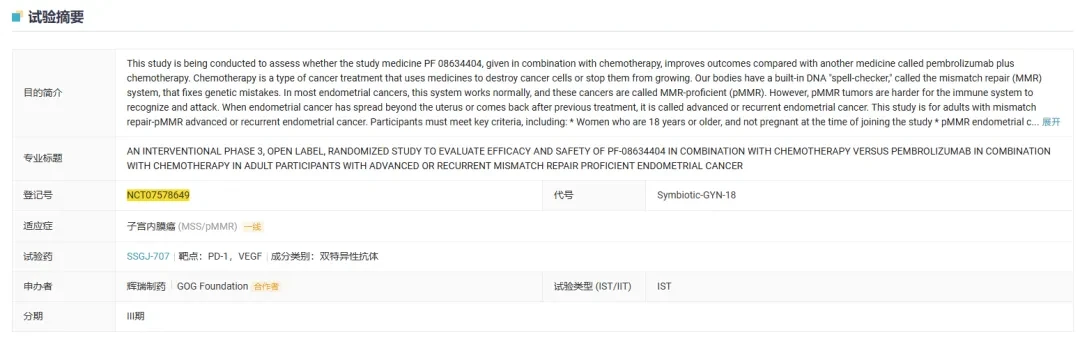
Screenshot source: Insight Database

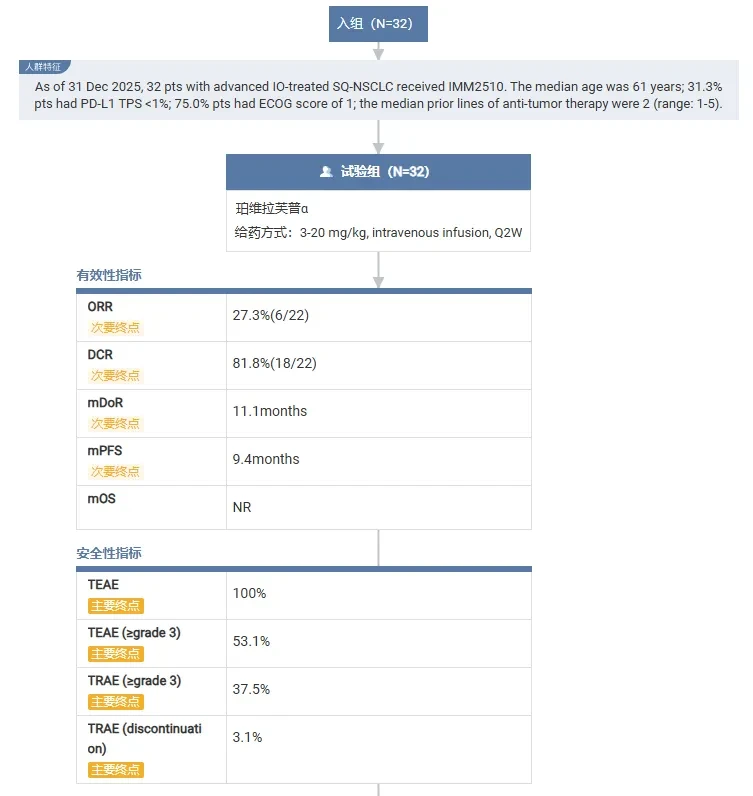
Screenshot source: Insight database
Cover Source:Insight Graphic
Disclaimer:This article is for informational purposes only and does not represent the stance or views of Insight, nor does it constitute recommendations or introductions to treatment plans. If needed, please consult and contact legitimate medical institutions.
Editor: ccai
PR Draft Coordination: WeChat insightxb