

China's Hepatitis B Innovators Lead the Global Race with Breakthrough Functional Cure Candidates

AusperBio
Biological Vaccine and Nucleic Acid Drug Developer

The Narrative Around Innovative Hepatitis B Drugs Is Undergoing a Dramatic Shift.
Over the past three decades, nucleos(t)ide analogues (NAs) have effectively suppressed HBV DNA levels. However, they fail to address the root of the problem: HBsAg persists, cccDNA remains intact, and immune tolerance continues, leaving patients unable to discontinue medication. Consequently, a paradoxical situation has emerged in the management of chronic hepatitis B: while a definition of clinical cure exists, the vast majority of patients are confined to lifelong therapy, relying on entecavir or tenofovir for more than a decade.
Then came the 2026 EASL Congress, with Hengrui Medicine’s HBV siRNA pipelineHRS-5635 Has Also Initiated Global Phase III Trials。
In the ASO field, AusperBio’s AHB-137 has announced Phase II data from 16 weeks of treatment in treatment-naïve patients with chronic hepatitis B. In the enriched population with baseline HBsAg levels of 100–1000 IU/mL, the clinical cure rate at 24 weeks post-treatment cessation reached a notably impressive level. Almost simultaneously, Hengrui’s GalNAc-siRNA drug HRS-5635 officially initiated its Phase III trial.
Taken together, these developments signify that China’s innovative hepatitis B drugs have transitioned from followers to leaders.
01
ASO: From Bepirovirsen to Chinese-Made
Why Is Hepatitis B So Difficult to Treat?
It is not that HBV DNA suppression is inadequate; nucleos(t)ide analogues (NAs) perform sufficiently well in this regard—indeed, overly well—to the extent that many people mistakenly believe that the treatment of hepatitis B has been largely resolved.
The real challenge lies in three overlapping biological issues:
1) Covalently closed circular DNA (cccDNA) resides within the nucleus of hepatocytes. Currently, no drugs can directly eliminate it; nucleos(t)ide analogues (NAs) are ineffective against cccDNA, and the immune system largely fails to recognize it.
2) HBV DNA fragments integrated into the host genome can continuously produce HBsAg; even when viral replication is completely suppressed, HBsAg can still be constantly "produced";
3) Long-term exposure to high levels of HBsAg induces immune tolerance, leading to progressively weaker T-cell and B-cell responses to HBV antigens, and resulting in the loss of the host immune system’s ability to clear the virus spontaneously.
This is why the endpoint definition of a functional cure—sustained HBsAg negativity and undetectable HBV DNA after treatment discontinuation—is nearly an impossible task in the era of nucleos(t)ide analogues (NAs): while viral replication is suppressed, the antigen load remains unchanged, and the immune system remains dormant.
The Logic Behind New-Generation Hepatitis B Drugs Stems from This Fundamental Contradiction.
Bepirovirsen is an antisense oligonucleotide (ASO) drug co-developed by GSK and Ionis. ASOs function by binding complementarily to HBV RNA, inducing its degradation, thereby simultaneously downregulating HBsAg, HBeAg, HBV RNA, and pgRNA. In other words, it “truncates” the viral protein production chain at the transcriptional level.
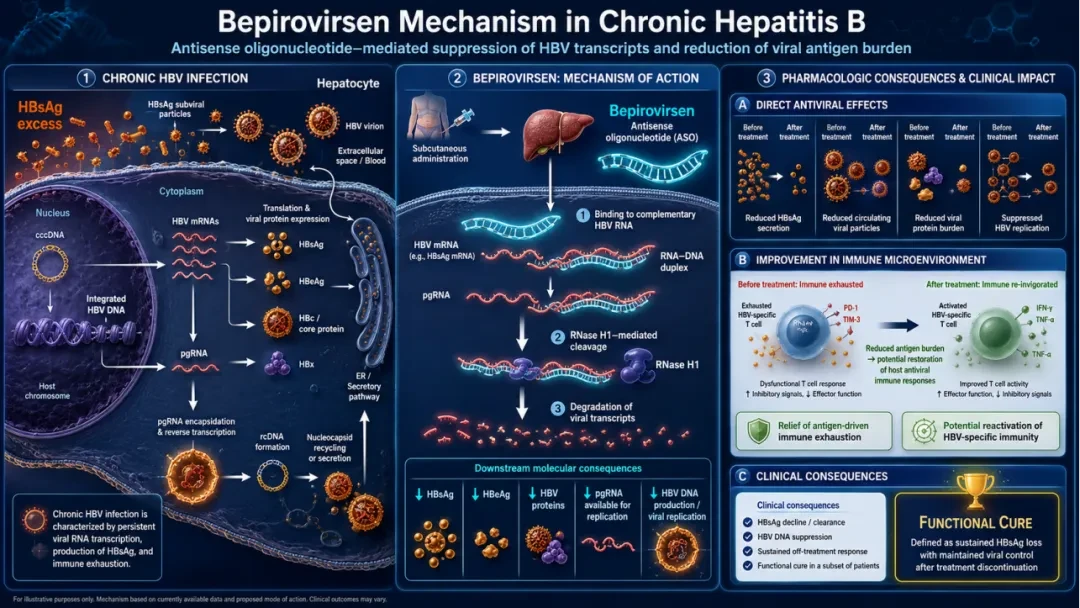
Key data are from the B-Clear IIb study. With the 300 mg once-weekly regimen administered for 24 weeks, with or without a nucleos(t)ide analogue (NA) background, approximately 9%–10% of patients in the overall population achieved sustained response, defined as HBsAg negativity and undetectable HBV DNA, during the 24-week follow-up period.
This figure appears to be relatively low in the eyes of many people.
The challenge was that, prior to 2024, virtually no drug in Phase II trials for chronic hepatitis B could transform “sustained HBsAg clearance after a finite treatment duration” into a reproducible, measurable endpoint suitable for Phase III validation. B-Clear achieved this, and the subsequent Phase III trials, B-Well 1 and B-Well 2, both met their primary endpoints. Bepirovirsen has entered the regulatory submission process in multiple markets, including China.
It has set an anchor for the entire industry: namely"Limited-course ASO + HBsAg clearance + sustained control after treatment discontinuation", has been proven to be a viable path, not just a PowerPoint presentation.
All innovative drugs entering this therapeutic area in the future will face a core issue:Can it be better than bepirovirsen?
AusperBio’s AHB-137 is a pioneer among domestically produced antisense oligonucleotides (ASOs). Developed on the Med-Oligo™ platform, it is a non-conjugated ASO. Like bepirovirsen, it is administered via subcutaneous injection once weekly at a dose of 300 mg. However, the data presented at EASL 2026Exploring a population that has been scarcely studied systematically with bepirovirsen:Treatment-naïve patients with chronic hepatitis B who have not received any antiviral therapy, with low HBV DNA levels and baseline HBsAg levels of 100–10,000 IU/mL, underwent a treatment duration of only 16 weeks.
In the subgroup with baseline HBsAg levels of 100–1000 IU/mL, the functional cure rate reached a considerably high level 24 weeks after treatment discontinuation (Note: Data disclosed by EASL indicate a high proportion; specific subgroup figures are subject to the final published data).
These data carry several layers of meaning worth unpacking gradually:
1) Differences between treatment-naïve patients and previously treated patients
The B-Clear trial of bepirovirsen primarily validates its efficacy in treatment-experienced patients on a nucleos(t)ide analogue (NA) background—i.e., patients already receiving NAs for viral suppression, with bepirovirsen added to reduce HBsAg levels. In contrast, AHB-137 targets treatment-naïve patients, proceeding without NA support and employing a 16-week monotherapy regimen with an antisense oligonucleotide (ASO) to achieve the trajectory from antigen reduction to clearance.Fundamental Difference in Design: The former is an "add-on drug strategy," while the latter asks, "Can treatment-naïve patients be cured with a limited-duration regimen?"
2) The Importance of Baseline HBsAg Stratification
Higher efficacy was observed in the 100–1000 IU/mL subgroup, suggesting that functional cure of hepatitis B is increasingly resembling precision oncology—rather than a one-size-fits-all approach for the entire population, it isStart with the "enriched population" and gradually expand to patients with higher baseline levels.This is a shrewd research strategy, but it also means that readers cannot directly extrapolate this high cure rate to all patients with chronic hepatitis B (CHB).
Baseline HBsAg levels of 100–1000 IU/mL represent a relatively low range in clinical practice, corresponding to a population that is inherently more amenable to cure; however, the sample size for this group is limited.
Whether the subsequent Phase III trials can replicate the results is the true test.
3) 16-week treatment course, with figures demonstrating differentiated potential.
If AHB-137 can ultimately maintain a high rate of functional cure with a 16-week treatment regimen in treatment-naïve patients with low HBsAg levels in Phase III trials, this treatment duration would be commercially logical for both patients and health insurance payers—Shorter than the 24-week duration of the primary bepirovirsen regimen, implying lower total treatment costs and better adherence.
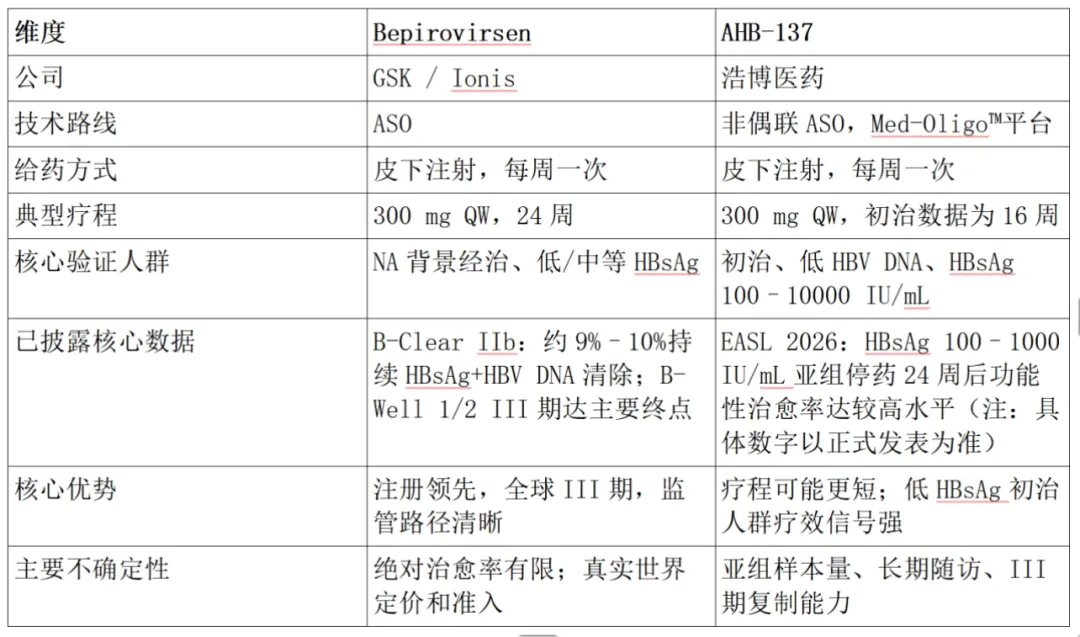
To be fair, the current data for AHB-137 are still from Phase II subgroups, with a limited sample size. What will truly put concerns to rest is the pending Phase III trial. Nevertheless, the presentation of such results at EASL already demonstrates that the platform capabilities of Chinese-made antisense oligonucleotide (ASO) therapies have reached a new level—reflecting independent strategic thinking in mechanism of action, patient selection criteria, and treatment regimen design.
02
The Stage Performance of siRNA
Many people conflate siRNA and ASO, perceiving both merely as "small nucleic acids that lower HBsAg." In reality, their mechanisms of action and clinical development pathways differ significantly.
ASOs are single-stranded and act on HBV RNA through an RNase H-mediated degradation mechanism. They are relatively simple to manufacture but typically require weekly injections, resulting in a high frequency of administration during the treatment course.
siRNA is a double-stranded RNA, with the greatest clinical advantage being that the dosing interval can be extended significantly, such as every 4 weeks, every 8 weeks, or even quarterly for certain designs, which improves compliance in patients with chronic diseases.Advantagesis enormous.
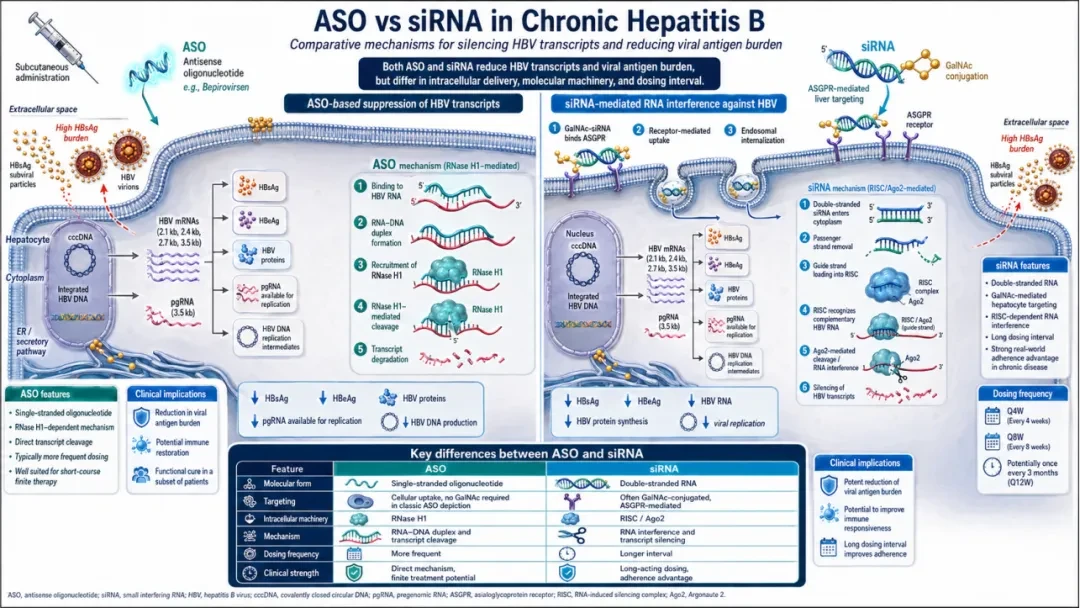
(Comparison of ASO and siRNA Mechanisms)
The core therapeutic rationale of siRNA is to rapidly reduce HBsAg and viral protein loads, thereby alleviating the immune system’s “antigen burden,” and then combine this with immune activation modules (PEG-IFNα, therapeutic vaccines, or monoclonal antibodies) to pursue a functional cure after treatment cessation.
Hengrui’s HRS-5635 has officially launched its Phase III trial, taking the lead in development progress. This essentially marks the entry of this paradigm into the regulatory validation stage in China.
HRS-5635 is an HBV siRNA developed by Hengrui based on GalNAc liver-targeting technology. It is delivered to hepatocytes via ASGPR-mediated uptake, activates the RNAi mechanism, and simultaneously suppresses multiple HBV transcripts, leading to reductions in multiple markers including HBsAg, HBeAg, and HBV RNA.
Although China already has numerous early-stage siRNA projects, advancing an HBV siRNA candidate into pivotal registration-enabling clinical trials demonstrates at least two key points: first, the delivery stability of the GalNAc liver-targeting platform has been validated in early-phase studies; second, the magnitude and durability of HBsAg reduction have reached levels sufficient to support Phase III trial design. Initiating Phase III clinical trials not only underscores the efficiency of Hengrui Medicine as an established pharmaceutical company but also validates the robust foundation of its technology platform and pipeline.
Certainly, the core issues in Phase III are far more complex than those in early-stage clinical trials—whether HBsAg clearance (rather than merely a reduction) can be achieved, whether this effect can be sustained after treatment discontinuation, and how to design combination strategies (monotherapy advancement versus combination with PEG-IFNα) are all key focal points for HRS-5635 in the coming years.
We can also refer to data from established siRNA candidates in the hepatitis B indication.
Roche/Novo’s xalnesiran (RG6346) is one of the most mature HBV siRNA candidates with publicly available data, and its Phase II results can serve as a benchmark for the entire therapeutic approach. In brief: while xalnesiran monotherapy significantly reduces HBsAg levels, the proportion of patients achieving HBsAg loss (seroclearance) in the monotherapy group is relatively low. When combined with PEG-IFNα, particularly in patients with lower baseline HBsAg levels, the HBsAg loss rate is substantially increased.
This indicates that reducing HBsAg levels and clearing HBsAg are two tasks with significantly different levels of difficulty.
siRNA is highly effective at rapidly reducing HBsAg levels from high titers; however, transitioning from “low-level HBsAg” to “HBsAg negativity with sustained response” typically requires immune system reactivation. The role of PEG-IFNα is precisely to provide an immunological boost after the antigen load has already been reduced.
However, PEG-IFNα has an unavoidable issue: a considerable burden of side effects. Flu-like symptoms, bone marrow suppression, and emotional impacts all pose challenges to long-term treatment adherence.
Nevertheless, this very example demonstrates:The future role of siRNA will no longer be that of the "protagonist" achieving a cure on its own, but rather one component within a precisely engineered combination.OneBase.
It’s quite interesting to reflect on: in the past, when discussing a cure for hepatitis B, everyone envisioned discovering a single “magic bullet” drug capable of working alone. Now, it appears that the truly effective approach may lie in a refined strategy of patient stratification and combination therapy, more akin to a relay race, with each medication playing its specific role.
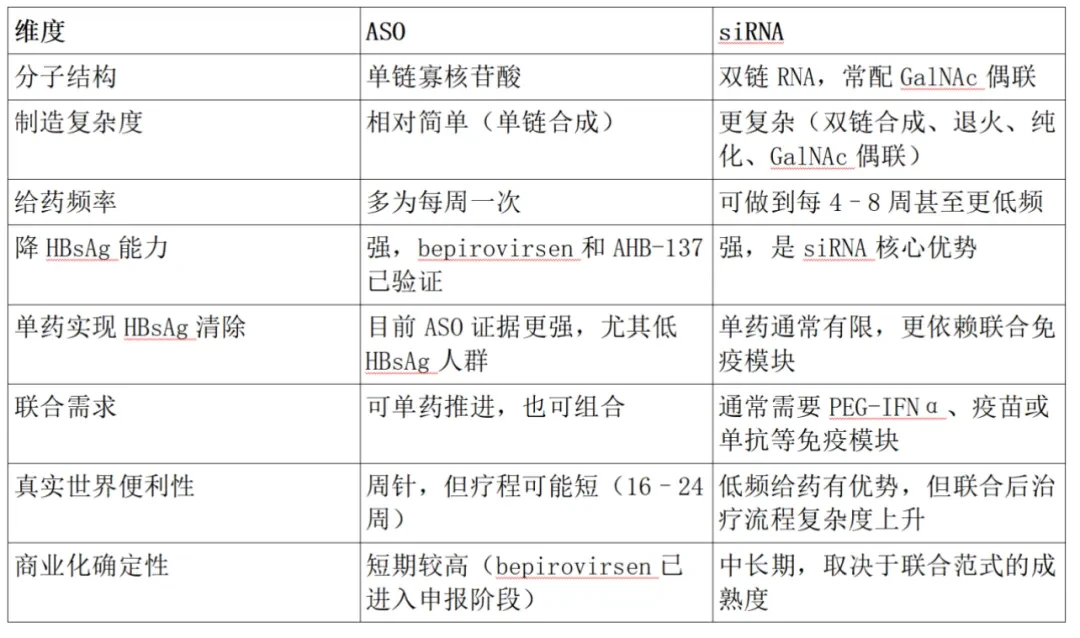
(ASO vs. siRNA: Differences in the Underlying Logic of Two Approaches)
This table leads to the conclusion that ASOs excel in short-term certainty, while siRNAs hold greater potential for mid-to-long-term combination therapy paradigms. Each modality addresses different stages and patient stratifications within the curative pathway for chronic hepatitis B.
03
Small Molecule Inhibitors—Another Possibility
CAMs (Capsid Assembly Modulators) were initially perceived by many as “more potent NAs”—both are small-molecule oral agents that suppress HBV replication.
This understanding is inaccurate; the difference lies in the distinct levels of the mechanisms of action.
Traditional nucleos(t)ide analogues (NAs) target HBV reverse transcriptase, directly inhibiting the reverse transcription of pgRNA into HBV DNA, thereby suppressing downstream steps in viral replication. In contrast, CAM-E agents (capsid assembly modulators with aberrant assembly effects) interfere with the core capsid assembly process itself; rather than blocking reverse transcription, they cause misassembly of the nucleocapsid.), thereby interfering with pgRNA packaging and the formation of new nucleocapsids, as well as the most critical step: reducing the replenishment of the cccDNA pool via the nucleocapsid recycling pathway.
If cccDNA replenishment is continuously suppressed, the cccDNA pool would theoretically be gradually "diluted" with hepatocyte division. This is an effect that nucleos(t)ide analogues (NAs) cannot achieve, and it represents the greatest theoretical value of CAM-E class drugs: they may leave a mark at the cccDNA level, rather than merely suppressing HBV DNA replication.
Therefore, it is logically sound to position capsid inhibitors as an "oral foundational module."
Aligos Therapeutics’ ALG-000184 is an oral CAM-E agent and a pioneer in this therapeutic area. Data from its long-term Phase 1 study demonstrated reductions in multiple hepatitis B-related biomarkers., as shown in the figure:
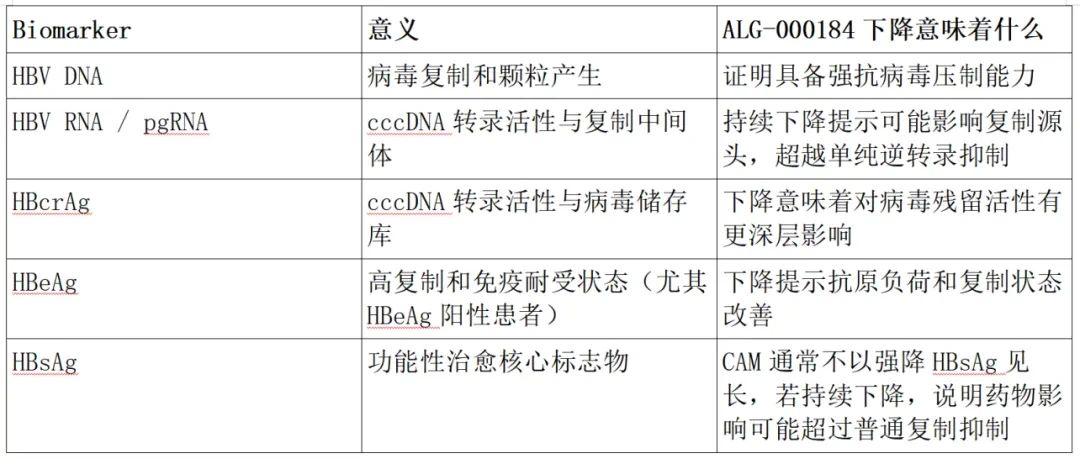
Most notably, the concurrent decline in HBV RNA and HBcrAg warrants close attention. The presence of HBV RNA in serum reflects the transcriptional activity of cccDNA. If ALG-000184 can sustainably suppress HBV RNA, it would indicate not only inhibition of reverse transcription but also a reduction in the downstream transcriptional flux from cccDNA. The decline in HBcrAg points in a similar direction.
Of course, Phase 1 data are limited, with a small sample size and relatively short follow-up duration. The "decline in multiple biomarkers" is an intriguing signal, but it remains quite far from demonstrating an ability to "alter the natural history of the disease."
Simply put, there is currently insufficient data to support the expectation that CAM-E agents such as ALG-000184 can achieve a functional cure as monotherapy. This approach also does not align well with the biological rationale for hepatitis B cure—suppressing viral replication alone, without reducing antigen levels and reactivating immunity, makes it difficult to achieve high HBsAg clearance rates.
Its true value may only be fully realized within a combination regimen.
A rational framework for future portfolio logic might be as follows:NAs or CAM-Es continuously suppress viral replication and cccDNA replenishment at the foundational level; ASOs or siRNAs reduce the antigen load, such as HBsAg, at the upper level; immune modules (PEG-IFNα, therapeutic vaccines, or monoclonal antibodies) reactivate host immunity when antigen levels are low, promoting clearance and maintaining control.
The three layers each perform their distinct functions. Capsid inhibitors target the foundational layer—the gradual depletion of the cccDNA reservoir—a process that requires time and can only be sustained long-term in the context of chronic disease management through oral small-molecule therapies.
Compared with ASOs and siRNAs, oral administration offers inherent commercial advantages for chronic diseases such as hepatitis B: broader accessibility, improved patient adherence, greater potential for cost control, and easier integration into tiered diagnosis and treatment systems and primary care settings.
Conclusion:ASO is currently at the forefront, with bepirovirsen defining the first-generation registration criteria for functional cure. siRNA represents a mid-to-long-term platform paradigm characterized by infrequent dosing and potent antigen reduction; however, fully realizing its therapeutic potential requires combination with immune modulators. Meanwhile, capsid inhibitors are quietly addressing the most difficult-to-quantify challenge at the foundational level: gradually shrinking the cccDNA pool and reducing residual viral activity.
China has the world's largest population of HBV-infected individuals, as well as domestic innovative forces advancing simultaneously along three distinct pathways.
Previously, the core objective of hepatitis B treatment was to “suppress the virus”; now, perhaps more importantly, it is to “enable patients to discontinue therapy.”

Click "Yaodu" below”, follow for more exciting content
Disclaimer
The push notification rules for WeChat Official Accounts have changed yet again. If you don’t click“Seen”or not set to"Starred", we might just fade into the vast sea of literature~ Click here to make sure you don't miss out on the latest updates from Yaodu! ???