Miniscule Submits IPO Prospectus for Hemoglide: A Pacemaker-Sized Implantable Intravascular Heart Pump

Johnson & Johnson
Medical Device R&D and Manufacturer

Abiomed
Cardiac System Medical Device Developer

Since Johnson & Johnson acquired Abiomed for $16.6 billion in 2022, Abiomed’s Impella series of interventional heart pumps has become a cash cow for Johnson & Johnson. Last year, sales of the Impella series reached $1.751 billion, representing a year-over-year increase of 17.1%.
With the surge in popularity of the Impella series of percutaneous heart pumps, an increasing number of companies, including Boston Scientific, have entered this market segment. However, these products bear strong similarities to the Impella devices and lack significant disruptive innovation.
UntilMinisculePublic Disclosure of Its Interventional Heart PumpHemoglide, this is a completely disruptive interventional cardiac pump that can be directly implanted into the patient's heart to provide blood pumping, similar to Abbott and Medtronic's leadless pacemakers.
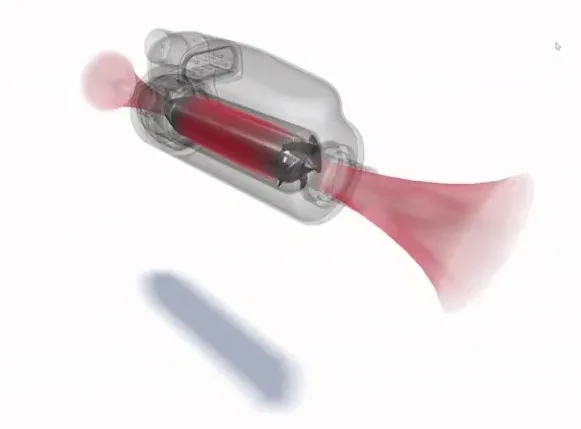
Hemoglide
HemoglideIt is a cardiac pump designed for long-term implantation, and it is only as large as an AA battery (an AA battery has a diameter of approximately 14–14.5 mm and a height of approximately 49–50.5 mm).HemoglideProvides a support option for patients, designed to facilitate hospital discharge, restore mobility, enhance rehabilitation potential, and improve quality of life, while reducing adverse events or potential risks.
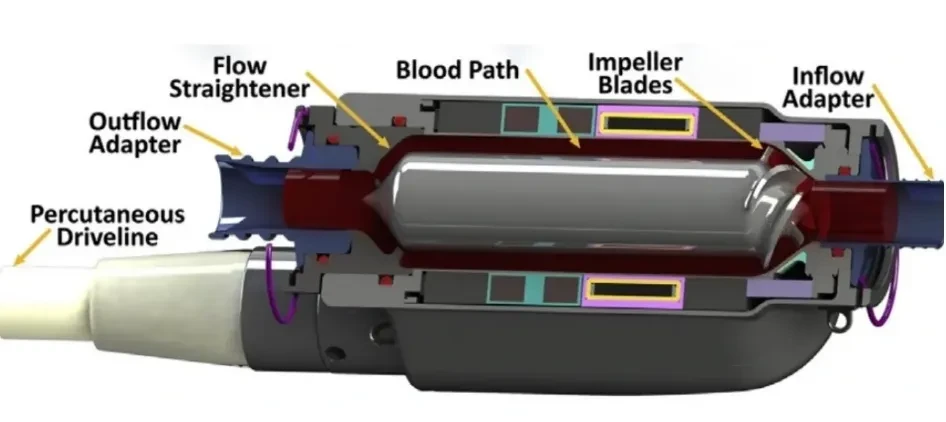
HemoglideEmploys a fully magnetically levitated rotor with no mechanical bearings, eliminates intrapump blood recirculation pathways, and optimizes flow to minimize blood damage.
HemoglideIt can be implanted similarly to a cardiac pacemaker. Designed specifically for minimally invasive implantation, it eliminates the need for open-chest surgery. Its drive line is extremely thin and flexible, with dimensions only one-third those of the HeartMate 3, thereby reducing the risk of infection.
HemoglideIt eliminates the constraints of hospitalization and the need for continuous clinical monitoring, enabling patients to return to their communities, families, work, and recreational activities while promoting recovery.
Hemoglide Study Results
Hemolysis and von Willebrand Factor (vWF) Testing
In vitro benchtop test results indicate that Hemoglide causes negligible hemolysis and preserves the integrity of von Willebrand factor (vWF). A well-designed ventricular assist device (VAD) can minimize hemolysis, which is the process of destroying oxygen-carrying red blood cells. vWF is a glycoprotein that promotes platelet adhesion to maintain hemostasis.
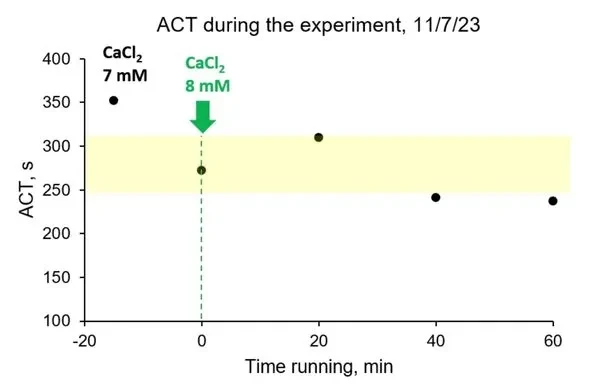
Acute Ex Vivo Study
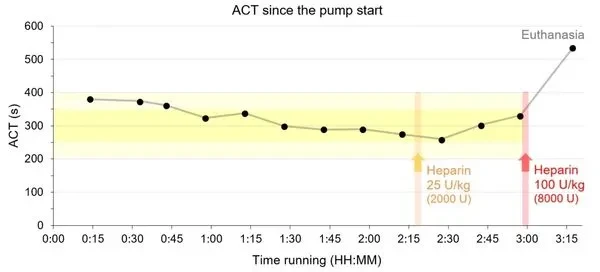
In vitro experimental results showed that the activated clotting time (ACT) remained within normal limits during blood circulation in Hemoglide. The activated clotting time (ACT) is an indicator of the rate of blood coagulation.
In Vitro Thrombosis Test
In vitro benchtop test results demonstrate that Hemoglide exhibits high thromboresistance.¹ Thrombosis is another term for blood clot formation, and the thromboresistance of a ventricular assist device (VAD) measures its ability to resist blood clot formation.
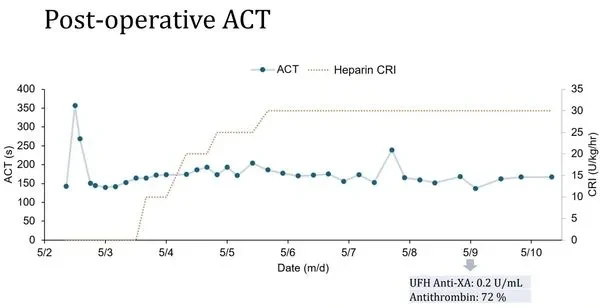
7-Day In Vivo Study
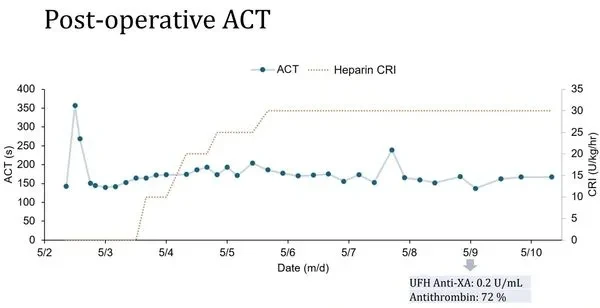
The in vivo experimental results were consistent with previous findings on the antithrombotic properties of Hemoglide, further demonstrating that renal function was not adversely affected. In this study, Hemoglide was implanted in live sheep for seven days to continue evaluating its antithrombotic performance, while simultaneously monitoring for any decline in renal function.
Miniscule
Miniscule is an innovative medical device company. Hemoglide, a ventricular assist device (VAD), is an implantable blood pump the size of two AA batteries, designed to help stable shock patients return home and regain mobility.



Author Biography
Ren Zhenchu

Ren Zhenchu, Editor of the InnovLab official account and a student of the third cohort of CCI. InnovLab was founded in 2026 and is dedicated to disseminating the latest medical device technologies from both China and abroad. InnovLab primarily focuses on innovative medical devices in fields such as general surgery and gastroenterology.



CCI Cardiovascular Physicians Innovation Club
Long press the QR code to follow us
This Issue's Feature: Shen Li
Author of this article:Ren Zhenchu
Post-production: Zhang Lirong