

Medical-Preventive Dual Key: A Clinical Guide to Infection Prevention in Patients with Chronic Diseases

GSK
Pharmaceutical R&D Manufacturer
“Doctor, I have hypertension. Can I receive the XX vaccine? Are there any risks?” In outpatient clinics for chronic diseases such as cardiovascular, endocrine, and respiratory conditions, this is a question nearly every physician encounters daily from patients with chronic illnesses.
Is there a “guide” that integrates multiple chronic disease fields, including cardiovascular, endocrine, and rheumatology/immunology, to professionally, rigorously, yet accessibly explain “How to Scientifically Prevent Infections in Patients with Chronic Diseases?”
GSK’s Vaccine Medical Department keenly identified this clinical pain point in chronic disease management. In collaboration with DXY, it conducted surveys to delineate the real-world clinical dilemmas faced by physicians managing chronic diseases, providing professional content recommendations and evidence-based support. The initiative was spearheaded by Professor Huo Yong from Peking University First Hospital and Professor Zhao Jiajun from the Provincial Hospital Affiliated to Shandong First Medical University. Thirty-four clinical experts in the field of chronic diseases contributed to and reviewed the manuscript, while 46 domain experts participated in interpreting and disseminating the content. After two years of meticulous refinement, the guidebook “Dual Keys to Medicine and Prevention: Strategies for Infection Prevention in Chronic Diseases,” targeted at healthcare professionals, was finally completed and released on May 30 during the 20th Oriental Cardiology Conference (OCC 2026).
This guide adopts a question-and-answer format to systematically address 50 high-frequency clinical questions, ranging from “Why patients with chronic diseases need to be more vigilant against infections” to “Precautions before and after vaccination.”
Breaking Down Specialty Barriers: This Guide Is a Bit “Hardcore”
Historically, chronic disease management has often focused on long-term medication and indicator control for conditions such as hypertension and diabetes, while easily overlooking a hidden yet far-reaching aspect: the prevention of infectious diseases. For patients with chronic conditions, even a common case of influenza or an outbreak of herpes zoster can trigger a rapid deterioration of their condition, potentially becoming life-threatening.
Promoting the deep integration of treatment and prevention is a key breakthrough for improving the quality of chronic disease management and enhancing long-term patient outcomes, which is also the original intention behind compiling "Dual Keys to Medicine and Prevention: A Guide to Infection Prevention in Chronic Diseases." The "core strength" of this guide is reflected in three aspects:
34 Renowned Experts Provide “Insightful” Guidance
This guide was co-created by Professor Huo Yong from Peking University First Hospital and Professor Zhao Jiajun from the Provincial Hospital Affiliated to Shandong First Medical University. The collaborative team spans multiple specialties, including cardiology, endocrinology, pulmonology, nephrology, oncology, and neurology. Each response has been rigorously reviewed by authoritative clinical experts in the respective fields, ensuring that every recommendation is grounded in the latest evidence-based medicine and closely aligned with the actual conditions of Chinese patients.
Addressing Pain Points Directly: Resolving Real Confusions Through a Q&A Format
Every question addressed in this guide stems from extensive surveys conducted by GSK’s Medical Affairs Department and DXY among a large number of clinicians, authentically capturing the most perplexing issues encountered in clinical practice and the most frequently asked questions by patients. These include: Why should patients with chronic diseases place greater emphasis on preventing infectious diseases; Is vaccination safe and effective for patients with cardiovascular diseases; How to select appropriate vaccine types, and what precautions should be taken before and after vaccination.
This intuitive Q&A (Question and Answer) format allows physicians to quickly consult information during breaks between outpatient visits, effectively serving as an “on-the-go advisor” at their side.
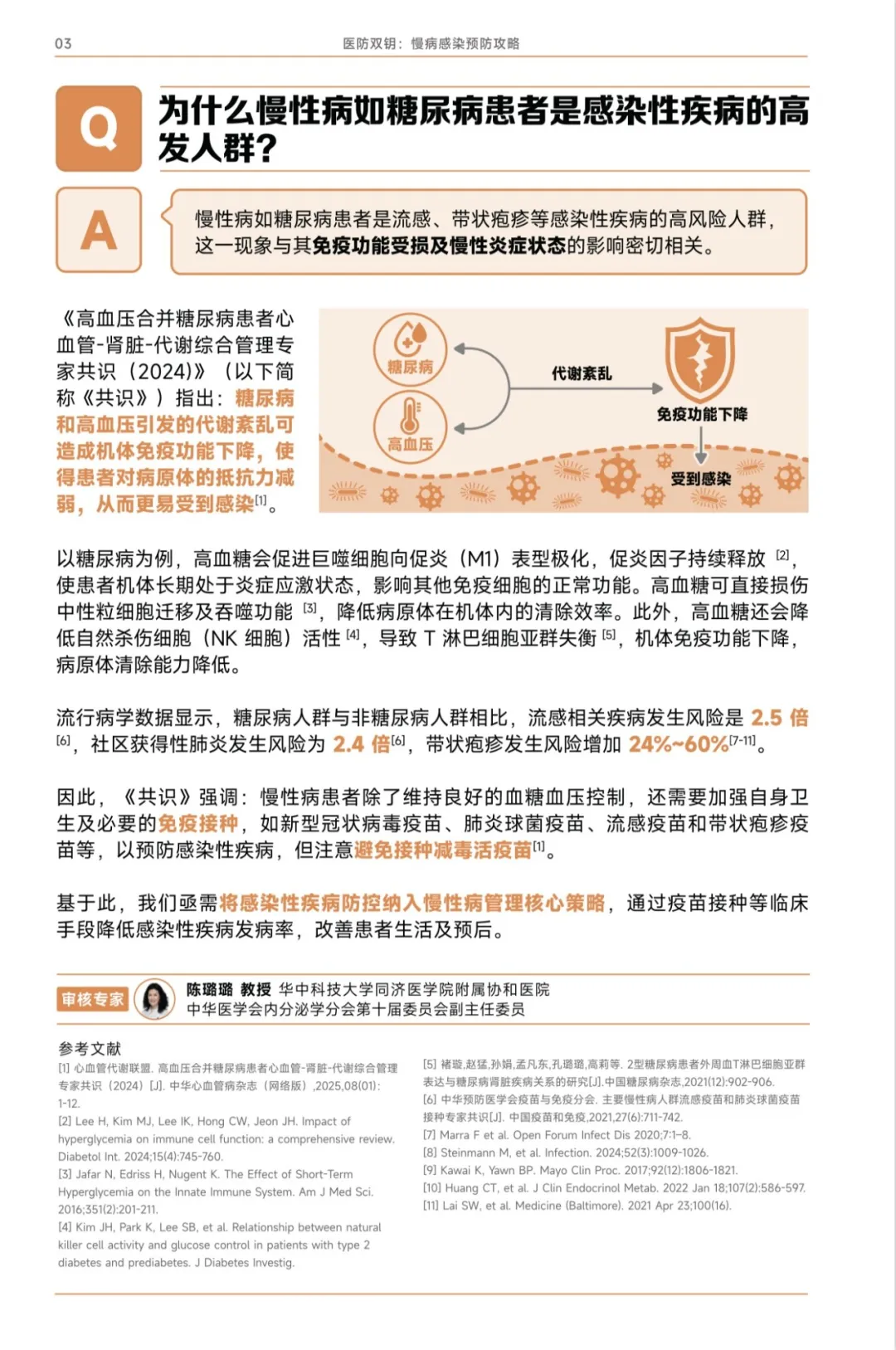
“Dual Keys to Medicine and Prevention: Strategies for Infection Prevention in Chronic Diseases” Excerpt
Covering Seven Major Fields to Facilitate the Integration of Medical Care and Disease Prevention
Comprehensive Guide: Structured around common chronic diseases in clinical practice, this guide is divided into chapters on cardiovascular diseases, endocrine disorders, rheumatic and immune-mediated diseases, chronic respiratory diseases, chronic kidney disease, cancer, and neurological disorders. It systematically integrates chronic disease management with infection prevention across these seven major fields, achieving a unification of "therapeutic thinking" and "preventive thinking."
OCC’s Highlight Moment: Panoramic Integration Driving the In-Depth Implementation of Medical-Preventive Care Convergence
On May 30, during the 20th Oriental Cardiology Conference (OCC 2026), GSK and DXY jointly held a special launch event for “Dual Keys to Medicine and Prevention: A Guide to Infection Prevention in Chronic Diseases” at this premier gathering of cardiovascular specialists across China. Li Tiantian, Founder and Chairman of DXY, together with four leading experts—Professor Huo Yong from Peking University First Hospital, Professor Peng Yongde from Shanghai General Hospital, Professor Yang Yanmin from Fuwai Hospital, Chinese Academy of Medical Sciences, and Professor Li Yong from Huashan Hospital Affiliated to Fudan University—officially unveiled the guide and participated in a roundtable discussion. From a multidisciplinary perspective, they explored in depth the clinical value and practical approaches to preventing infectious diseases among patients with chronic conditions.
This was not merely a launch event, but also an opportunity to disseminate industry concepts. Synchronized with online live streaming, DXY’s omni-channel communication matrix and external media outlets worked in tandem to achieve comprehensive coverage spanning academic conferences, online dissemination, and industry discussions. This enabled grassroots physicians unable to attend in person to participate in interactions, truly realizing the strategy of “leveraging key points to drive broader impact.”
“Dual Keys to Medicine and Prevention: A Guide to Infection Prevention in Chronic Diseases” rapidly garnered industry attention during the OCC, evolving from a highlight moment into a hot topic of industry discussion. This established an industry benchmark for the project and brand, while also bringing the concept of “integration of medical care and prevention” to the forefront for more clinicians and industry practitioners.
The press conference marks only the first milestone. In the future, DXY will continue to expand its content ecosystem around “Dual Keys to Medical Care and Prevention: A Guide to Infection Prevention in Chronic Diseases,” leveraging formats such as short-video interpretations, themed roundtables, Sino-foreign dialogues, and education for primary-care physicians. These efforts aim to translate the guide from a launch event into real-world clinical practice, thereby enhancing healthcare professionals’ integrated capabilities in medical care and prevention within comprehensive chronic disease management. (Sun Yangming)