

Takeda China Hosts First Blood Products Summit Forum Under the Theme 'T-GATHER: Advancing Albumin Therapy Together'
Takeda
Biopharmaceutical Manufacturer
SHANGHAI, May 17, 2021 /PRNewswire/ -- Recently, the inaugural Takeda Blood Products Summit (hereinafter referred to as the "Summit"), initiated by Takeda China, was successfully held. Themed "T-GATHER: Uniting Strength for Human Serum Albumin", the hybrid event brought together more than 20 clinical experts from diverse disciplines across China. It provided a multidimensional academic exchange platform for the cross-disciplinary application of blood products, including human serum albumin. The Summit also offered guidance on best practices for the clinical use of blood products in China, fostered expert consensus, and explored the standardized and protocol-driven application of human serum albumin in therapeutic settings across hepatobiliary surgery, critical care medicine, and pharmacy departments.

Inaugural Takeda Blood Products Summit
Blood products primarily refer to biologically active preparations derived from healthy human plasma and manufactured using biological processes or separation and purification technologies. They are widely utilized in the treatment of acute and critical conditions in intensive care units (ICUs), liver surgery, and burn departments, serving as essential medications for the prevention and control of major diseases and the management of critically ill patients. In plasma, human serum albumin is the most abundant protein component.[1]。
Given that the clinical application of human serum albumin in China largely relies on individual experience and lacks standardized and regulated treatment protocols, various misconceptions persist both among patient populations and in clinical practice. Particularly against the backdrop of the global pandemic, the sharp surge in demand for blood products has further intensified these challenges: a decline in donor visits to plasma collection centers has severely strained plasma collection volumes, further hindering the capacity to meet patient demand.
Against the backdrop of advancing diagnostic and therapeutic technologies, accelerating innovative research and development, and profound concurrent shifts in patient needs, it has become imperative for the blood products sector to transition into a multidisciplinary, new diagnostic and therapeutic paradigm. At this forum, experts unanimously emphasized that promoting an innovative, multidisciplinary collaborative diagnostic and therapeutic model, while balancing standardization and personalization, will facilitate more rational and effective clinical application of blood products, fully realize the economic value of these medications, and improve clinical outcomes for a broad patient population.
In the field of critical care medicine, therapeutic blood products, including human serum albumin, are emerging as essential medications. Their clinical application and practical experience in the management of severe COVID-19 patients have drawn increasing attention to the use of this agent in the ICU. When administered in critical care, it can reduce the incidence of complications and significantly improve patient prognosis in specific conditions, such as sepsis and liver cirrhosis complicated by spontaneous bacterial peritonitis.[2]In addition, as a resuscitation fluid, albumin not only exerts excellent volume-expanding effects but also helps attenuate sepsis-induced inflammatory responses and promotes the repair of tissue and cellular damage.[3]。
In hepatobiliary surgery, the perioperative use of blood products is also of great clinical significance.Professor Zhu Jiye, Director of the Institute of Organ Transplantation, Peking University, and Director of the Department of Hepatobiliary Surgery, Peking University People's Hospitalstated: "Human serum albumin is synthesized almost entirely in the liver; therefore, for patients undergoing hepatic surgery, particularly those with pre-existing hepatic impairment, it may lead to postoperative hypoalbuminemia and precipitate a series of severe complications. Exogenous supplementation of human serum albumin is a widely recognized and effective method for correcting perioperative hypoalbuminemia following hepatectomy."
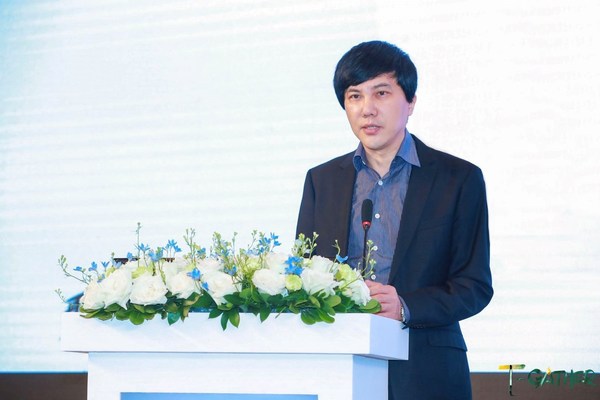
Professor Zhu Jiye, Director of the Institute of Organ Transplantation, Peking University, and Director of the Department of Hepatobiliary Surgery, Peking University People's Hospital.
Professor Mao Yilei, Chief Physician, Department of Liver Surgery, Peking Union Medical College HospitalIt was also mentioned that, "In recent years, there has been increasing advocacy for the rational use of human serum albumin during the perioperative period of liver resection. For patients with normal preoperative liver function undergoing minor to moderate liver surgery, the indications for postoperative albumin supplementation can be narrowed; whereas for patients with definite preoperative hypoalbuminemia, perioperative albumin supplementation is recommended, which may be beneficial in reducing complications and improving surgical outcomes."[4]。”
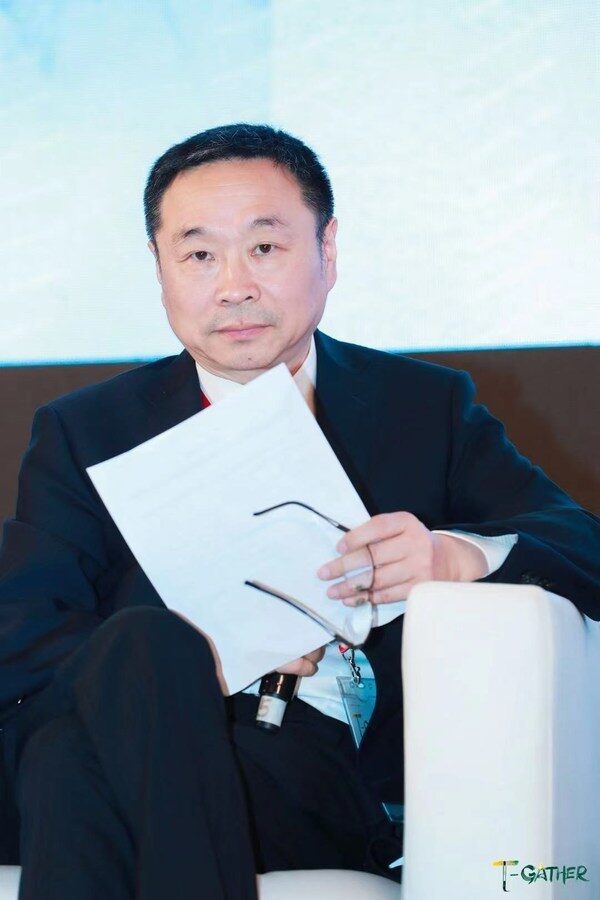
Professor Mao Yilei, Chief Physician, Department of Liver Surgery, Peking Union Medical College Hospital
Mr. Guohong Shan, President of Takeda Chinastated: “As a globally leading pharmaceutical company with a 240-year heritage, Takeda also boasts over 75 years of experience in the development of plasma-derived products. In China, we remain committed to building diverse academic exchange platforms for physicians, fostering multidisciplinary dialogue, and setting benchmarks in the therapeutic field. Leveraging the platform of this Blood Products Summit, we hope not only to continuously explore and gain insights into cutting-edge trends but, more importantly, to collaborate with academic and clinical leaders across various disciplines to chart the course for the rational and effective use and future development of blood products in China, ultimately benefiting patients. Looking ahead, we will further increase our R&D investment in blood products, continuously introduce highly innovative products to China, and contribute to realizing the vision of a ‘Healthy China.’”
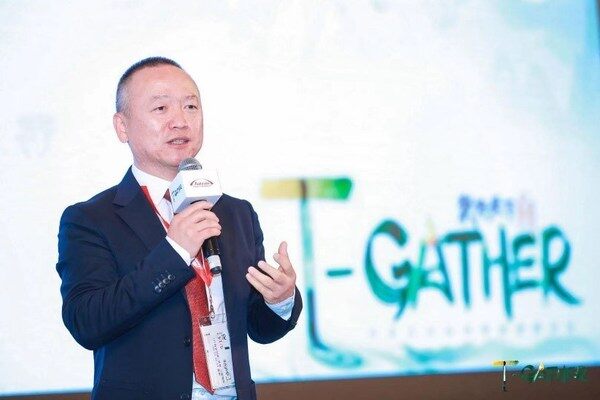
Mr. Guohong Shan, President, Takeda China
[1] Ji Xiao. Research on Critical Quality Attributes of Recombinant Human Serum Albumin[D]. National Institutes for Food and Drug Control, 2019.
[2] DUAN Hong-jie, CHAI Jia-ke, et al. Functions of human serum albumin and its application in the treatment of critical illness[C]// Chinese Association of Rehabilitation Medicine; Department of Orthopedic Surgery, Capital Medical University; Beijing Shijitan Hospital, Capital Medical University. Chinese Association of Rehabilitation Medicine; Department of Orthopedic Surgery, Capital Medical University; Beijing Shijitan Hospital, Capital Medical University, 2015.
[3] Research Progress on the Use of Albumin for Fluid Resuscitation[J]. The Journal of Practical Medicine, 2015, 000(020):3442-3443.
[4] Mao Yilei, Sang Xinting, Yang Zhiying, et al. Clinical application of albumin in patients after liver surgery[J]. Chinese Journal of Practical Surgery, 2007, 27(8): 616-618.
Statement:
1. This article aims to convey cutting-edge information in the medical and pharmaceutical fields and does not constitute a recommendation or promotion of any drug or treatment regimen.
2. For more information on diseases, medications, diagnosis, or treatment, please consult a healthcare professional.
About Takeda Pharmaceutical
Takeda (Tokyo Stock Exchange Stock Code: 4502) (NYSE ticker: TAK) is a values-based, R&D-driven global biopharmaceutical company headquartered in Japan. Takeda is committed to translating scientific discoveries into highly innovative medicines, safeguarding patients' healthy lives and brighter futures. Takeda focuses its drug research and development on four therapeutic areas: oncology, gastroenterology, neuroscience, and rare diseases, with targeted R&D investments in plasma-derived therapies and vaccines. We remain steadfastly focused on developing highly innovative medicines, striving to improve lives by pioneering novel treatment modalities, strengthening our collaborative R&D engine, and building a robust and diverse product pipeline. With employees across approximately 80 countries and regions, we partner with local healthcare stakeholders to deliver meaningful health benefits to patients worldwide.
Takeda entered China in 1994. Takeda China's headquarters is located in Shanghai, with its main business centers in mainland China situated in cities and regions such as Beijing, Shanghai, Tianjin, Guangzhou, and the Hong Kong Special Administrative Region. The company maintains offices in major cities across China and currently employs over 2,000 employees in China. With the development of China's economy and the growing demand for healthcare, China has become one of Takeda's most important emerging markets globally.
For more information, please visithttps://www.takeda.com
Forward-Looking Statements
This document and any materials distributed in connection therewith may contain forward-looking statements, views, or opinions regarding Takeda’s future business, future conditions, and operating performance, including Takeda’s estimates, forecasts, objectives, and plans. Forward-looking statements often include, but are not limited to, the following words, such as "aim," "plan," "believe," "hope," "continue," "expect," "intend," "seek," "ensure," "will," "may," "should," "would," "could," "anticipate," "estimate," "predict," or similar expressions, or the negative thereof.
Forward-looking statements in this document are based solely on Takeda's estimates and assumptions as of the date of release. Such forward-looking statements are not guarantees of future performance by Takeda or its management and involve known and unknown risks, uncertainties, and other factors, including but not limited to: the economic conditions facing Takeda's global operations, including the macroeconomic environments in Japan and the United States; competitive pressures and developments; changes in applicable laws and regulations; the success or failure of product development projects; decisions by regulatory authorities or the timing of such decisions; fluctuations in interest and exchange rates; claims or concerns regarding the safety or efficacy of marketed products or product candidates; the timing and impact of post-merger integration efforts for acquired companies; and the ability to divest assets that are non-core to Takeda's operations and the timing of any such divestitures, all of which could cause Takeda's actual results, performance, achievements, or financial condition to differ materially from any future results, performance, achievements, or financial conditions expressed or implied by such forward-looking statements.
For more information regarding the above and other factors that may affect Takeda's results, performance, achievements, or financial condition, please refer to Takeda's latest Annual Report on Form 20-F filed with the U.S. Securities and Exchange Commission, “Item 3. Key Information—D. Risk Factors” and other reports. Please refer to the Takeda website for further details.https://www.takeda.com/investors/reports/sec-filings/orwww.sec.gov。Takeda's actual results, performance, or financial condition may differ materially from those expressed or implied in the forward-looking statements. Persons receiving this press release should not place undue reliance on any forward-looking statements. Takeda assumes no obligation to update any forward-looking statements contained in this press release or any other forward-looking statements that may be released by the Company, except as required by law or securities exchange rules. Past performance is not indicative of future results, and Takeda's performance in this press release is not indicative of, nor should it be construed as an estimate, forecast, or projection of Takeda's future performance.