

ReadCrystal: Can MicroED Technology Power the Next-Generation Drug Discovery Platform?

ReadCrystal
Small Molecule Targeted Innovative Drug Developer
MicroED (Microcrystal Electron Diffraction) was selected by Science magazine as one of the top ten scientific breakthroughs of 2018 globally. ReadCrystal believes that the revolutionary capability this technology provides for acquiring structural biology data is poised to overcome the bottlenecks commonly encountered across various existing drug discovery technology platforms.
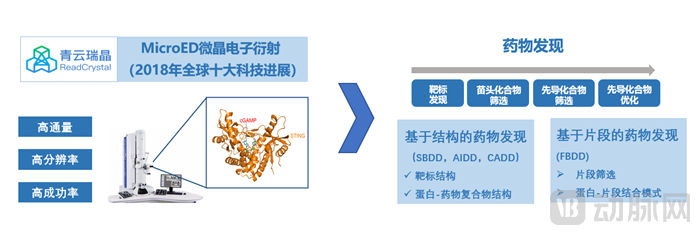
Drug discovery is positioned at the forefront of the entire biopharmaceutical industry chain and represents the critical stage for generating core patents. Consequently, drug discovery technology platforms have become a fiercely contested strategic battleground for pharmaceutical companies and CROs alike. The history of human drug discovery began with the exploration of natural products, whereas modern drug discovery is a complex, multidisciplinary process that integrates biology, chemistry, physics, medicine, and other related disciplines.
Currently, drug discovery primarily relies on four technology platforms: high-throughput screening (HTS), structure-based drug design (SBDD), fragment-based drug design (FBDD), and DNA-encoded compound library (DEL).Currently, the highly popular AI-driven drug design (AIDD) can essentially be understood as a specialized technical methodology within structure-based drug design platforms.
Among these four technology platforms, the most mature and widely utilized is high-throughput screening (HTS) technology. Over the past two decades, HTS has served as the absolute mainstay in drug discovery, with many FDA-approved chemical drugs tracing their origins to early high-throughput screening of small-molecule compounds.
However, high-throughput technology also faces significant bottlenecks: the chemical space it covers is extremely limited (the entire chemical space reaches up to 1060order of magnitude, while the largest molecular library only has 106-7magnitude), therefore the screening success rate is low. Furthermore, after years of application, its potential in target-based drug discovery has been largely exhausted, while the remaining targets are predominantly those that are difficult to successfully develop using high-throughput screening methods.
Furthermore, as the complexity of target compounds associated with many current drug targets has significantly increased, the chemical space has expanded exponentially, thereby further reducing the success rate of development using high-throughput screening (HTS).
As for the aforementioned "remaining targets," for example, those currently receiving significant attention in the industry: protein-protein interaction (PPI) targets, structure-based drug discovery (SBDD, which also includes AIDD) and fragment-based drug discovery (FBDD) have become the primary development approaches. Both methodologies heavily rely on the observation and understanding of the atomic-resolution structures of the targets and target-ligand complexes.
When conducting virtual screening using physics-based CADD methods, it is necessary to perform molecular docking and scoring between the molecules and the target protein, as well as molecular optimization through activity prediction methods such as FEP. In this process, the structural data of the target protein must be used as the starting point.
During the computational process, due to the complexity and conformational dynamics of proteins, reliance on protein-ligand complex structures is necessary to determine the binding sites, binding modes, and binding pocket conformations of various candidate molecules, thereby guiding and correcting the calculations. Without sufficient structural data to support the computation, the error margin often exceeds the differences in binding energies among different molecules.
Artificial Intelligence Drug Design (AIDD) can be considered a specialized technical pathway within Structure-Based Drug Design (SBDD). By analyzing the binding energy between existing molecules and protein targets, it predicts the binding energy of novel molecules to proteins. The primary advantage of AIDD lies in its high computational speed, enabling the rapid screening of vast molecular libraries. For established targets with sufficient data, it has already yielded promising results. However, for First-in-Class (FIC) targets lacking public data or having only limited datasets, significant challenges remain, and there are currently no mature solutions available.
FBDD exponentially reduces the chemical space required for screening by shifting the screening targets from intact drug molecules to molecular fragments, thereby enhancing the activity and drug-likeness of candidate molecules. Its effectiveness has been validated in the R&D of multiple drugs, such as:
Venetoclax, a small-molecule drug targeting BCL-2. This deconstructive logic is highly appealing at the theoretical level, yet it faces significant limitations in practical application, primarily because the binding affinity of fragment molecules is several orders of magnitude lower than that of the intact molecule (approximately 102-105), therefore, screening becomes the primary bottleneck, and due to low binding affinity, the binding sites and modes of fragment molecules can hardly be predicted computationally, making it impossible to proceed with the subsequent linking or growing steps to obtain complete molecules.
Structural biology techniques can yield structural information on protein-fragment complexes, thereby confirming binding events and, when binding occurs, identifying the binding site and mode. Given that the FBDD screening process necessitates the evaluation of thousands to tens of thousands of molecular fragments, high-throughput, high-resolution structural elucidation techniques serve as the ideal approach for FBDD implementation.
Both of the above methods rely on structure determination, particularly high-throughput, high-resolution structural elucidation techniques. Currently, the mainstream technology is single-crystal X-ray diffraction; however, its limitations in the following aspects have made it a bottleneck for SBDD and FBDD:
① Low crystallization success rate: Single-crystal X-ray diffraction requires large single-crystal particles (greater than 50 μm), yet the crystallization process is highly challenging and has a low success rate. Growing single crystals is often described as an art rather than a science, with success or failure largely dependent on chance. For instance, proteins such as GPCRs and ion channels, which serve as critical drug targets, are notoriously difficult to crystallize.
② Difficulty in Small-Molecule Penetration: Small-molecule soaking is a critical step in co-crystal structure determination. However, due to the large size of single-crystal particles, the penetration rate of small molecules is low, and the crystals are prone to cracking after soaking, which often leads to failure in determining the co-crystal structure.
③ Long cycle: Extensive time is required to screen and optimize single-crystal crystallization and molecular soaking conditions. Furthermore, testing relies on large-scale scientific infrastructure—the synchrotron radiation light source—backed by billions of RMB in state investment. Domestically, however, only the Shanghai Synchrotron Radiation Facility (SSRF) in Zhangjiang is available. With access granted only once every few weeks or even months, the pace of R&D iteration is severely constrained.
MicroED technology replaces traditional X-rays with high-energy electrons, leveraging the stronger interaction between electrons and matter to enhance the signal-to-noise ratio, thereby reducing the required sample volume by approximately 100 million times. This significantly increases the success rates of structure determination and small-molecule penetration, shortens the project cycle, and enables real-time structural analysis to be conducted in in-house laboratories.That is, MicroED leverages equipment valued at merely tens of millions to achieve results that far surpass those of scientific infrastructure worth billions.
It is foreseeable that this technology will exert a profound impact on the life sciences. Consequently, it was recognized by the prestigious international journal *Science* as one of the Top 10 Breakthroughs of 2018, alongside other landmark achievements across life sciences, physics, and chemistry, including gene-silencing therapeutics based on RNA interference (RNAi) technology and single-cell sequencing for tracing single-cell developmental lineages.
By substantially improving the success rate and efficiency of structure determination, MicroED technology is poised to supply a wealth of foundational data on target proteins for Structure-Based Drug Design (SBDD), thereby enhancing computational accuracy and enabling virtual screening for First-in-Class (FIC) targets. Meanwhile, for the hundreds to thousands of structural assays required during the Fragment-Based Drug Discovery (FBDD) screening process, high-throughput MicroED technology can also serve as an ideal structural determination platform.Therefore, drug screening platforms based on MicroED technology are expected to significantly enhance the effectiveness and efficiency of SBDD and FBDD.
The ReadCrystal team originates from Stockholm University in Sweden and Peking University. At Stockholm University, electron crystallography (the academic term for MicroED) has been under development since the 1980s. Through the dedicated efforts of multiple generations, it has evolved from a theoretical hypothesis into a practical reality, with established applications in proteins, small-molecule pharmaceuticals, energy materials, metals, and other fields. Professor Xiaodong Zou currently serves as the leading authority in electron crystallography at Stockholm University and is the only Chinese member of the Nobel Committee for Chemistry. She has also authored the International Union of Crystallography's textbook on electron crystallography.
Leifeng Liu, Founder and CEO of ReadCrystal, earned his fully-funded Ph.D. at Stockholm University under the supervision of Professor Junliang Sun and Professor Xiaodong Zou, and conducted postdoctoral research at the University of Tokyo and the University of Birmingham. Additionally, the company has two Co-founders and Chief Scientists: Dr. Junliang Sun (crystallographer) and Dr. Xiaoguang Lei (medicinal chemist).
Dr. Junliang Sun previously served as an Associate Professor at Stockholm University and is currently a Research Professor at Peking University and Secretary-General of the Chinese Crystallographic Association. Dr. Xiaoguang Lei is a Professor at Peking University and a Senior Research Fellow at the Peking University-Tsinghua University Joint Center for Life Sciences. He currently serves as a committee member of the Chemical Biology Professional Committee of the Chinese Chemical Society, an international committee member of the International Society for Chemical Biology, and Executive Editor of the internationally renowned academic journal *Bioorganic & Medicinal Chemistry*.
ReadCrystal has also established a strong Scientific Advisory Board: Lin Jianhua, former President of Peking University and former Chairman of the Chinese Crystallographic Society, serves as the company's crystallography advisor; Gao Ning, Deputy Dean of the School of Life Sciences at Peking University, serves as the company's structural biology advisor.
Currently, by leveraging the team's accumulation of over a decade of prior experience and a rare multidisciplinary team assembled following the company's establishment,Achieved comprehensive breakthroughs across dry-lab and wet-lab domains, including MicroED wet-lab workflows, data acquisition hardware and software, and data processing algorithms., thereby securing the globally leading position in high-throughput, high-resolution MicroED technology.
ReadCrystal is focusing on the synergistic integration across various stages of MicroED technology, SBDD, and FBDD, leveraging the high-throughput and high-resolution advantages of MicroED to optimize underlying physics-based algorithms, accelerate R&D iteration cycles, and streamline R&D workflows in SBDD and FBDD processes.
Meanwhile,Through a strategic partnership with the Peking University Sunan Institute of Molecular Engineering, the company has established a Joint R&D Center for Drug Discovery in Changshu, Suzhou. The center currently houses hardware equipment valued at nearly RMB 40 million, providing drug discovery, structural biology, and solid-state pharmaceutical research services to enterprises and research institutions.In terms of commercialization, the company has currently established partnerships with several leading CROs and renowned pharmaceutical companies.
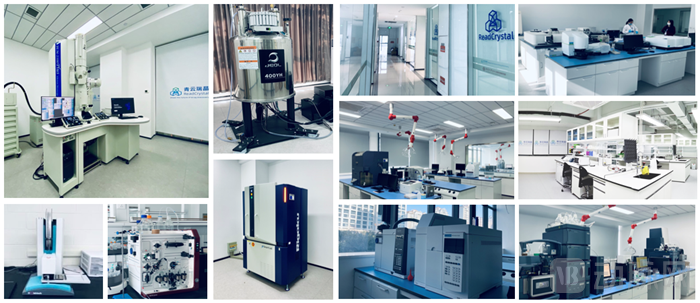
ReadCrystal secured two consecutive funding rounds in late 2020 and early 2021, totaling tens of millions of RMB. The company has completed laboratory setup and team formation, while effectively advancing the applied development of MicroED-related technologies and preliminarily applying them to drug discovery. Currently, the company is raising a Pre-A financing round, aiming to establish a more comprehensive computational and medicinal chemistry team and drive the implementation of additional R&D service projects.
By integrating MicroED technology, wet screening technology, and first-principles-based computational technology, ReadCrystal will focus on drug design for difficult-to-drug targets, building a foundational technology platform with distinctive technical features.