

Jialiang Medical: A Breakthrough in Drug-Resistant Epilepsy Treatment with Brain-Computer Interface Innovation

GenLight
Innovative Medical Device Solution Provider
As early as the 5th century BC in Greece, Hippocrates, the "Father of Western Medicine," proposed that human thought, emotion, and cognition all originate from the brain. While people often acknowledge the brain's vital importance, they tend to neglect brain health.
In fact, brain diseases encompass various types. Clinically, they are commonly classified into several major categories: brain tumors, traumatic brain injuries, cerebrovascular diseases, and functional brain disorders. Among these, functional brain disorders include conditions such as epilepsy and Parkinson's disease.
In May this year, the Seventh National Population Census showed that China's total population exceeded 1.4 billion, with the proportion of individuals aged 65 and above reaching 13.5%, an increase of 4.6 percentage points compared to a decade ago. According to incomplete statistics, the total number of patients with several major functional neurological disorders in China has surpassed 50 million.
Furthermore, despite an investment boom in the healthcare sector since 2019, the focus within the brain science space remains concentrated on "brain-inspired science" and acute cerebrovascular therapy, leaving a vast unmet clinical need in the field of chronic diseases.
Based on this, Dr. Cao Peng founded GenLight Medical at Haichuang Park in Hangzhou Future Sci-Tech City. Leveraging brain-computer interface (BCI) technology as its initial focus, the company aims to deliver state-of-the-art therapeutic solutions to a broad patient population with neurological disorders.

After graduating from the Biomedical Engineering program at Xi'an Jiaotong University, Cao Peng pursued advanced studies at the French National Institute for Advanced Studies / University of Technology of Compiègne, where he conducted scientific research in magnetic resonance imaging and earned a Ph.D. from the Joint Laboratory of Biomedicine and Biomechanics. Upon returning to China, he successively held positions at GE Healthcare and Jenscare Scientific, gaining a profound understanding of healthcare systems both in China and globally.
Dr. Cao Peng has led and participated in multiple provincial and ministerial-level scientific research projects, published over 40 papers in domestic and international core journals, and holds multiple domestic and PCT patents.Drawing on his academic research overseas, professional tenure at a Fortune 500 multinational enterprise, and invaluable experience in scaling a startup from the ground up, Dr. Cao Peng possesses rare full-lifecycle expertise in medical devices—from initial concept to final product commercialization—along with extensive corporate management capabilities.
In 2020, astutely recognizing the immense potential of the brain science-driven medical device sector within neuroscience, he resolved to found GenLight, aiming to build a globally leading technology platform for neurosurgery and brain science.

Dr. Cao Peng, Founder of GenLight Medical
The disease name epilambanein (Greek: epilepsy), coined by Hippocrates, remains in use to this day, making epilepsy one of the oldest recognized diseases in the world.
According to World Health Organization data, approximately 50 million people worldwide live with epilepsy, with around 5 million new cases diagnosed annually, and the risk of premature death among patients with epilepsy is three times higher than that of the general population. Furthermore, countless epilepsy patients and their families endure the dual burden of the disease and social discrimination.
Epilepsy is classified into two categories: one is amenable to pharmacotherapy, while the other progresses to drug-resistant epilepsy (DRE) due to medication resistance or other factors, necessitating intervention solely through lesionectomy and neuromodulation.
China currently has over 3 million patients with drug-resistant epilepsy (DRE), representing a potential market of nearly RMB 80 billion. GenLight Medical has taken the lead in entering the market, developing two core products to establish a comprehensive solution for DRE.
1. Magnetic Resonance-Guided Laser Ablation Minimally Invasive Surgical System (LaserRoTM)
Traditional craniotomy primarily targets single focal lesions. When a lesion is located in an eloquent area or multiple focal lesions are present, surgical resection will result in numerous irreversible adverse effects on the brain.
Precise minimally invasive procedures carry relatively low risks. Among them, Magnetic Resonance-guided Laser Interstitial Thermal Therapy (MRgLITT) has gradually emerged in recent years as a minimally invasive approach internationally. The overseas market is currently dominated by Medtronic and Monteris Medical, and the industry remains in the phase of accumulating clinical evidence. It was not until 2016 that Medtronic's Visualase system received FDA approval for the treatment of brain tumors.
It is estimated that as of 2020, approximately 7,000 MRgLITT procedures for epilepsy treatment had been performed in the United States, and the number is expected to grow rapidly in the future as clinical results continue to be published.
Genlight Medical's MRI-guided laser ablation minimally invasive surgical system (LaserRoTM), utilizing high temporal resolution magnetic resonance imaging (MRI) technology and slender, multi-size, multi-reflection-mode fiber optic catheters enables the integration of multi-modal preoperative planning software with robotic assistance, dual temperature monitoring via MRI and fiber optic probes, and a precisely controllable range.
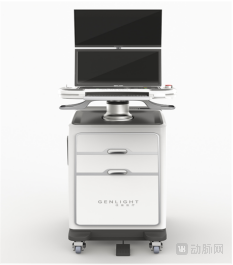
GenLight Medical - MRI-Guided Laser Ablation Minimally Invasive Surgical System: LaserRoTM
II. Closed-Loop Neurostimulator (EpilcureTM)
Neuromodulation technology primarily utilizes electrical stimulation to treat epilepsy. Compared to conventional surgical interventions, it offers reduced brain invasiveness, representing a significant therapeutic advantage for patients who are ineligible for craniotomy or radiotherapy.
The vast majority of neurostimulators currently on the market employ an open-loop stimulation approach, delivering electrical pulses at a fixed frequency based on predetermined stimulation intensity and inter-pulse intervals.Unlike open-loop stimulation, GenLight's closed-loop/responsive neurostimulator utilizes real-time monitoring to deliver timely feedback for abnormal electroencephalographic activity, thereby enhancing both safety and efficacy, the two core performance metrics.
The Responsive Neurostimulation (RNS) System developed by the US-based company NeuroPace is currently the only neuromodulation stimulator that utilizes closed-loop stimulation. By capturing epileptic brain signals via intracranial EEG, it automatically delivers targeted electrical stimulation directly to the epileptic focus, achieving full automation. Additionally, its design relocates the pulse generator from the chest implant site typical of VNS and DBS systems to the cranium, thereby reducing soft tissue trauma and the risk of surgical complications.
Currently, NeuroPace's RNS System has been sold to over 130 Comprehensive Epilepsy Centers (CECs) across the United States, and a comprehensive insurance coverage framework has been established. NeuroPace's Q1 report indicates that over 6.6 million intracranial EEG data records have been accumulated to date,As the only successfully commercialized product currently capable of continuous intracranial electroencephalography (iEEG) monitoring, RNS holds immense commercial potential.
Epilcure, jointly developed by Hangzhou Nuowei Medical Technology Co., Ltd., a subsidiary of GenLight, in close collaboration with a team from Zhejiang UniversityTMThe closed-loop neurostimulator fills a gap in domestic manufacturing, featuring a compact and lightweight design. It innovatively incorporates a wireless charging solution, significantly extending the device's service life.
EpilcureTMUtilizing medical-grade brain-computer interface (BCI) application chips and intelligent BCI modulation technology, integrated with an intelligent epileptic EEG detection algorithm, enables automated optimization of treatment regimens. Invasive BCIs represent an indispensable pathway for brain science research, while closed-loop neurostimulators for epilepsy treatment serve as a critical gateway to in-depth exploration in the field of neuroscience.
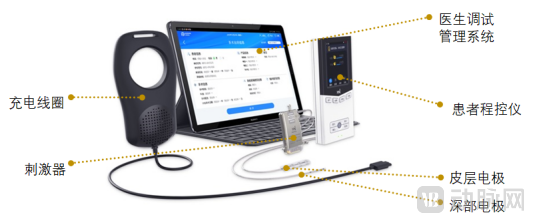
GenLight Medical - Closed-Loop Neurostimulator - EpilcureTM
In March this year, GenLight Medical and The Second Affiliated Hospital of Zhejiang University School of Medicine jointly completed Asia's first closed-loop neurostimulator implantation procedure. During the one-month postoperative inpatient observation period, the treated patient remained seizure-free, demonstrating favorable clinical outcomes.
It is reported that the second patient has also successfully undergone surgery recently, experiencing a similar, significant reduction in symptoms postoperatively. The product is expected to soon enter large-scale clinical trials, bringing new hope to the broader epilepsy patient community.
In addition to comprehensive solutions for refractory epilepsy, GenLight Medical has also launched a series of product R&D projects targeting the treatment of Parkinson’s disease and depression, aiming to achieve import substitution. The company has also established a strategic presence in the field of minimally invasive brain tumor surgery.
In China, the annual incidence of brain tumors exceeds 400,000 cases, with nearly 150,000 being malignant gliomas and metastatic brain tumors. GenLight's MRI-guided laser ablation minimally invasive surgical system, LaserRoTM, can also be used for minimally invasive surgical treatment of brain tumors.
Implantation of this device takes only 5–20 minutes. Guided by MRI for precise lesion localization, it requires only a 2–4 mm scalp incision. The procedure is safe, minimally invasive, and associated with a low complication rate, while allowing for repeatable, multi-directional surgical interventions upon recurrence. It effectively preserves perilesional brain tissue, thereby better safeguarding higher cognitive functions such as memory and language.
GenLight Neurotech also provides brain-computer interface (BCI) research services and integrated solutions targeting neurocognition and neurological disorders. Its series of optogenetics research systems delivers technical support for optogenetic studies. Already commercially available and under continuous development, these systems are leading the direction of scientific research.
Dr. Cao Peng stated that GenLight boasts a research team with exceptional localization capabilities, featuring several overseas-educated PhD and Master’s graduates who have previously held mid-to-senior management positions at Fortune Global 500 companies and domestic AI unicorns. The company has already established industry-academia-research collaborations with prestigious Chinese universities such as Zhejiang University and multiple renowned Class III Grade A hospitals in China, and is actively preparing for various product R&D and regulatory submission initiatives.
According to reports, multiple projects initiated by the company have secured support from programs such as the National 863 Program, Zhejiang Province Major Science and Technology Special Projects, and Zhejiang Province Key Research and Development Programs, and have also been awarded the second prize in the finals of the Hangzhou Overseas High-Level Talents Innovation and Entrepreneurship Competition. Since its establishment last year, GenLight has garnered favor from numerous prominent investment institutions and has now advanced to the Series B financing stage.
When discussing the company's strategic layout, Dr. Cao Peng stated: “A truly world-class medical device enterprise must be a global healthcare company, firmly embodying the principle of 'Made in China, for the World.' In the future, GenLight Medical will continue to build a globally leading technology platform in neurosurgery and brain science, striving to realize the beautiful vision of 'igniting the light of technology and illuminating the hope of life.'”