

WeFlow-Arch® Modular Embedded Aortic Arch Stent Graft System Successfully Completes First Patient Enrollment in Pivotal China Clinical Trial

Wei Qiang Medical
Vascular Interventional Device R&D and Manufacturer
HANGZHOU, June 17, 2021 /PR Newswire/ -- June 2, 2021,Jointly developed by Professor Guo Wei's team and Wei Qiang Medical's WeFlow-Arch®Module-Embedded Aortic Arch Stent Graft System (hereinafter referred to as WeFlow-Arch®) The kick-off meeting for the Chinese registration clinical trial was successfully held at the lead site, the Department of Vascular Surgery, First Medical Center of the Chinese PLA General Hospital, and the first patient was successfully enrolled on June 7. MarkingWorld's FirstA device for the treatment of aortic arch pathologies, featuring a modular main body combined with an embedded branch structure, has officially entered the registration clinical trial phase in China. Subsequent international multi-center registration clinical trials are planned (Project No.: NCT04765592).
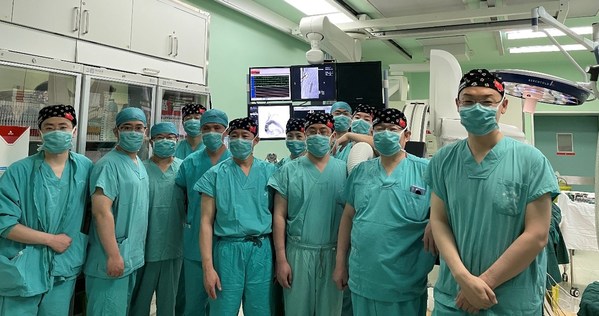
Group Photo
WeFlow-Arch, a project under the "13th Five-Year" National Key R&D Program (Project No.: 2020YFC1107700), with Professor Guo Wei from the Department of Vascular Surgery, Chinese PLA General Hospital, serving as the Principal Investigator (PI) for China,®, is expected to resolve the global challenge of endovascular treatment for complex aortic arch diseases. The product entered the Special Review Procedure for Innovative Medical Devices ("Green Channel") of the China National Medical Products Administration (NMPA) in January 2021.
Aortic arch diseases have historically been considered a "forbidden zone" for endovascular intervention due to their complex anatomical structures. The primary challenge lies in ensuring the complete exclusion of arch pathologies while simultaneously maintaining the patency of the supra-aortic branch vessels. To date, no mature endovascular devices are available for widespread clinical application. To address these technical challenges, Professor Guo Wei innovatively proposed the design concept of the "modular embedded branch," which has subsequently led to the development ofWeFlow-Arch® module integrated aortic arch stent graft system.
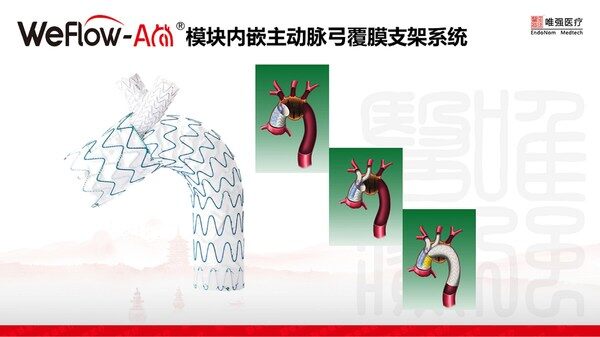
WeFlow-Arch® Integrated Modular Aortic Arch Stent Graft System
The system comprises an integrated ascending aortic stent graft system, an arch stent graft system, and a branch stent graft system, specifically designed for endovascular reconstruction of the aortic arch. The integrated ascending aortic stent graft features two integrated branch stents, which can be combined with the branch stent graft system for endovascular reconstruction of the brachiocephalic artery, left common carotid artery, or left subclavian artery. The combination of the arch stent graft and the integrated ascending aortic stent graft can address pathologies involving the aortic arch and descending aorta. The design concept of this modular integrated stent graft system ensures uninterrupted cerebral perfusion during the procedure, effectively avoiding deep hypothermic circulatory arrest and open-chest surgery, while reducing the risk of stroke, thereby providing patients with a novel therapeutic option. It is anticipated that this multicenter clinical trial will further validate the safety and efficacy of WeFlow-Arch®.
The first enrolled patient was a 67-year-old male. In 2014, he presented with sudden chest pain and was diagnosed with a descending aortic aneurysm. Given the small aneurysm size, no specific treatment was administered. In 2019, he developed blood-tinged sputum accompanied by chest tightness upon exertion. The patient declined open surgical intervention, after which he experienced persistent blood-tinged sputum. Over the past month and a half, he has experienced intermittent hemoptysis, averaging 10 episodes daily, accompanied by worsening exertional chest tightness. His past medical history includes a 20-year history of hypertension and lacunar cerebral infarction.
PreoperativeCTA:
Aortic arch and descending aortic aneurysm, left internal carotid artery occlusion, and a large mass in the upper left thoracic cavity. The aneurysm exceeds 15 cm in diameter, compresses the left upper lobe, and presents a clear indication for surgery. The proximal portion of the aneurysm involves the origin of the left common carotid artery.
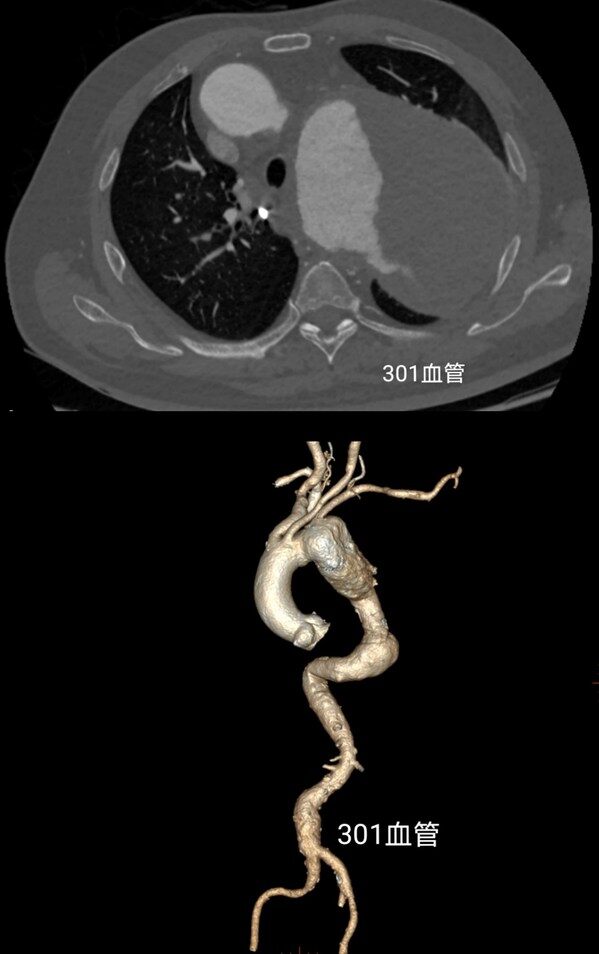
Preoperative CTA
Surgical Strategy:
Aortic arch endovascular repair was performed using the WeFlow-Arch® modular aortic arch stent-graft system, concurrently with endovascular reconstruction of the innominate artery and left subclavian artery.
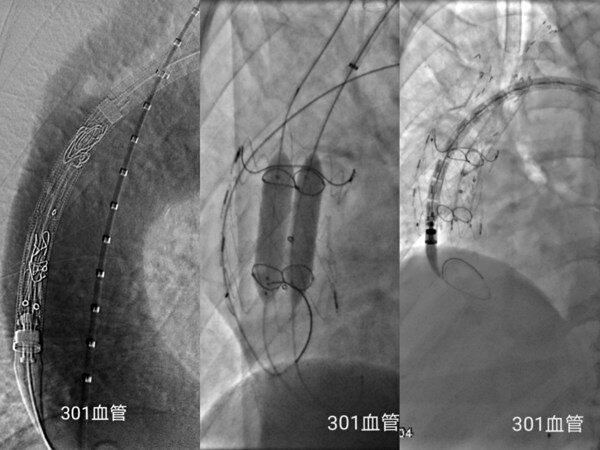
Surgical Procedure
Postoperative Angiography:
Accurate positioning of the aortic and branch stent-grafts; no type I or type III endoleaks; patent branch stents; normal blood supply to the left vertebral artery.
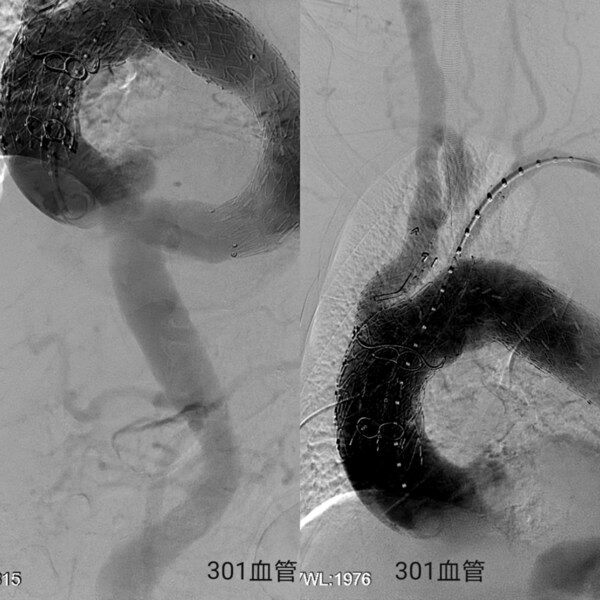
Postoperative Angiography
Postoperative Results:
Postoperative CTA demonstrates the implanted stent-graft in good configuration with no endoleak; the innominate artery and left subclavian artery are patent.
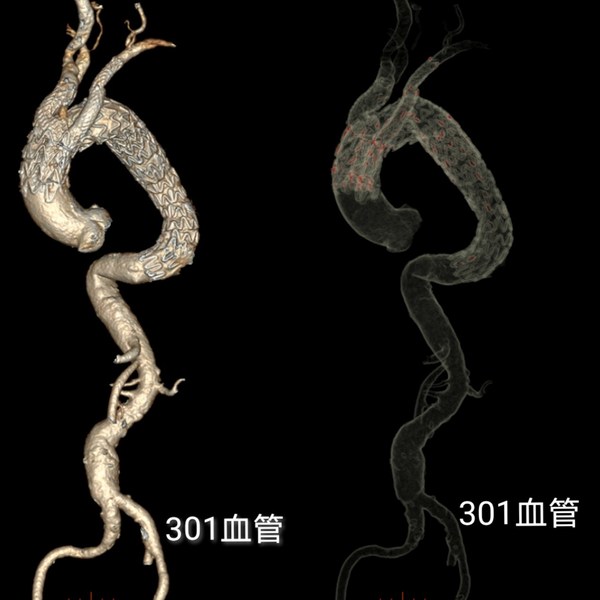
Postoperative Results
Postoperatively, Professor Guo Wei stated:“At present, endovascular reconstruction of the aortic arch still presents numerous challenges, including a limited number of available devices, insufficient clinical evidence, and suboptimal outcomes. The design concept of WeFlow-Arch® offers an alternative approach to aortic arch endovascular reconstruction, with favorable postoperative outcomes. We hope this product can complete multicenter clinical trials as soon as possible to benefit more patients.”