

Medtronic's $1.1 Billion HeartWare Acquisition Ends in Failure as Chinese Capital Doubles Down on Artificial Heart Race

Medtronic
Chronic Disease Medical Device and Therapy Developer
In June 2021, Medtronic announced the discontinuation of sales of its HVAD artificial heart product and notified all physicians to cease implanting new HVAD devices.
The news sent shockwaves through the industry. The emerging artificial heart market has long been dominated by two giants: Medtronic and Abbott. Now, Medtronic’s market exit signifies that after years of fierce competition, the company has conceded defeat, effectively ceding the artificial heart market to Abbott.
The artificial heart rivalry between industry giants Medtronic and Abbott is drawing to a close, but the current market landscape is not the endgame; the global competition in the artificial heart market has only just begun.
As Medtronic exits the market amid a crisis of complaints and product recalls, multiple Chinese artificial heart companies are rapidly expanding.
Recently, multiple artificial heart companies in China have secured backing from top-tier capital. In June 2021, Vivace Capital led a strategic restructuring of Yongrenxin with an investment of tens of millions of USD; Tongxin Medical had previously completed multiple rounds of financing, while Core Medical also closed a funding round valued at hundreds of millions of RMB; additionally, Xinqing Medical, a developer of extracorporeal artificial hearts, received an investment exceeding RMB 100 million from Northern Light Venture Capital.
Artificial hearts have unequivocally emerged as one of the hottest investment tracks in the cardiovascular sector today. Against the backdrop of Medtronic's major strategic withdrawal, why do top-tier global capital players continue to heavily bet on this field? How will Medtronic's exit reshape the global R&D landscape for artificial hearts? VCBeat (WeChat ID: vcbeat) interviewed multiple industry experts in the artificial heart sector and outlined the key drivers shaping the industry's development.
For most people, "artificial heart" remains a term with strong sci-fi connotations, but in reality, the artificial heart that garners significant attention in both clinical and industrial sectors does not literally refer to the complete replacement of the human heart with a mechanical device.
Artificial hearts are classified into two types: one is the Total Artificial Heart (TAH), and the other is the Left Ventricular Assist Device (VAD). The TAH is a medical device implanted in patients suffering from biventricular heart failure or left and right ventricular dysfunction. This condition accounts for only 5% to 30% of heart failure patients, with the remainder presenting with left-sided heart failure. The products approved for market launch by Medtronic and Abbott are also LVADs. (Note: All subsequent references to "artificial heart" in this article specifically refer to Left Ventricular Assist Devices (LVADs).)
The basic principle of an artificial heart is to implant a pump connected to an external power source into the left ventricle of a patient with heart failure. The high-speed rotating rotor within the cardiac pump propels blood into the left ventricle, supplementing the cardiac output that the native heart is unable to provide.
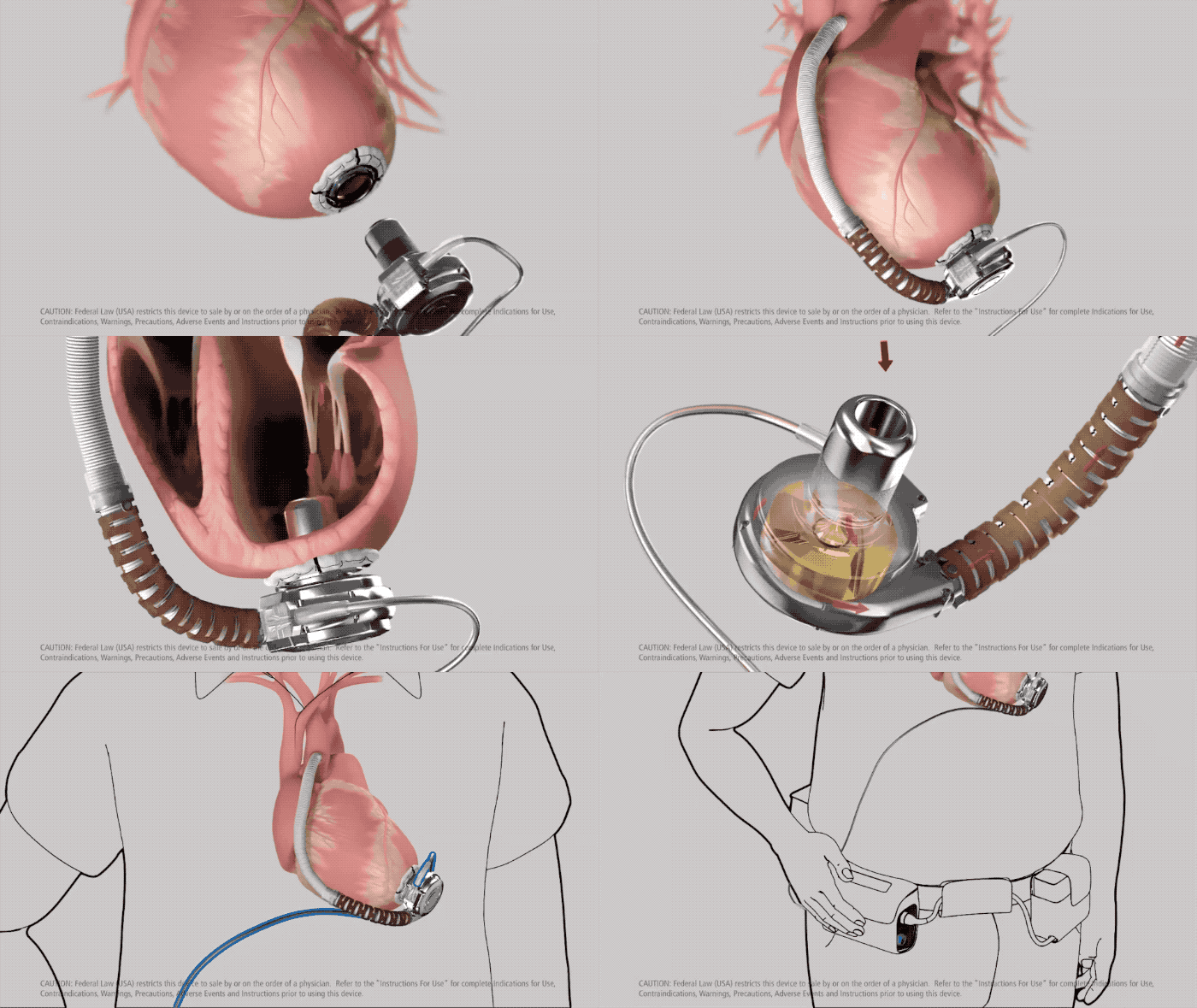
An artificial heart consists of an implantable pump, an external modular drive system, a system controller, and batteries. The direct trigger for the recent recall of the Medtronic HeartWare HVAD was a controller issue. After a batch of controllers was replaced, it resulted in the pump failing to initiate startup, failing to restart, or experiencing a delayed restart after the pump had stopped.
The deeper reason is that Medtronic's HVAD product has historically been at a competitive disadvantage in the market., the HVAD device faced multiple severe recalls. Following the launch of Abbott's HeartMate 3, sales of Medtronic's HVAD experienced a precipitous decline.
Medtronic CEO Geoff Martha stated: “A new data analysis reveals that the HeartWare HVAD has higher stroke and mortality rates compared to similar devices from Abbott, which was the primary reason driving Medtronic’s decision to withdraw the product from the market.”
What Sets Abbott's HeartMate 3 Apart?
The primary difference between the Abbott HeartMate 3 and the Medtronic HVAD lies in the distinct rotor suspension technologies within their pumps., this is also the key to the Abbott HeartMate 3 achieving lower stroke and mortality rates.Medtronic's artificial heart utilizes hydrodynamic suspension technology, whereas Abbott employs full magnetic suspension technology.
International research and development of artificial heart technology began in the 1950s. Regarding pump rotor drive technology, three generations of technical routes have undergone evolution, innovation, and development to date: pulsatile VADs, mechanical bearing VADs, and magnetically levitated VADs.
The levitation-based artificial heart eliminates bearing contact points, thereby minimizing blood damage. However, the technological approaches of Medtronic and Abbott do not represent a generational difference; both hydrodynamic suspension and magnetic levitation are types of levitation-based artificial hearts. What are the differences between the two?
Dr. Xu Boling, founder of Xinqing Medical, told VCBeat: "Hydrodynamic suspension utilizes blood flow to generate a supporting force that maintains the stable operation of the impeller within the artificial heart pump, allowing the rotor to levitate within the chamber without any contact with the chamber walls. Fundamentally, hydrodynamic suspension relies on the rotation of the component to generate hydrodynamic lift, making it a passive suspension force.”
The primary advantage of hydrodynamic suspension is its simple structure, which eliminates the need for additional control mechanisms, resulting in a more compact device with lower power consumption and reduced heat generation. However, to achieve sufficient supporting force, the impeller clearance cannot be excessively large, and specific blood flow velocity requirements must be met to ensure the long-term stable operation of the impeller. The drawback of reduced bearing clearance is the generation of high shear rates and shear stresses, which can cause blood damage.
Medtronic's HeartWare serves as a representative example of hydrodynamic suspension. Previously, Medtronic stated on its official website that the HeartWare is the world's smallest artificial heart. However, in clinical practice, a prominent issue with Medtronic's HVAD is a relatively high incidence of cerebral thrombosis.
Another technological approach, fully magnetic levitation, utilizes an electromagnetic field to apply an active force to the rotor, along with a series of electronic circuit components. By sensing the rotor's position and subsequently controlling the electromagnetic force, the system maintains the rotor consistently centered within the cavity.
Compared with hydrodynamic suspension, active suspension offers a wider dynamic suspension range for control. On the other hand, fully active magnetic levitation requires a series of electronic circuits, sensors, and other components, resulting in high system complexity. The additional circuitry also generates heat. Consequently, the primary R&D challenge for fully active magnetic levitation products lies in achieving miniaturization, reducing heat generation, and lowering power consumption and costs.
Overall, both hydrodynamic levitation and magnetic levitation have their advantages and respective challenges to address. The market withdrawal of Medtronic's HVAD will likely steer the industry toward a fully magnetic levitation approach.
However, the fully magnetically levitated technology route was also previously rejected by the market. Chen Chen, founder of Tongxin Medical, once stated in a speech that the development of fully magnetically levitated technology has undergone three stages.
Prior to 2000, fully magnetically levitated artificial hearts were highly sought after for their superior hemocompatibility; however, between 2000 and 2010, due to their excessively large size, they could only be implanted in the abdominal cavity, rendering them unacceptable to clinicians, and numerous companies that had committed to the fully maglev technological route were consequently phased out.
Subsequently, following Abbott's launch of the HeartMate 3, which demonstrated a lower stroke incidence rate compared to Medtronic's HVAD, the fully magnetically levitated technological approach began to gain recognition.
For the industry as a whole, Medtronic’s market withdrawal has not only reshaped the industry landscape but also provided new insights for the research and development of artificial heart products.
The head of core medical technology noted: “For all artificial heart R&D enterprises, the market withdrawal of Medtronic’s HVAD offers a key lesson: product design must place greater emphasis on long-term hemocompatibility. When selecting a technological pathway, long-term clinical adverse events must be carefully considered. Initially, artificial heart products were designed as a bridge to transplant for patients with end-stage heart failure; however, in current clinical practice, artificial hearts increasingly serve as a long-term supportive therapy for patients,”For product design, this requires thorough consideration of long-term hemocompatibility.”
In the context of an extreme scarcity of heart transplant donors, artificial hearts offer patients a new therapeutic alternative. For the prolongation of life, artificial hearts hold extraordinary significance.
But from a commercialization perspective, is the artificial heart sector, characterized by substantial R&D investment and high entry barriers, a sound business?The substantial capital deployment by two industry giants, Abbott and Medtronic, along with the strategic bets of top-tier domestic capital, may have already provided the answer.
Behind the artificial heart as a standalone product lies a rare multi-billion RMB market track within the cardiovascular sector.
The cardiovascular sector is the most important market within the medical device industry, having spawned several major tracks such as stents, valves, and electrophysiology. Heart failure, however, represents the final frontier in cardiovascular medicine. Although significant progress has been made in the treatment of nearly all other cardiac conditions, heart failure (HF) remains an exception. The prevalence of HF continues to rise, while patient survival has seen only marginal improvement. As the end-stage outcome of various cardiovascular diseases, heart failure is currently the only cardiovascular condition exhibiting year-on-year increases in prevalence, incidence, and mortality rates.
According to the *Report on Cardiovascular Health and Diseases in China 2019*, the prevalence of cardiovascular diseases in China continues to rise, with an estimated 8.9 million heart failure patients in 2019.
Medical devices for chronic heart failure can be subdivided into implantable left ventricular assist devices (LVADs), biventricular pacemakers, implantable cardioverter-defibrillators (ICDs), ventilators, extracorporeal life support devices, and other products. The high unmet medical need for safe and effective treatments, coupled with the increasing prevalence of chronic heart failure, is expected to drive rapid growth in demand for these devices.
Among the treatment options for advanced heart failure, heart transplantation is currently recognized as the only effective therapy for patients with end-stage heart failure; however, the severe shortage of donor hearts significantly limits the implementation of heart transplantation procedures.
Dr. Wang Wenyan, Chief Physician at the Heart Failure Center of Sichuan Provincial People's Hospital, once stated that China currently has nearly 1 million patients with end-stage heart failure, yet the annual supply of heart transplants is only approximately 400 to 700 cases, highlighting a critical shortage of donor hearts. In the United States, an estimated 60,000 to 100,000 patients wait for heart transplants each year, but only around 2,000 procedures are performed annually.
As an alternative to heart transplantation, artificial hearts overcome the shortage of donor organs. They not only provide bridging therapy prior to transplantation or for cardiac function recovery, but also offer lifelong long-term treatment.
Based on the clinical application data of marketed products from Medtronic and Abbott, the number of clinical applications for artificial hearts is also quite substantial.
Medtronic's 2021 financial report indicates that the HVAD system and related components generated $141 million in revenue for the company. Following its commercial launch in 2018, Abbott's HeartMate 3 captured the dominant market share. To date, the HeartMate 3 heart pump has provided circulatory support to nearly 18,000 patients worldwide.
According to statistics from ASAIO (American Society for Artificial Internal Organs), the number of implants for three highly successful artificial heart devices—Medtronic's HVAD, Abbott's HeartMate II, and HeartMate 3—has exceeded 63,000 clinical cases to date.
However, as Medtronic's market withdrawal serves as a cautionary tale, it is evident that the artificial heart business is far from an easy endeavor.
Medtronic's initial acquisition of HeartWare cost $1.1 billion. A JPMorgan analysis estimated that bringing this product to market cost Medtronic an additional $80 million. According to Medtronic's 2021 financial report, the HVAD system and its related components generated $141 million in revenue for the company. Based on these figures, the artificial heart project has incurred a significant net loss for Medtronic. The company's decision to discontinue the HVAD also underscores the numerous intractable challenges that artificial heart products continue to face.
The market withdrawal of Medtronic's artificial heart does not signify that Abbott's HeartMate 3 has achieved ultimate victory, as Abbott's artificial heart products have also faced recalls.
What other product performance aspects of artificial hearts still require improvement?
The head of core medical technology stated: “Current artificial heart designs are primarily advancing in two directions: first, to improve patients' quality of life; and second, to reduce adverse reactions.”
To minimize adverse events, all current challenges facing artificial hearts center on complications. Implantable artificial hearts must address issues such as infections caused by various internal device components and long-term blood trauma, as well as problems induced by prolonged continuous flow, including valve calcification and valve dysfunction.
Dr. Xu Boling, founder of Xinqing Medical, stated: “The most critical issue is hemocompatibility. All blood-contacting artificial organs face the challenge of blood damage. Because blood contains a vast number of blood cells, any artificial surface can trigger cellular destruction and injury responses. Such blood damage can lead to hemolysis or thrombosis, as well as further complications. For instance, a thrombosis-induced stroke can inflict fatal harm on patients.”
Blood compatibility issues can be divided into hemolysis and coagulation problems.
Hemolysis refers to the destruction of red blood cells in the bloodstream. The breakdown of red blood cells can lead to a series of secondary complications, including hepatic and renal impairment, as well as dyspnea in patients. Currently, the academic community has established a foundational understanding of the mechanisms and pathophysiology underlying hemolysis through research, enabling a certain degree of control over this condition.
However, the coagulation mechanism has not yet been fully elucidated in scientific research, resulting in relatively indirect testing methods and preventing R&D personnel from mapping test results to clinical outcomes with 100% accuracy. Furthermore, the coagulation mechanism is influenced not only by the device but also by the design of the anticoagulation protocol.Therefore, coagulation and thrombosis issues are relatively complex and often represent the greatest concern following the market launch of artificial hearts.”
In addition to hemocompatibility, infections caused by cables connecting to external devices pose another major challenge. The risk of infection from percutaneous cables is influenced by their diameter and flexibility. Therefore, current artificial heart designers are striving to develop cables that are fewer in number and thinner in diameter.
Under the premise of effectively addressing adverse reactions, the development of artificial hearts must also consider how to integrate the device into patients' daily lives to effectively enhance their quality of life.
Currently, patients with artificial hearts must carry external components for prolonged periods while remaining connected via cables, which poses certain inconveniences to their daily lives. In the future, artificial heart designs will continue to evolve toward greater miniaturization, portability, stability, and safety.
Faced with numerous challenges in the artificial heart market, Medtronic chose to exit, ceding the market to its rival Abbott.In the artificial heart sector, Abbott currently dominates the market. This market landscape is highly likely to be disrupted by companies in China. Currently, multiple enterprises in China are actively investing in artificial heart research and development.The artificial heart sector has garnered substantial investor interest, with multiple companies securing large financing rounds exceeding RMB 100 million. In terms of clinical development, several domestic enterprises are advancing at a rapid pace.
From a technological pathway perspective, most companies in China, like Abbott, have chosen the fully magnetically levitated technology route. Therefore, Medtronic's market withdrawal of the HVAD has limited impact on artificial heart companies in China; instead, it validates the soundness of their early technological pathway choices.
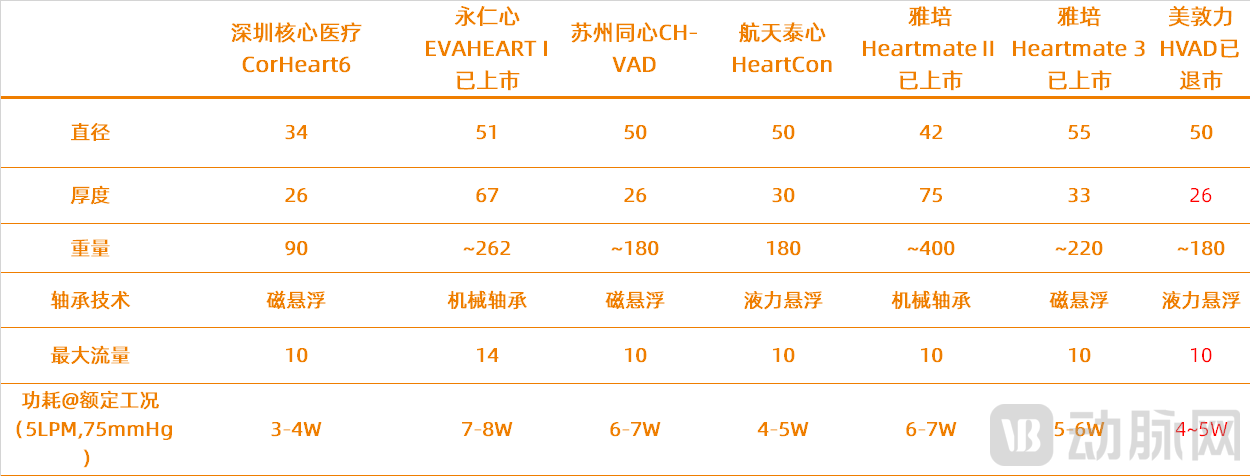
VCBeat compiled the key players in the global artificial heart sector and their core performance:
Yongrenxin:
Chongqing Everheart Medical Device Co., Ltd. was established in 2014, initially co-founded by Chongqing Lilong Technology Industry Group and Japan's HI-LEX Group. Everheart's implantable left ventricular assist system, EVAHEART, is currently the only approved artificial heart product in China. However, the EVAHEART is not a magnetically levitated heart device; rather, it is a transitional product between the second and third generations, specifically an implantable left ventricular assist system that utilizes a centrifugal mechanical bearing structure.
In 2021, Vivo Capital completed an initial controlling stake acquisition and strategic restructuring of Yongrenxin Artificial Heart, investing tens of millions of US dollars. Following this strategic restructuring, Yongrenxin will leverage the capital injection and resource synergy from Vivo Capital to drive R&D and innovation in next-generation artificial hearts, advance the clinical and commercial applications of its products, and facilitate the introduction and localized manufacturing of additional medical devices for heart failure treatment. Founded in 1996, Vivo Capital is a leading global healthcare investment firm that has invested in over 290 public and private companies worldwide. With Vivo Capital’s backing, Yongrenxin is expected to emerge as a key player in the next-generation artificial heart sector.
Tongxin Medical:
Tongxin Medical was founded in 2008. Chairman Chen Chen, the principal inventor of the Levacor artificial heart developed by the U.S.-based World Heart Corporation, has over 20 years of research and development experience in artificial hearts.
Tongxin Medical's artificial heart product, CH-VAD, utilizes a fully magnetically levitated technology platform and possesses complete independent intellectual property rights. It is smaller in size than the HeartMate 3, allowing for less invasive implantation. The CH-VAD's cable contains four conductors with a diameter of 3.4 mm and has been patented in the United States, making it the artificial heart globally with the thinnest percutaneous cable and fewest conductors. To date, clinical trials for this fully magnetically levitated artificial heart have been completed in 25 patients at Beijing Fuwai Hospital and Wuhan Union Hospital.
Tongxin Medical has completed multiple rounds of financing, and in 2019, it secured a strategic investment of over RMB 100 million from Blue Sail Medical.
Core Medical
Founded in 2016, Core Medical's core team comprises top technical experts from China and the United States, with extensive experience in the research and development of commercialized ventricular assist artificial hearts and high-end medical devices.
From a technical perspective, the ultra-compact magnetic levitation artificial heart developed by Shenzhen Core Medical features a more optimized primary and secondary flow field structure, magnetic levitation motor design and control technology, and an integrated, multi-redundant non-contact bearing system. These advancements reduce blood residence and microcirculation times, lower the risk of blood damage, and deliver superior hemocompatibility, which will effectively improve patients' quality of life and alleviate their burden.
Core Medical's independently developed product with independent intellectual property rights—the "Ultra-compact Magnetically Levitated Centrifugal Artificial Heart"—features a diameter of 34 mm, a thickness of 26 mm, and a weight of approximately 90 grams. Compared with officially published data in the VAD field both domestically and internationally, Core Medical's product achieves a 40% reduction in diameter and a 60% reduction in weight relative to existing magnetically levitated artificial hearts on the market, making it currently the world's smallest and lightest magnetically levitated artificial heart.
Qing Medical
Xinqing Medical was founded in May 2017 in the Suzhou New District, with a founding team comprising top artificial organ experts from China and overseas, alongside leading clinical institutions in China. Dr. Xu Boling, Founder and CEO, brings nearly 14 years of R&D experience in artificial hearts. He is a Young Expert of the National Major Talent Program, a Distinguished Professor at Soochow University, and the first Chinese Board Member of the International Society for Mechanical Circulatory Support (ISMCS), a premier authority in the artificial heart field with a history of nearly three decades.
The artificial heart developed by Xinqing Medical differs from implantable artificial hearts, as it is an extracorporeal artificial heart. Extracorporeal artificial hearts (mid- to short-term extracorporeal circulatory assist devices) are indicated for transitional therapy in patients with advanced acute heart failure. They serve to temporarily substitute native cardiac function over a mid- to short-term period, enabling patients to survive the critical phase and facilitating recovery. Xinqing Medical primarily focuses on the research and development of extracorporeal life support devices for clinical scenarios such as acute cardiogenic shock, intraoperative circulatory protection during cardiac surgery, and acute or critical organ failure. The company’s current core product line includes minimally invasive catheter-based artificial hearts, fully magnetically levitated extracorporeal artificial hearts, and next-generation extracorporeal membrane oxygenation (ECMO) systems. Its fully magnetically levitated extracorporeal artificial heart has already been advanced to clinical application.
Aerospace Taixin
Founded in 2016, Aerospace Taixin is a subsidiary of China Aerospace Science and Technology Corporation (CASC). Leveraging over 50 years of expertise in aerospace servo technology, the company developed the HeartCon artificial heart featuring dual magnetic-hydrodynamic levitation, which entered the innovative medical device approval pathway in 2018.
CorWave
CorWave is a French company founded in 2011. The most significant difference between the VAD it has developed and existing products lies in the pump's blood delivery mechanism, which does not rely on a rotating rotor. Instead, it utilizes a biomimetically designed wave membrane—a disk-shaped membrane driven by a magnetic actuator. The waves generated on this membrane propagate radially inward, thereby propelling blood toward the central orifice and mimicking the pulsatile flow of a natural heart. This approach distinguishes it from the rotary LVADs currently available on the market.
The artificial heart sector represents an early-stage blue ocean market, while heart failure constitutes a major threat to global health. Compared with heart transplantation, artificial hearts provide patients with a broader range of therapeutic options and hold substantial clinical significance. From a technological standpoint, the competition between Medtronic and Abbott has largely defined the industry's technical pathway. As more artificial heart products enter the market, the heart failure treatment sector is poised to reach an inflection point.
Medtronic's product withdrawal, on the one hand, clarifies the technological development pathway for the industry; on the other hand, it serves as a warning to the entire artificial heart sector that for such high-risk, high-barrier products, market approval is not the endpoint, as they must undergo long-term clinical validation.
References:
Tongxin Medical: How Far Is the Artificial Heart From Replacing Heart Transplantation?
Spending 1 Million RMB on an Artificial Heart Isn't Meant to Make You Live to 200 —— ifanr