

Approval for Dual Clinical Submissions in China and the US! Meiji Bio's SELNP Platform Advances Oral Paclitaxel
As a cornerstone drug in the field of tumor chemotherapy, paclitaxel has become a fundamental medication for treating various solid tumors such as breast cancer, ovarian cancer, and lung cancer since its clinical application in the 1990s. It still maintains a global market size close to 10 billion US dollars. However, in contrast to its repeatedly proven efficacy is the long-term stagnation in its method of administration—over the past three decades, the clinical application of paclitaxel has remained highly reliant on intravenous infusion, with treatment outcomes reaching a plateau that is difficult to improve further.
This route of administration means that patients need to periodically visit the hospital for treatment while enduring adverse events related to excipients, such as allergic reactions and neurotoxicity, which also consumes substantial medical resources. Against the backdrop of the continuous emergence of new therapies, this mature molecule's bottlenecks in terms of delivery methods and user experience have yet to be systematically resolved.
Miji Biotech, founded in Guangzhou, starts from this structural contradiction and focuses its R&D on the delivery system itself, exploring the practical feasibility of oral paclitaxel. To achieve this goal, the company has built a Self-Emulsifying Lipid Nanoparticle Drug Delivery (SELNP) platform and is advancing the development of its core product, MJC-001, based on this platform.
Veteran with 20 Years of New Drug R&D Experience Targets Drug Delivery Challenges
The starting point of Meiji Biotechnology's entrepreneurship stems from founder Dr. Huang Huiyu's observations and reflections on the long-term operational logic of the drug development system. As a technical entrepreneur with over 20 years of international new drug research and development experience, he has worked at multinational pharmaceutical companies such as Novo Nordisk and Novartis. He was deeply involved in the development of several blockbuster drugs, including Semaglutide and Secukinumab, which together generate annual global sales exceeding $30 billion.
Long-term practice within multinational pharmaceutical systems has gradually made him realize that R&D resources and innovative attention are often more concentrated on new targets and new molecules. However, mature drugs that have been proven effective but have significant shortcomings in terms of drug delivery methods, dosing frequency, or patient usage experience often struggle to receive long-term, continuous R&D investment, with their clinical and commercial value not being widely recognized. Notably, the gradual evolution of a large number of traditional intravenous monoclonal antibody drugs into subcutaneous injection drugs fully reflects the clinical and commercial value of formulation innovation.
Paclitaxel is a typical example of this judgment—its efficacy has been fully validated, yet it has long been默认只能以注射形式使用。正因如此,围绕紫杉醇“是否可能真正实现口服化”的探索,始终停留在边缘地带。
Huang Huiyu recalled in an interview that similar attempts had been made before, with major pharmaceutical companies abroad also having invested heavily in in-depth research and development. However, the pathways were relatively concentrated and repeatedly faced setbacks: one approach aimed to improve oral bioavailability by altering molecular structures but was halted during the clinical stage due to safety concerns; another attempted a breakthrough from the formulation perspective but was constrained by the large molecular weight of paclitaxel (approximately 850 Da), its classification as a BCS Class IV drug, along with multiple limitations such as low solubility, low permeability, and potential gastrointestinal toxicity.
In specific practice, projects from companies such as Bristol-Myers Squibb (BMS), Odonate Therapeutics, and Athenex have all faced setbacks during the clinical stage. Additionally, some products already on the market still carry a risk of hematotoxicity due to their reliance on high proportions of Polysorbate 80.
After systematically reviewing these experiences, Huang Huiyu founded Meiji Biotech in Huangpu, Guangzhou, and made a clear decision: instead of altering the molecular structure of paclitaxel, he aimed to address the balance between stability and safety during oral administration by reconstructing the delivery system. In his view, only when oral formulations demonstrate comprehensive advantages in efficacy, safety, and medication convenience can they truly replace existing injection solutions, rather than remain as supplementary options.
This judgment is also reflected in the company's organization and commercialization strategy. Meiji Bio focuses its resources on core technologies and early clinical validation, planning to bring in partners through licensing or co-development after key data becomes clear, to advance late-stage development and commercialization. In terms of organizational model, the company operates with its core team as the hub, collaborating with CROs and research institutions to drive R&D, reduce early-stage costs, and improve efficiency.
The above technologies and strategic pathways have gradually translated into clear phased progress: Completion of the proof-of-concept for oral paclitaxel and advancement of IND-enabling studies in 2023; initiation of preparations for dual IND filings in the U.S. and China, obtaining domestic invention patent authorization, and establishing PCT international patents in 2024; FDA IND and NMPA clinical trial approvals for the core product MJC-001 in 2025. Currently, the company is advancing its Pre-A round of financing to support the Phase I clinical study of MJC-001 in China and the early development of other R&D projects.
SELNP Platform: A Delivery Revolution with High Solubility, High Drug Loading, and Low Toxicity
Meiji Biotechnology can achieve the oral administration of paclitaxel, with the core being a delivery system they have developed—the Self-Emulsifying Lipid Nanoparticle (SELNP) platform. This platform does not simply increase drug loading or pursue more complex structures; instead, it redesigns the absorption and distribution pathways of the drug after entering the human body, allowing the drug to reach its target site (such as tumor tissue) in a stable and controllable manner, forming an effective and safe exposure state within the body.
Unlike traditional liposomes or ionizable lipid nanoparticles (LNPs) that rely on preformed nanostructures, SELNPs form a stable homogeneous concentrated system by combining the active pharmaceutical ingredient with screened lipid excipients. After administration and dilution by body fluids, they spontaneously form nanodroplets with controllable particle sizes. This mechanism allows the "self-assembly" of the delivery structure to occur during the in vivo administration process, thereby enhancing the solubility and absorption efficiency of poorly soluble drugs, cyclic peptides, polypeptides, mRNA, etc., while significantly increasing drug-loading capacity. Moreover, it avoids the reliance on complex equipment and processes during the preparation and storage stages, substantially reducing production costs.
In terms of safety and accessibility, SELNP does not rely on potentially allergenic excipients such as phospholipids, cholesterol, organic solvents, or Tween-like substances, reducing the common risks of immune reactions and toxicity found in traditional lipid delivery systems. Meanwhile, based on a homogeneous liquid process, the platform eliminates the need for lyophilization or ultra-low temperature storage, offering practical feasibility in production scale-up, storage, transportation, and cost control.
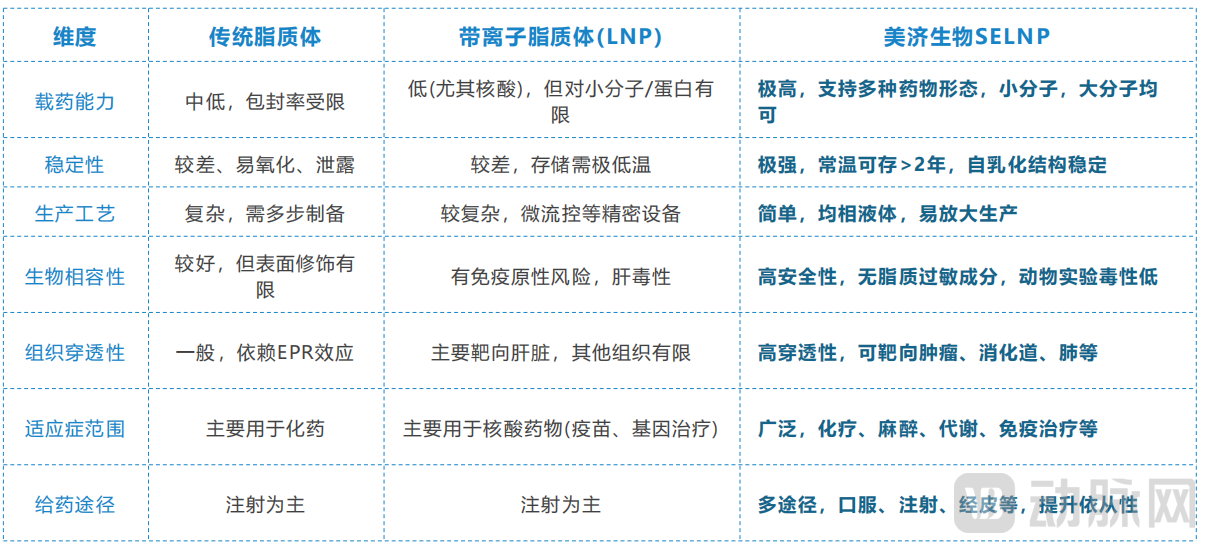
Comparison of SELNP with Common Technical Platforms
More importantly, the platform is not customized for a single molecule. Meiji Biotechnology disclosed that SELNP has been verified in preclinical studies to be adaptable to small-molecule drugs, peptides (linear and cyclic peptides), antibodies, and nucleic acid molecules, supporting multiple administration routes such as oral, injection, and transdermal delivery. In terms of tissue distribution, it is not limited to a single organ like the liver but can cover multiple tissues such as tumors, the digestive tract, and lungs, providing a basis for subsequent pipeline expansion and new indications.
China-US Dual Approval Advances Clinical Trials, Oral Paclitaxel Leads Multi-dimensional Pipeline Expansion
In terms of pipeline selection, Meiji Bio chose the most challenging paclitaxel as the first validation object for its platform capabilities. As the company's core product, MJC-001 adopts a low-dose, high-frequency metronomic dosing regimen, aiming to enhance therapeutic efficacy through more stable in vivo exposure levels, reduce the toxic side effects associated with the traditional "high-dose injection every three weeks," and delay the occurrence of drug resistance.
In preclinical head-to-head studies, MJC-001 has demonstrated significantly greater therapeutic potential. Compared with the intravenous injection group of albumin paclitaxel, its inhibition of tumor growth was more sustained and pronounced within the same treatment period.
Specifically, in the MDA-MB-231 breast cancer xenograft model, the tumor inhibition rate of the 100 mg/kg oral dose group exceeded 90%; in the Hs746T gastric cancer xenograft model, its tumor inhibition rate (TGI) approached nearly 100%, with overall efficacy surpassing that of the control group treated with intravenous injection of albumin paclitaxel (Abraxane) at 30 mg/kg.
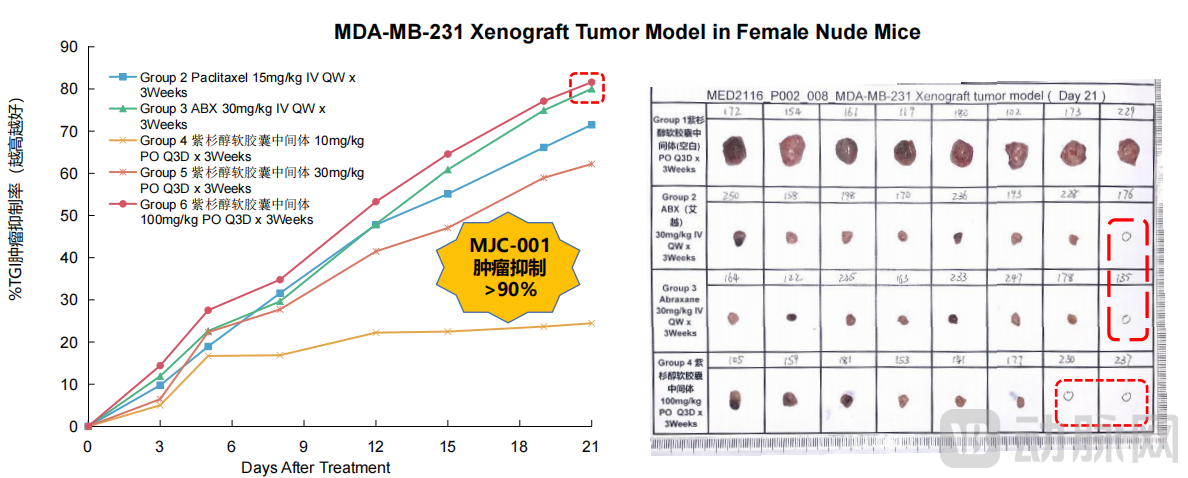
MDA-MB-231 Breast Cancer Efficacy Significantly Superior to Albumin Paclitaxel
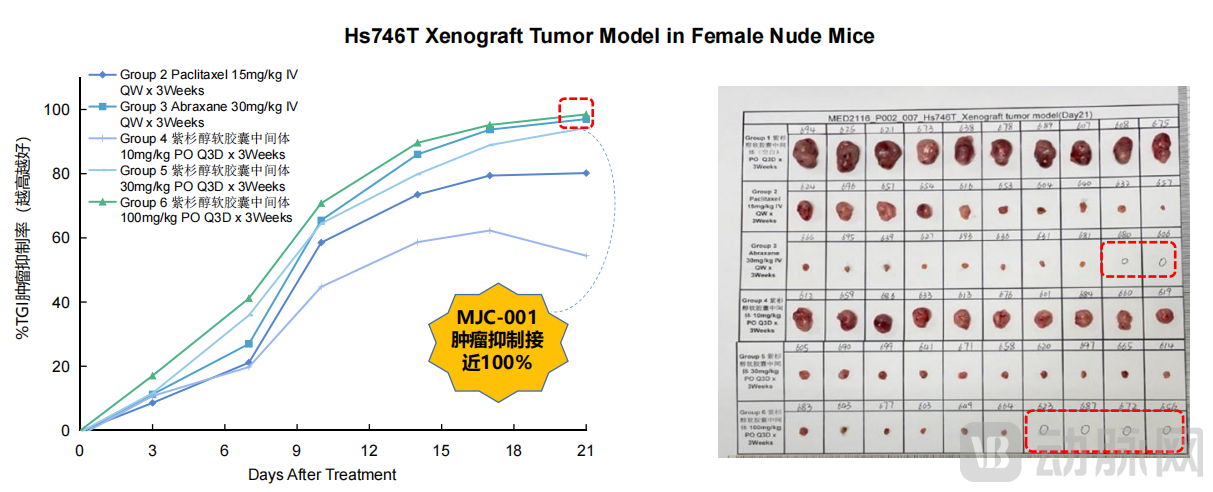
Hs746T Gastric Cancer Therapy Superior to BMS Albumin Paclitaxel
In terms of safety, animal experimental results showed that MJC-001 has good tolerance in oral administration. In mouse, rat, and beagle dog models, no significant weight loss or systemic toxicity was observed under continuous or high-dose administration conditions, with the maximum tolerated dose being significantly higher than previous oral paclitaxel candidates and commonly used injectable formulations. Hematological, biochemical parameters, and major organ pathological evaluations were generally well-controlled, with the severity of key toxic side effects such as neutropenia being lower than that of Taxol.
On the regulatory pathway, MJC-001 has received clinical trial approval from both the FDA and NMPA, with plans to simultaneously advance multi-center Phase I clinical studies in the United States and China, focusing on evaluating safety, tolerability, pharmacokinetics, and preliminary efficacy.
In addition, Meiji Biologics has developed a second core pipeline, MJC-002—Propofol Aqueous Injection. Compared to MJC-001, MJC-002 is still in an earlier stage of development. Propofol, a commonly used anesthetic in clinical and surgical settings, has long been formulated as a fat emulsion, which presents safety concerns such as respiratory depression, injection pain, lipid overload, hypotension, and Propofol Infusion Syndrome (PRIS), limiting its use in some individuals with allergic constitutions. MJC-002 utilizes SELNP technology to achieve a homogeneous aqueous formulation without fat. Preclinical studies show that at lower doses, it achieves anesthetic effects comparable to the original drug, with faster recovery, reduced risk of allergies, and significant improvement in hypotension.
While advancing its core pipeline, Meiji Biotechnology is also exploring long-term R&D directions based on the clinical experience of MJC-001. In the company’s vision, the formulation, dosing, and safety data accumulated from oral paclitaxel are expected to provide practical references for subsequent more innovative molecules. From a long-term planning perspective, Meiji Biotechnology aims to expand the SELNP platform to more molecular types and disease areas, including oral peptides, cyclic peptides, in vivo CAR-T, antibodies, and combination cancer therapies.
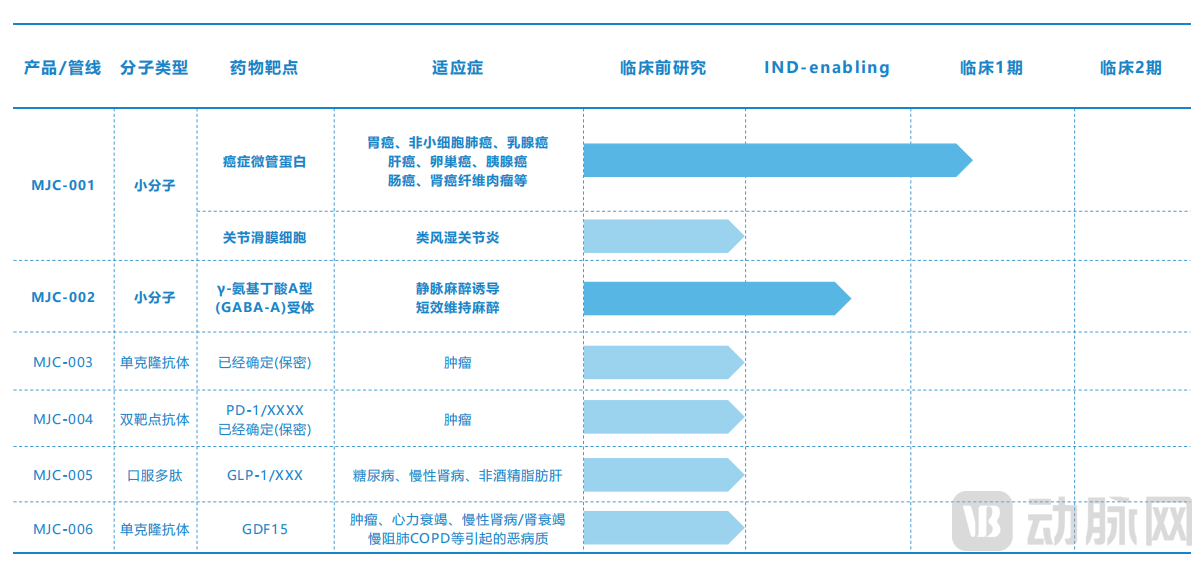
Overview of Meiji Biotech Pipeline Layout
Not Just FIC: Reevaluating the R&D Value of Improved New Drugs
Against the backdrop of continued attention on innovative drugs, discussions about R&D efficiency and clinical certainty are gradually returning to rationality. Beyond FIC (First-in-Class) and BIC (Best-in-Class) innovative drugs, the R&D pathway based on mature molecules, addressing clear clinical pain points and unmet clinical needs through optimization, is being reevaluated for its clinical and industrial value. As Dr. Huang Huiyu mentioned in the interview, the long-term pursuit of breakthrough innovation does not mean that other forms of innovation lack significance.
Taking improved new drugs as an example, these products rely on validated active molecules and optimize safety, compliance, or user experience through improvements in dosage form, administration methods, or delivery systems. They are compared with the standard treatments of already marketed drugs to verify long-standing but inadequately addressed clinical needs. Relevant pathways have mature practices both in China and abroad. Luye Pharma's liposomal paclitaxel "Lipusu" and overseas albumin-bound paclitaxel have established a stable foundation for clinical application and gained considerable market returns through innovations at the formulation level without changing the core mechanism of action.
From the R&D logic perspective, the mechanism of action for such products is clear, with predictable toxic side effects and controllable risks. Before entering the clinical stage, they can be directly compared with existing gold-standard solutions, with relatively clear boundaries for efficacy and safety. This not only reduces R&D uncertainty but also makes their clinical value easier for doctors and patients to understand and accept.
From a broader industry perspective, the R&D of innovative drugs is moving towards diversified pathways. Whether it is based on mature molecules addressing real-world pain points or exploring more groundbreaking novel mechanisms, the ultimate goal remains the same: to return to the clinical essence by validating value through real-world data, ensuring that drugs truly serve patients and precisely meet unmet clinical needs.
Miji Biotech focuses on the mature molecule paclitaxel and explores new possibilities for oral administration through the SELNP delivery platform. The core objective is not merely to extend the product line but to validate the platform's application capability in real clinical scenarios. In the company’s product portfolio, MJC-001 adopts the R&D approach of "optimizing based on a mature molecule" as its starting point, reflecting comprehensive considerations of clinical certainty, technical feasibility, and clinical value.
Huang Huiyu also emphasized that starting with improved drugs does not constitute a limitation on the company's long-term innovation boundary. The SELNP platform itself has the potential for cross-molecular and cross-scenario expansion, providing a technical foundation for the subsequent layout of higher innovation FIC and BIC projects by the company.
From this perspective, MJC-001 represents the platform's first step toward the clinical system rather than a singular definition of Meiji Biotechnology's innovation pathway. As the investment and financing environment returns to rationality and clinical data gradually materializes, innovative companies emphasizing platform capabilities and clinical certainty—like this one—may see their true value transcend conceptual narratives. Their worth will likely be genuinely understood by the market and ultimately validated through practices that serve patients and address unmet clinical needs.