

Zhongke Zhiying Advances Clinical Commercialization of Proprietary Low-Cost, Wearable Magnetoencephalography System

MAGNOSIS
MAGNOSIS
Magnetoencephalography (MEG) is currently the most advanced magnetic source imaging technology and serves as a crucial step in the preoperative evaluation of patients with epilepsy and brain tumors. Its principle relies on measuring the extremely weak magnetic field signals generated extracranially by intracranial neural electrical activity, enabling non-invasive, real-time detection of neural activity processes within the brain.
Neurophysiological functional diagnosis based on magnetoencephalography (MEG) has been widely used in the clinical diagnosis of epilepsy and demonstrates tremendous application potential in areas such as the diagnosis of pediatric visual, auditory, and language developmental abnormalities, AD/ADHD diagnosis, rehabilitation training, and neurodegenerative diseases.
Taking epilepsy as an example, China currently records approximately 300,000 new cases annually, with the total patient population reaching 10 million. Among them, 30% suffer from drug-resistant epilepsy. However, access to magnetoencephalography (MEG) in China remains highly limited; only a few thousand patients undergo MEG scans each year, which severely restricts the diagnosis and surgical treatment of epilepsy.
Furthermore, magnetoencephalography (MEG) enables non-contact, high spatiotemporal resolution recording of brain electrical activity, serving as a non-invasive brain-computer interface (BCI) technology applicable to healthy individuals and holding significant potential for applications in the fields of BCI and brain-inspired computing.
Currently, the clinical market demand for neurological diseases stands at thousands of units, while the potential application market for psychiatric disorders, neurodegenerative diseases, and diagnosis of pediatric developmental abnormalities reaches tens of thousands of units. “The project is designed to comply with FDA standards, and the overseas market will account for more than half in the future,” said Wang Fan, one of the founders of MAGNOSIS.
However, traditional magnetoencephalography (MEG), currently widely adopted in clinical practice, has two major limitations:
First, the cost is high.Priced at approximately 30 million yuan, it incurs high operation and maintenance costs. The Superconducting Quantum Interference Device (SQUID), the core component of traditional magnetoencephalography (MEG), requires substantial consumption of liquid helium during operation, and its cryogenic systems also necessitate regular maintenance. Consequently, the fee for a single examination is around 10,000 yuan.Second, narrow scope of application.Conventional magnetoencephalography (MEG) requires the patient's head to remain still during recording, which significantly limits its application in populations such as children and patients with psychiatric disorders.
Therefore, in recent years, the magnetoencephalography (MEG) field has been actively advancing next-generation MEG systems based on atomic magnetometers, which are wearable, compact, low-cost, and high-performance. Currently, China's existing MEG market is dominated by imported products, relying entirely on imports (Canada, Finland, the United States, and Japan). Given this market gap and demand, MAGNOSIS aims to become the industry leader in the MEG sector, dedicating itself to the research and development, manufacturing, and services of novel MEG and other medical electrophysiology devices.
MAGNOSIS was founded in 2019 as an incubated company of the Institute of Biophysics, Chinese Academy of Sciences. In early 2021, MAGNOSIS completed an angel financing round worth tens of millions of RMB, invested by the Inno Angel Fund.
Zhou Quan, Partner at Inno Angel Fund, stated that "Brain Science" research has been listed as one of the 100 major projects in the 14th Five-Year Plan, while China's scientific instruments and equipment for brain science research remain in the early stages of development. Relying on the platform of the Chinese Academy of Sciences (CAS), MAGNOSIS has developed China's first magnetoencephalography (MEG) system, achieving a breakthrough from zero and filling the domestic gap in high-end brain science equipment. The core team has accumulated over a decade of R&D experience in the neuroscience field, securing multiple major achievements in electroencephalography (EEG), MEG, and brain-computer interfaces (BCI). Inno Angel Fund believes that under the leadership of scientists and professors including the founding team, MAGNOSIS will contribute its strength to the national "Brain Science" initiative.
Atomic magnetometers can operate at room temperature without requiring liquid helium cooling. Their compact and lightweight design, combined with the capability for low-cost mass production via semiconductor fabrication processes, is ushering in a new dawn for the field of magnetoencephalography (MEG).
Furthermore, given that atomic magnetometer-based magnetoencephalography provides the highest transmission bandwidth in the field of non-invasive brain-computer interfaces (BCIs), and its theoretical accuracy can approach or even surpass that of invasive BCI technologies such as electrocorticography (ECoG), this technology can also be integrated with neural intervention techniques like transcranial magnetic stimulation (TMS), thereby holding substantial prospects for practical application in the BCI domain and expected to play a pivotal role in future brain-computer integration.
Compared to traditional imported products, the MAGNOSIS atomic magnetometer MEG system, as an emerging neuroimaging technology, is not only expected to significantly reduce the comprehensive operational cost of magnetoencephalography (MEG)—from nearly 10,000 RMB per hour down to the thousand-yuan range—thereby better benefiting a broad population of epilepsy patients and providing neuroscience with a highly cost-effective research tool, but also capable of delivering whole-brain, high spatiotemporal resolution electrophysiological diagnostics for patients with pediatric developmental disorders, psychiatric diseases, neurodegenerative conditions, and more.
It is reported that MAGNOSIS has already applied for and been granted multiple patents in China and internationally in the field of magnetoencephalography (MEG) and electrophysiological devices. The company will successively complete the development and clinical trials of MEG products that comply with clinical medical device requirements and obtain relevant international and Chinese registration certifications. Driven by the industrialization of MEG as a flagship electrophysiological device, MAGNOSIS aims to develop the entire downstream industry chain related to neuro-electrophysiological diagnosis and treatment, which is expected to generate substantial economic benefits and deliver significant social impact.
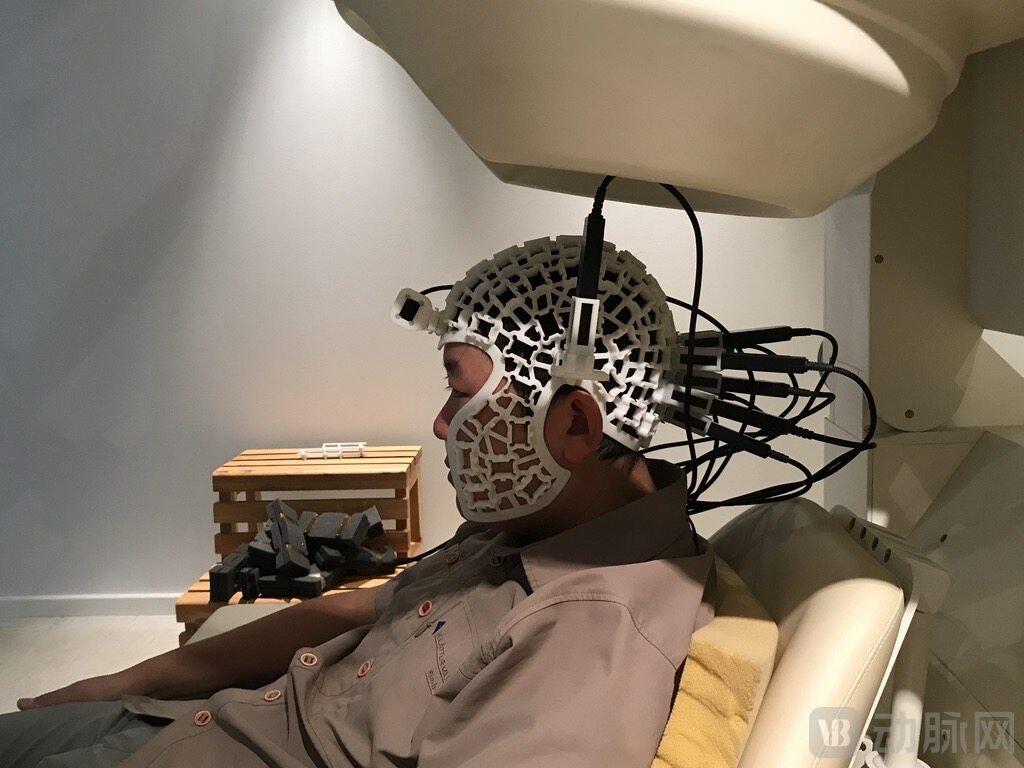
China's First Multi-Channel Atomic Magnetometer-Based Magnetoencephalography Prototype Developed by MAGNOSIS in 2018
Currently, MAGNOSIS has completed the fabrication of a pilot-scale prototype and is comprehensively advancing clinical product development. Within 2 to 3 years, the company expects to deliver a novel wearable magnetoencephalography (MEG) device that meets clinical standards, enabling large-scale mass production and commercial sales. As part of its subsequent business expansion, MAGNOSIS will also provide full-industry-chain services, including data analysis, to cover a wider range of application scenarios.