

From "Physical Filling" to "Structural Remodeling," How Does CHAMFOND Define the Aesthetic Medicine Regeneration 4.0 Era?

CHAMFOND
Innovative Biomedical Material Developer
Looking back at the evolution of China's medical aesthetics industry, every technological leap has revolved around "more natural, safer, and longer-lasting" results.
Over the past decade, the industry has jointly witnessed an explosive growth in material science: from the 1.0 era represented by hyaluronic acid, which laid the foundation for "instant aesthetics" through physical filling; to the 2.0 era centered on PLLA (poly-L-lactic acid) and PCL (polycaprolactone), which opened new pathways for inducing collagen regeneration through tissue response; and then to the currently thriving 3.0 era of recombinant collagen, which has achieved higher affinity structural repair through bioengineering technology.
Although these classic materials have stood the test of time through iterations, as the market enters deeper waters, the industry has begun to examine deeper clinical outcomes—how to completely avoid long-term risks such as chronic inflammation, granulomas, and "dough-like" changes?
This introspection has led to a fundamental transformation in the logic of anti-aging: shifting from单纯的 "local volume filling" to a systematic "tissue structure reconstruction"; moving away from "filling wherever is sunken" and "stimulating repair," and gradually转向 achieving more lasting and natural results through "awakening the tissue's inherent regenerative capacity."
As the industry delves deeper into aging research, the critical role of the ECM has garnered increasing attention from scientific institutions. In April 2025, the globally authoritative scientific journal *Cell* officially designated the extracellular matrix (Extracellular Matrix, ECM) as the thirteenth hallmark of aging, pointing out that as age increases, ECM function gradually declines, ultimately leading to issues such as skin aging, degeneration of bone and joint functions, and slower tissue repair. Changes in the ECM are both a cause and a consequence of aging.
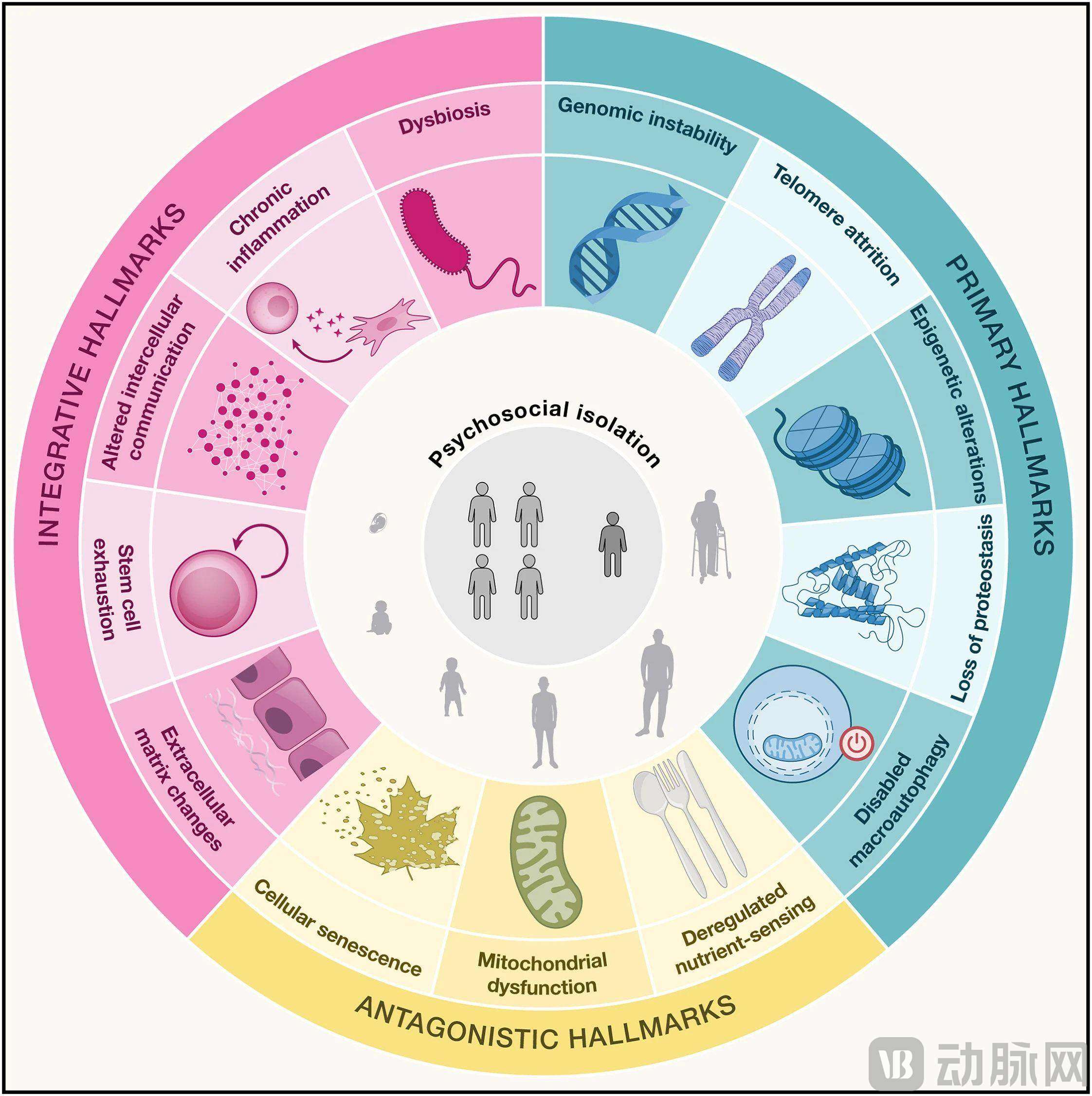
Biomarkers of Human Aging, Image Source: Cell
At the same time, leading cosmetics brands such as L'Oréal Group, Shiseido, Estée Lauder, Bloomage BioTechnology, and Marubi BioTechnology have successively followed suit in strategic layout. Upstream companies like CHAMFOND, which focus on ECM, have also successively secured financing in an environment where capital is becoming increasingly cautious.
As the global anti-aging market is mired in the fierce internal competition of a "component red ocean," ECM has quietly opened the next door of value.
"ECM/dECM is the core material that initiates the 4.0 paradigm, providing not only structural support but also a complete tissue microenvironment," said the founder of CHAMFOND in an interview with VCBeat.
ECM is a complex three-dimensional network substance secreted by cells and deposited in the extracellular space. It is widely present in various tissues such as epithelial tissue, connective tissue, and muscle tissue, forming a physical scaffold and functional regulation platform for cell survival, proliferation, and function. ECM plays a crucial role in tissue development, homeostasis, repair, and diseases (such as fibrosis and cancer metastasis).
dECM (decellularized ECM, decellularized extracellular matrix) is the ECM obtained after decellularization treatment of a complex formed by tissue or in vitro cell culture. dECM, after undergoing decellularization, removes cellular components and immunogenic substances but retains the complete three-dimensional scaffold structure of natural ECM and key bioactive components (such as collagen, growth factors, etc.). SIS (Small Intestinal Submucosa) and ADM (Acellular Dermal Matrix, acellular dermal matrix) are specific application forms of dECM in the small intestinal submucosa and dermal tissue, respectively, belonging to corresponding specific types of dECM.
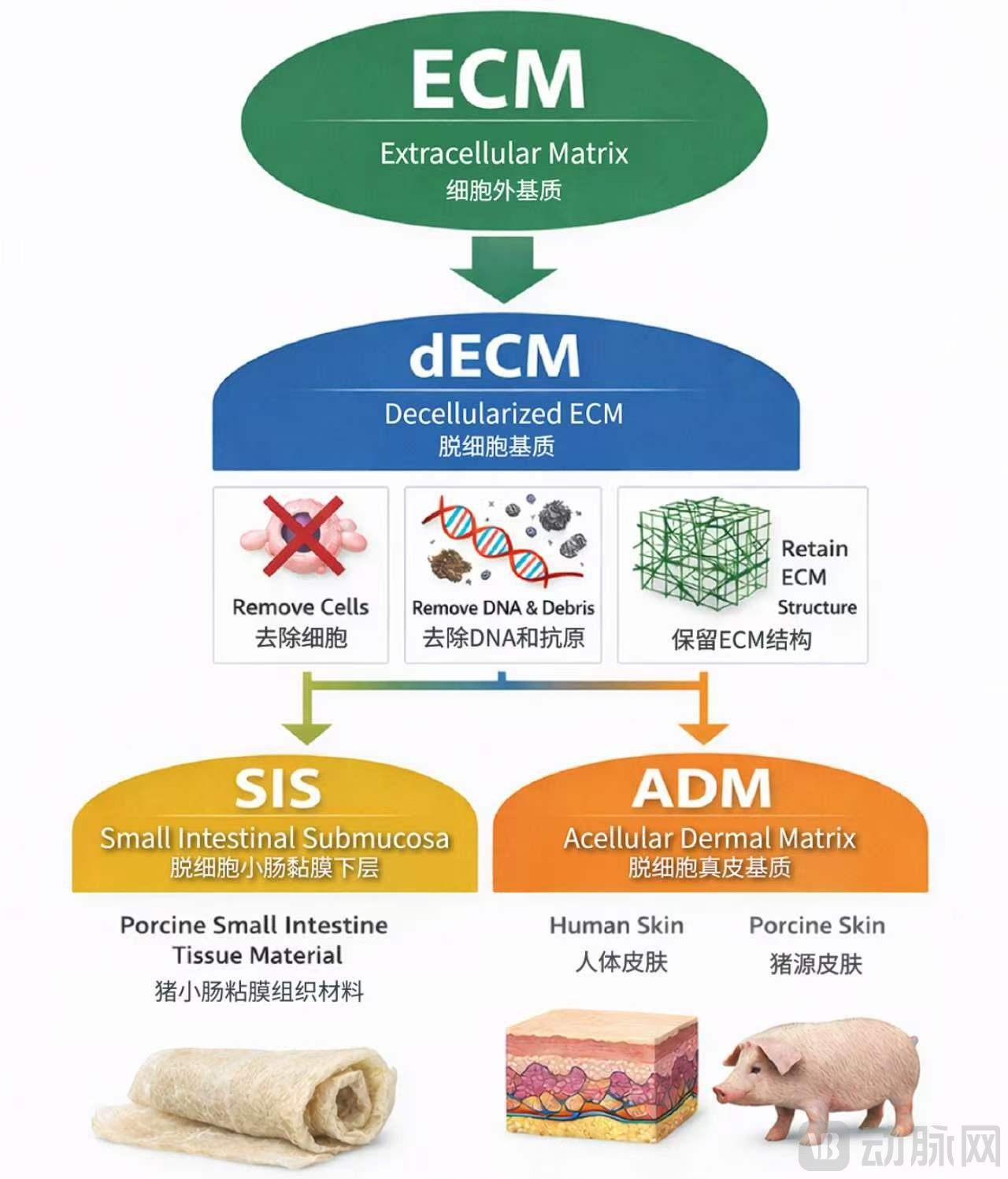
A Diagram to Understand the Relationship Between ECM/dECM/ADM/SIS
Why is ECM/dECM the Core Material for Initiating the 4.0 Paradigm? This assessment actually encompasses three fundamental underlying logics that distinguish ECM from other anti-aging materials:
The Scientific Core of ECM: Integration of 3D Structure and Active Components, Programmable Regenerative Microenvironment
The complex three-dimensional network structure of ECM is crucial for tissue regeneration.It not only provides physical support for cells but also offers an ideal microenvironment for cell migration, differentiation, and proliferation through its complex network structure. This three-dimensional structure can simulate the geometric morphology and mechanical properties of natural human tissues, promoting natural tissue repair and reconstruction, thereby achieving more precise and long-lasting tissue regeneration effects.
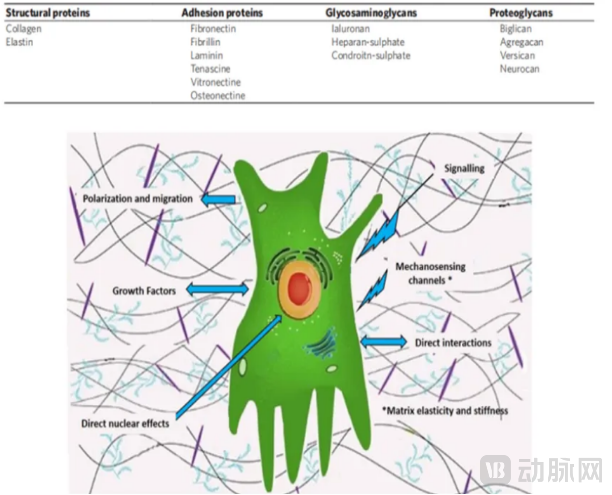
Moreover, ECM is mainly composed of various bioactive components such as collagen, elastin, proteoglycans, and glycosaminoglycans (GAGs).What is provided is a complete regenerative microenvironment. The components it contains, such as glycosaminoglycans (GAGs), can precisely regulate collagen arrangement and the regeneration process, making it more natural and orderly.——In natural tissues, the proper assembly and stabilization of collagen fibers require glycosaminoglycans (GAGs) as "cement" to regulate hydration, elastin to provide resilience, and basement membrane proteins (such as laminin) as anchors.If only recombinant collagen is supplemented, the lack of these synergistic components often prevents the newly formed collagen fibers from forming a stable three-dimensional network and makes them susceptible to rapid degradation by enzymes in the body.
These bioactive components retained in ECM together form a "programmable" regenerative system.When cells home here, the entire microenvironment can automatically restart the full process of regeneration, rather than just passively providing structural support.
Therefore,The core breakthrough of ECM lies in systematizing and programming the regeneration process, marking a fundamental shift from "providing form" to "reconstructing the microenvironment of life."
Compared with recombinant collagen, ECM has more advantages in structure and function.
"Recombinant collagen in the 3.0 era, while solving the purity issue of the ingredient, is more like a 'meal replacement' because it provides only a single collagen fragment or partial triple helix structure; whereas ECM offers a 'full-course meal,' featuring the complete collagen amino acid sequence and intact triple helix structure, with a longer degradation cycle and better efficacy."
CHAMFOND's founder vividly analogized: "Recombinant products typically only provide a single sequence of a certain type of collagen, like a 'single thread'; whereas collagen in the ECM is an interwoven mix of multiple types such as Type I, III, V, VI, and VII fibers, bundled together with elastin, glycosaminoglycans, etc., forming a 'rope,' making the difference in effect self-evident."
Unlike collagen, which mainly provides a single-component direct supplement, ECM offers a complete regenerative microenvironment through its complex structure and multi-scale pores.These pores not only provide space for cell colonization but also promote the growth of capillaries, thereby supporting tissue repair and regeneration. Compared with recombinant collagen, the mechanism of ECM achieves a leap from single structural support to systematic microenvironment reconstruction.
More critically, multiple studies have confirmed,Homologous ECM is more likely to guide homologous phenotype regeneration, a "targeting" capability that single proteins cannot match.For example, the skin ECM is rich in type Ⅰ/Ⅲ collagen, fibronectin, etc., which highly matches with dermal fibroblast migration, collagen remodeling, and anti-fibrotic signaling. In contrast, adipose ECM contains more laminin, perilipin-related proteins, and adipose-derived growth factors, providing a lipogenic differentiation microenvironment for adipocyte precursor cells. However, recombinant collagen or gelatin can only offer a single protein scaffold, unable to reproduce this "exclusive" microenvironment...
These characteristics not only make ECM more advantageous in a variety of clinical applications, but also position ECM to usher in the 4.0 era, becoming the core incremental direction in the anti-aging and repair field.
Industry Validation: International Giants Invest Heavily, While the Market in China is Just Emerging
The enormous clinical and commercial value of ECM has been validated in the global market.In 2017, global pharmaceutical giant Allergan acquired LifeCell, an American tissue engineering company (ADM product), for $2.9 billion; in 2023, Coloplast, a leading care products company, spent $1.3 billion to acquire Kerecis, an Icelandic regenerative medicine company (fish skin-derived dECM). These transactions clearly indicate that ECM technology has been regarded as a core strategic asset in the field of regenerative medicine.
In contrast, the market in China is on the verge of a "pre-explosion" phase.Although some domestically produced ECM products have been approved in the serious medical field, there are currently no such products approved for medical aesthetics injection and filling. The ECM industry is at a turning point from technological explosion to product penetration. For companies like CHAMFOND that focus on foundational research, this is not only a commercial opportunity but also a time window to define the standards of Regenerative Medicine 4.0.
CHAMFOND is an innovative biomedical materials platform enterprise focused on multiple fields such as medical aesthetics, dentistry, orthopedics, and oncology. The founder is a veteran of the industry with a background in clinical medicine and three successful entrepreneurial experiences. CHAMFOND's team has been engaged in ECM research and development for nearly two decades. The core scientists have played a key role in the successful commercialization of China’s first and the world’s second ECM nerve material. They have also accumulated deep technical expertise and extensive experience in application conversion across various tissue-derived ECM materials. Additionally, CHAMFOND is one of the few companies in the industry capable of successfully developing more than three types of dECM materials and addressing both consumer healthcare and serious medical scenarios.
The company owns a GMP factory and R&D center of nearly 3,000 square meters in Ningbo, collaborating on more than ten projects with multiple universities and research institutes. It also holds over 20 independent intellectual property rights and is recognized as a technology-based small and medium-sized enterprise and a high-tech enterprise by the state. The company has receivedOriental Bountiful Sea, Chengshu Investment, Ningbo Yongke Angel, Ningbo Kangxi Biotechnology, Ningbo WanliSupport from professional investment institutions and industrial capital.
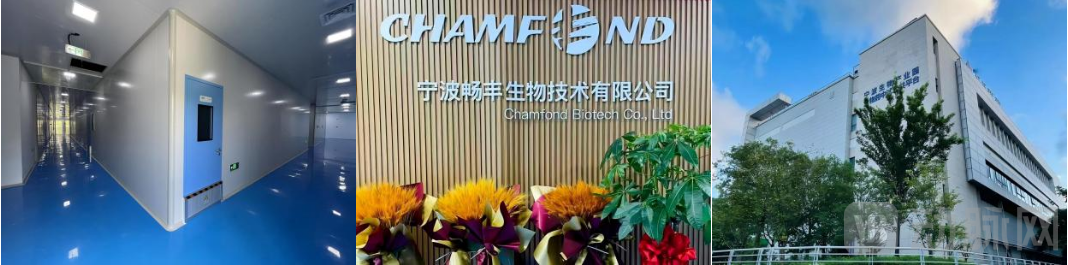
The core barrier of CHAMFOND lies in its "multi-source" ECM technology platform. Unlike most companies in the industry that choose a single tissue source or obtain a single component through cell culture pathways, CHAMFOND has successfully developed more than four different sources of ECM materials, which can be used in various clinical scenarios.Due toECM is tissue-specific.ECM from different organs or tissues retains the characteristics of the original tissue in terms of protein composition, three-dimensional topology, mechanical properties, and bioactive signals, thus having "exclusive guidance" capabilities for cell behavior and tissue regeneration. If used across tissues (e.g., directly filling dermal ECM into cartilage), the regenerative effect will be significantly compromised due to mismatched mechanical and biochemical cues.
Therefore,CHAMFOND has adhered to the development principle of "from where it comes, back to where it goes" since its inception, ensuring precise matching between materials and target repair tissues in terms of mechanical and biochemical cues, thereby maximizing repair efficacy. Each ECM material from a different source corresponds to a unique production process, and CHAMFOND's nearly two decades of profound expertise in the ECM field provides both the knowledge depth and powerful momentum for this kind of product pipeline to thrive.
According to the introduction by the founder of the company,The company currently owns more than four types of ECM materials from different sources, three of which are brand-new decellularized materials (dECM). Some of these materials are industry-first innovations, being not only structurally unique but also innovative in terms of indications.Moreover, the company has broken through the previous limitation of ECM being predominantly in patch form.Successfully prepared dECM into injectable formulations such as microparticles or hydrogels., greatly expanding the flexibility and convenience of clinical applications.
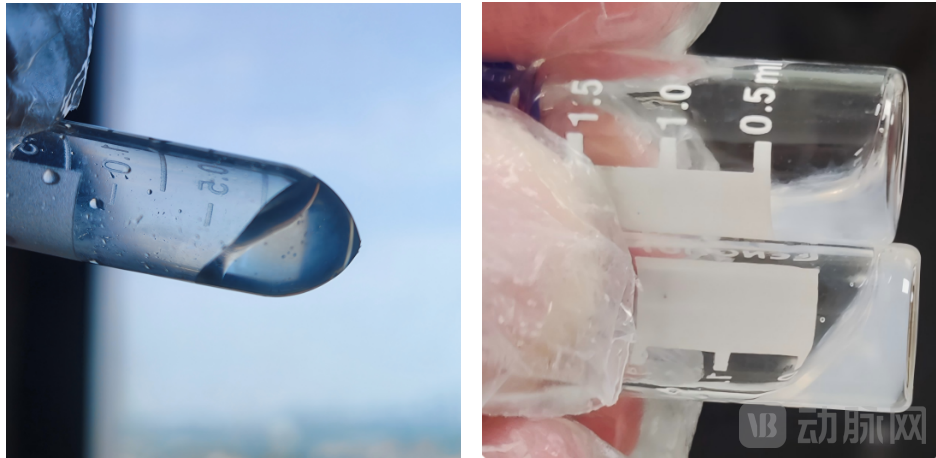
It is reported that 2026 will be the "Clinical First Year" for CHAMFOND, by which time 3 to 4 ECM materials from different sources will officially enter the clinical registration stage, and another two innovative pipelines are in the pre-research phase.
With the gradual relaxation of policies and continuous technological advancements, the ECM industry has entered a critical period.
On the policy front, the "National Strategic Emerging Industry Key Products and Services Guidance Catalog (2023 Edition)" includes ECM-related products such as "decellularized matrix materials" and "3D bioprinted scaffolds" in its key support scope, encouraging the development of ECM biomaterials for tissue repair and regeneration. In November 2023, the Medical Device Standards Management Center of the National Medical Products Administration released documents such as the "General Requirements for Quality Evaluation and Quality Control of Decellularized Matrix Materials in Tissue Engineering Medical Devices," further clarifying testing indicators and methods, including residual α-Gal antigen in decellularized matrix materials. In August 2025, after more than a year, the National Medical Products Administration issued the latest "Guiding Principles for Product Registration Review of Decellularized Matrix Soft Tissue Wound Repair Materials," providing clear guidance for registration applications of these materials. The introduction of relevant regulatory policies signifies that the pathway from production quality control to clinical application for decellularized matrix materials is becoming increasingly clear, offering a stable regulatory framework for industry development.
On the industry side, a global overview shows that ECM medical aesthetics applications in countries like South Korea have entered a boom period, while the Chinese market is welcoming a golden window of opportunity to catch up. With the maturation of the industry chain and breakthroughs in technology, the application potential of ECM in the Chinese market is immense, with broad prospects for development.
CHAMFOND's founder pointed out that with the integration of advanced technologies such as 3D printing, the application of ECM will gradually expand from tissue repair to organ reconstruction. For CHAMFOND, medical aesthetics injections are just the beginning, and in the future, it will play a key role in the broader field of regenerative medicine.