

Experts Call for Inclusion of Immune Function Testing in Routine Health Checkups to Enhance Health Management

BD
Medical Device R&D Manufacturer, Distributor
SHANGHAI, July 8, 2021 /PRNewswire/ -- Since the CPC Central Committee and the State Council introduced the "Healthy China 2030" Planning Outline and launched the "Healthy China Action," China's health management industry has entered an unprecedented period of strategic development. Public health awareness has steadily increased, with a growing number of individuals proactively seeking health check-ups and screenings to better understand their physical conditions and potential disease risks. In particular, following the outbreak of the COVID-19 pandemic, both the general public and healthcare professionals have gained a deeper, firsthand understanding of how immune function impacts overall health. Consequently, immune assessment is gradually gaining attention as an emerging clinical examination.
Recently,Supported by BD“Symposium and Validation Meeting on the Application of Immune Function Testing in Health Management” was held in Hangzhou. At the conference,Numerous authoritative experts in health management and clinical laboratory medicine in China convened to conduct in-depth discussions and analyses on the value, current applications, future prospects, and clinical pathways of immunity testing. They jointly signed a consensus statement on the immunity testing program, advocating for its inclusion in routine health examinations to further elevate public health management standards.
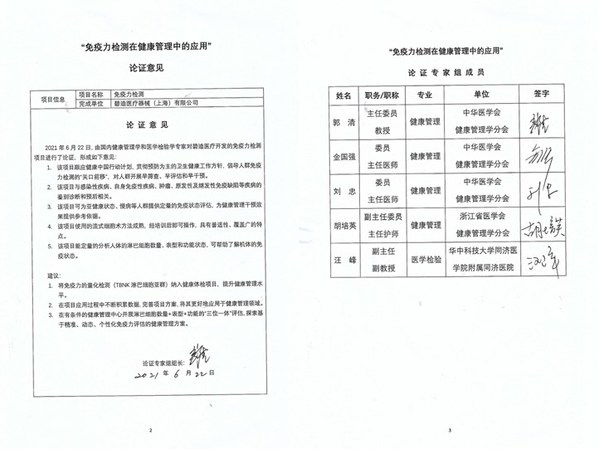
Joint Expert Opinion
Immune Function Testing Points the Way for Preventive Healthcare
Immunity is the body's intrinsic defense mechanism, equipped with the capacity to recognize and eliminate foreign pathogens such as viruses and bacteria, clear senescent, damaged, dead, or degenerated host cells, and identify and process mutated cells and virus-infected cells within the body. Extensive research has demonstrated that immune status is closely associated with the onset and progression of various diseases, particularly chronic conditions. Quantitative assessment of immune function is therefore of significant clinical importance for disease prevention, diagnosis, and treatment.

Conference Venue
Professor Wang Feng, Deputy Director of the Department of Laboratory Medicine at Tongji Hospital, Tongji Medical College, Huazhong University of Science and Technology, stated that extensive clinical research and practice by his team demonstrate a close correlation between flow cytometry-based lymphocyte subset analysis and aging, sub-health status, and the onset of certain diseases. Combining immune function testing with routine examinations enables more precise identification of sub-health conditions and indicates potential disease risks.
Numerous studies have shown that monitoring peripheral blood lymphocyte levels enables quantitative assessment of an individual's immune status, thereby facilitating the detection of sub-health conditions.、Indicate disease risk prior to the onset of clinical manifestations, thereby enabling timely intervention to achieve the goal of preventive healthcare.
Currently, Tongji Hospital has established and is continuously optimizing a cellular immune function testing platform, and has launched an immune assessment program at its Health Management Center. Utilizing multicolor flow cytometry to analyze lymphocyte counts, precise subset classification, and functional profiles, the platform enables a precise evaluation of the body's immune status and levels, thereby providing guidance for the diagnosis, prognostic monitoring, and individualized treatment of immune-related diseases.
Professor Liu Zhong, Director of the Health Management Center at the First Affiliated Hospital, Zhejiang University School of Medicine, stated: “Health management centers should provide patient navigation services to individuals with abnormal immune function test results to facilitate timely medical consultation. Greater emphasis should also be placed on high-risk populations with compromised immunity who have not yet developed clinical diseases, guiding them to adopt healthier lifestyles. Furthermore, given the significant inter-individual variability in immune function, individual baselines can be established through serial immune function testing, and immune status can be assessed based on relative deviation values.””
How Far Is Immune Function Testing from Widespread Application?
In recent years, the value of immune function testing has been widely recognized by the scientific community both domestically and internationally. However, as an emerging approach to health monitoring and disease early warning, although it has already been implemented in certain medical institutions, awareness among both the general public and healthcare professionals remains insufficient, necessitating further popularization and promotion.
“The key to the large-scale implementation of immune function testing programs lies in the accurate interpretation of test parameters, which requires extensive clinical experience and professional education. Accordingly, knowledge and skills training related to immune testing should be strengthened.”,Based on the clinical practice experience in conducting immune function testing over the past decade at the Health Management Center of Zhejiang Provincial People's Hospital, Professor Hu Peiying, Director of the Center, proposed.
Professor Jin Guoqiang, Vice President of the First Affiliated Hospital of Nanchang University, points out that a series of further efforts are still needed in the implementation of immune function testing initiatives to refine this system. On the one hand, a standardized closed-loop system encompassing immune testing, assessment, and intervention must be established; on the other hand, during clinical implementation, biomarkers that serve as specific indicators for disease onset should be progressively explored. Additionally, testing should be appropriately upgraded from the quantitative detection of immune cells to functional assessment in a timely manner, so as to provide greater clinical significance.
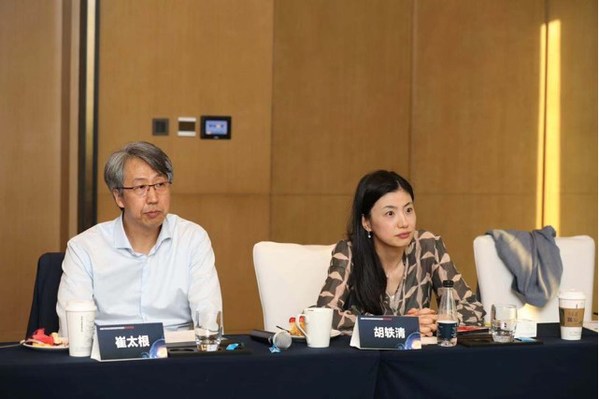
Conference Venue
Dr. Hu Yiqing, Vice President of Biosciences, Greater China at BD, and Dr. Cui Taigen, Senior Director of Medical Affairs, Greater China at BD, recommended conducting a “three-in-one” assessment of lymphocyte count, phenotype, and function at qualified health examination institutions. They proposed exploring health management protocols based on precise, dynamic, and personalized immunity testing, and continuously accumulating data to refine these solutions throughout the process. Furthermore, it is essential to promptly establish immunity testing standards or expert consensus to better apply this technology in the health management sector.
Professor Guo Qing, Chair of the Health Management Branch of the Chinese Medical Association, concluded that immune function testing is an essential component of the "Three Earlies" ("early screening, early assessment, and early intervention") health management model. However, its pharmacoeconomic feasibility should also be considered during practical implementation. In light of the current situation, it can be targeted at mid-to-high-end populations and qualified industry clients...、Initially implemented among specific industries and occupational groups, with coverage gradually expanding. "Meanwhile, medical institutions at or above the county level are all equipped with TCM preventive healthcare centers. Immunity testing serves as a valuable complement to traditional Chinese medicine, providing evidence-based medical support for TCM constitution assessment and therapeutic efficacy evaluation. The two can collaborate on joint research to accumulate clinical data and fulfill the objective of preventive healthcare.",Professor Guo Qing said.
Following a technical evaluation of the immune function testing project, the attending experts unanimously agreed that it is relevant to the differential diagnosis and prognosis of diseases such as infectious diseases, autoimmune disorders, tumors, and primary and secondary immunodeficiencies. The mature flow cytometry methodology employed enables the quantitative analysis of the count, phenotype, and functional status of human lymphocytes. It provides quantitative immune status assessments for populations in sub-health conditions or with chronic diseases, serving as a reference for evaluating the effectiveness of health management interventions. This initiative aligns with the Healthy China Action Plan and embodies the guiding principle of prioritizing prevention in healthcare.