

2026 China's Innovative Healthcare Landscape: Where Will the Source of Innovation Come From, and How Will the Industry Ecosystem Be Reshaped?
The year 2025 that has just passed witnessed a "small climax" in China's medical industry, which had been immersed for many years.
First, in terms of innovative products, according to data from VCBeat Medical Device,In 2025, a total of 109 innovative medical devices were approved for marketing, among which the number of Class III innovative devices reached a record high, increasing by 19.67% year-on-year.; In addition, in terms of innovative drugs, China approved the marketing of 76 innovative drugs in 2025, showing a significant increase compared to 2024, with a primary focus on cutting-edge fields such as oncology, autoimmune diseases, and metabolic disorders.
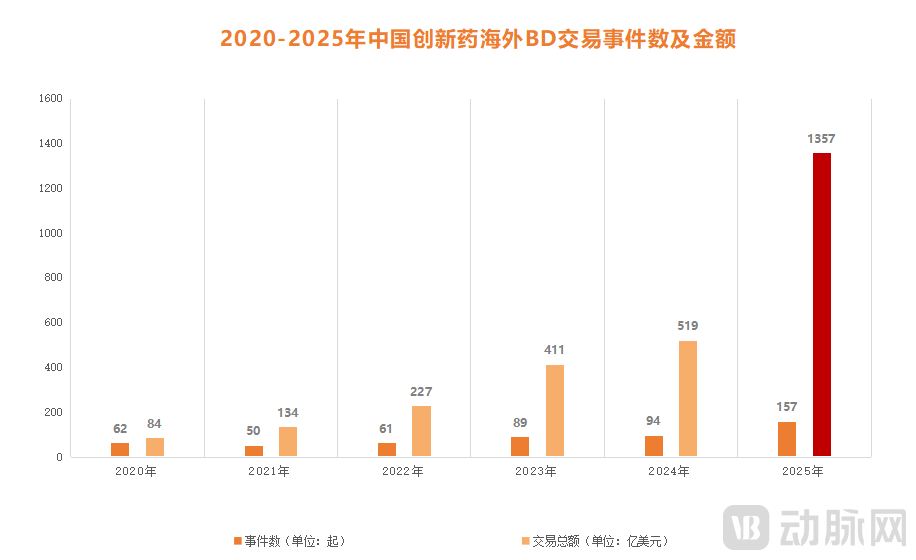 Figure 1. Number and Amount of Overseas BD Deals for Innovative Drugs in China, 2020-2025 (Data Source: PharmaCube)
Secondly, in the BD transaction环节, according to the PharmaCube database,In 2025, China's innovative drug sector completed 157 overseas BD deals, with a total licensing transaction value of $135.7 billion, both figures setting new historical records.Notably, in 2025, the total amount of China's innovative drug BD transactions accounted for 49% of the global share, surpassing the United States for the first time.
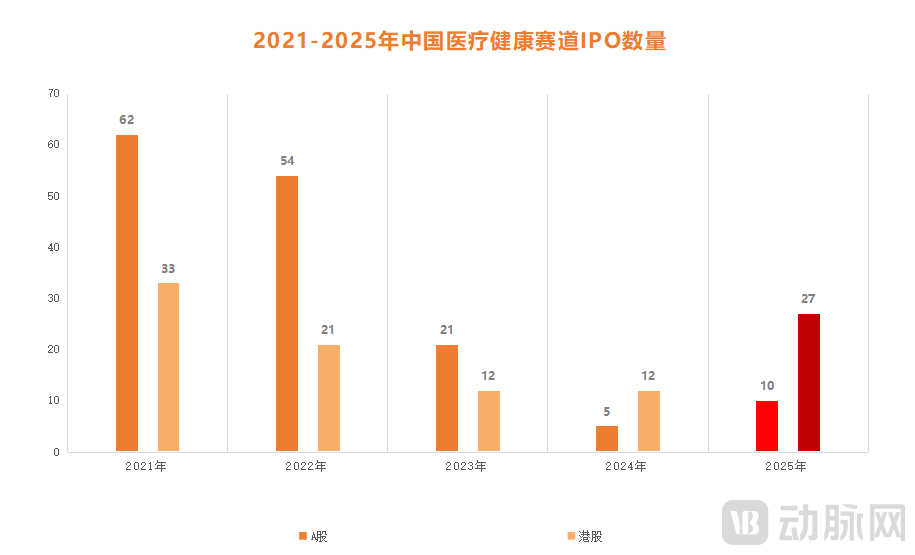 Figure 2. The number of IPOs in China's healthcare track from 2021 to 2025 (Data source: iFind Finance)
Finally, in the secondary market, with the opening of Hong Kong stocks and the restart of A-shares in 2025, Chinese medical enterprises have finally ushered in a long-awaited boom at the IPO level.A total of 37 medical enterprises successfully went public in China, more than double the 17 in 2024.At present, more than 60 healthcare companies are still in the queue at the Hong Kong Stock Exchange, and the investment enthusiasm of the capital market for the healthcare sector continues to rise.
But behind the hustle and bustle, the industry is also fraught with undercurrents. On the one hand, medical companies still face difficulties in financing and exiting, with many already on the brink of collapse. On the other hand, due to factors such as cost control in China's medical insurance system, the normalization of centralized procurement, and the intensifying competition from homogenization, innovative products still face significant challenges in terms of payment pathways and commercial return cycles. Whether a product can quickly ramp up after launch and achieve scaled revenue has become a critical test for the survival and development of medical companies. In addition, the rapid changes in the global geopolitical landscape and fluctuations in the economic environment have added more uncertainty to the long-term development of the healthcare industry.
Therefore, this is a critical period of deep integration, with both abundant development opportunities and significant survival challenges. Whether a balance can be established in this competition depends on more hard power and wisdom. As the old and new years alternate, VCBeat has specially compiled"2025 Proxima Investment Healthcare Innovation Summit"The highlights of the period, along with exclusive interviews with several senior industry figures, hoping to bring more thoughts and directions for China's medical industry, which is currently navigating through the "deep water zone."
How is AI boosting China's role as a "new engine" for global healthcare innovation?
China's medical industry is accelerating its rise, a genuine feeling among professionals in the field today.
"In terms of innovation, the chairman of a well-known pharmaceutical company mentioned at the conference, 'I returned to China in 2008, when the domestic market was mainly dominated by generic drugs, and innovative drugs were just beginning to emerge. However, 20 years have passed, and now we are developing very rapidly in many cutting-edge fields. We have even taken a leading position in sub-sectors such as bispecific antibodies and ADCs, maintaining a global leadership.'"
This is just one aspect; the "value content" of innovative pharmaceutical companies is also rapidly increasing.Proxima Capital Investment Partner Song HaolinIn this regard, "Ten years ago, the revenue of China's top five pharmaceutical companies was about 10 billion US dollars, with a total market value of 150 billion US dollars;By 2025, the top five pharmaceutical companies will have reached a revenue of tens of billions of US dollars and a market value exceeding 165 billion US dollars, indicating that Chinese pharmaceutical enterprises have become one of the world's leading large pharmaceutical companies.。”
This has been most intuitively verified in the scorching-hot BD deals of the past two years. According to statistics from the VCBeat database, in the first three quarters of 2025, the total amount of China's BD overseas transactions reached 100 billion US dollars, with an upfront payment totaling 8.1 billion US dollars. Both figures have already equaled the total for all of 2024. This shows that overseas pharmaceutical giants are increasingly recognizing China's innovative drugs, especially under the pressure of the patent cliff and intensifying global competition, their demand for China's innovative drugs has never been stronger.
However, even so, there are still certain limitations in innovation within the medical field in China. In response to this,Sun Xiaolu, Founder and Managing Partner of Proxima VenturesHe talked about, "When we focus on specific fields, especially in the medical device sector,We found that there are still many companies and products lacking in China."On the other hand, unlike the United States where innovation is mainly driven by listed companies, most of our innovative power comes from start-ups. The investment in innovation by listed companies in China is still relatively insufficient, which is a significant gap."
Over time, it becomes difficult for giant enterprises targeting the global market to emerge in the medical field. The chairman of a leading domestic medical device company expressed deep feelings about this: "For so many years, there hasn’t been a particularly large company in China’s medical market. I believe there are two key reasons for this: First, many companies do not engage in any forward-looking R&D. If they only produce copied or imitated products, their ceiling in the global market will be relatively low. Second, any company lacking forward-thinking R&D cannot achieve high product quality. Without high-quality products, you can't enter developed countries and can only compete on price in developing countries."
Therefore,Innovation remains a key issue for China's medical industry in this era, and in this process, how to deeply integrate with cutting-edge technologies such as AI has become particularly important.。
In the past few years, as AI technology has increasingly permeated the healthcare sector, a disruptive transformation is quietly taking place in the industry. Take innovative drugs, for example—AI has moved from concept validation to becoming a productivity platform, compressing the entire chain cycle from target discovery, molecular design, and preclinical validation to patient recruitment by 30% to 50%. Additionally, in terms of medical devices, AI is driving a leapfrog development toward intelligence, precision, and accessibility. Not only has it significantly improved the efficiency and safety of innovative devices in clinical applications, but it has also created entirely new value in scenarios such as early screening, chronic disease management, and personalized treatment.
As an active promoter of the application of AI technology in the healthcare field in China,Dr. Ruiyao Zhang, Head of Tencent Health Life Sciences Business"We have profoundly felt this change. The impact and driving force of AI on the entire medical diagnosis and treatment process have gradually shifted from being experience-driven, single-modal, and passively responsive in the past to a data-driven, multi-modal, and proactive preventive and predictive process."In the next 3-5 years, we will see AI being more deeply integrated into more clinical pathways, but it will definitely not be a disruption or replacement.。”
So, how exactly should we integrate?
In this regard, several attendees shared their insights, unanimously agreeing that "understanding AI, embracing AI, and ultimately becoming AI is a process that the entire biopharmaceutical industry must undergo. And in this process,Large models, data, and computing power are the three key elements."At present, China does not lack AI computing power, and many people are also developing large models. However, data, especially high-quality, shareable, and standardized real-world data and clinical multi-omics data, remains the biggest shortcoming restricting the implementation of AI in the biopharmaceutical field."
BD, Going Overseas, M&A: Great Opportunities but Where is the Path?
Facing entirely new industry changes, healthcare professionals are also seeking new market opportunities. The booming BD (Business Development) deals are a typical example, which have now become an important way for many pharmaceutical companies in China to convert cash flow. In addition, "going global" is also a key path for domestic medical enterprises in China to seek new growth curves, especially in the field of medical devices.Without the support of BD, going overseas is actually an inevitable choice.。
In the just-passed 2025, many device companies have reaped significant gains overseas. Take Mindray as an example; in the first half of 2025, its international business revenue reached 8.332 billion yuan, accounting for the first time 50% of the total revenue, on par with the domestic market. Additionally, Cofoe Medical's overseas business revenue in the first half of 2025 increased by over 200% year-on-year, with products rapidly entering more than 60 countries and regions worldwide. Moreover, MicroPort Robotics, United Imaging Healthcare, Hithrone Medical, and Yuwell Medical have also shown outstanding performance in overseas markets.
In addition to "going overseas," mergers and acquisitions have also become an important exit channel for many companies. Focusing on the device sector, data released by VCBeat shows,In 2025, the amount of domestic M&A transactions surged by 45% year-on-year, with the largest known M&A being MicroPort Cardiocom acquiring MicroPort Rhythm for $680 million.It is reported that in the first half of 2025, PE/VC participation in domestic M&A accounted for 67%, nearly twice that of strategic investors, indicating that more and more institutions have begun to consider acquisitions as an important exit and investment approach.
But behind the opportunities, there are also risks. For example, BD, VCBeat once statistics,The "Return Rate" of China's Innovative Drugs in Overseas BD is 40%, which means that Chinese pharmaceutical companies often can only receive the upfront payment, with a low proportion of milestone payments. Moreover, once the deal is terminated, it could bring a "devastating" impact on domestic pharmaceutical companies. The same is true for going abroad. Facing an unfamiliar regulatory system and a completely different market environment, a wrong choice will not only result in earning no money but also cost the substantial early investment, worsening the already strained cash flow and even triggering a debt crisis.
Therefore,How to BD, Where to Go Overseas, and Who to Merge with, which involves a great deal of knowledge and requires companies to conduct thorough market research. Then, while seizing opportunities, how can profits be maximized? And how can risks be minimized to the greatest extent?
"First, taking the hottest BD as an example, Liu Yang, Vice President of Business Development at SinoBio, said, "A successful BD requires the perfect alignment of timing, location, and people—matching strategies, R&D, and timing on both sides. Effective mobilization and full cooperation from relevant teams are essential to achieving collaboration."In the face of unequal power positions in negotiations with multinational pharmaceutical companies, competitive bidding and other strategies can be introduced to protect one's own interests. Therefore, BD personnel are not only facilitators of external transactions but also coordinators of internal resources and enablers of value maximization, requiring strategic patience in long-term competition."
In addition, the division of interests in the deal is also crucial. In this regard, a BD specialist from a pharmaceutical company said, "We are also considering whether, in addition to License-out, retaining the rights in China could allow us to keep some overseas rights as well, closely integrating the rights in China with those overseas. This way, while controlling risks, we can also gain more commercial space for ourselves."
Secondly, focus on going overseas,Chairman of Boen Group, Tian FangjunBelieves that for a successful overseas expansion, there must be four key stages: 1.0 Testing Phase, starting from scratch, the primary task is to understand the target market and certify regulations, achieving initial sales through distributors; 2.0 Brand Building Phase, establishing a local team, building brand influence, and connecting with key opinion leaders; 3.0 In-depth Expansion Phase, expanding the direct sales team and even considering acquiring local channels; 4.0 Localization Phase, building factories locally to achieve full-chain localization of R&D, production, and sales. He particularly emphasized that different product lines require differentiated strategies—consumables and other passive products are relatively easier to enter, while high-end active equipment like CBCT requires stronger service support capabilities.
Of course, this is not an easy task, and a lot of preparatory work needs to be done in advance. A pharmaceutical company has achieved remarkable results in overseas BD transactions, and its person in charge also shared their own experience at the meeting: "First,The core logic of going global is the creation of value. How to create value and how to maximize it are questions that enterprises must consider before going abroad.; Secondly, talent. If you want to continuously strengthen sales and management capabilities overseas, you must prioritize the development of overseas talent in advance—perhaps even planning five years ahead. Otherwise, when market opportunities truly explode, you will face the dilemma of having 'demand but no personnel'; Finally, for particularly capable companies, the goal should be to become an 'MNC' (Multinational Corporation), gaining more influence and control when expanding abroad. Of course, this requires continuous effort in organizational structure, operations, and corporate culture."
Finally, it is worth mentioning mergers and acquisitions, which are key choices for many medical enterprises seeking breakthroughs and growth.。VCBeat Chairman Zhong Shuqiao once successfully orchestrated the largest cross-border medical device acquisition in China to date, and led the company to quickly recover from a low period. The current revenue has returned to pre-centralized procurement levels. However, in his view,Mergers and acquisitions are just a necessary means for enterprise development and should not be blindly superstitious."I think mergers and acquisitions always serve the corporate strategy, whether domestic or cross-border. The essence is to figure out what your own strategy is. As far as mergers and acquisitions in the medical device industry are concerned, I believe overwhelming mergers are better than equal mergers. Many times, small-scale mergers and acquisitions, such as those that strengthen product lines or sales networks, will definitely carry less risk and yield better results compared to entering an entirely new field. Additionally, if you want to increase the success rate of mergers and acquisitions, it’s crucial to integrate quality systems effectively while also being customer-oriented. Grasping these two points can help clarify the main risks and conflicts, truly allowing mergers and acquisitions to serve the corporate strategy."
A certain device manager expressed agreement with this, "CollectThe purpose of the acquisition is not just to boost sales, but to build strong channels and reach end customers."Therefore, if such an opportunity arises and the company itself has the ability to integrate, then this can be done, but do not rush into it. If not yet ready, efforts and funds can be temporarily invested in innovating products, building terminal brands, and maintaining KOL relationships. By doing these well, mergers and acquisitions will naturally fall into place."
How has the investment logic in innovative healthcare changed?
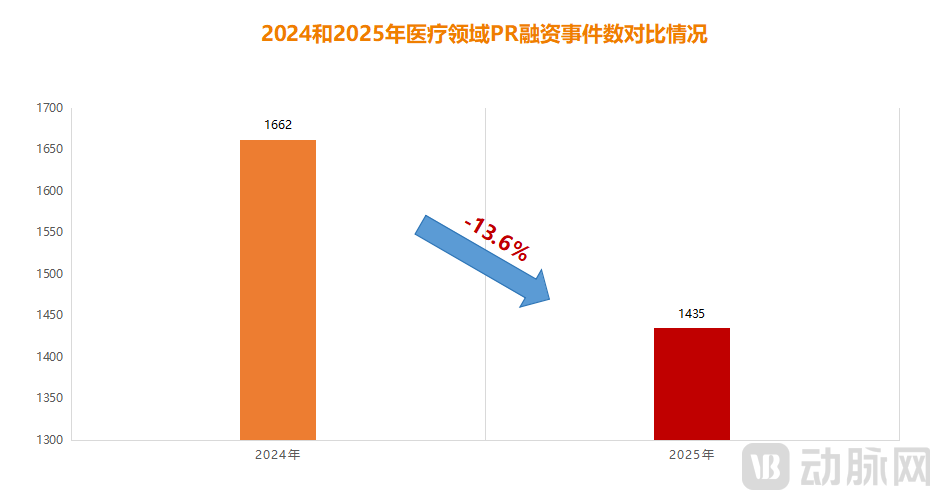 Figure 3. Comparison of PR Financing Events in the Healthcare Sector Between 2024 and 2025 (Data Source: VCBeat)
According to data released by VCBeat,In 2025, the medical field in China completed 1,435 financing events, a year-on-year decrease of 13.6%.。Although the total investment has not been announced yet, according to industry speculation, the total amount of financing in China's medical primary market in 2025 will exceed that of 2024, and the overall venture capital market is showing significant"Volume Shrinks, Price Rises"Characteristics. This indicates that the capital market is accelerating its shift from "broad coverage" to precise aggregation around leading targets with high technological barriers. Investors now place greater emphasis on the certainty of projects in both clinical stages and market aspects.
So, how exactly did this evolve? What changes will occur in the future medical venture capital market? We can gain insight into the profound trajectory behind this shift through the real experiences of multiple healthcare investors.
During the "2025 Proxima Investment Healthcare Innovation Summit",Proxima also reviewed the achievements of the past decade — a total of 74 companies invested, supporting 242 innovative products, of which 52 were global firsts.. All of this is closely related to the investment strategy that Proxima has been practicing. Regarding this,Proxima Capital Investment Partner Song HaolinHe said, "First, we will seek globally innovative products and platforms, considering what kind of biotechnology the next generation should focus on to address existing clinical pain points, and finally add tool empowerment to accelerate new drug development; secondly, connecting with China, following this strategy, we will target several special globally innovative directions, and then utilize China speed to truly bring in and go global; the last point is to adhere to value investing. Proxima Capital has made many early investments, transforming a lot of scientists' ideas into specific products. In the later stage, we also began to lay out some high-value, high-potential, and clinically soon-to-be-verified innovative fields, thereby seeking the best value points for investment layout. In summary,Proxima Centauri's investment in the field of innovative healthcare focuses primarily on whether the product can truly solve actual clinical problems.。”
2025,Mao Hua, Partner and Managing Director of Frost & Sullivan ConsultingParticipated in several major financing events, during which he deeply felt the significant changes in China's innovative drug industry: "The first intuitive feeling is that the industry has become more mature, no longer holding an opportunistic mentality like before, but rather driven by science and unmet clinical needs when looking at issues; the second change is that the division of labor in the industry has become very clear. For example, companies that are good at early-stage R&D and transformation will continue to enhance their advantages in this area, while handing over the later-stage clinical development and commercialization, which they are not good at, to more specialized industry participants, greatly improving the overall resource utilization and operational efficiency of the industry; the last point is that the vast majority of companies are earnestly working on 'First in class' or 'Best in class' assets in a certain field, and are considering internationalization more, hoping to bring their products to the international market."
As a state-owned capital platform, Jinduo Investment, which originated from Luzhou Laojiao, explained the iteration of the medical venture capital logic from another perspective.Investment Director Yan YangchuIn this regard, he commented, "Having experienced drastic changes in the investment market and witnessed the rise and fall of countless companies, we have continuously reflected on our lessons learned in investment. The primary market has long faced liquidity pressures and information delays, unlike securities trading, which can follow market trends and be sold promptly. Chasing investment trends in equity investment can easily lead to a dilemma. What we need to do is focus on laying out projects with high growth potential and strong uniqueness in the early stages, weathering cycles, and waiting for the arrival of the right opportunity. As such, we are also participating in the investment of Nuofute Intelligent, the world’s first early-stage surgical robotics project."Considering that most medical projects have not yet become profitable, we are also designing diversified exit paths, including but not limited to asset securitization methods such as the STAR Market Growth Layer and Hong Kong IPOs, mergers and acquisitions, equity transfers, or equity swaps.。”
It is foreseeable that the next 5-10 years will still be the golden period for innovative medical investment in China. After a series of cyclical rotations,Once again, a historic opportunity has emerged.。