

Shenzhen NewApt Biotech Secures Tens of Millions in Angel Funding Led by Cowin Capital to Advance DEL Platform and Oncology Pipeline
NewDEL Biotech
Antitumor New Drug R&D Company
VCBeat (WeChat: vcbeat) was the first to learn that recently, Shenzhen NewDEL Biotech Co., Ltd. (“NewDEL Biotech”), the first incubated company of Guangdong’s first biomedical manufacturing innovation center—the Guangdong Provincial Small Molecule New Drug Innovation Center (“Small Molecule Center”)—has announced the completion of an angel financing round of tens of millions of RMB, led by Cowin Capital. The proceeds from this round will be used to advance the company’s pipeline under development and to build a DNA-encoded compound library technology platform.
Shenzhen NewDEL Biotech Co., Ltd. is a startup focused on innovative drug development and technology services, with DNA-encoded library (DEL) technology as its core technology.
In recent years, a novel high-throughput drug screening technology—DNA-encoded compound library (DEL) technology—has gradually developed, establishing itself as an emerging frontier in drug discovery and development. In a DNA-encoded compound library, a unique DNA sequence is conjugated to each drug molecule to be screened, functioning like a "barcode" for identification. This allows the entire molecular library to be screened against drug targets as a single pooled mixture. The screening results can be obtained by decoding and analyzing the DNA barcodes to determine the structures of the identified drug molecules, thereby facilitating subsequent structural modification and activity optimization (Figure 1).
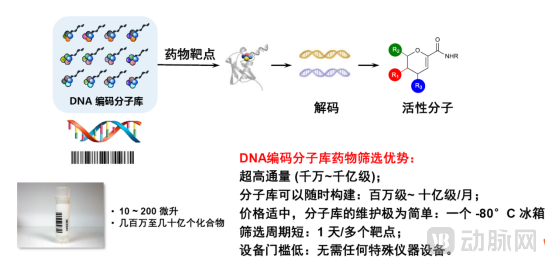
Figure 1: Technical Workflow and Advantages of DNA-Encoded Compound Libraries
Compared with conventional molecular libraries, DNA-encoded compound libraries offer two advantages:
1) Tens of millions to hundreds of millions of compounds can coexist within a single system at extremely minute quantities. Typically, a compound library comprising tens of millions of molecules consists of only approximately 100 μL of solution; the synthesis, screening, storage, and related procedures for the library can all be completed in a simple 1.5 mL microcentrifuge tube.
2) Similarly, molecular library screening no longer requires expensive instrumentation (e.g., screening robots), dedicated screening space, or extensive human resource support, and can be conducted in standard laboratories. DNA-encoded compound libraries have significantly reduced drug screening costs and improved screening efficiency, enabling the screening of numerous important drug targets.
In recent years, this technology has gained widespread recognition and application across the industry. Today, all of the top 20 global pharmaceutical companies have established DEL screening departments or formed collaborative research partnerships with DEL biotechnology enterprises. A substantial number of hit compounds generated from DNA-encoded compound libraries have already advanced into drug lead compounds and are progressively entering clinical testing phases for the treatment of various major diseases. It can be stated with certainty that DEL has become a critical enabling technology in new drug research and development.
Leveraging its proprietary DNA-Encoded Library (DEL) technology, NewDEL Biotech addresses unmet clinical needs by establishing a comprehensive lifecycle system for innovative drugs, focusing on the design, R&D, and commercialization of First-in-Class (FIC) therapeutics. The company is committed to becoming an internationally leading, distinctly positioned R&D-driven biopharmaceutical enterprise. Notably, the company holds exclusive live-cell screening technology within the DEL field (Figure 2), capable of screening targets that are difficult to purify, such as membrane proteins. This screening model, which more closely mimics physiological conditions, significantly improves the success rate of drug screening and has been widely applied across the company's innovative drug R&D programs.
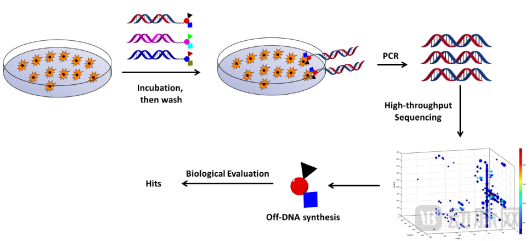
Figure 2: Live-cell screening workflow for DNA-encoded compound libraries
NewDEL Biotech is the first new drug R&D and commercialization company incubated and successfully established by the Small Molecule Center. Its R&D pipeline, derived from its proprietary research projects, is primarily focused on the development of novel oncology therapeutics.
Oncology has consistently remained the most pivotal domain in innovative drug development. A decade ago, cancer immunotherapy emerged, most notably with the regulatory approval of PD-1 antibody drugs in 2014. Their breakthrough therapeutic efficacy in advanced melanoma offered renewed hope for a cancer cure. Today, cancer immunotherapies represented by PD-1/PD-L1 inhibitors have expanded to encompass dozens of indications. In 2020, Keytruda (commonly referred to as the "K drug") surpassed $14 billion in global sales, rightfully earning its status as the undisputed top-selling drug. However, a substantial proportion of patients still commonly exhibit non-response or develop acquired resistance to anti-PD-1/PD-L1 therapies. Consequently, pharmaceutical companies both in China and globally are actively developing combination regimens and novel immune-targeted therapeutics, aiming to address these prevailing challenges and ultimately pave the way for next-generation alternative treatments.
Addressing clinical challenges and unmet needs in tumor immunotherapy, NewDEL Biotech is actively developing novel small-molecule therapeutics targeting immune checkpoints and emerging targets within the tumor microenvironment. All candidate compounds have been identified using DNA-encoded library (DEL) technology, and several programs are currently demonstrating significant progress. The lead pipeline candidate is a highly sought-after novel immune checkpoint inhibitor with substantial market potential. To date, no approved products share this target, and competing agents are exclusively large-molecule biologics. NewDEL Biotech’s candidate is a proprietary small-molecule inhibitor, representing a first-in-class innovation both in China and globally. Additionally, several small-molecule inhibitor programs for anti-infective and metabolic diseases have completed early-stage screening. Moving forward, the company will further expand its R&D pipeline through strategic collaborations and in-licensing.
The core team at NewDEL Biotech comprises a group of experts and entrepreneurs with years of extensive practical experience in medicine, pharmaceuticals, and corporate operations. The Chief Scientist of the company’s core technical team possesses 18 years of industry experience in DEL technology and is internationally recognized as a preeminent academic leader. The technical team, primarily composed of high-caliber overseas talents, holds over five years of research experience in DEL technology and has successfully utilized the platform to screen and identify lead compounds for numerous major pharmaceutical companies both in China and abroad. Key executives of the core management team have been deeply engaged in the pharmaceutical sector for nearly three decades. They possess keen industry insight and forward-looking strategic decision-making capabilities, having previously managed multiple well-known listed pharmaceutical enterprises in China and successfully turned several from deficit to profitability. They enjoy a highly distinguished reputation within the industry.
NewDEL Biotech will also leverage a wealth of resources, including the shared key technology platform of the Small Molecule Center, funding allocation, expert review, public services, and industry alliances, to significantly accelerate the advancement of new drug development projects and the commercialization of research outcomes.
He Xun, Founder of NewDEL Biotechstated: "We sincerely thank CapitalWise, the investor in this round, for its recognition and support of NewDEL Biotech. The NewDEL Biotech team will seize the historic development opportunities in the biopharmaceutical industry of the Guangdong-Hong Kong-Macao Greater Bay Area, continuously refine our core technologies, expand our product pipeline, and accelerate the market launch of first-in-class innovative drugs to benefit patients. We will work hand in hand with industry peers and investors to jointly create value."”
Head of Investment, Cowin Capitalstated: "NewDEL Biotech is committed to the development and industrialization of first-in-class new drugs in the Guangdong-Hong Kong-Macao Greater Bay Area, achieving genuine original innovation through its proprietary, specialized DNA-encoded library (DEL) technology. Founder He Xun is a renowned biomedical expert in Shenzhen, as well as a highly experienced and accomplished entrepreneur. The technical team has been deeply engaged in the DEL field for many years. We firmly believe that under Mr. He's leadership, NewDEL Biotech holds immense potential, and I look forward with great anticipation to the company's future development!"
Guangdong Provincial Small-Molecule New Drug Innovation Center
Approved by the Department of Industry and Information Technology of Guangdong Province in September 2018, the Guangdong Provincial Small Molecule New Drug Innovation Center is the first provincial-level biopharmaceutical manufacturing innovation center in Guangdong Province (including Shenzhen). Operating under a “Company + Alliance” model, the Center integrates shareholder entities such as listed industry enterprises, central state-owned pharmaceutical corporations, prominent private enterprises, industry associations, new-type R&D institutes, pharmaceutical investment institutions, and professional management teams, which collectively provide guarantees in industrial resources, technical support, capital and funds, and service provision. Focusing on the major demands for innovative development in the biomedical sector and key common industry technologies, the Center is dedicated to breaking through critical technological bottlenecks across the industrial chain and promoting the commercialization of research achievements. By leading the direction of technological reform and development in the biomedical industry of the Guangdong-Hong Kong-Macao Greater Bay Area, it aims to build a new cooperation and exchange platform, serving as an innovation carrier that supports the high-quality development of the Greater Bay Area’s biomedical sector.
Cowin Capital
Cowin Capital, founded on June 26, 2000, is one of China's first professional private equity investment firms. With nearly 20 years of investment management experience, the firm manages over RMB 25 billion in assets, has invested in more than 500 companies, and guided nearly 100 to successful public listings. It is a leading domestic professional investment institution in China, distinguished by its long operational track record and consistently outstanding returns.