

Raised over 300 million yuan, covering 1,300 institutions, TSOLife upgrades elderly care services with AI
The "2024 World Health Organization Report on Aging and Health" indicates that increasing life expectancy and declining birth rates are significantly reshaping the global population structure. By 2030, one in six people worldwide will be aged 60 or above. At that time, the population aged 60 and above will increase from 1 billion in 2020 to 1.4 billion; by 2050, the global population aged 60 and above will double to 2.1 billion. It is projected that between 2020 and 2050, the number of people aged 80 and above globally will triple to reach 426 million.
Facing the continuously worsening aging population and the growing demand for elderly care, traditional elderly care service models struggle to meet the surging needs of the elderly. Technology-empowered elderly care has become a new market trend, and the application value of artificial intelligence (AI) technology in the elderly care industry is becoming increasingly prominent.
AI is driving transformation in the elder care sector by optimizing early disease detection, improving patient management systems, and assisting clinical decision-making. AI-driven tools, such as machine learning (ML) algorithms, predictive analytics models, and assistive robots, are being widely applied in areas like physiological monitoring, nursing care, and health risk identification to address aging-related challenges such as frailty, multimorbidity, polypharmacy, and fall prevention.
The functional value of elderly care technology continues to strengthen, but the pain points of inadequate expression of elderly needs, lack of emotional companionship, and insufficient social connection remain unresolved. TSOLife is targeting this market gap, committed to integrating AI technology into elderly care industry scenarios to provide personalized services that meet the spiritual needs of the elderly.
The commercial potential of this track has also attracted capital attention. In May 2025, TSOLife completed a $43 million (approximately 300 million RMB) Series B financing round, exclusively led by PeakSpan Capital. Currently, its total financing amount has reached $52 million (approximately 370 million RMB).
Investor Arnie Whitman commented that TSOLife's approach to collecting and applying social data is pioneering in the industry, and its AI technology innovation driven by emotion also has broad market application prospects.
Currently, the software developed by TSOLife is being implemented in 1,300 elderly care facilities across 47 states in the U.S., with partners including leading U.S. operators such as Brookdale (NYSE:BKD), Priority Life Care, and Benchmark.
TSOLife was founded by David Sawyer in Florida, USA, in 2015. The entrepreneurial impetus came from the experience of Sawyer's grandmother passing away, which prompted him to explore ways to preserve life stories and memories. This is also the origin of the name TSOLife (The Story Of Life), and it eventually evolved into the company's brand philosophy – "Every life is worth being told, heard, and recorded."
Based on this concept, the first phase of TSOLife focuses on the family end, with the core being the use of AI technology to help families record their loved ones' life moments and emotional connection points. The company has launched a digital "oral history" archive product: while conducting unstructured in-depth interviews with elderly individuals and their families, AI technology is used to simultaneously collect oral content. The extracted information is then organized and categorized, ultimately creating standardized electronic archives covering multiple dimensions such as personal growth experiences, careers, and hobbies, achieving the preservation of life stories and memories.
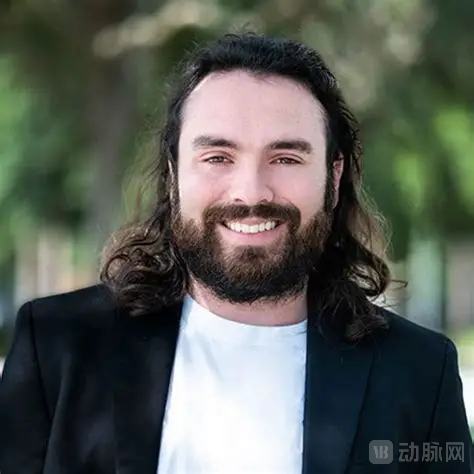
David Sawyer, Founder of TSOLife
As AI technology accumulates and the founder's market insights deepen, TSOLife enters the second phase of corporate development, shifting its service focus from family-oriented to senior living community-oriented while expanding the application scope of AI technology. On one hand, TSOLife adapts its "oral history" archival product from the first phase for community use, adjusting the collection process and content dimensions to better align with the needs of bulk community services. On the other hand, TSOLife adds a service decision algorithm module based on its original AI collection technology, which can generate social behavior modeling, lifestyle rhythm analysis, and more from archival data, providing data support for real-time decision-making within communities.
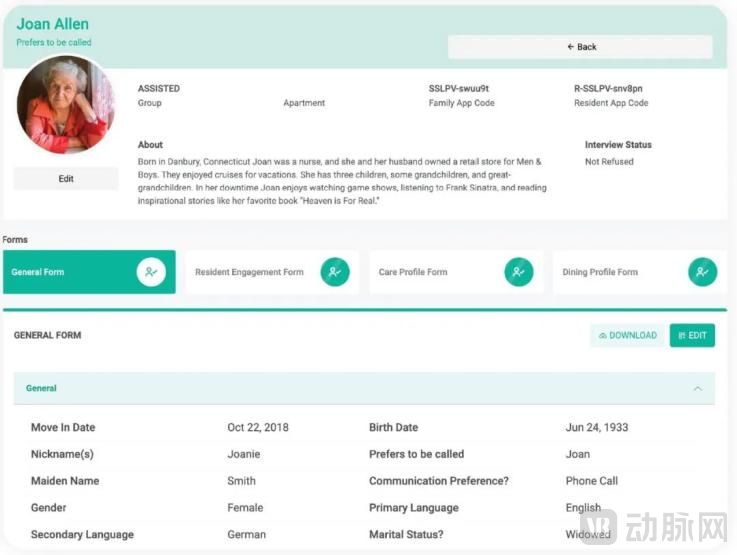
Digital Archives of Retirement Community Residents (Source: TSOLife Official Website)
In the process of collaborating with senior living communities, TSOLife adopts a SaaS subscription-based charging system and offers tiered subscription plans for communities of different sizes. The basic version focuses on the file management functions of the Vita SaaS system, while the advanced version additionally unlocks decision-support tools such as recommendation engines and operation dashboards. This is aimed at lowering the technical barriers in community work and improving operational efficiency. Meanwhile, TSOLife has also launched a new product, the Minerva AI platform, which uses the Vita SaaS system as its core carrier. By collecting hundreds of data points from residents, it provides data support for strategic decision-making in senior living communities to optimize elderly care services and enhance residents' living experience.
As the business at the senior living community end gradually matures, TSOLife completed the acquisition of Fit Minds (a provider of brain health and cognitive health solutions) in 2022. This move integrated Fit Minds' cognitive training content into the Minerva AI platform. By using AI to analyze cognitive data of residents in senior living communities—covering quantifiable and qualitative information across dimensions such as memory, attention, and language logic coherence—it enables communities to customize personalized cognitive training programs for different residents. Thus, TSOLife’s functional system has expanded from single data-driven decision-making to providing health services, ultimately forming a complete senior care service loop: "Resident Data Collection - AI Technology Analysis - Customized Cognitive Health Services," officially entering the third phase of its strategic layout.
The B-round financing completed in May 2025 became a landmark move in the fourth phase of TSOLife's development. With the capital support from this round of financing, TSOLife will further increase its investment in technology research and development and market expansion in the AI eldercare technology sector. While deepening the previously established closed-loop eldercare service system, the company will also promote its large-scale implementation. On August 13 of the same year, the company announced that five new vice presidents had joined the executive team, with professional backgrounds covering technology, finance, data strategy, and sales. They are particularly skilled at addressing industry challenges faced by suppliers and operators in the senior living real estate sector. With the injection of fresh talent, TSOLife is also driving dual growth in the number of users and usage frequency on the senior living community front.
TSOLife's core product Minerva AI, independently developed by the team, is the industry's first resident insight platform designed specifically for senior living communities, which transcribes resident interviews using AI technology and converts the information into clear data.
The core architecture of the Minerva AI platform is composed of an integration platform, analytical dashboards, and control panels. These three modules also serve as the product-end carriers of TSOLife's "Data Collection Layer - Analysis Layer - Application Layer" technical model. Among them, the integration platform, as the core carrier of the collection layer, streamlines the data collection process for community staff—such as automatically creating detailed profiles from resident admission interview videos, capturing key information like residents' interests and basic demographic characteristics (e.g., age, gender, income level), recommending suitable admission plans for users, and rationally allocating housing resources. It also incorporates social matching functions to create personalized "private community environments" for residents, thereby enhancing their quality of life and community retention rates.
Based on the rich data collected by the integrated platform, the dashboard analysis at the analytical layer further consolidates and analyzes multi-dimensional information such as residents' admission records, service logs, and activity participation, making it convenient for community staff to retrieve and utilize. It also outputs visual indicators and decision-making recommendations, providing data support for the initiation of elderly care community projects and subsequent planning.
The TSOLife control panel, located at the application layer, builds a profile of elderly community residents based on two core datasets: demographic information and personal interests. It assists the community marketing department in identifying potential users and developing differentiated activity strategies, such as calligraphy and painting salons or chronic disease lectures, directly driving the refinement and personalization of elderly community services.
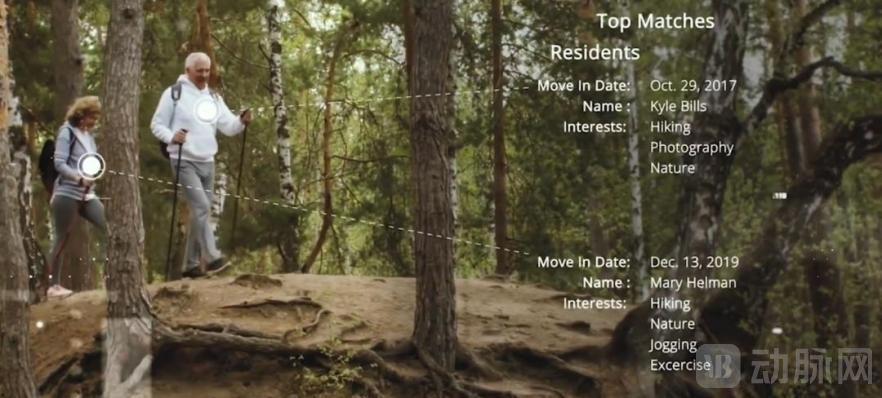
Conduct social matching for residents (Source: TSOLife official website)
Leveraging Minerva AI's data analysis capabilities, TSOLife has built a web platform system deeply integrated with community work: 1. Launching a transportation hub function to optimize the traffic management model for residents and staff within retirement communities, enabling convenient itinerary arrangements and centralized management while granting residents greater autonomy in decision-making; 2. Establishing an intelligent survey and feedback platform to collect real-time feedback and service evaluations from residents and their families, effectively monitoring the distribution, responses, and resolution of feedback surveys. Additionally, the platform utilizes AI technology to provide solutions, proactively addressing and resolving residents' concerns about elderly care services; 3. Creating the industry’s first on-demand customized library, offering personalized daily forums for each resident, aiming to elevate the resident experience to new heights and enrich their community living experience.
TSOLife has upgraded the operational efficiency and resident experience of senior living communities through technology integration and scenario innovation. The company, using product functions as a carrier, has built a community operation system around "resident data - AI technology providing personalized elderly care service recommendations - improving resident retention rates," which also offers an actionable reference for the development strategies of overseas senior care technology companies.
In contrast, in China's eldercare technology sector, according to iResearch's "China Smart Elderly Care Industry Research Report" (November 2025), China’s smart elderly care industry is facing the compounded impact of demand-side drivers, including significant changes in family structures, an increase in single-person households, empty-nesters, and elderly individuals with disabilities or semi-disabilities. On the supply side, there are also gaps, with intelligent solutions becoming crucial for improving efficiency and reducing costs.
China's Smart Elderly Care Industry Has Formed a Differentiated Competitive Landscape with Three Types of Players: Comprehensive Solution Providers, Vertical Technology Companies, and Traditional Elderly Care Enterprises. Leading companies in China’s elderly care technology sector mostly focus on hardware products such as health monitoring and intelligent caregiving devices—these low-barrier, easy-to-use products have already achieved scaled adoption. At the platform operation level, companies like Beijing Vanke Happiness Family and Ocean Pacific Spring Bloom have adopted a model that integrates resident data profiles with community services and social matching, showing initial success in exploring full-scene service loops. However, industry-related exploration still needs to accelerate.
In addition, the residents of China's pension communities are diverse in type and have significant differences in demand. The demand differentiation between刚需型 (such as disabled, low-income) and 品质型 (healthy, middle-to-high income) elderly people is obvious, which requires local enterprises to promote the implementation of intelligent product scenarios with local adaptation as the core, avoiding the disconnection between technology research and development and actual pension scenarios.
Overall, China's elderly care technology sector is in a critical transition period from technological upgrading to the deepening of community services for the elderly. The deep integration model of TSOLife—"AI technology-understanding residents' needs-providing personalized services"—may provide an innovative paradigm for the personalized development of local elderly care technology enterprises.