

Assisted Reproduction Enters the DeepSeek Moment: How Fertsy Brings Embryo Evaluation Out of the "Black Box"?

Fertsy
Developer of Intelligent Reproductive Center Solutions
Recently, Fertsy (Beijing) Technology Co., Ltd. ("Fertsy" for short) and Professor Sun Haixiang's team, Chairman of the Chinese Medical Association's Reproductive Medicine Branch and Director of the Reproductive Medicine Center at Nanjing Drum Tower Hospital, jointly released translational research findings on "Embryo Development Prediction Method and Device." The study utilized a prospective, double-blind, randomized controlled design to systematically validate the application effects of an AI embryo evaluation system within real clinical workflows.
The institute responded to a set of long-standing real-world contradictions in the field of assisted reproduction: limited treatment success rates, but decision-making highly reliant on human experience. The 2023 World Health Organization report shows,The global average live birth rate of IVF is less than 40%.,Most patients need to undergo 3-4 treatment cycles to achieve pregnancy outcomes, and some families are forced to discontinue treatment after repeated attempts. For women,Repeated ovulation induction and egg retrieval not only mean financial burdens but also come with continuous physiological and psychological stress.。
In the exploration to improve success rates,AI and Automation Technologies Gradually Enter the Field of Assisted Reproduction.Time-lapse incubators for embryos, which emerged in the early 2010s, are capable of continuously recording the embryo development process without disturbing the culture environment. However, the large amount of imaging data they generate has long relied on manual interpretation, making it difficult to directly transform into reusable clinical decision-making evidence. As a result, their practical application value was once questioned.
It is against this backdrop that the engineering and technical team began to collaborate across disciplines with clinical experts.Fertsy has chosen to focus on the niche direction of combining in vitro fertilization (IVF) with artificial intelligence (AI), hoping to use algorithms and engineering methods to explore the structuring and standardization of the critical decision-making process of embryo evaluation.
Seven Years of Technical沉淀, Products Launched in Multiple Markets at Home and Abroad
The starting point of Fertsy can be traced back to 2019. Two alumni from the Department of Electronic Engineering at Tsinghua University—Zhang Dan, who previously worked at Huawei, and Huang Haosi, with a background in search engines at Microsoft and Baidu—turned their focus to the field of assisted reproductive technology. In an interview, co-founder Huang Haosi mentioned that, influenced by his family background in medicine, he had long been attentive to genuine pain points in medical practice that could be addressed with information technology. The decision-making processes in reproductive medicine, which heavily rely on human expertise, became a key area of consideration for the team.
Unlike the common medical AI approach of "wandering around with a big hammer looking for nails," Fertsy has been different since its inception.Guided by Real Clinical ProblemsThe team did not停留在医学机理层面的抽象讨论, but instead focused on a more engineering-oriented question: which key decision-making stages possess the potential to be digitized, standardized, and continuously verified. "Born with AI" summarizes the team's self-positioning—applying the efficiency logic of internet and engineering systems to address complex issues in medical scenarios.
From the project launch in 2019 to the completion of company registration in 2023, the team spent four years completing the critical groundwork of technical accumulation and clinical validation.At the beginning of 2024, Fertsy received seed round investment from Xishan Angel Network., officially entering the commercialization phase. 2025 becomes a key milestone:AI Embryo Evaluation System Achieves First Commercial Sales in Taiwan, China, and subsequently entered multiple regional markets; in the same year, the company received support from the Zhongguan Village National Independent Innovation Demonstration Zone for key technology innovation projects, and won third place nationwide in the AI and Robotics track of China's Medical Device Innovation and Entrepreneurship Competition.
Supporting this progress is a well-structured cross-disciplinary team. On one hand, the engineering and artificial intelligence teams possess industry-level technical expertise, excelling in transforming complex clinical workflows into implementable system solutions. On the other hand, the reproductive medicine experts and embryologists are deeply involved in problem definition, evaluation criteria establishment, and clinical validation pathway design. Through continuous iteration of "clinical problem identification—engineering implementation pathway—data feedback validation," Fertsy has gradually achieved the transformation from technical feasibility to clinical applicability.
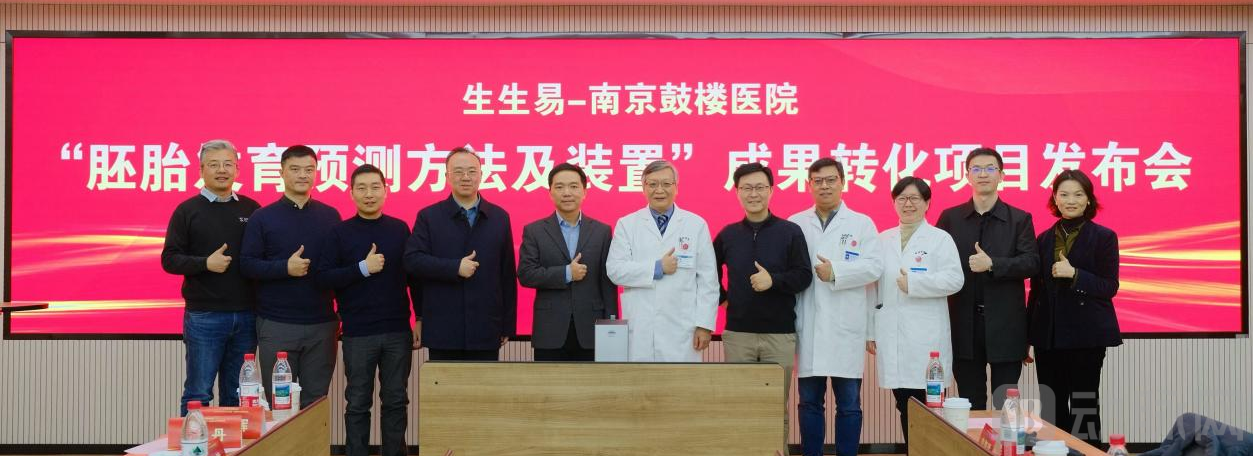
Fertsy - Nanjing Drum Tower Hospital Achievements Release Conference
In terms of market implementation, Fertsy has chosen the path of overseas-first. In 2025, its products will first achieve sales in Taiwan, China, and enter the Middle East and Mexican markets, with commercial trials simultaneously starting in Japan and the EU region, completing the initial layout of globalization.
This choice is primarily due to the differences in implementation conditions across regions. Compared to strongly regulated markets such as China, the United States, and the European Union, regions like Taiwan, Japan, and parts of the Middle East remain relatively open in terms of regulation for assisted reproductive devices and software, providing a window for rapid validation of new technologies in real clinical environments. Fertsy adopts a "dual-track advancement" strategy,Currently, two products have obtained the Class II Medical Device Registration Certificate in Beijing, and the related hardware products are applying for U.S. FDA certification., while prioritizing the completion of commercial validation in markets with relatively clear regulatory pathways.
Based on this, the structural differences among institutions in different markets further influence the application of products. In China, the reproductive healthcare system is dominated by large public hospitals capable of handling tens of thousands of treatment cycles annually, with a focus on system stability and consistency under high-load scenarios. In contrast, overseas markets are mainly comprised of small- to medium-sized clinics that handle hundreds of cycles per year, where labor costs are high and decision-making chains are short, leading to a higher acceptance of intelligent tools that emphasize ease of deployment and clear cost-effectiveness. Fertsy focuses on validating the standalone usability and commercial efficiency of its products in overseas markets, while adapting and refining its solutions for large-scale application scenarios in major centers within China, forming a differentiated advancement strategy.
Improve Pregnancy Rates, AI Can Explain Quantitative Embryo Evaluation Criteria
The introduction of AI in the field of assisted reproduction has long been constrained by controversies over algorithmic black-boxing: the lack of explainability in evaluation criteria makes it difficult for doctors to entrust the critical decision of embryo selection to the system. Fertsy's entry point is precisely the development of explainable AI that aligns with clinical decision-making logic, and based on this foundation, it gradually extends to key steps throughout the laboratory process.
The core technical idea isBreak down the experience of top embryologists into quantifiable, verifiable structural indicators.EmbryoInsights™ AI Embryo Evaluation System connects to embryo time-lapse incubators, continuously capturing embryo development image data. It analyzes key structures such as the inner cell mass and trophoblast cells, along with their dynamic changes, presenting the evaluation criteria in a visualized manner and generating structured embryo development reports for doctors to reference within existing clinical frameworks. Currently, the system is compatible with various mainstream embryo time-lapse incubators.
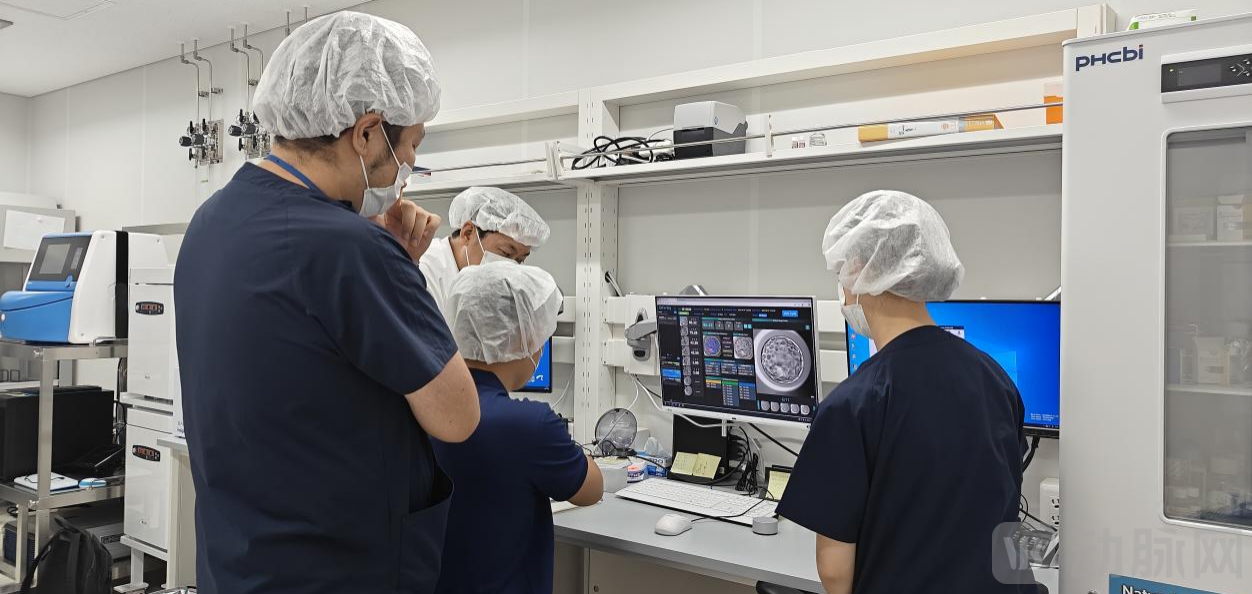
EmbryoInsights™ AI Embryo Evaluation System Deployed at Hata Reproductive Hospital, Fujita Health University, Japan
The EmbryoInsights™ system does not directly provide simple conclusions but rather answers "why this embryo is recommended," making AI a second perspective for辅助决策 instead of replacing the doctor's decision. According to data disclosed by the Reproductive Medicine Center of Drum Tower Hospital and the company, a prospective double-blind randomized controlled study based on millions of embryo images and case data shows that...The accuracy rate of core morphological index evaluation reaches 97%, and the clinical pregnancy rate of single blastocyst transfer assisted by AI increases from 68% to 80%.. Its value lies not in replacing human judgment, but in reducing fluctuations caused by differences in experience through solidifying standardized processes, and efficiently handling large amounts of imaging data to compensate for human limitations.
Beyond the core node of embryo evaluation,Fertsy Gradually Builds a Product Portfolio Covering Evaluation, Storage, and Basic Equipment. This layout is not a simple product overlay, but rather a reduction in the laboratory's reliance on personal experience by introducing quantifiable and traceable technical tools, laying the foundation for process standardization and subsequent automation.
In the cryopreservation and low-temperature storage processes, Fertsy has introduced an intelligent low-temperature storage monitoring solution.Compared with embryo evaluation, once this process encounters abnormalities, the consequences are often irreversible. However, it has long relied on manual inspections and paper-based records. This solution continuously monitors the operating status of liquid nitrogen tanks through weight sensing, visible light and infrared imaging, and algorithmic analysis, distinguishing between normal operations and abnormal situations. It provides timely warnings when risks arise and generates comprehensive data records. Its core significance lies in reducing hidden risks caused by human oversight while providing traceable evidence for laboratory quality management and compliance reviews.
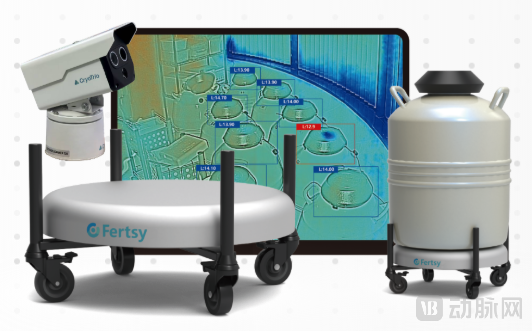
Intelligent Low-Temperature Storage Monitoring Solution
Outside of the software system, Fertsy is also simultaneously expanding into laboratory fundamental hardware such as vacuum pumps., but it does not primarily focus on single-point performance. Instead, it emphasizes seamless collaboration with AI systems and experimental workflows, reducing fragmentation between evaluation, operation, and storage. Following this approach, various products function more like intelligent modular components of a laboratory rather than isolated tools, also paving the way for the subsequent “Lab in A Box” concept to have practical implementation.
Multi-party Collaboration among Government, Industry, Academia, Research, Application, and Investment: Assisted Reproduction Moves towards Intelligence and Accessibility
Fertsy: Advancing Technology Implementation through Collaboration in Real-World Medical Systems
The concentrated embodiment of this idea is the "Lab in A Box" concept proposed by Fertsy. This concept does not refer to a specific product but rather an envisioning of the future form of assisted reproductive laboratories —Integrate complex processes such as microscopic operations, embryo culture, freezing and thawing into a desktop-level intelligent box.. The laboratory of the future will move towardsIntelligent, Automated, Miniaturized, reduce the reliance of processes on individual experience differences, making the laboratory's operating status more traceable and reproducible.
At this stage, "Lab in A Box" is still in the process of continuous advancement. However, the systematic layout surrounding this direction is driving Fertsy to transition from being a single technical tool provider to a process-level solution provider. Huang Haosi stated in an interview that in the coming years, the company will continue to improve its product system and expand into global markets. While ensuring safety and compliance, it will gradually enhance the accessibility of assisted reproductive technologies.
Against the backdrop of a continuously declining global fertility rate, the significance of this pathway does not lie in creating a groundbreaking narrative but in providing a sustainable and realistic route for reproductive medicine through more stable and replicable intelligent technological tools. This allows assisted reproduction to maintain precision and efficiency while benefiting more families who desire new life.