

Five Key Points Analysis: New National Medical Insurance Regulations Reshape the Surgical Robot Commercial Ecosystem
A trial guideline issued by the National Healthcare Security Administration has quietly sparked a profound transformation centered around the commercialization of surgical robots in operating rooms.
On January 22, 2026, according to the official website of the National Healthcare Security Administration, the National Healthcare Security Administration recently held the "Price Project Empowering Medical Technology Innovation and Development Sharing Event" in Beijing. Nearly 200 representatives from relevant departments, local healthcare security departments, medical institutions, university associations, investment institutions, and medical device companies gathered together.
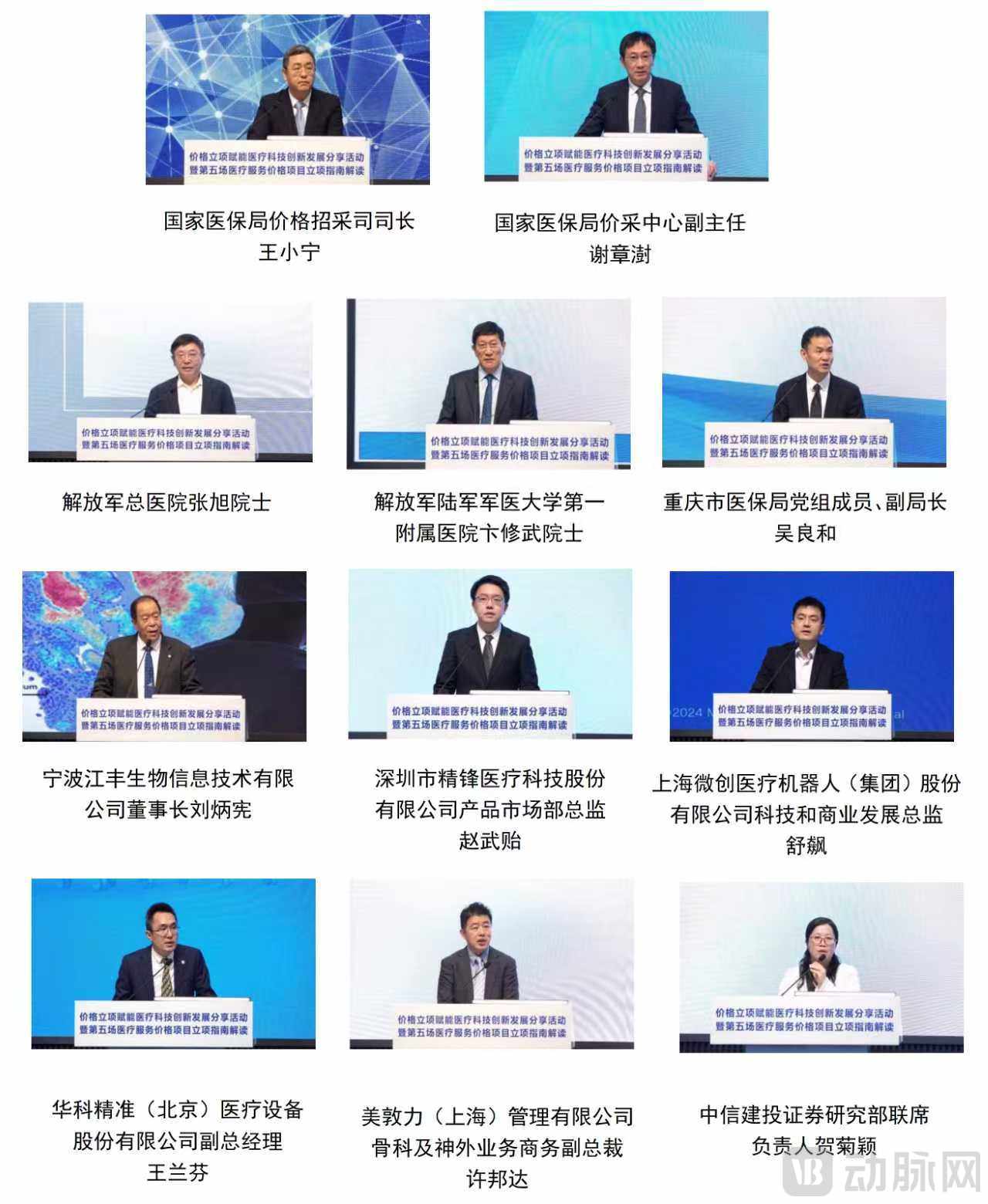
During the event, more than 20 companies, including MicroPort Surgical, MicroPort Medical, and Medtronic, showcased dozens of medical devices on-site. Cutting-edge products such as surgical robots and intelligent pathology diagnostic systems became the focus. The National Healthcare Security Administration announced the completion of the project guidelines compilation work, promoting the basic unification of medical service price items across China.
The core issue of the activity revolves around the "Guidelines for the Establishment of Medical Service Price Projects for Surgical and Treatment Assistance Operations (Trial)" (hereinafter referred to as the "Establishment Guidelines") recently officially issued by the National Healthcare Security Administration. This document focuses on the forefront of medical technology, covering achievements such as 3D printing, tracer-enhanced imaging, energy devices, intraoperative image guidance, robotic arms, and remote surgery, standardizing the formation of 37 price items, 5 additional charges, and 1 expansion item.
The release of the "Project Launch Guidelines" has sparked a heated response in the medical device industry. Representatives from companies such as JF Medical, MicroPort Medical, and HICOOL Precision shared at an event, stating that the implementation of the "Project Launch Guidelines" will inject strong momentum into the industry’s development, greatly encourage the enthusiasm of self-developing enterprises, help more high-quality surgical robots enter the market, and basically solve the clinical transformation issues of innovative technology products like precision navigation and surgical robots.
According to VCBeat, this "Project Guidelines" has five major highlights.
The intent of this "Project Guidelines" release is fairly clear — to lead the upgrading of medical technology through price-based project initiation, and to guide the transition from "traditional treatment" to "precision medicine."
In recent years, the innovation capabilities of surgical robotics companies have been continuously strengthening, with products receiving regulatory approval at an accelerating pace, providing more options for precision surgical treatments.
The "Project Guidelines" released this time have broken the traditional boundaries of categorization by surgical approach, application site, and domestic and international brands, adopting a purer project initiation model.
In terms of the charging mechanism, according to the "Project Guidelines," robotic-assisted surgical operations are divided into three levels: navigation, participation in execution, and precise execution. A coefficient-based charging system linked to the main surgery is implemented. Equipment with higher involvement, more comprehensive functions, and more precise execution will receive a higher charging coefficient.
Everbright Securities' research report pointed out that this policy "is expected to reshape the industry's valuation logic," favoring platform companies that can adapt to the new medical insurance payment rules and have capital and channel advantages, as well as domestic enterprises whose product performance meets the high charge standards for "precise execution."
This "Project Guidelines" also clearly defined the pricing mechanism for surgical robots, and the National Healthcare Security Administration will guide regions to study and establish reasonable charging standards with both minimum and maximum limits.
Considering the relatively high amortized cost of surgical robots in the early stage of clinical use and the accessibility for patients, specific standards will be reasonably formulated by local medical insurance departments in combination with factors such as local economic and social development.
While supporting the accelerated clinical transformation of medical devices, the "Project Initiation Guidelines" also take into account the affordability for patients. It explicitly includes essential proprietary consumables used during the operation of robotic arms into the price structure, guiding companies to proactively reduce unreasonable markups in intermediate distribution channels. The "Project Initiation Guidelines" also make a clear distinction between the charges for single-use and reusable consumables.
Taking the ultrasonic scalpel as an example, if medical institutions use disposable ultrasonic scalpel heads, the disposable ultrasonic scalpel heads are sold at a zero markup, and the "ultrasonic scalpel auxiliary operation fee" will no longer be charged; if medical institutions use reusable ultrasonic scalpel heads, the "ultrasonic scalpel auxiliary operation fee" is charged directly.
Another breakthrough in the "Project Guidelines" is the forward-looking establishment of a charging pathway for remote surgeries. A separate charge for "Remote Surgical Assistance Operation" has been introduced, stipulating that medical institutions utilizing platforms to remotely control surgical instruments for key steps or entire procedures can charge accordingly, with pricing standards linked to the main surgery.
This regulation is seen by the industry as breaking through the "last mile" for remote surgery to move from cutting-edge clinical exploration to practical application. Since China successfully performed the first remote 5G orthopedic surgery with robotic assistance in 2019, remote surgeries across various disciplines have been intensively carried out in regions such as Beijing, Shanghai, and Zhejiang. In November 2025, the world's first remote robotic subretinal injection surgery was successfully completed between Guangzhou and Xinjiang.
Price-based project initiation allows patients, medical institutions, and pharmaceutical companies to achieve multi-party benefits. It is conducive to promoting the cross-regional expansion of high-quality medical resources, enhancing the accessibility of such resources, and innovating the tiered medical treatment model.
Zhang Xu, Academician of the Chinese Academy of Sciences and Director of the Department of Urology at the General Hospital of the People's Liberation Army, stated that his team is conducting a series of studies in China on remote surgeries based on a domestically produced robotic platform.
In addition, to ensure the quality control and traceability of robotic arm surgery and remote surgery, the "Project Initiation Guidelines" include the "storage and upload of medical data and equipment operation records" as part of the pricing structure. When medical institutions carry out related auxiliary operations, they should save and upload medical data and equipment operation records that meet the requirements. Those who do not provide data storage and upload services will be subject to a price reduction policy.
The deeper value of data uploading and aggregation lies in the fact that, through in-depth analysis of massive, authentic, and continuous equipment operation and clinical outcome data, medical insurance departments can collaborate with medical institutions, enterprises, and experts to build scientific efficacy and benefit evaluation models, better quantifying the clinical value of surgical robots.
On this basis, we can continuously optimize the technical application pathway, accelerate the development of new surgical methods, and explore and cultivate innovative scenarios such as telemedicine and intelligent navigation, pushing cutting-edge technologies to evolve from "usable" to "user-friendly."
The release of the "Project Initiation Guidelines" comes at a critical time when the landscape of China's surgical robot market is being reshaped.
The development of the surgical robotics industry has long faced fundamental challenges: "ambiguous pricing, unsubstantiated charges," making it difficult to form a viable business model. This has resulted in the last mile—from "innovative product" to "accessible commodity"—remaining a daunting journey, even after technological breakthroughs and successful product approvals.
Market data reflects this dilemma. According to a research report by Zhongyou Securities, the total sales of surgical robots in China from January to November 2025 slightly decreased by 0.87% year-on-year.
"Equipment + Consumables + Services" constitutes a sustainable commercial closed loop in the field of surgical robotics, especially in niche areas such as orthopedics. However, the absence of clear charging criteria may result in the value of the service component not being reasonably reflected, and it is also difficult to establish a linkage between consumable usage and technical service fees.
For example, before the introduction of the "Project Approval Guidelines," the charging boundary between disposable and reusable consumables was unclear. Some companies tended to register reusable consumables as disposable products, distorting normal market choices and technological development paths.
The imperfection of this charging mechanism will also suppress the enthusiasm of hospitals to purchase advanced equipment, and make it impossible for enterprises to form a stable income expectation and a virtuous cycle of R&D re-investment.
The "Project Guidelines" issued by the National Medical Security Administration this time directly address the core pain points mentioned above. For the first time at the national level, a unified price management framework has been established for auxiliary operations such as robotic surgery, clarifying the value representation and payment standards for different technical levels, providing authoritative and clear guidelines for the entire industry's charging practices.
More importantly, the policy focuses on repairing and completing the commercial closed loop, incorporating essential proprietary consumables—such as those required for robotic arm use—into the pricing structure. It also clarifies the charging rules for single-use versus reusable consumables, helping to establish a transparent and reasonable pricing model based on "technical labor value + necessary material consumption costs."
The release of the "Project Initiation Guidelines" will help stabilize the long-term expectations of medical institutions and enterprises, guide the industry to shift from单纯的产品销售 to providing持续的技术服务与解决方案, thereby establishing a healthy and sustainable business ecosystem that truly promotes innovative technologies from being "usable" to becoming "user-friendly" and widely accessible.