

Occlutech Files IPO Prospectus: Over 130,000 Devices Sold Across 80+ Countries with Innovative Structural Heart Portfolio

Occlutech
Manufacturer and Developer of Heart Occluders and Other Vascular Implants
The human heart is divided into left and right sides, with the atria positioned superiorly and the ventricles inferiorly. The right heart is responsible for collecting venous blood and pumping it to the lungs, while the left heart pumps arterial blood into the aorta and its branches to supply the body with blood and oxygen. The left and right atria and ventricles are separated by septa to ensure unidirectional blood flow within the body.
During fetal development, the left and right atria and ventricles are interconnected. However, as the infant matures, the four chambers of the heart become separated. Congenital heart disease occurs in individuals whose interatrial or interventricular pathways fail to close normally.
Congenital heart disease (CHD) is the most common type of congenital malformation, accounting for approximately 28% of all congenital anomalies. According to the *Report on Cardiovascular Health and Diseases in China 2019*, CHD is the leading congenital malformation in China, with an estimated 2 million prevalent cases. If left untreated, CHD may lead to complications such as heart failure and pulmonary hypertension.
Currently, there are two treatment modalities for congenital heart disease: surgical repair and interventional therapy. Compared with traditional surgical procedures, interventional therapy is characterized by its minimally invasive nature and high safety profile. In 2018, a total of 36,705 interventional procedures for congenital heart disease were performed in China. Congenital heart diseases primarily manifest in three forms: atrial septal defect (ASD), ventricular septal defect (VSD), and patent ductus arteriosus (PDA). Depending on the specific etiology, the structural design of the occluders utilized in interventional therapy varies accordingly.
Leveraging its unique braiding technology, the German company Occlutech has developed a total of seven occluder models, with products exported to over 80 countries worldwide.
Occlutech was founded in Germany in 2003. Since then, Occlutech has been developing, manufacturing, and commercializing structural heart disease and atrial shunt products to address congenital heart disease, stroke prevention, and heart failure. The company has recruited talent in fields such as biotechnology and medical devices to collaboratively empower its R&D, marketing, and sales operations.
Sabine Bois joined Occlutech as Chief Financial Officer in 2014 and was later appointed Chief Executive Officer in 2017. She has over 15 years of experience in the biotechnology industry, having helped establish several startups and co-founded a biotechnology company in 2007. Occlutech's current Chief Financial Officer, Lars Wadell, joined the company in 2021. Previously, he served as Chief Financial Officer at TFS Trial Form Support AB and Ambea AB, and as Group Financial Director at Intentia AB.
Additionally, Oshri Budana, Head of Global Operations at Occlutech, has over 20 years of experience in operations management, while Stefan Kleidon, Vice President of Sales and Marketing, has 20 years of experience in sales and marketing within the medical technology industry.
Occlutech has developed a total of 7 occluders targeting various types of structural heart disease. Among them,PDA occluders and ASD occluders are Occlutech's flagship products.。Meanwhile, Occlutech has been continuously innovating and improving its products, and is currently developing the Flex II series of occluders.
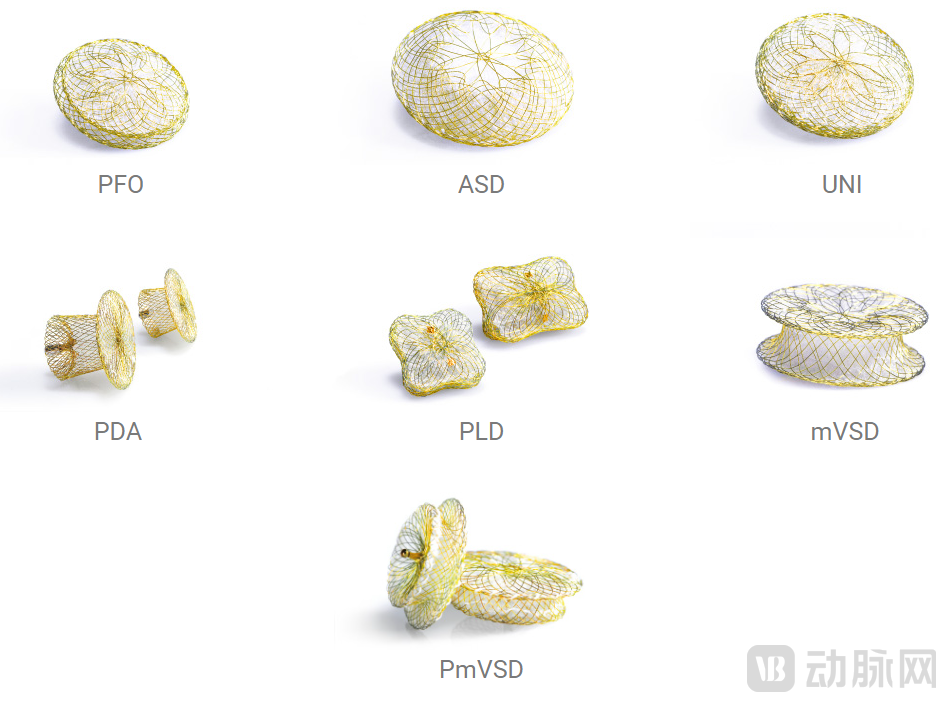 Source: Occlutech Official Website
The Occlutech occluder features innovations in design, functionality, and safety, as follows:
# Unique Braiding Technology
Occlutech's occluder featuresHand-woven biocompatible PET occlusion membrane. Moreover, the left disc of the occluder utilizes less material and features fewer protrusions, reducing the exposed surface area and thereby lowering the risk of thrombosis in patients.
Good Radial Force and Compliance
The occluder conforms well to the cardiac anatomy, while the specialized spherical connection between the occluder and the pusher securely locks the device to prevent dislodgement.
Good biocompatibility
Nitinol is a material widely used in implantable cardiac devices, possessingShape Memory PropertyAndSuperelasticity。Clinically, occluders braided from nickel-titanium alloys are commonly used both domestically and internationally. However, when nickel levels in the human body exceed a certain threshold, patients may experience symptoms such as allergic reactions and toxicity. Occlutech's occluder is braided from Nitinol, with a titanium oxide layer formed on its surface. Nitinol coated with titanium oxide exhibits superior biocompatibility and effectively reduces the release of nickel into the human body.
Currently, the ASD occluder has been approved in over 60 countries worldwide, including Canada, Japan, and South Korea, and its Premarket Approval (PMA) application in the United States is undergoing final review by the FDA.
June 1, 2021,Occlutech Announced That Its ASD Occluder Trial in China Has Enrolled 180 Patients as Planned.。This marks a significant step toward the approval of Occlutech's ASD occluder in China, and upon completion of the 12-month follow-up for all trial participants, the company expects to submit a regulatory approval application to the NMPA.
Additionally, to accommodate various cardiac defects, Occlutech has developed devices in different configurations. The PDA occluder is available in varying lengths, while the PLD (paravalvular leak) occluder features rectangular and square designs. Furthermore, the connecting waist between its two discs comes in varying diameters.
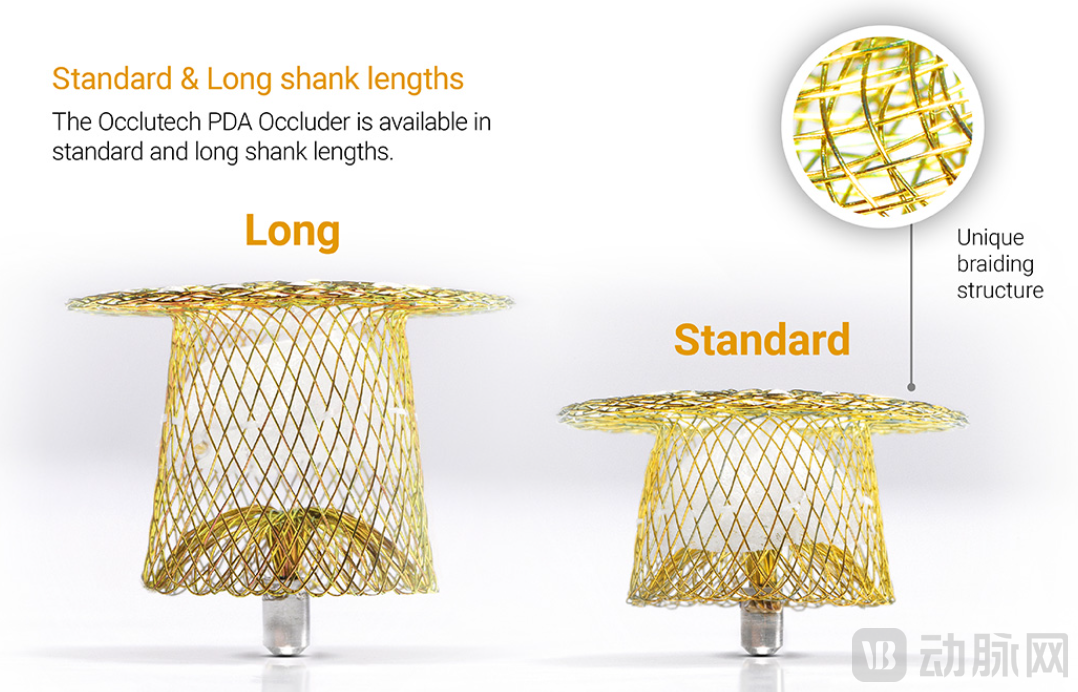 PDA Occluder Source: Occlutech Official Website
In addition to occluders, Occlutech is also developing the AFR Atrial Flow Regulator, which enables adjustable shunt flow.
Patients with heart failure (HF) are unable to eject blood normally, resulting in the heart's inability to pump sufficient blood to the body. Based on the left ventricular ejection fraction (LVEF), heart failure patients can be classified into three subtypes: heart failure with preserved ejection fraction (HFpEF); heart failure with mildly reduced ejection fraction (HFmrEF); and heart failure with reduced ejection fraction (HFrEF). Over the past decade, treatments for HFrEF have advanced rapidly; however, existing therapies for HFpEF have not significantly reduced patient mortality or morbidity.
Interatrial shunt devices represent a novel clinical approach for the treatment of heart failure, particularly in patients with HFpEF. The mechanism of action involves the percutaneous, minimally invasive implantation of a shunt across the interatrial septum to alleviate left atrial pressure overload, without significantly compromising left ventricular output or substantially increasing right ventricular load.
Occlutech's independently developed AFR (Atrial Flow Regulator) is a nitinol mesh device consisting of two flat discs and a connecting neck with a central fenestration.Blood can flow from the left side to the right side through its central shunt to reduce the burden on the left atrium. Moreover, once implanted, the AFR maintains a permanent atrial shunt with a fixed diameter.
Additionally, to facilitate patient-oriented personalized therapy, the AFR is manufactured in various sizes. For patients with heart failure, the AFR is available in two different waist heights and two distinct disc sizes to accommodate varying interatrial septal thicknesses and overall cardiac anatomy. Furthermore, the device features two different fenestration diameters, with the specific diameter determined based on the required interatrial flow volume for each patient.
Occlutech conducted the PRELIEVE study to evaluate the safety and efficacy of the AFR device, and the 3-, 6-, and 12-month follow-up data demonstrate that the AFR device is safe and effective.All subjects with available data achieved a left-to-right shunt and shunt patency, with no patient experiencing stroke or atrial fibrillation.In September 2019, AFR obtained EU CE certification for use in patients with HFpEF and HFrEF, and is marketed in the CE-regulated European market.
Additionally, the AFR can be used in patients with pulmonary arterial hypertension to facilitate right-to-left blood shunting via a central fenestration, thereby reducing right ventricular pressure. Pulmonary arterial hypertension (PAH) is a rare but life-threatening disease characterized by elevated pulmonary arterial blood pressure; without effective treatment, patient survival is typically less than three years. Clinically, PAH is difficult to cure, and management primarily focuses on alleviating clinical symptoms and controlling disease progression.
To accommodate the varying cardiac anatomies of different PAH patients, the AFR is available in three different waist heights and four different disc sizes. Additionally, the device's connecting neck features four different fenestration diameters. To date, the AFR has not yet been approved for use in patients with pulmonary arterial hypertension.
In December 2020, the FDA granted Breakthrough Device Designation to Occlutech's first-in-class Implantable Atrial Flow Regulator for the treatment of pulmonary arterial hypertension. Subsequently, in January 2021, the FDA granted Breakthrough Device Designation to the company's first-in-class Implantable Atrial Flow Regulator for the treatment of patients with HFpEF or HFrEF.
To expand its product portfolio, in addition to developing occluders and atrial flow regulators, Occlutech also manufactures related ancillary products, such as pushers and delivery steel cables.
Since its establishment, Occlutech has developed an extensive product portfolio, with sales exceeding 130,000 products,Among them, 10 products have obtained EU CE certification., addressing congenital defects, stroke prevention, and heart failure. The company operates manufacturing and R&D facilities in Germany and Turkey, and through its direct sales organization and international distribution partners, markets its structural heart disease and atrial shunt products to hospitals and clinics in over 80 countries worldwide.
In August 2011, Occlutech completed a €15 million financing round, which remains its only funding to date. Additionally, in January 2013, Occlutech successfully acquired NonWoTecc Medical, a private nanotechnology company based in Cologne, Germany, specializing in the development of nanotechnology-based coatings and coverings for medical devices, including occluders and stents.
China's congenital heart disease occluder market is highly concentrated,Lifetech Scientific, Beijing Huayi Shengjie, and Shanghai Shape Memory (a subsidiary of Lepu Medical) collectively account for a substantial market share.Meanwhile, enterprises such as Shanghai Pushi Medical, Beijing BaiRen Medical, Weihai Weixin, and Xuzhou Asia-Pacific have also received approval for their congenital heart disease occluder products.
The only congenital heart disease occluder to enter the Chinese market is the Amplatzer product line from AGA Medical Corporation, a subsidiary of St. Jude Medical (Abbott). In 2008, AGA Medical Corporation also filed a lawsuit against Occlutech over alleged infringement of its product patents. Ultimately, Occlutech prevailed in the litigation, securing recognition of its intellectual property status from the European Section of the International Association for the Protection of Intellectual Property (AIPPI).
In addition, Shanghai Shape Memory Alloy Material Co., Ltd., a subsidiary of Lepu Medical, jointly developed the world's first bioresorbable occlusion system with the National Engineering Research Center for Biomaterials and the National Center for Cardiovascular Diseases. The occluder is made from the biodegradable polymer poly-L-lactic acid (PLLA),Once the ventricular septal defect has healed, the occluder will degrade into water and carbon dioxide and be eliminated from the body, thereby avoiding potential complications associated with the long-term implantation of metal devices., is another manifestation of the "intervention without implantation" concept in the cardiovascular field. Previously, this occluder was accepted for registration by the NMPA in February 2021.
Meanwhile, Shanghai Jinkui Medical is also developing biodegradable occluders. Previously, its biodegradable patent ductus arteriosus (PDA) occluder completed the first-in-human clinical trial at Shanghai Xinhua Hospital.