

Racing on the Same Track as Giants, MicroLink Medical Validates the "China Pathway" for Brain-Computer Interfaces with Multiple Clinical Data

WE-LINKING
Developer of Medical-Grade Fully Implantable Wireless Brain-Computer Interface Systems
The Signal Behind Medtronic and Precision's Collaboration: Why "Intraoperative Functional Navigation" is the Key Piece for Brain-Computer Interface Implementation in Healthcare?
With the support of national strategies, "brain-computer interface" has taken off rapidly, transitioning from a hot topic in "frontier technologies" to an inflection point of industrialization, bringing broad room for imagination both inside and outside the industry.
However, there is still a gap between the high enthusiasm and the冷静的 clinical reality, especially for implantable brain-computer interfaces, whose development still faces significant challenges—issues such as implantation safety and ethics, long-term signal stability, treatment efficacy and benefits, cost and payment systems, data security and privacy, and doctor training and usage thresholds all require systematic breakthroughs.
So, what path and form will this technology take to enter the medical system and social life?
The answer to the question should start from the essence of medicine. As a medical technology, the rational approach for implantable brain-computer interfaces to enter the clinical field as soon as possible might be ——Let doctors understand it as soon as possible, rather than continuing to mystify it; seek connection points with existing medical solutions, rather than forcibly intervening; enter the field in the role of an "auxiliary system," rather than aggressively promoting itself as a "disruptive system."
Recently, the strategic cooperation between Medtronic, a global medical device giant, and Precision Neuroscience (hereinafter referred to as Precision), a leading U.S. implantable brain-computer interface company, is a typical case of the above-mentioned rational development path.
In this collaboration, Precision's implantable brain-computer interface technology based on flexible thin-film electrodes will be deeply integrated with Medtronic's clinically mature StealthStation surgical navigation system to jointly develop an intraoperative solution capable of achieving "synchronized structural-functional visualization."
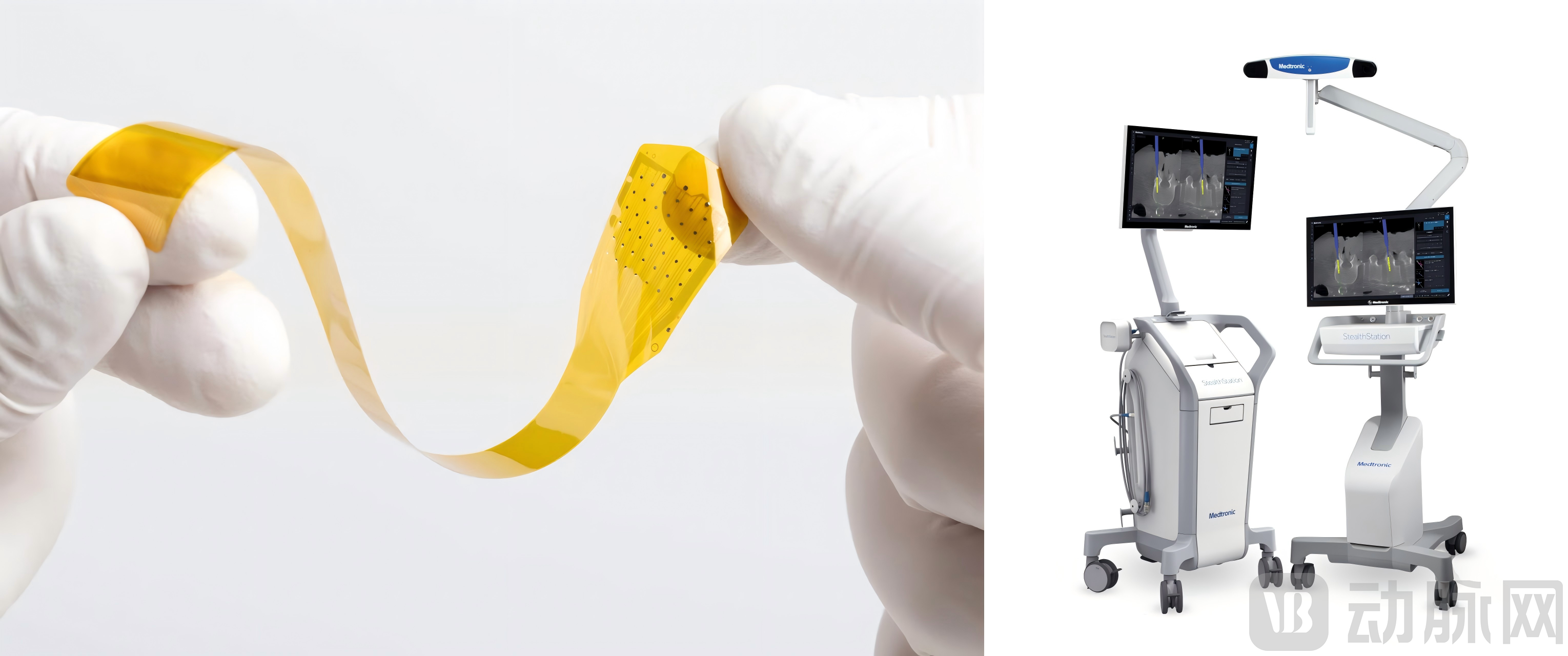
Precision Neuroscience Ultra-Thin Flexible Cortical Electrode Array (Left)
Medtronic StealthStation Intraoperative Navigation System (Right)
Image source: Precision Neuroscience and Medtronic official website
Traditional intraoperative navigation enables real-time visualization of structures, while brain-computer interfaces can dynamically capture functional signals. A neurosurgical platform that systematically integrates "function-structure-navigation-procedure" will have significant clinical value.
Therefore, the strategic cooperation between Precision and Medtronic is by no means a "co-branded show" chasing the hot concept of brain-computer interfaces, but a strong alliance based on clinical value —Aiming to systematically integrate "structural recognition" and "functional recognition" in brain surgery, jointly building a closed-loop data system and integrated solution for clinical pathways.
Precision's featured product, the "Ultra-Thin Flexible Cortical Electrode Array," can adhere to the surface of the cerebral cortex with high spatial resolution, capturing neural electrical signals. It strikes an excellent balance between minimally invasive implantation and large-area coverage, making it one of the few globally approved high-density cortical electrode products currently on the market. Medtronic's "StealthStation," on the other hand, relies on intraoperative 3D image guidance to accurately locate anatomical structures and provide real-time, dynamic visualization of navigation information within the surgical field, serving as an "indispensable" core device in complex brain surgeries.
The integration of the two will build up a"Intraoperative Decision-Making Platform Supporting Simultaneous Visualization of Structure and Function," which achieves real-time overlay presentation of the spatial distribution of neuroelectric signals (function) and brain anatomy (location), providing more reliable auxiliary decision-making support for precise resection and functional preservation.
Brain-computer interface technology based on flexible thin-film electrodes offers high-density neural signal acquisition, excellent conformity and stability with the cerebral cortex, and non-penetrative safety—precisely meeting the intraoperative requirement for "rapid identification of functional areas." Particularly in surgeries involving the localization of language, motor, and sensory functional areas, it is expected to replace traditional electrical stimulation-based functional mapping techniques, enabling low-intervention, high-resolution, real-time construction of "brain function maps."
When this technology is fused with StealthStation’s anatomical imaging, doctors can simultaneously observe structural images and dynamic functional maps of the brain in the navigation view — providing unprecedented assistance for high-risk brain surgery decisions such as "how to maximize the preservation of function while removing tumors."
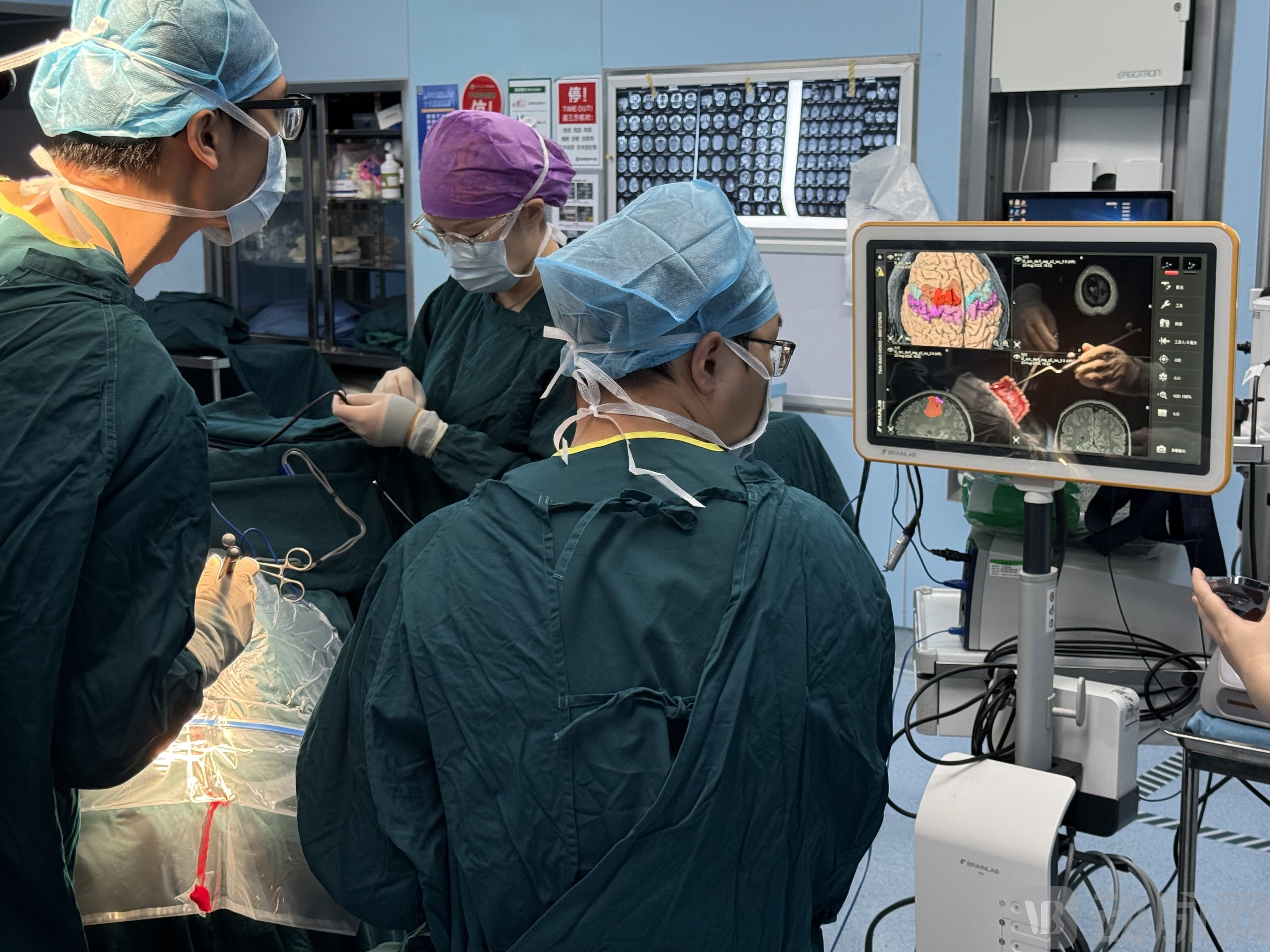
MicroLink Medical and Tongji Hospital Jointly Perform Precise Resection Surgery for Tumors in Brain Functional Areas
Image source: Weiling Medical
Furthermore, the two parties will jointly build a "Digital Brain Atlas Model" covering the evolution of patients' brain function status "pre-operatively, intra-operatively, and post-operatively," thereby providing decision support for intra-operative procedures and post-operative rehabilitation pathways.
From the perspective of industry development, as pointed out by relevant media commentary: In the past few years, companies like Neuralink and Synchron have turned brain-computer interfaces into a highly sought-after "sci-fi label." However, the collaboration between Precision and Medtronic has opened up a clinical pathway and rapid point of implementation that expands from "chronic brain control" to "intraoperative assistance," bringing the "interface dream" back to clinical reality.
From the industry trend of the cooperation between Precision and Medtronic, "intraoperative brain function navigation," which boasts strong technical feasibility and a clear approval pathway, is one of the earliest essential clinical scenarios for implantable brain-computer interface technology. It has now become a "key building block" in neurosurgical intraoperative decision support systems.
This technology has already been pioneered by someone ahead of them, and that is China's MicroLink Medical.
MicroLink Medical focuses on the full-stack technology of medical-grade implantable brain-computer interfaces. In terms of the founding team background, medical philosophy, and technical logic, it is highly similar to Precision. The company's team integrates interdisciplinary strengths from brain science, medicine, and engineering. By enabling direct communication between the brain and computers (artificial intelligence), they achieve precise interpretation of brain functions, as well as physiological remodeling and functional reconstruction of brain networks, significantly improving the quality of life for patients with neurological disorders.
MicroLink Medical focuses on exploring the clinical value of implantable brain-computer interface technology in brain medicine, and is committed to providing full-cycle intelligent diagnosis and treatment services covering "pre-operation, intra-operation, and post-operation" for patients with brain injuries.The company is exploring and collaborating on brain function protection technology for patients undergoing brain surgery, brain function repair technology for patients with intracranial and extracranial trauma, brain function replacement technology for severe degenerative and traumatic central nervous system conditions, as well as treatment technologies for mental disorders and other major brain diseases.The "Protection-Repair-Substitution-Treatment" Four Levels of Brain Function.
For the first level of "brain protection," MicroLink Medical has taken the lead in developing "precise brain surgery positioning technology assisted by brain-computer interfaces" — which is precisely the direction Medtronic and Precision are planning to collaborate on.
MicroLink Medical's brain-computer interface decoding system can receive intraoperative electroencephalographic signals in real time and rapidly decode them online through AI algorithms, generating physiological and functional maps. When patients are awakened during surgery and perform specific commands (such as speaking or moving limbs), the system can identify and locate the neuroelectric activity characteristics of corresponding brain functional areas, thereby helping doctors clearly distinguish between "resectable lesion areas" and "essential protected functional areas." This precise brain function navigation technology lays the foundation for an integrated intelligent diagnosis and treatment model that combines "preoperative and intraoperative monitoring—intelligent assisted diagnosis—real-time surgical navigation."
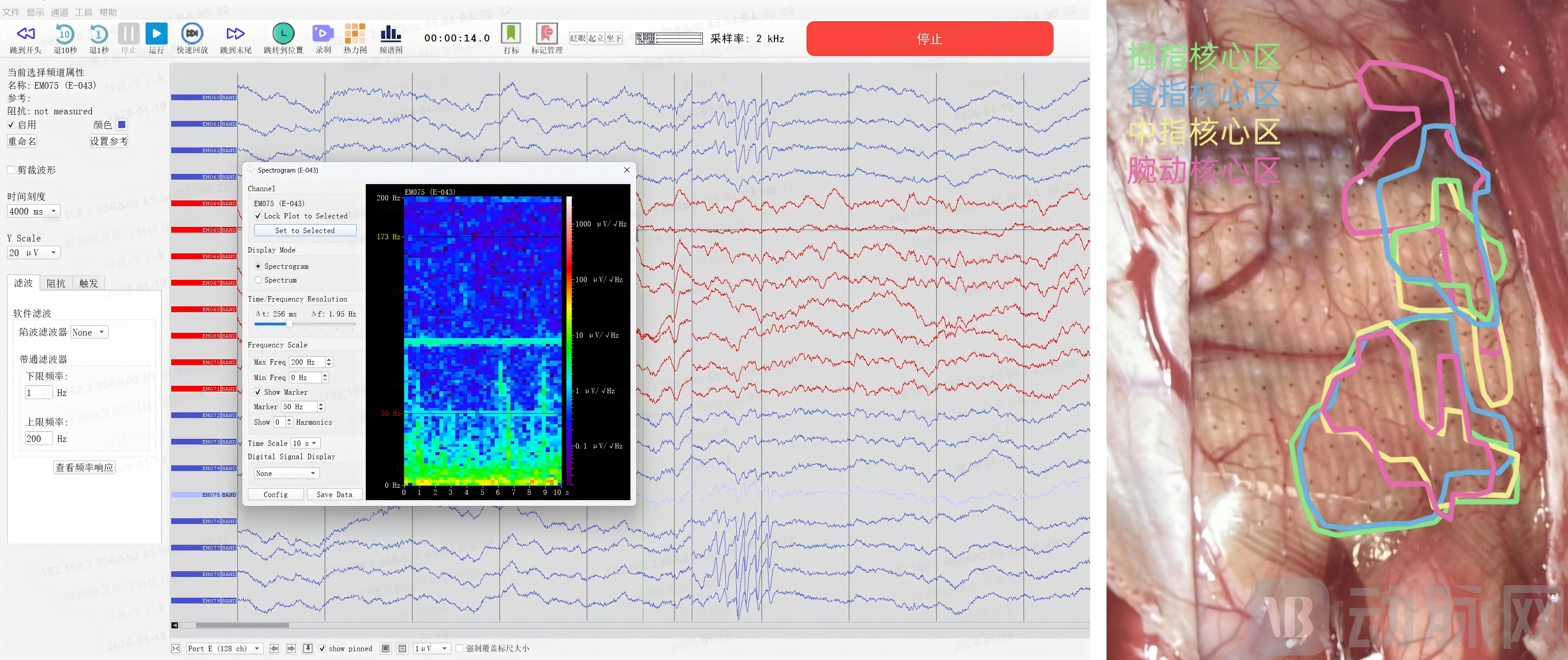
MicroLing Medical High-Throughput Neuroelectrophysiological Acquisition System Collects Electrophysiological Signals (Left)
Functional Atlas of Hand Fine Motor Tasks (Right)
Image source: Weiling Medical
This brain-computer interface decoding system includes MicroLink Healthcare's flexible thin-film high-density electrode arrays, high-throughput neurophysiological signal acquisition devices, AI-enhanced rapid decoder software, and other technical products. Based on this complete product technology stack, the system achieves efficient collaboration between "signal acquisition" and "data analysis."
Currently, this technology has been implemented in clinical research in more than twenty top hospitals in China, achieving landmark validation results. In this process, the company has established an exclusive scientific research clinical database, covering hundreds of intraoperative data for various brain diseases. Notably, whether in terms of total data volume or the coverage of disease types, Weiling Medical has reached several times the scale of Precision.
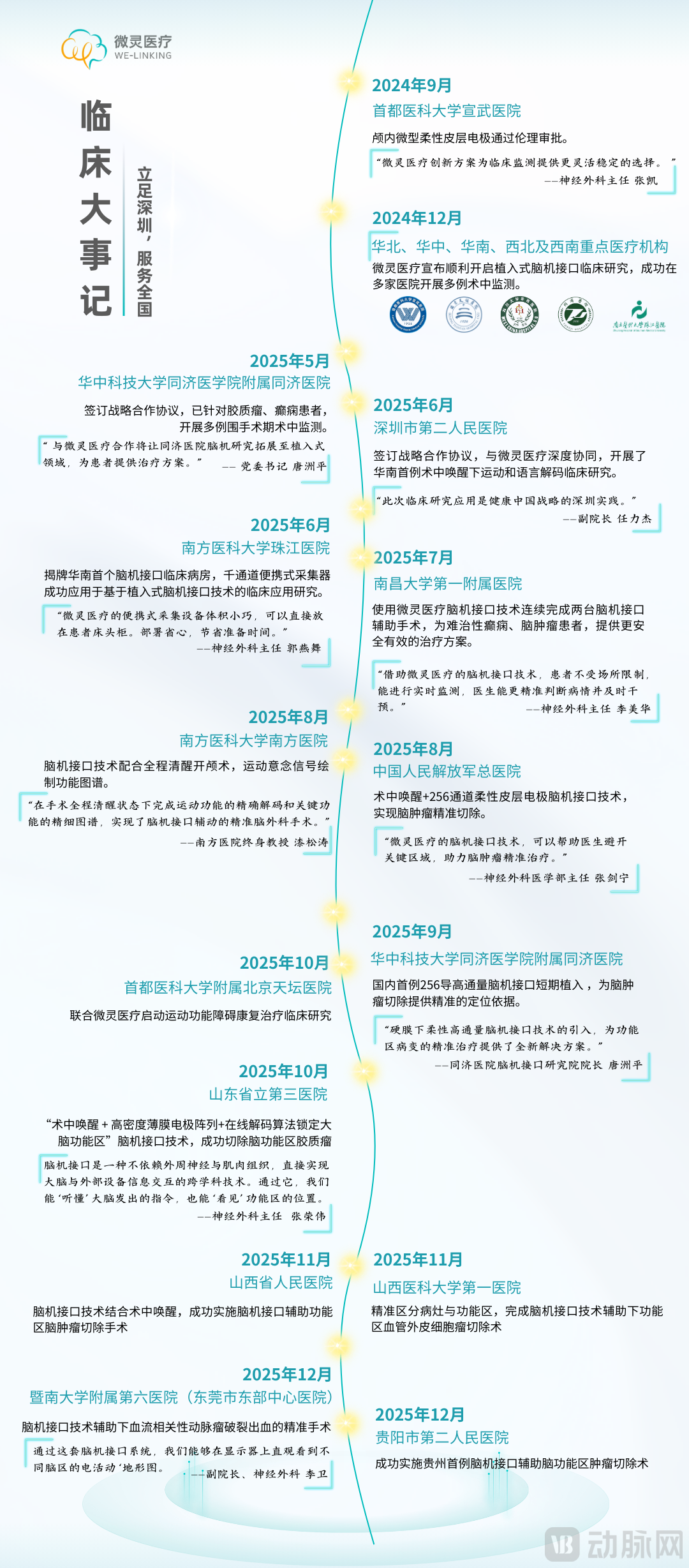
MicroVeda Medical Clinical Milestones
Image source: Weiling Medical
In the "protection-repair-replacement-treatment" of brain function, the second level is "brain repair."MicroLink Medical has developed "Brain-Computer Interface Guided Motor Function Reconstruction Technology." The core device of this technology system is MicroLink Medical's "World’s First Fully Implantable Subdural Cortical Signal Brain-Computer Interface Microsystem"—WE-LINKING Type I, which was awarded the "HuaNao Award—Top 10 Advances in China's Brain-Computer Interface in 2024."
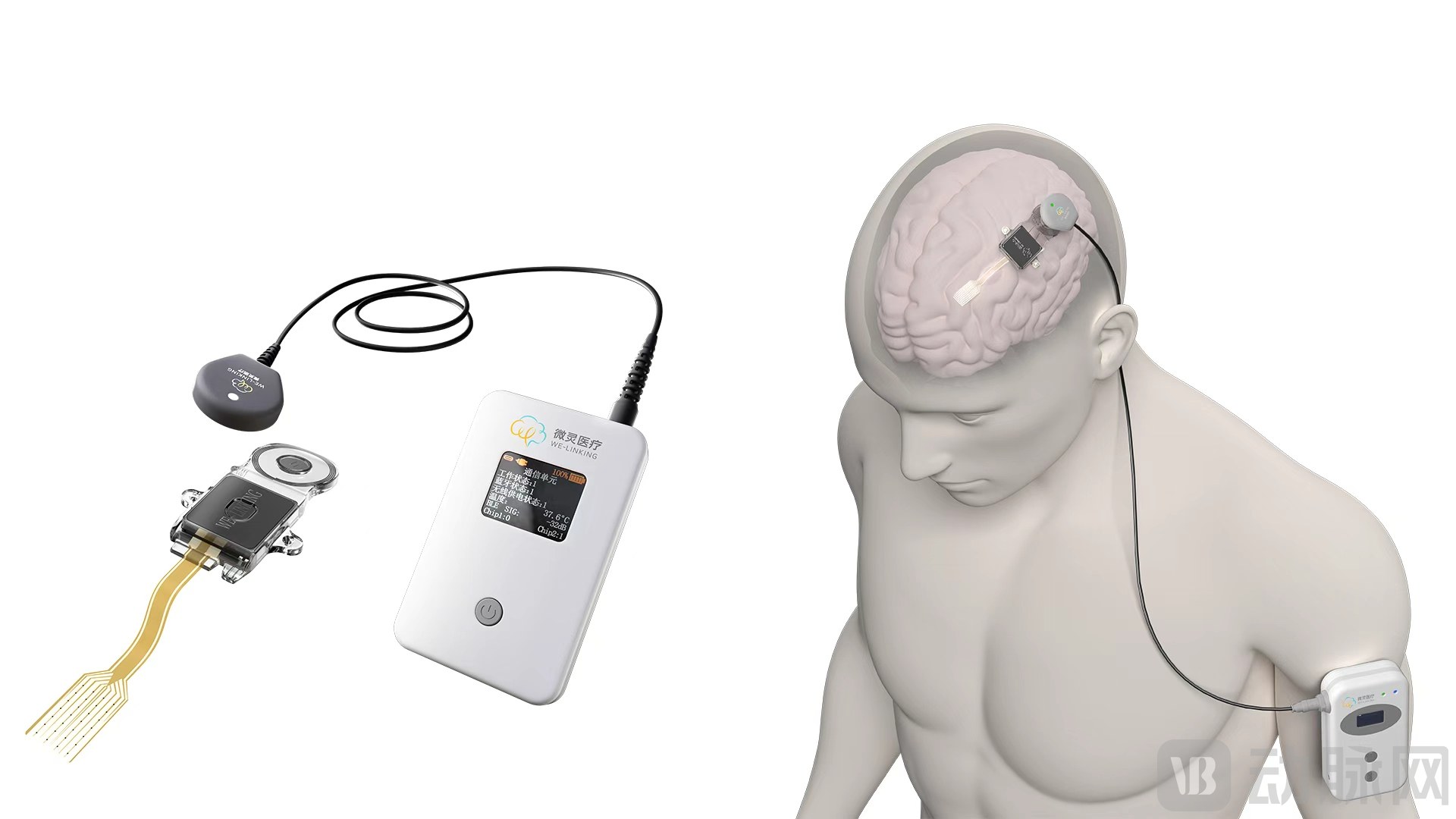
WE-LINKING Type I Brain-Computer Interface Microsystem: In Vivo and Ex Vivo Devices and Operating Modes
Image source: Weiling Medical
Specifically, WE-LINKING I has achieved multiple breakthroughs at the technical level.
First, the system relies on wireless direct power supply and low-power on-chip processing technology, as well as a flexible thin-film neural electrode technology with a thickness of only 1/10 of a hair strand (approximately 10 micrometers), achieving a leapfrog improvement in safety and acceptance in scientific research and clinical settings compared to Neuralink's similar products.
Secondly, the CORTEX-0 type film mesh neural electrode array, which is self-adhesive and can stabilize on the surface of the cerebral cortex, supports high-density integration of over a hundred channels per square centimeter, with a spatial resolution reaching sub-millimeter level. This solves the clinical challenge of precisely collecting high-throughput brain signals while avoiding penetrating damage to brain tissue.
In addition, the core of the WE-LINKING Type I implant consists of a 64/128/256-channel CORTEX-0 electrode and a battery-free electronic package. It supports a sampling rate of up to kilohertz per channel and is the world's first clinically-grade, fully implantable wireless system capable of collecting raw brain signals across hundreds of channels—this stands in marked contrast to Neuralink’s system, which collects discrete neural spike data.
Finally, the implant adopts an innovative wireless direct power supply design, completely eliminating the battery traditionally used in implanted devices. This design not only fundamentally enhances electrical safety but also enables stable, high-precision neural signal acquisition, real-time analysis, and wireless transmission.
From the perspective of clinical value, the WE-LINKING Type I fully implantable brain-computer interface microsystem developed by WE-LINKING Medical Technology, in collaboration with external motion decoders and training aids (such as spinal cord nerve stimulators or robot-driven devices), forms a complete "brain-computer interface-guided motor function in-situ reconstruction training system." During training, patients achieve active neurorehabilitation driven by "thought-device" interaction through the brain-computer interface, thereby promoting physiological remodeling and functional compensation of damaged neural circuits, and ultimately restoring lost limb motor control functions to a certain extent.
Currently, this technology and system are in the scientific research clinical stage, and in the future, they are expected to open up a completely new precise repair path for diseases such as motor function reconstruction.
In 2025, the global brain-computer interface (BCI) industry witnessed the accelerated rise of a future-oriented sector. Entering 2026, "scaled production" and "capital investment" have become the keywords defining this new phase of the industry. However, at the intersection of cutting-edge technology and clinical needs, the focus is no longer solely on scientific breakthroughs but rather on returning to the medical essence of BCIs—centered on serving patients with brain injuries, emphasizing neuroprotection, repair, substitution, and treatment.
In this global race, China is driving brain-computer interfaces from science fiction to real-world medical applications with unprecedented speed and determination. Looking ahead, MicroLink Medical, a full-stack technology research and development enterprise specializing in medical-grade implantable wireless brain-computer interfaces, will continue to focus on developing brain-computer interface therapies that cover the entire life cycle, making the technology accessible to more patients with neurological disorders.